



Fact Sheets And Publications
Saltwater Intrusion and Crop Insurance
October 2026 | Written by Nate Bruce, Farm Business Management Specialist
Reviewed by:
Jarrod Miller, University of Delaware Extension Agronomist
Drew Harris, University of Delaware Kent County Extension Agent
Luke Clifton, King Crop Insurance Agent
Andy Shoemaker, Agrisompo Regional Claims Specialist
Mark Sultenfuss, Nagel Crop Insurance Agent
Introduction
The Delmarva region faces a new threat to agricultural productivity, saltwater intrusion and inundation (SWI). Saltwater intrusion is when rising groundwater brings salt up from below and saltwater inundation is when tidal flooding and storm surges push saline water onto agricultural fields. Saltwater intrusion poses new challenges to producer’s risk management decisions and how they rely on crop insurance products to mitigate both production risks and market risks.
Multi-Peril Crop Insurance Products (MPCI)
Multi-peril crop insurance (MPCI) is a federally subsidized insurance program administered by the United States Department of Agriculture’s Risk Management Agency. MPCI protects against a broad range of unavoidable natural events such as drought, excessive moisture, flooding, hail, wind, frost, heat, freeze, plant disease, insect damage, and devaluation in market prices between planting and harvest. Currently, SWI itself would not trigger a loss through an MPCI policy, but rather flooding or excess precipitation from coastal storms.
The two most common MPCI policies are revenue protection (RP) and yield protection (YP). YP provides protection against production risk only with coverage based on a yield guarantee determined by the expected yield and a chosen coverage level. RP provides protection against both price and production risks and is based on a revenue guarantee, which is a product of expected yield, futures price, and a chosen coverage level. Because RP offers protection against both production risk and price risk, it is a more popular product than YP on the Delmarva peninsula.
On Delmarva, the cost of MPCI policies is slightly greater than that of other regions in the United States because of how the risks of agricultural production are determined by actuaries. The region is surrounded by water, both the Chesapeake Bay to the west and the Atlantic Ocean to the east. The region is always threatened by tropical storm events, some of which could lead to a SWI occurrence. If SWI events worsen over time on Delmarva, crop insurance premiums could increase in the long run as this would make insuring agricultural losses riskier. The long-term impact of SWI on risk management decisions needs to be evaluated.
Actual Production History (APH): Long Term Effects of Reduced Yields
Both YP and RP are based on a producer’s Actual Production History (APH) to establish the expected yield. An APH generally incorporates up to 10 years of a producer’s production records. When a producer lacks enough production history to establish an APH, a transitional yield (T-yield), is used until 4 years of production records can be used. Each county has a Tyield based on the 10-year historical county average yield for the insured crop.
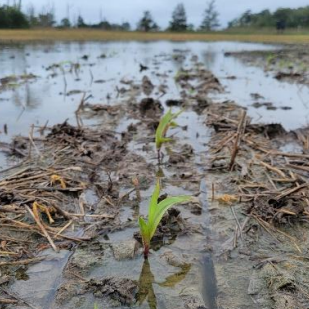
SWI can impact a producer’s APH when it reduces crop yields on affected acreage. Research has shown that SWI can reduce productivity on formerly productive portions of farmland (Miller et al., 2025). Continuous planting into areas of the farm that had a SWI event can erode a producer’s APH, lowering insurance guarantees. With crop insurance, producers pay for what they plant.
Producers with salt-affected acreage may therefore need to consider both the value of continued production and the potential long-term effects on crop-insurance coverage. Avoiding production on severely affected areas may limit the accumulation of low yields on the APH. This planting strategy mitigates reductions to YP and RP insurance loss guarantees, however lowers agricultural output of a farming property. Producers need to evaluate whether this is the best option for their operation or not.
Loss Adjustment and Prevented Planting
When a producer who purchases MPCI policies files a loss with their crop insurance agent due to a SWI event, a loss adjuster for the Approved Insurance Provider (AIP) will evaluate the field to determine the cause of loss. Saltwater intrusion itself is not deemed a cause of loss for MPCI policies, however, flooding, a hurricane, or another insured cause of loss associated with a saltwater event may provide coverage, depending on the crop policy and circumstances.
Saltwater impacts may also affect planting decisions in a subsequent crop year. Prevented planting coverage may be available when an insured cause of loss prevents annual planting. This could include situations in which residual salt remains in the soil or irrigation water following an insured cause of loss, such as a hurricane or flood, and that prevents field operations. The event must occur during the applicable prevented planting insurance period, and all other policy requirements must be met. These requirements can become particularly important when saltwater impacts persist across multiple years. Repeated flooding or excessive moisture may affect eligibility for prevented planting in subsequent years.
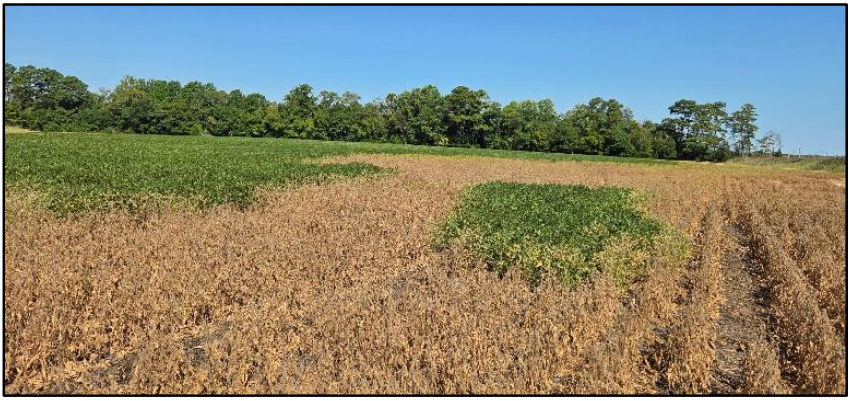
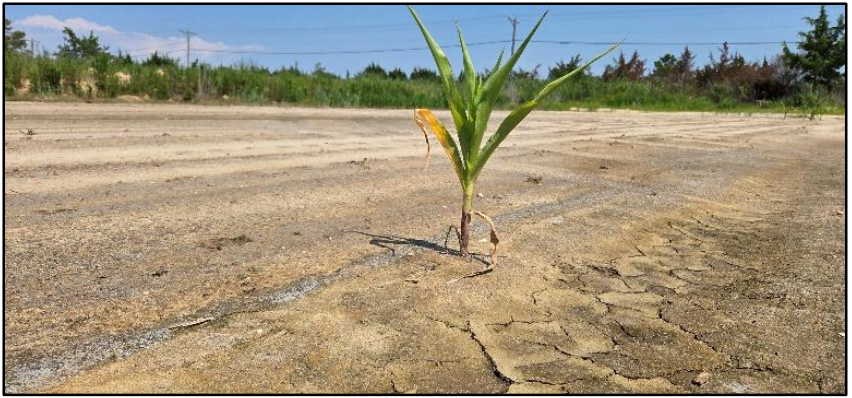
An issue with claiming a loss to flooding or excessive rainfall is that they both cannot be the cause of loss for more than 2 consecutive years. Continuous issues could deem a farm uninsurable. After 2 years, an assessment will be conducted on the property to determine which acres can be farmed, and which cannot. Producers may need to consider whether filing an insurance claim is feasible if they intend to continue producing crops on the property in the long run if there has already been an insurance claim on the property with flooding or excessive rainfall as the primary cause of loss.
Insurance Units and SWI
Producers who tend farms with SWI can use insurable units to reduce potential negative impacts on APH. When insuring crops through MPCI policies, producers must elect an insurable unit structure to insure such as basic units, enterprise units, optional units, and whole farm units. Each insurable unit has its own premium and subsidy provisions and provides different ways of combining acreage and production for determining losses. Basic units allow acreage to be insured based on crop, rental agreements, and land ownership. Land planted in the same crop, whether or not the land is owned, can be considered a basic unit. Enterprise units aggregate acreage of the same crop across land that is owned, cash rented or leased with a crop share agreement for each crop in a county. For example, all production of one specific commodity, whether it is irrigated or not or where it is located in the county, is aggregated for determining loss. Optional units can allow producers to separate eligible farms or types of production into separate insurable units. For example, irrigated production can be insured separately from non-irrigated production and eligible farms can be insured separately. Whole farm units aggregate multiple crops into a single insurance unit and are not generally used on the Delmarva peninsula.
With basic and enterprise units, a producer’s APH for a crop is generally combined across the acreage included in the unit structure. Through optional units, a producer can separate out different properties from one another with separate APHs and insurance guarantees. Producers who tend farms where SWI has occurred should consider insuring through optional units to best preserve APH and insurance guarantees. However, optional units will result in greater insurance premiums. A cost benefit analysis on this decision needs to be made whether or not this is the best risk management strategy to take for insuring crops that are at risk of saltwater intrusion.
Long-Term Impacts of SWI on Risk Management Decisions at the County Level
Depending on the severity of SWI at the county level, there can be potential impacts on crop insurance guarantees in the long run. Producers who do not have sufficient production records to create their own APH records may opt to use a T-yield until sufficient records are available. The T-yield is the 10-year county average yield for a given crop.
If SWI is severe enough to reduce yields at the county level, T-yields can also be reduced, lowering insurance guarantees for new producers. USDA RMA can designate highrisk areas (e.g., flood- or drought-prone) where TYields may be adjusted downward to reflect lower expected productivity. If SWI occurs with increased frequency, farmland in high impacted counties could become designated high risk, impacting insurance guarantees for new and beginning farmers. Supplemental Crop Option (SCO) and the Enhanced Coverage Option (ECO) are county level, area-based products that are add-ons to an underlying MPCI such as YP or RP. The products differ in how indemnities are triggered as they are based on county level performance. If SWI erodes away expected county yields over time, SCO and ECO indemnities can be impacted. The potential effects of widespread and persistent SWI on county yields, T-yields, and area-based insurance products warrant further research.
Summary
Saltwater intrusion is a new threat for agricultural producers on the Delmarva peninsula. In addition to reducing crop productivity, these events can have both short- and long-term implications for crop insurance and risk management. Producers in areas that are susceptible to SWI events should consider evaluating their risk management strategy to better mitigate risk.
References
Biram, H., Coble, K. H., Connor, L., Loy, R. M., Mills, B., Mitchell, J. L., & Rainey, R. L. (2024). The Fundamentals of Federal Crop Insurance.
Biram, H.D. and Connor, L. (2023). Types of Federal Crop Insurance Products: Individual and Area Plans. University of Arkansas System Division of Agriculture, Cooperative Extension Service Fact Sheet No. FSA75.
Biram, H.D. and Rainey, R. (2023). Individual Crop Insurance, Yield Protection. University of Arkansas System Division of Agriculture, Cooperative Extension Service Fact Sheet No. FSA78.
Biram, H.D. and Rainey, R. (2023b). Individual Crop Insurances: Revenue Protection, and Revenue Protection – Harvest Price Exclusion. University of Arkansas System Division of Agriculture, Cooperative Extension Service Fact Sheet No. FSA79
Biram, H.D. and Mills B. (2023). Insurable Unit Structures in Crop Insurance. University of Arkansas System Division of Agriculture, Cooperative Extension Service Fact Sheet No. FSA77
Johnson S.D., and Plastina A. (2025) Supplemental Coverage Option (SCO) and Enhanced Coverage Option (ECO): Ag Decision Maker. Iowa State University, Cooperative Extension Service Fact Sheet No. A1-44
Laporte, J. (2021). Introduction to Crop Insurance for Field Crops. Michigan State University, Cooperative Extension Service Fact Sheet No. E-3415
Maples, W., and Mills B. (2025). Crop Insurance Basics. Mississippi State University, Cooperative Extension Service Fact Sheet No. P4102
Miller, J.O., de Barros, P.R., Schulenburg, A.N. et al. Coastal stressors reduce crop yields and alter soil nutrient dynamics in low-elevation farmlands. Discov Agric 3, 119 (2025). https://doi.org/10.1007/s44279-025-00303-7
Plastina, A., Johnson S.D., and Edwards M. (2021). Revenue Protection Crop Insurance: Ag Decision Maker. Iowa State University, Cooperative Extension Service Fact Sheet No. A1-54
Plastina A. and Edwards M. (2020). Yield Protection Crop Insurance: Ag Decision Maker. Iowa State University, Cooperative Extension Service Fact Sheet No. A1-52
Plastina A., and Edwards M. (2017) Proven Yields and Insurance Units for Crop Insurance: Ag Decision Maker. Iowa State University, Cooperative Extension Service Fact Sheet No. A1-55
Rosch, S. (2021). Federal Crop Insurance: A Primer. https://crsreports.congress.gov/product/pdf/R/R46686
Tack, J., Coble, K., & Barnett, B. (2018). Warming temperatures will likely induce higher premium rates and government outlays for the U.S. crop insurance program. 635–647.
USDA-RMA (2024) Enhanced Coverage Option (ECO) https://www.rma.usda.gov/sites/default/files/2024- 11/Enhanced%20Coverage%20Option%20Fact%20Sheet. pdf
USDA-RMA (2024) Supplemental Coverage Option for Federal Crop Insurance https://www.rma.usda.gov/sites/default/files/2024- 02/Supplemental-Coverage-Option-Fact-Sheet.pdf
USDA-RMA (2025) New Farmers – Get Started Fact Sheet https://www.usda.gov/sites/default/files/guidancedocuments/Farmers.New%20Farmers%20- %20Get%20Started%20Fact%20Sheet.pdf
UD Cooperative Extension
This institution is an equal opportunity provider.
In accordance with Federal law and U.S. Department of Agriculture policy, Cooperative Extension is prohibited from discriminating on the basis of race, color, national origin, sex, age, or disability.