



Fact Sheets And Publications
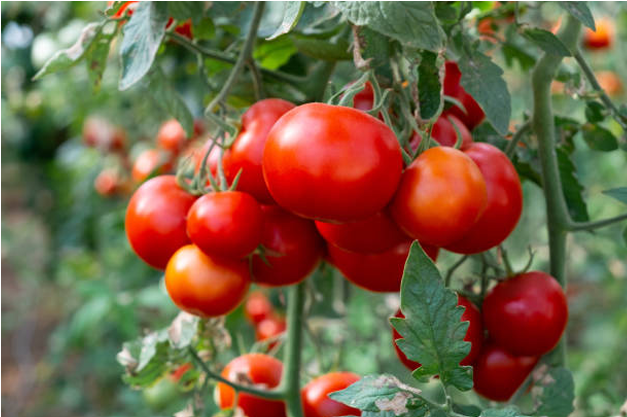
Plasticulture Tomatoes
May 2026 | Written by Nate Bruce, Farm Business Management Specialist and Ty Wolaver, Extension Specialist - Farm Management, University of Tennessee
Introduction
Tomatoes (Solanum lycopersicum) are an edible warm-season vegetable in the nightshade family. The genus name, Solanum, is the Latin word solamen, which translates to "comforting or soothing." Tomatoes are known for their hearty fruit that can be consumed in many different ways, from being consumed fresh as part of a dish to being consumed as a value-added product. There are many different varieties of tomatoes, with each being bred for certain types of consumption and growing conditions. Plasticulture is a crop production system that has become well-adapted for growing tomatoes in the last twenty years.
Plasticulture is a season-extending production system that incorporates plastic mulches, drip irrigation, and fertigation to raise a tomato crop. Plasticulture production offers many advantages to raising tomatoes, such as fewer weeds, increased plant productivity, reduced fertilizer loss, and much more. Tomatoes are typically planted in the Mid-Atlantic and Northern South regions in April and May. This publication provides information on marketing, production, and economic considerations for individuals considering producing plasticulture tomatoes directly to consumers. This publication will focus on larger slicing tomato production that yields larger-sized fruits.
Market Analysis
Roadside stands are a great market for tomatoes, but like farmers' markets, they are only successful based on their location. Studies have shown that the national average for travel to roadside stands is reported to be between 40 and 60 miles. This means that customers often stop on the way to a particular destination. Understanding where customers are coming from and going to is important for choosing a successful roadside stand location. The display, packaging, and pricing must be easy to understand for the customer. Similar to selling tomatoes at the farmer's market, fresh tomatoes need to be of high quality. Prices need to be clearly visible and legible, and various sales quantities should be offered. Roadside stands can be staffed, or an honor box can be used. There are pros and cons of both staffing a roadside stand and opting to use an honor box. Make sure to evaluate which is best for the roadside stand location and potential customer base.
Pick-you-own marketing is also an option for plasticulture tomatoes, but is less common as a marketing strategy as compared to small fruit. Consistent yields are required for pick-your-own to work, but it allows customers to harvest the tomatoes that are at a certain level of ripeness they desire. For example, green tomatoes can be desirable to customers for frying and offering pick-your-own gives customers an opportunity to purchase tomatoes at this ripeness stage. Pick-your-own creates issues with liability and needs to be considered, as there will be visitors coming to the farm. In addition, long work hours are often required for pick-your-own, as someone has to be present at the operation.
Value-added marketing is another way to market tomatoes, particularly number twos that are not suitable for being sold fresh. Value-added marketing adds additional value to the raw product. The producer must become the processor of tomatoes, changing the physical state or form of the product for market. Before marketing anything as a value-added product, make sure to consider all local rules and regulations. As mentioned earlier, some examples of value-added tomato products are dried tomatoes, puree and pastes, sauces, ketchups, powders, and chutneys.
Production Considerations
Cultivar Selection
Plants can be started from seeds indoors or purchased from plant nurseries. When choosing a tomato variety, it is imperative to consider resistance to diseases and susceptibilities. There are many different large tomato varieties that can be chosen for plasticulture production. Some ripen at different times of the growing season. It is important to choose a variety that fits into the marketing scheme. Some commonly planted varieties are Amelia, Bella Rosa, BHN 602, BHN 964, Biltmore, Camaro, Defiant, Dixie Red, Mountain Glory, Mountain Merit, Mountain Spring, Primo Red, Red Defender, Red Deuce, Red Morning, Rocky Top, Scarlet Red, and Volante. Make sure to research the variety for an intended planting before purchasing seeds or plants to ensure the variety works for the growing region.
Site Selection and Planting
Some of the most reliable plasticulture sites are fields that have wooded areas or windbreaks on the northwest side of the field, as wind not only has a drying effect on plant foliage, which minimizes disease exposure, but also can help to stop frost. It is best to use a north-south plasticulture row orientation for uniform ripening and stands. It is best to choose well-draining fields that consist of sandy loam or clay loam for shaping plasticulture tomato beds. Production needs to be in close proximity to a clean water source as drip irrigation is heavily used within a plasticulture production system. Plasticulture tomato plants are typically planted in April or May, with harvest starting to occur in June or July, depending on cultivar selection and climatic conditions. Field rotation is recommended to reduce exposure to diseases, particularly soil-borne issues. Avoid tomato plantings in fields that have herbicide or growth regulator carry. Plasticulture tomatoes can also be raised within a high tunnel greenhouse, similarly to growing them in the field. A high tunnel greenhouse has unique considerations if used for growing plasticulture tomatoes, but can also yield ripened fruit earlier than tomatoes planted in the field.
Pest Management
Tomatoes have numerous insect pests such as aphids, corn earworms, European corn borers, beet armyworms, cabbage loopers, hornworms, armyworms, Colorado potato beetles, cutworms, flea beetles, leafminers, mites, pinworms, stink bugs, thrips, and whiteflies. Tomatoes are prone to many different diseases, such as nematodes, damping-off, bacterial canker, bacterial speck, bacterial spot, bacterial wilt, botrytis fruit rot, buckeye rot, fusarium wilt, verticillium wilt, late blight, leaf mold, powdery mildew, southern blight, anthracnose, septoria leaf spot, timber rot, tomato spotted wilt virus, and post-harvest rots. Tomatoes are a crop that needs to be scouted regularly to identify a proper chemical spray regime of fungicide and insecticide products. Weed control between plastic rows needs to be considered as well and can be controlled with herbicide products between the rows. Cover crops such as rye or oats can be planted between the plasticulture rows to suppress weeds.
Harvest and Storage
Harvesting of tomatoes typically begins at the end of June and early July. Tomatoes are often harvested by hand. Timing of tomato harvest is critical for marketing top quality tomatoes directly to consumers. Depending on the variety and stage tomatoes were picked, they can ripe in days or weeks. The breaker stage is when a tomato begins to show its first blush of color, signaling it is mature enough to be harvested and ripened off the vine. It is at this stage that the hue of the tomato will start to go from green to reddish color or other color depending on variety. Once a tomato has reached the breaker stage, it has all the sugars and essential compounds necessary for it to reach its mature color and full flavor. The harvest process can be staggered to allow for extended marketing and a prolonged harvest period. Depending on the potential market, some consumers may look to purchase green tomatoes. This is something to consider in the harvest process as tomatoes will have to be harvested early before the breaker stage, for this consumer demand. Tomato harvest typically lasts 3 - 4 weeks after the first initial harvest.
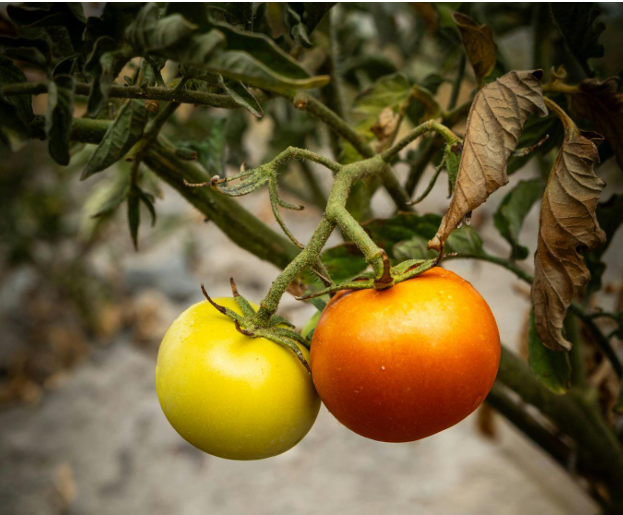
The best temperature to store harvested tomatoes is around room temperature, between 65 -70 degrees Fahrenheit. They are best stored in a cool, dark place with decent air flow. Refrigeration can alter the taste of fresh tomatoes, so it is not recommended to do so if selling directly to consumers. If stored in warmer temperatures, tomatoes will ripen more quickly. Temperatures above 80 degrees Fahrenheit will ripen tomatoes quickly. This can be useful if they are needed quickly for a particular market and time constraints are an issue.
Labor Requirements
Plasticulture tomatoes are a very labor-intensive crop to grow, primarily due to the crop being primarily harvested by hand. Labor needs planting, staking and tying, removing mulch, stakes, and tying per acre is about 25 - 40 labor hours. Harvest hours vary considerably depending on marketing strategy.
Economic Considerations
Commercial Production
When considering farming tomatoes for commercial purposes, there is going to be a large amount of up-front cost associated with the purchase of necessary equipment. Land is going to be the biggest long-term investment and often requires a large down payment that will take many production cycles to return. In addition to land, a tomato farm is going to require a large amount of machinery and equipment, including but not limited to tractor(s), wagon(s), tillage equipment, and more. When deciding whether tomato production is correct for your farming operation, you should consider how long it will take for you to return the up-front investment for your farm from the marketing of tomatoes. You should compare this to other agricultural ventures or other investment opportunities available to your business. In some situations, traditional investment may return higher yields to your capital. Conversely, other agricultural ventures may have similar returns with lower risk in initial land or capital investments.
Another consideration in commercial production is a terminal market. With large-scale production, it is necessary to have an agreed-upon price and quantity to be delivered to the wholesale market. Wholesale middlemen and grocery or restaurant distributors often work with established operations that can reliably provide the quantities that they require throughout the season, so obtaining contracts can be difficult. There may often be times when a price is agreed upon with wholesalers, but when it comes time for delivery of the tomatoes, a wholesaler turns them down due to an unneeded supply.
Many tomato producers have cut out these issues by becoming vertically integrated as wholesalers and producers of tomatoes, but for a farmer independent of a wholesale market, there is a large risk in each year’s production.
Another consideration of large-scale production will be the price received for a year’s tomato crop. Because of the large amount of product to be sold, margins on a per-ton or per-bushel basis are often very thin. If the estimated cost of production was incorrect (i.e., cost of fuel or fertilizer increases), farmers are often stuck with their agreed-upon price and overall monetary losses until price can be renegotiated.
The last consideration this paper will mention is labor. Vegetable production is a very labor-intensive form of agricultural production. The biggest consideration with labor is availability. In a 2021 study done by the University of Tennessee, it was found that over 60% of vegetable producers cannot find proper employees for their operation. At the same time, farms between 5 and 25 acres needed an average of 8.5 workers (a mix of hired labor, family labor, and volunteers) to manage their farms. Farms over 25 acres needed an average of 15.3 workers (a mix of hired labor and family labor). This can present a large challenge because, like all agricultural enterprises, tomato production is very time-dependent, especially when it comes to harvesting.
Small-Scale Production
When considering adopting tomato production as either an on-farm form of income or an additional enterprise attached to a farm already in production, there are several factors a producer must think about. First and foremost is the up-front cost to begin production. While small-scale production does not require nearly the same amount of capital as commercial production, there will still be a significant cost incurred before the first revenues are collected. Tilling equipment, storage, ground cover, irrigation, stakes or baskets, fertilizer, pesticides, collection boxes, and even the tomato plants themselves (either as seed or as seedlings) all must be purchased before the first tomato is sold. This can lead to several thousand dollars being spent before any type of return is found. Land is also a consideration. With a consistent ballooning in land prices if land is being purchased solely for small-scale vegetable production, careful planning must be mapped out to ensure a return to the principal and interest payment the land will accrue.
Before tomatoes are ready to be sold, a producer should have an understanding of that year's full cost of production, including variable and fixed costs. Using this information, a producer should determine what will be both their breakeven production is, how many plants are needed to receive an even return on investment and their breakeven price and how much should be charged to receive an even return on investment. It is only by understanding how much should be produced at what price that a tomato farmer will have an opportunity to be profitable by the end of the production year.
Another consideration will be the marketing of the tomatoes. While many small farms will have success in producing vegetables, including tomatoes, those producers might not consider how many tomatoes can be sold to consumers in their area. Farmers’ markets, Community Supported Agriculture (CSA) subscriptions, and other direct-to-consumer sales can be useful in moving product, but if there are ever times that would normally be used for selling produce at a farmers’ market, for example, when the farmer cannot be set up for whatever reason, then that is missed revenue and lost product for that time. There will also be times where traffic at farmers’ markets or interest in locally grown produce will lull, which will also decrease expected revenue and increase product waste. Because of this, even small-scale farm businesses should be connected with a wholesale market. This can include local restaurants and grocery stores. Whereas direct-to-customer sales of vegetables can fetch a premium, wholesale produce will be discounted, but even at a discount, the predictability of revenue can help reduce product waste and increase overall revenue, so it is important for tomato producers to be reaching out to possible wholesale buyers before the product is available.
A tomato farmer must also be honed in on what varieties of tomatoes stand the best chance of being purchased by both direct-to-consumer customers and wholesale customers. One advantage of small-scale is the ease of being able to produce multiple varieties to fit these needs. It is best to meet demand that might be found at terminal markets, so as to better move the product.
Similar to commercial production, a small-scale tomato producer must also understand the time commitment involved in tomato farming. Per 1000ft^2 plot, a farmer can expect to spend 5-6 hours per week working with the production system between field preparation, planting, spraying, maintenance and trellising, and harvesting and packaging. This is often expected, and isn’t all that much of a time commitment week to week, especially if only a few thousand square feet are going to be farmed. However, an often forgotten source of labor hours is in marketing, such as driving and boothing a farmers’ market. It is not unreasonable to expect 6-7 hours per week, usually all on one day, often Saturday, to be spent marketing the tomatoes. This does not include preparations for marketing, such as researching the best place and subscribing to the markets before the season starts.
Because of the small-scale nature of this type of tomato production, all labor can generally be covered by an individual or by a family, which can be an advantage as labor costs are avoided. However, there is often not enough revenue to pay for an employee to either man the farm or run the marketing booths, even if the owner of the farm would see this as advantageous. This leaves the farmer and farm family locked into all labor responsibilities, which disallows for time away from the farm.
Revenue Variability and Risk Protection
Along with the variability in consumers and wholesalers' purchasing a tomato crop, there are other considerations that can affect the revenue of a tomato farm. Things such as weather, disease stress, and pests can directly affect the quantity and quality of the tomato crop that is harvested. Some of these risks can be mitigated by having proper irrigation and a proper integrated pest management (IPM) plan (contact your local extension office for help on both of these issues). However, some threats are much less avoidable. Adverse weather events can easily damage a crop, with not much a farmer can do to prevent or protect against them. Any of these damages to quantity or quality can, of course, decrease the salable product and therefore overall revenue. Another threat is an overly productive year in a farmer’s marketing area. If an overabundance of tomatoes is on the market all at once, the price a farmer receives will often be decreased. To help with some of these issues, having prearranged agreements with wholesalers or direct-to-consumer markets, like CSAs, can help lock in some revenue. Also, having a proper IPM and irrigation system will protect a tomato crop. Additionally, programs like the Department of Agriculture’s (USDA) Whole-Farm Revenue and Micro-Farm protection policies can help recoup some lost revenue.
Overall, it is important to keep proper records and build a yearly farm plan to help be prepared for lowered revenue by being able to quickly run new breakeven analyses and make informed decisions.
Value-Added Sales
Inevitably, some amount of the tomatoes being grown will either not meet quality standards for being sold or will be getting close to their expiration date before they have a chance to be sold. This is to be expected, and proper planning can turn this apparent loss in revenue into a new revenue stream for the farm. By turning unfit tomatoes into further processed products such as canned tomatoes, dried tomatoes, and more, they are then ready to be sold in their value-added form. This can be a good way to capture more revenue from the tomato crop or even increase overall profit in some scenarios.
Even further, if other ingredients are added to the tomato processing to make products like salsa, sauces, jams, jellies, and more, they might increase their appeal to the end consumer. These products can often be labor-intensive in production, but they can save otherwise lost inventory and increase the overall profitability of a tomato farm.
Small-Scale Tomato Budget | |||||
Production Space | 1,000 | sq. ft. |
|
|
|
Planting Density (6ft centers, 2 feet between plants, so about 6 30ft rows per 1000sqft) | 80 | plants/1000 ft^2 |
|
|
|
Marketed Rate (1) | 75% |
|
|
|
|
Average Pounds per Plant (multiple varieties) | 8 |
|
|
|
|
|
|
|
|
|
|
Gross Income | % Mix | Quantity | $/Unit | Total Estimate | Total Quantity |
Tomatoes retail (in pounds) | 60% | 288 | $4.00 | $1,152.00 | 288 |
Tomatoes Wholesale (in pounds) | 40% | 192 | $1.00 | $192.00 | 192 |
| Total lbs | 480 | Total Revenue | $1,344.00 | 480 |
|
|
|
|
|
|
Variable Costs | Unit | Quantity/1000ft^2 | $/Unit | Total Estimate | Total Quantity |
Transplants | plugs | 80 | $0.50 | $40.00 | 80 |
Soil Test5 | test | 1 | $15.00 | $15.00 | 1 |
Fertilizer - 10-10-10 (3) |
| 1 | $22.97 | $22.97 | 1 |
Fungicide - cost of sprays throughout growing season (2) |
| 1 | $23.19 | $23.19 | 1 |
Insecticide - cost of 2 sprays throughout growing season (2) |
| 1 | $19.99 | $19.99 | 1 |
Irrigation Supplies |
|
|
|
|
|
Dripline purchased annually | linear ft. | 250 | $0.33 | $82.50 | 250 |
Attachments purchased annually |
| 1 | $75.00 | $75.00 | 1 |
Operation of Irrigation (3) | water use in 1,000 gal. | 10.00 | $4.50 | $45.00 | 10 |
Staples for Ground Cover | staples | 1,000 | $0.17 | $171.10 | 1000 |
Black Woven Ground Cover (3 year life) | ft. | 1,000 | $0.03 | $10.36 | 1000 |
Tomato baskets (3 year life) | basket | 80 | $4.98 | $132.80 | 80 |
Garden Labor (7 minutes/ft^2/wk for 5 months(4) over 1000ft^2) (5-6hr/wk) | hours | 120 | $0.00 | $0.00 | 120 |
Fuel (20 mile round trip to farmer's markets) | mile | 300 | $0.725 | $217.50 | 300 |
Harvest Containers | boxes | 25 | $3.45 | $86.13 | 25 |
Total Variable Costs | $941.54 |
| |||
|
|
| Return to Variable Cost | $402.46 |
|
|
|
|
|
|
|
Fixed Costs | Unit | Quantity | $/Unit | Total Estimate |
|
Used Tiller (depreciable over 7 years) | Model 732 Tiller | 1 | $285.71 | $285.71 |
|
Storage and Post-Harvest Handling Building (depreciable over 10 years) | (15'X20'X16') | 1 | $275.00 | $275.00 |
|
Land Cost ($50,000/acre, 6% interest) | portion of mortgage | 1 | $267.85 | $267.85 |
|
Marketing Costs (farmers' markets, 2 markets, $25 entrance, $5/wk) | day | 15 | $8.33 | $125.00 |
|
Marketing Labor | hours | 105 | $0.00 | $0.00 |
|
Other Fixed Cost |
| 0 |
| $0.00 |
|
Other Equipment |
| 0 |
| $0.00 |
|
Total Fixed Costs | $953.56 |
| |||
Total Specified Costs | $1,895.10 |
| |||
|
|
|
|
|
|
Returns Over Specified Cost | -$551.10 |
| |||
|
|
| Breakeven Quantity of Production (in 1000 ft^2 blocks) | 3 |
|
|
|
| Breakeven Price/lb (for only 1000ft^2) | $ 3.95 |
|
|
|
|
|
|
|
https://www.ramseymastergardeners.org/post/home-garden-productivity-study-results | |||||
|
References
Solanum lycopersicum (North Carolina State University) https://plants.ces.ncsu.edu/plants/solanum-lycopersicum/
Direct Marketing Guide for Producers of Fruits, Vegetables, and Other Speciality Products (University of Tennessee, Knoxville, 2023) https://utia.tennessee.edu/publications/wp-content/uploads/sites/269/2023/10/PB1711.pdf
Roadside Stand (University of Kentucky, 2024) https://ccd.uky.edu/sites/default/files/2024-12/ccd-mp-05_roadsidestands.pdf
Researchers Examine How Early Harvest, Storage Affect Tomatoes (University of California, Davis, 2024) https://www.ucdavis.edu/blog/researchers-examine-how-early-harvest-storage-affect-tomatoes
PB1642-Considerations for a Value-Added Agribusiness (University of Tennessee, Knoxville, 2000) https://voljournals.utk.edu/utk_agexmkt/11/
PB1710-Adding Value to Tennessee Agriculture through Commercial Food-Processing Enterprises (University of Tennessee, Knoxville, 2007) https://trace.tennessee.edu/entities/publication/e6669518-7dfd-44e9-a0df-eaf18cbec149
Roadside Stand (University of Kentucky, 2024) https://ccd.uky.edu/sites/default/files/2024-12/ccd-mp-05_roadsidestands.pdf
Plasticulture for Commercial Vegetables (North Carolina State University) https://content.ces.ncsu.edu/plasticulture-for-commercial-vegetables
S.W.O.T Analysis Identifying Your Strengths, Weaknesses, Opportunities, and Threats https://agecoext.tamu.edu/wp-content/uploads/2016/10/F.-SWOT-Anlaysis.pdf
Fruit and Vegetable Marketing for Small-Scale and Part-Time Growers (Penn State, 2005) https://extension.psu.edu/fruit-and-vegetable-marketing-for-small-scale-and-part-time-growers
High Tunnel Farming (North Carolina A&T, 2021) https://ncat.edu/caes/cooperative-extension/files/high-tunnel-farming.pdf
Research Update: The Economic Viability of Tomato Production Using Single-Versus Double-Layer High Tunnels (Food Distribution Research Society, 2023) https://www.fdrsinc.org/wp-content/uploads/2023/04/JFDR54.1_9_Morris.pdf
Harvesting and Storing Home Garden Vegetables (University of Minnesota Extension, 2026) https://extension.umn.edu/planting-and-growing-guides/harvesting-and-storing-home-garden-vegetables
How to Store Tomatoes (Texas A&M AgriLife, 2024) https://agrilifetoday.tamu.edu/2024/06/18/how-to-store-tomatoes/
Labor Use and Challenges Faced by Tennessee Fruit and Vegetable Producers (The Univeristy of Tennessee, 2021) https://utia.tennessee.edu/publications/wp-content/uploads/sites/269/2023/10/W985.pdf
Growing Wholesale Produce for Small and Mid Scale Farms (University of Wisconsin, 2020) https://fyi.extension.wisc.edu/danecountyag/files/2020/02/Small-Scale-Wholesale.pdf
Scaling Up Your Vegetable Farm for Wholesale Markets (Sustainable Agriculture Research & Education, 2021) https://www.sare.org/wp-content/uploads/Scaling-Up-Your-Vegetable-Farm-for-Wholesale-Markets.pdf
Whole Farm Revenue Protection Including Micro Farm (USDA, 2026) https://www.rma.usda.gov/policy-procedure/general-policies/whole-farm-revenue-protection
UD Cooperative Extension
This institution is an equal opportunity provider.
In accordance with Federal law and U.S. Department of Agriculture policy, Cooperative Extension is prohibited from discriminating on the basis of race, color, national origin, sex, age, or disability.