



Pollinators
Pollinators
Reviewed April 2025 | Written by: Grace Ferry and Brian Kunkel
What Pollinators Do For Us
Pollinators are critical to our food production system
More than 100 U.S.-grown crops rely on pollinators
The Honey Bee is our primary pollinator

Common Name: Eastern Tiger Swallowtail; Dense Blazing Star
Scientific Name: Papilio glaucus; Liatris spicata
This native plant helps improve the ecosystem while also attracting native Lepidoptera pollinators.

Common Name: Western Honey Bee
Scientific Name: Apis mellifera
Most common in Delaware
Pollinate crops & produce honey
Pollen basket attached to the hind leg

Common Name: American HoverFly
Scientific Name: Eupeodes americanus
Diptera
Native to North America
Accidental pollinators

Other Native Pollinators:
Mason bees, Leaf cutters, Cuckoo bees.
These pollinators all have different characteristics. For example, the Mason bee (Above, Osmia lignaria) is blue!
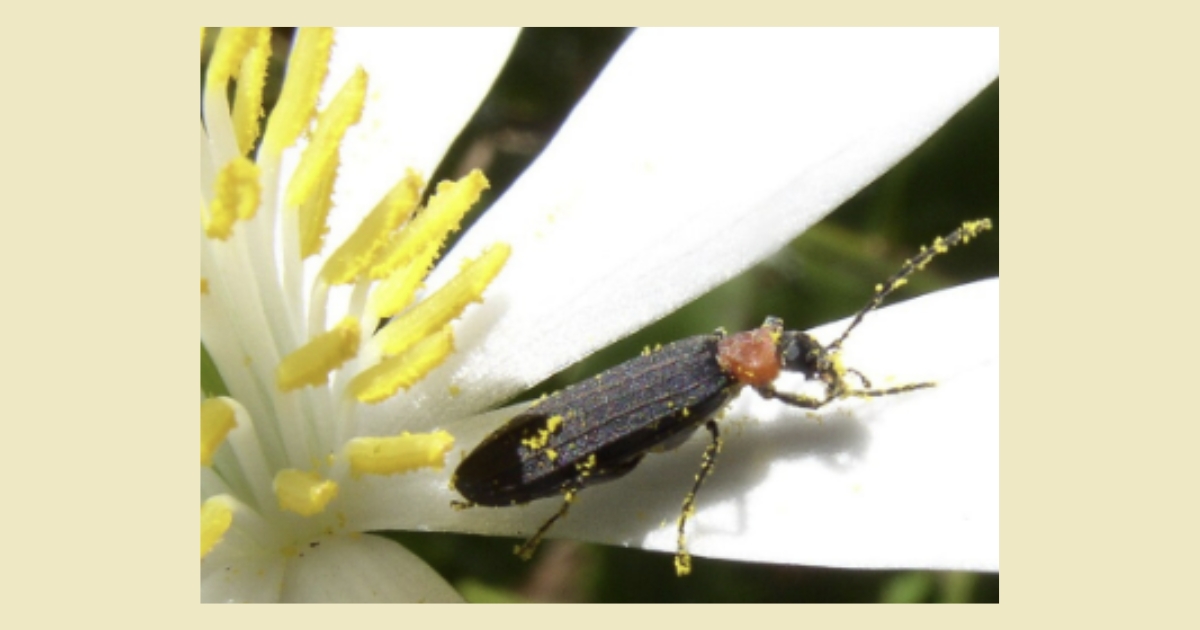
Common Name: Red Necked False Blister Beetle
Scientific Name: Asclera ruficollis
Some pollinators come from the order Coleoptera. This beetle has hardened elytra, which is a major characteristic of Coleoptera. They are frequently found on flowers, because that is where they mate, and pollen is a big part of their diet. Be careful dealing with them, because they do have toxic defense chemicals.
Ways to Promote Pollinator Activity
Plant native species
Avoid / limit pesticide use
Provide water and shelter


UD Cooperative Extension
This institution is an equal opportunity provider.
In accordance with Federal law and U.S. Department of Agriculture policy, Cooperative Extension is prohibited from discriminating on the basis of race, color, national origin, sex, age, or disability.