



Nutrient Recommendations
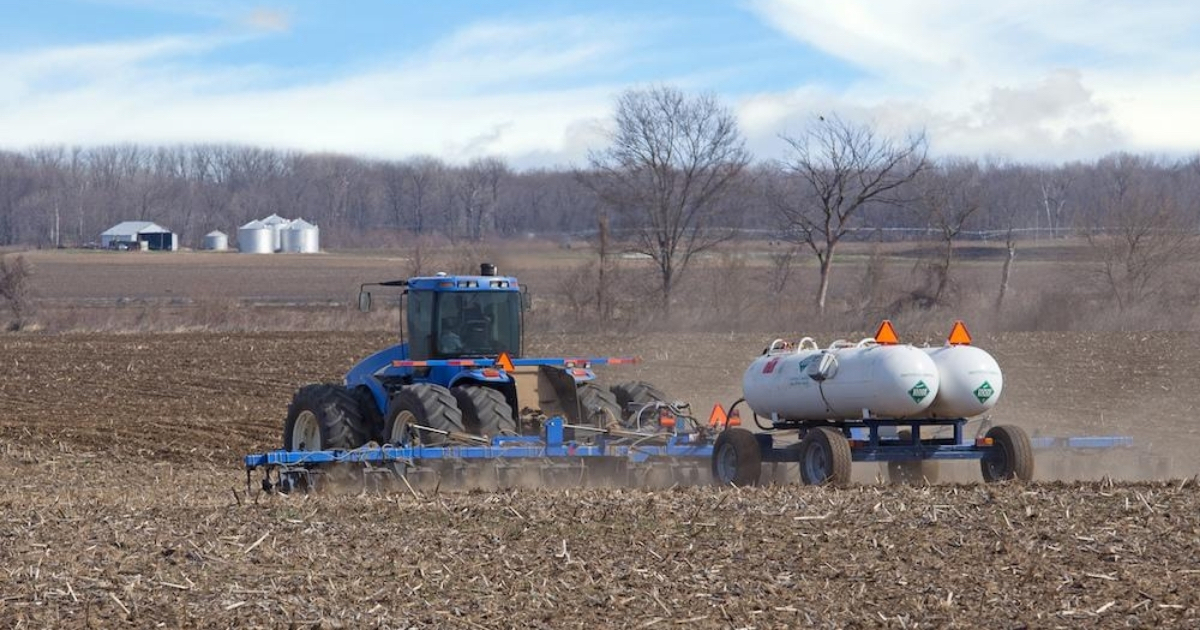
Nutrient Recommendations
October 2024 (Last update 2020) | Written by: Amy L. Shober, Karen L. Gartley, Jarrod O. Miller, and Richard Taylor
Nutrient recommendations are based upon soil test calibration studies that relate the probability of a profitable plant response to nutrient addition to the plant nutrient concentration in the soil as measured by a soil test.
Review the "Using the nutrient recommendations" below and then select an crop type to view a PDF with individual recommendations.
USING THE NUTRIENT RECOMMENDATIONS
Converting from Soil Test Results to University of Delaware Fertility Index Value (FIV)
Nutrient recommendations are based upon soil test calibration studies that relate the probability of a profitable plant response to nutrient addition to the plant nutrient concentration in the soil as measured by a soil test. However, the concentration of a soil nutrient measured by a specific soil test extracting solution is a function of the chemical composition of extracting agent and the forms of the nutrient present in the soil. Consequently, the concentration of a plant nutrient measured on a soil sample will vary with the soil test extracting solution used.
University of Delaware Nutrient Recommendations are based on the Mehlich 3 soil test. The University of Delaware Soil Testing Program reports results for phosphorus (P), potassium (K), calcium (Ca), and magnesium (Mg) as a Fertility Index Value (FIV). Results for manganese (Mn), zinc (Zn), sulfur (S), and boron (B) are reported in pounds per acre (lb/ac). Other regional soil testing laboratories may use different soil test extractions or report results in different units (Table 1).
| Laboratory | Soil Test Method | Reporting Units |
|---|---|---|
| University of Delaware (UD) | Mehlich 3 | UD-FIV (P, K, Mg, Ca), lb/ac (Mn, Zn, S, B) |
| AgroLab | Mehlich 3 | ppm, UD-FIV (for P only) |
| Brookside Laboratories, Inc | Mehlich 3 Bray 1 P Ammonium acetate K | ppm |
| Penn State University | Mehlich 3 | ppm |
| Rutgers University | Mehlich 3 | lb/ac or ppm |
| Spectrum Analytical Laboratories | Mehlich 3 | lb/ac or ppm |
| Virginia Tech | Mehlich 1 | lb/ac |
| Waters Agriculture Laboratories, Inc | Mehlich 1 | lb/ac |
| Waypoint Analytical | Mehlich 3 Mehlich 1 Bray 1 P Ammonium acetate K | ppm |
If available soil test results were obtained from a soil testing laboratory that uses a soil extract other than Mehlich 3 or that reports Mehlich 3 results in units other than UD-FIV (P, K, Ca, Mg ) or lb/ac (Mn, Zn, S, B), it is necessary to first convert those soil test values to the equivalent UD-FIV or Mehlich 3 equivalent in lb/ac before making a nutrient recommendation.
NOTE: Nutrient recommendations prepared using the University of Delaware Nutrient Recommendations from soil test results that were not properly converted to UD-FIV or Mehlich 3 (lb/ac) may be completely inaccurate. Inaccurate recommendations could result in under- or over-application of the required nutrient and subsequent loss of yield or unnecessary expense.
Conversion factors are available based on correlation studies between Mehlich 3 and the other extracts using 300 Delaware soil samples) in the following tables. NOTE: Some laboratories offer multiple extractants (e.g., Brookside, Waypoint). Confirm which soil test extractant was used with the soil testing laboratory before selecting a conversion table.
- Mehlich 1 soil extract
- Mehlich 3 soil extract
- Bray P1 (P), ammonium acetate (K, Ca, Mg), hydrochloric acid (HCl; Mn, Zn) soil extracts
Calculating the Lime Recommendation
To determine the lime requirement for a field, follow these steps:
Select the appropriate lime table from the list below based upon the target pH of the crop as listed in the recommendation section. Locate the value in the table where the Water pH row (shown along the left side of table) and the Buffer pH column (shown across the top of the table) intersect (see example).
Determine whether a lime credit is necessary. Lime credits are used to account for any lime that was applied in the past 18 months which has not had a chance to react. The equation for calculating the lime credit and an example can be obtained by clicking here.
Determine the the type of lime recommended (e.g., calcitic or dolimitic) by clicking here.
Writing a Lime Recommendation
Step-by-step instructions for writing a lime recommendation is available in Calculating the Lime Recommendation Using the Adams-Evans Soil Buffer. If the lime requirement test was performed by laboratory using a different buffer pH method (Table 2), refer to Measurement and Management of Soil pH for Crop Production in Delaware.
| Laboratory | Soil pH Method | Lime Requirement Method |
|---|---|---|
| University of Delaware (UD) | Water (1:1) | Adams-Evans |
| AgroLab | Water (1:1) | SMP |
| Brookside Laboratories, Inc | Water (1:1) | SMP/Sikora |
| Penn State University | Water (1:1) | Mehlich |
| Rutgers University | Water (1:1) | Adams-Evans |
| Spectrum Analytical Laboratories | Water (1:1) | Sikora |
| Virginia Tech | Water (1:1) | Mehlich |
| Waters Agriculture Laboratories, Inc | Water (1:1) | Adams-Evans (KY location); Mehlich (NC location) |
| Waypoint Analytical | Water (1:1) | Mehlich; SMP (by request only) |
University of Delaware Lime Tables
These tables are designed to be used with the Adams-Evans buffer pH. If the lime requirement test was performed by laboratory using a different buffer method, contact the laboratory for the appropriate lime tables.
- Target pH 5.2—Blueberries; non-scab resistant potatoes
- Target pH 5.6—Acid loving plants; black high organic matter soils
- Target pH 6.0—Most Delaware crops
- Target pH 6.2—Many commercial vegetable crops
- Target pH 6.5—High Calcium demand crops, golf course turf,
- Target pH 6.8—Alfalfa
- All Lime Tables—This file contains copies of all six lime tables for commercial crops.
Commercial Agriculture Soil Test Notes
- Soil Test Note 1: Explanation of Laboratory Tests
- Soil Test Note 2: Grain and Silage Crops
- Soil Test Note 3: Forage Crops
- Soil Test Note 4: Secondary and Micronutrients
- Soil Test Note 5: Nitrogen Fertilizers
- Soil Test Note 6: Use of Manures
- Soil Test Note 7: Fertilizing Vegetable Crops
- Soil Test Note 8: Interpretation of Soluble Salts Test
- Soil Test Note 12: Fertilizing Fruit Crops
- Soil Test Note 14: Pre-Sidedress Soil Nitrate Test for Corn
- Soil Test Note 18: Phosphorus Management and the Phosphorus Saturation Ratio
Can't find what you are looking for?
Contact Amy Shober at ashober@udel.edu
RECOMMENDATIONS BY CROP TYPE

Misc Crops
Mid-Atlantic Commercial Vegetable Production Recommendations

Cool Season Annual Forages
Forage and Hay Crops

Cool Season Perennial Forages
Established Hay

Cool Season Perennial Forages
Established Pasture
Cool Season Perennial Forages
New Seeding
Warm Season
Annual Forages

Warm Season Perennial Forages
Established Hay

Warm Season Perennial Forages
Established Pasture
Warm Season Perennial Forages
New Seeding

Golf and athletic
Turf Establishment

Golf and athletic
Turf Maintenance