


Celebrating 75 years
An impact in the First State and beyond
The Department of Applied Economics and Statistics celebrates 75 years of cutting-edge theoretical and applied research and education.
"The Department of Applied Economics and Statistics has been a cornerstone of our college. Evolving from its foundational agricultural roots, the department now meets the data-driven analytical demands of our present society. Its pioneering research continues to solve complex regional and global challenges, while its alumni champion innovation across industries and academia worldwide. With a strong connection to our communities through Cooperative Extension, the department continues to fulfill our land-grant mission by turning scholarship into real-world solutions for Delawareans."
With a mission to cultivate learning and develop and share knowledge that benefits society, the department offers undergraduate majors and graduate programs spanning applied economics, statistics, and, most recently, sports performance analytics.
The department is also home to the Center for Experimental and Applied Economics (CEAE), the research hub for experimental economics at the University of Delaware, and the Northeast Extension Risk Management Education Center (NERME), which serves the entire region with risk management extension programming.
“Our interdisciplinary group of faculty, staff, and students remains dedicated to developing and applying behavioral and analytical tools for a diverse set of topics and societal challenges with a special focus on agriculture, the environment and natural resources, and sports performance.” – Martin Heintzelman, department chair and professor
Support our department
During our 75th anniversary year, support our department as we continue advancing economics and statistics methods and theories, and applying them to various subjects, such as health, agriculture, natural resources, the environment, and data science. Your gift allows us to cultivate learning and develop and share knowledge that benefits society.

OUR ROOTS
A legacy that keeps growing
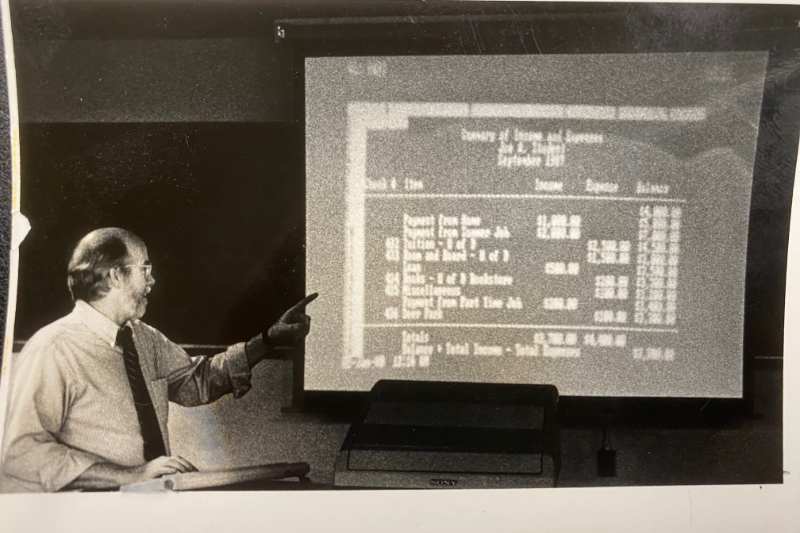
Founded in 1951 as the Department of Agricultural Economics, the initial program emphasized economics and management in agriculture. Today, our department retains its commitment to serving the community, locally and globally, with a more multidisciplinary approach.
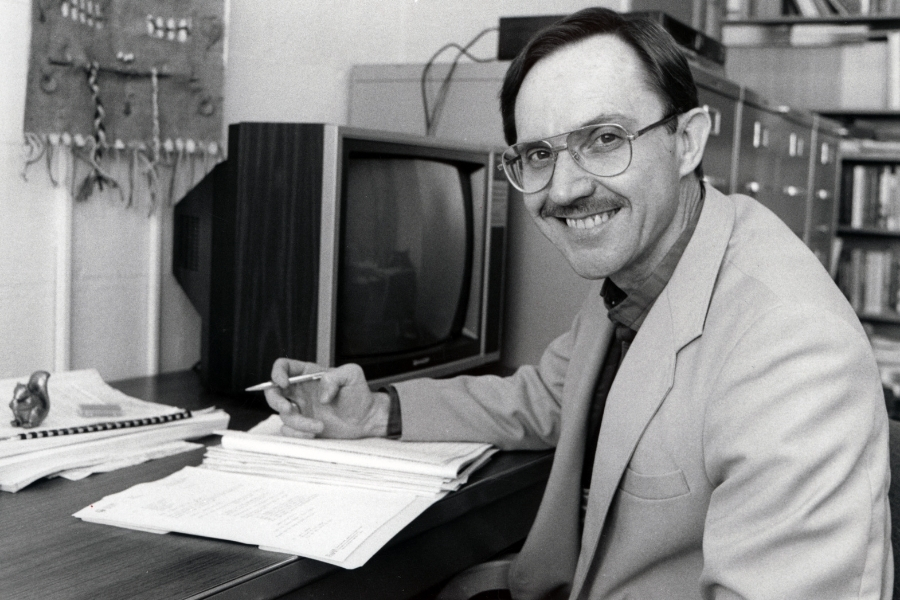
At its founding, the department built upon decades of contributions to the field via the UD Cooperative Extension work of R.O. Bausman, Harry Gabriel and others. Raymond Smith, William Crosswhite, William McDaniels and others generated a bounty of economic analyses of Delaware agricultural sectors, ranging from broiler chickens to vegetables to mushrooms.
Professor Gerald L. Cole was instrumental in the passage of the 1968 Farmland Assessment Act.
"The Farmland Assessment Act of 1968 is perhaps the most significant piece of legislation ever passed by the General Assembly. Dr. Gerry Cole, of the Department of Applied Economics and Statistics, provided the economic analysis of the impact of such legislation. The legislation removed property tax from open farmland, helping more farmers stay on the land." – Ed Kee, former Delaware secretary of agriculture
Gerry Vaughn, extension specialist for resources and policy, worked to see the passage of the Farmland Preservation Act of 1991. Enacted to conserve, protect, and encourage the improvement of agricultural lands within Delaware for the production of food and other agricultural products, more than a quarter of Delaware’s farmland is permanently preserved.
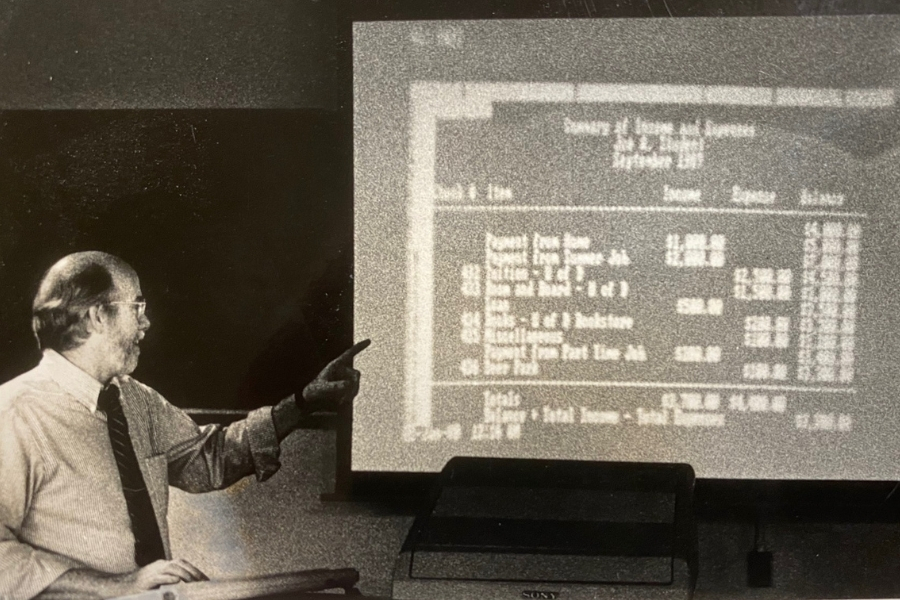
The 1960s saw the first major application of computers in broiler production. Department Chair Raymond C. Smith collaborated with poultry nutritionist Tom D. Runnels to calculate the most nutritious and lowest-cost poultry feed; their solution became the industry standard.
-
A department takes root
The Department of Agricultural Economics is founded.
-
Research informs farmland policy
Gerald L. Cole contributes economic analysis supporting the Farmland Assessment Act.
-
A commitment to preservation
Extension specialist Gerry Vaughn works toward passage of the Farmland Preservation Act.
-
Statistics expands the mission
The department adds a statistics program.
-
Experimental economics grows
The Center for Experimental and Applied Economics becomes an official UD center.
-
A new field of opportunity
The sports performance analytics major launches.
INDUSTRY IMPACT
Agriculture and food
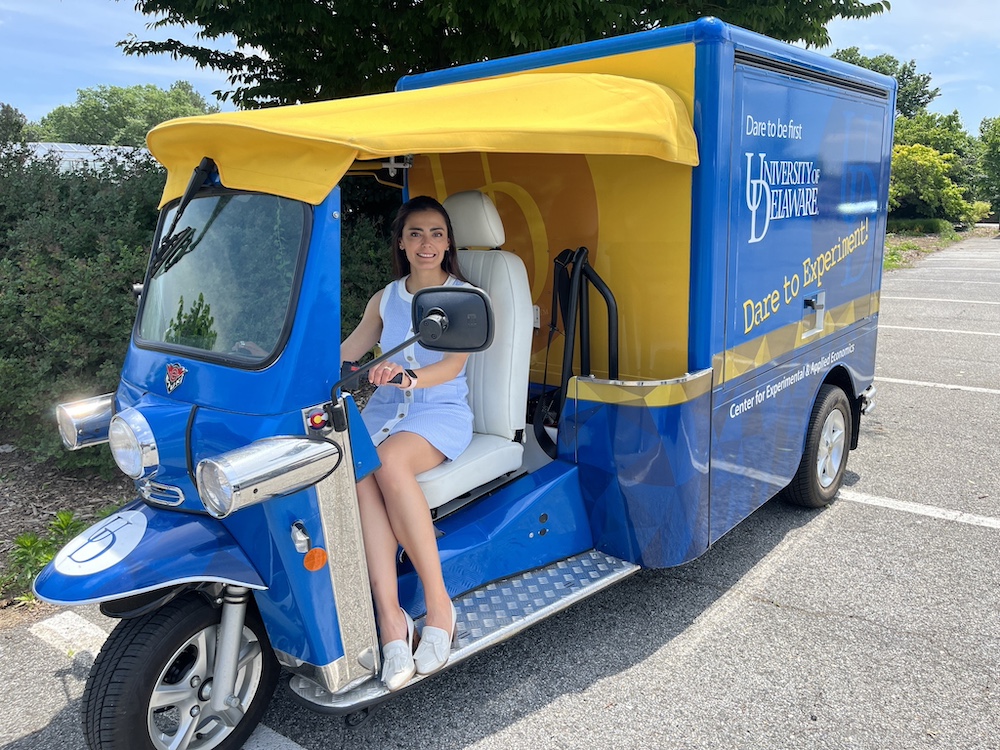
Today, the department continues to support Delaware agriculture and food Industries. Through the research of John Bernard and Michelle Segovia on Consumer Preferences and producer decision-making, the department is always working to improve our understanding of the food and agribusiness sector.
Kofi Britwum continues the long tradition of department faculty in Cooperative Extension, supporting industry analysis, risk education, and farm management. Britwum’s research extends to Africa, where he is investigating farmers’ willingness to adopt micronutrient biofortified crops.
“The most fascinating part of my research is the fact that people can see the same things, but draw completely different conclusions or have completely different interpretations. It just goes to show you how diversified people see things, and how the role of information influences behavior and preferences. ” – Kofi Britwum, assistant professor of farm management and agricultural economics
PROTECT THE PLANET
Sustainable solutions
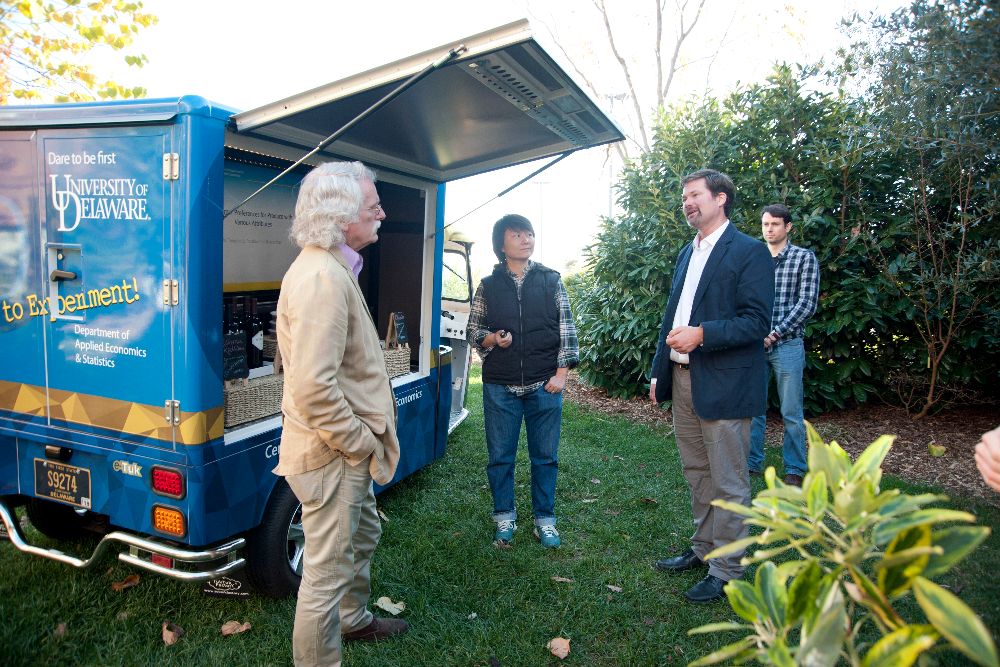
Our department works to answer key questions that help to identify sustainable solutions for global challenges facing society.
We’ve partnered with the National Science Foundation and the State of Delaware to assess major threats to Delaware’s water quality and develop viable technological and policy solutions to meet the challenges they pose through WiCCED (Water in the Changing Coastal Environment of Delaware). Kent Messer, S. Hallock du Pont Professor of Applied Economics, is the principal investigator for the project.
In 2024, the University of Delaware received $6 million in research funding from the National Science Foundation to develop best practices for coastal communities to combat sea-level rise, with a primary focus on the risks of flooding and salinization on coastal land. Led by principal investigator Leah Palm-Forster, associate chair and professor in the Department of Applied Economics and Statistics and director of the Center for Experimental and Applied Economics, the interdisciplinary research team included faculty members across UD and from the University of Rhode Island, College of Charleston, University of South Carolina, South Carolina Sea Grant Consortium, Delaware Technical Community College and The Citadel.
“The choices we make today are going to create a better tomorrow. That’s what it is all about.” – Maik Kecinski, associate professor of applied economics; graduate director of the agricultural and resource economics program
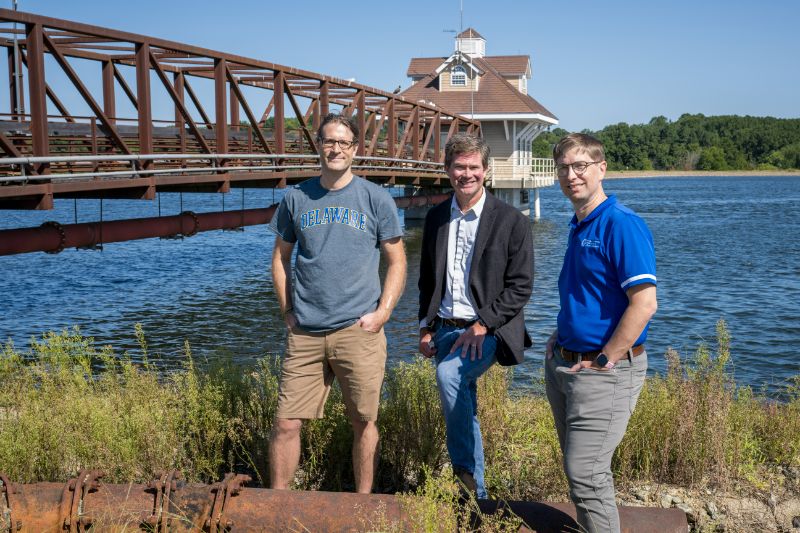
Also in 2024, Maik Kecinski, Kent Messer, and Martin Heintzelman from the Department of Applied Economics and Statistics received a $1.5 million grant from the U.S. Army Engineer Research and Development Center to help the U.S. Army Corps of Engineers assess the economic value of what is gained or lost from the Corps’ environmental projects.
Over the last decade, the Center for Behavioral and Experimental Agri-Environmental Research (CBEAR), a U.S. Department of Agriculture (USDA) national Center of Excellence that is housed within the department, received multiple grants to support innovative behavioral economics research at the nexus of agriculture and the environment.
Understanding how people make decisions
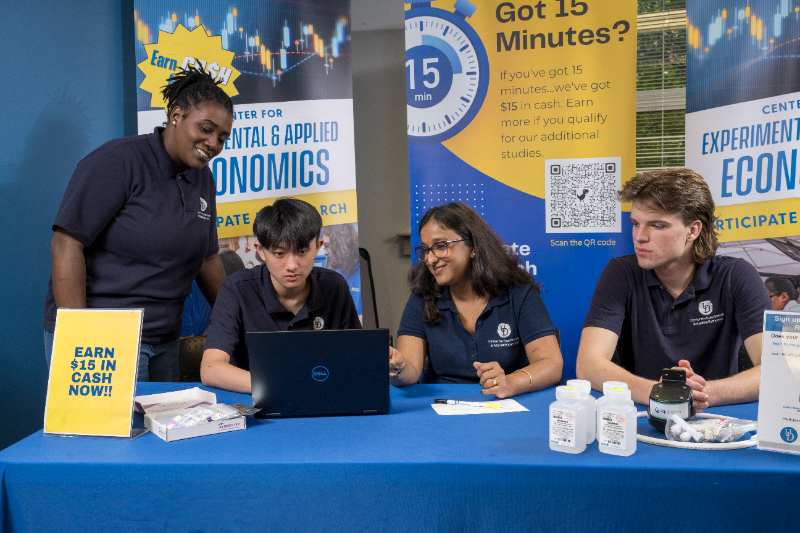
The Center for Experimental and Applied Economics (CEAE) connects research, hands-on learning and mentorship.
100+
undergraduate research assistants
150+
publications supported
50,000+
research participants
Founded in 2007 by faculty member Kent Messer, CEAE became an official UD center in 2014. Research supported by CEAE explores a wide variety of economic and consumer behaviors, including land conservation and ecosystem service markets, water quality monitoring, behavioral response to risk, food safety and agricultural policy, and provision of public goods.
CEAE catalyzed and facilitated innovative experimental economics research led by affiliated faculty and researchers. CEAE supports lab and field experiments, surveys, and other applied research methods that allow researchers to study how people make decisions in different contexts.
CEAE also cultivates the next generation of researchers through hands-on research opportunities, layered mentorship, and professional development. The Applied Economics and Experimental Research (APEX) internship provides a paid research experience for undergraduates starting as early as their first semester. The Mentoring Network provides graduate and undergraduate students with career-focused programming, while building connections across cohorts and fostering a strong, collaborative research community.
CEAE provided me with crucial resources: the computers and software I use to shape my experiment, resources for working through my budget and help with paying participants.
agricultural and resource economics graduate student, UD Class of 2024
FINDING REAL SOLUTIONS
sTATISTICS AND interdisciplinary collaboration
As demand for data analysis grew, the department added a statistics program in 2001, training students to apply statistical techniques to real data and real problems. Today, its faculty collaborate with researchers across the University of Delaware and at universities nationwide, as well as government and industry partners.
Explore faculty research and collaborations
- Wei Qian contributes statistical expertise to a UD project funded by the National Institutes of Health (NIH) that developed a machine learning model predicting an athlete's risk of lower-extremity musculoskeletal injury after concussion with 95 percent accuracy. Qian's work helped produce a validated injury risk prediction model with improved sensitivity and specificity.
- Shanshan Ding leads UD's Statistics and AI Lab for Scientific Discovery. Her interdisciplinary collaborators include researchers and physicians at ChristianaCare, Nemours Children's Health and Columbia University, along with UD faculty and labs in animal and food sciences, bioinformatics, computer science, electrical and computer engineering, biology and nursing. Ding's team applies advanced statistical and artificial intelligence methods to clinical, experimental and observational data to identify risk factors, improve predictive accuracy and support personalized treatment and evidence-based decision-making. Her research has received support from the National Science Foundation, NIH and the state of Delaware.
- Peng Zhao develops statistical learning methods that recover information obscured by noisy measurements and conventional modeling, advancing scientific discovery and efficient computation. His research connects the department with collaborators in artificial intelligence, nutrition, energy and network science. These collaborations include fine-tuning large language models with Microsoft Research; nutrition and measurement-error research with biomedical engineering researchers at the University of Houston; power systems and grid-state estimation with Argonne National Laboratory; and network and relational-data analysis with researchers at Texas A&M University and the University of Wisconsin-Madison.
OUR NEXT GENERATION
Learning that opens possibilities
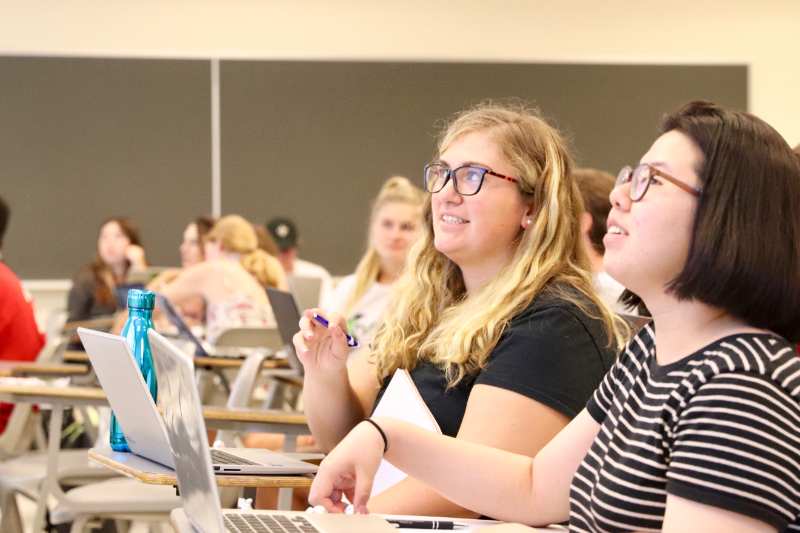
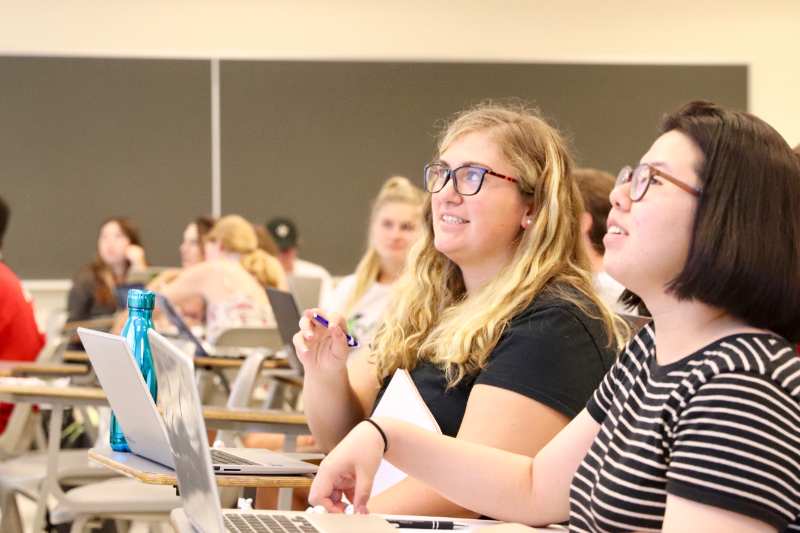
"We work on projects using real-world datasets and focus on solving open-ended problems, rather than just following textbook examples."
From the National Agri-Marketing Association student chapter to paid research internships and sports performance analytics, students put their knowledge into practice. At the 2026 meeting, APEC faculty member Kelly Davidson received the Dr. John B. Riley Outstanding Advisor Award for her work with UD NAMA.
APEC offers students opportunities for hands-on learning on and off campus. During her UD career, recent graduate Wanning Wang worked as a research assistant in the Center for Experimental and Applied Economics, where she also served as mentor-in-residence. Wang found research, mentorship, internship and student organization opportunities during her time in the college. She said knowledgeable professors kept her fully engaged in the classroom.
In 2025, we added a new major, sports performance analytics. Students work closely with UD athletics and learn both the theoretical and practical aspects of sports statistics. Students then apply advanced statistical analysis tools to improve outcomes and prevent injuries across a variety of sports.
There's no other program out there that's doing what we’re doing. They might have an analytics major, they might have some interns, they might have performance technology, but they don’t have it all working seamlessly together.
director of UD athletics sports science and analytics
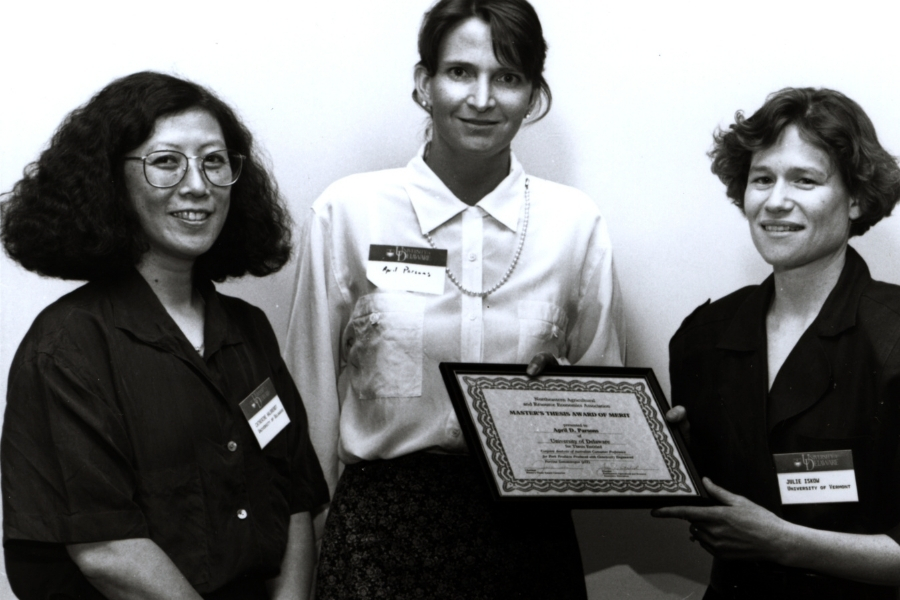
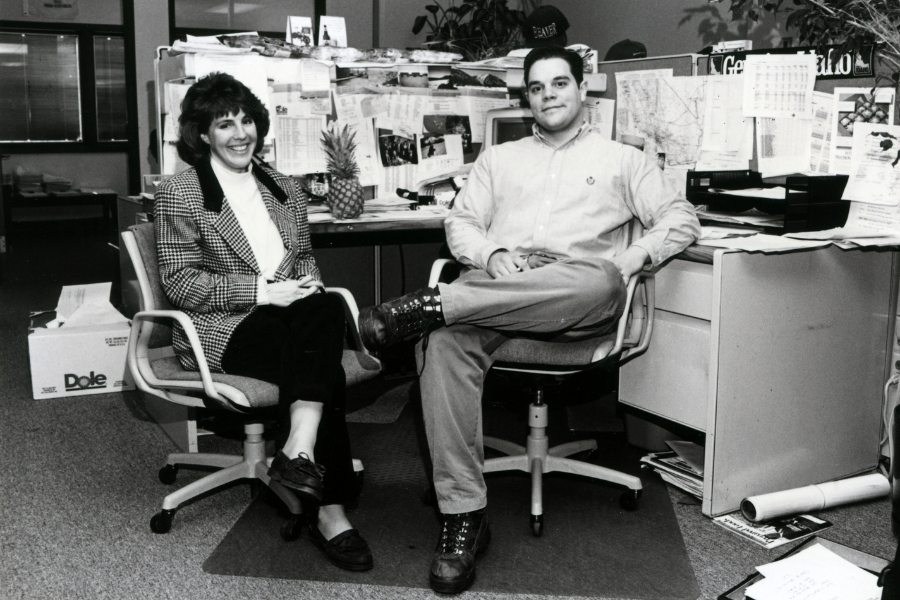
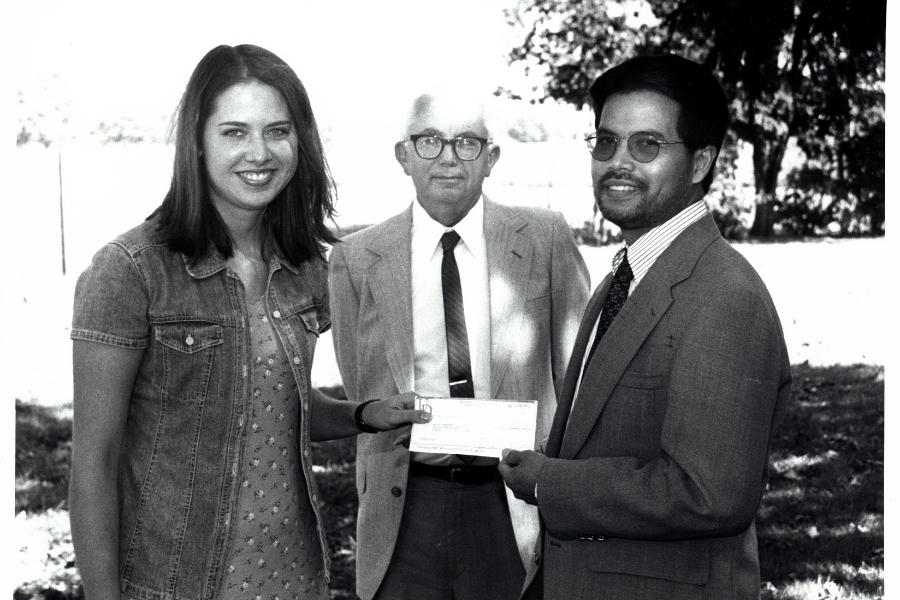
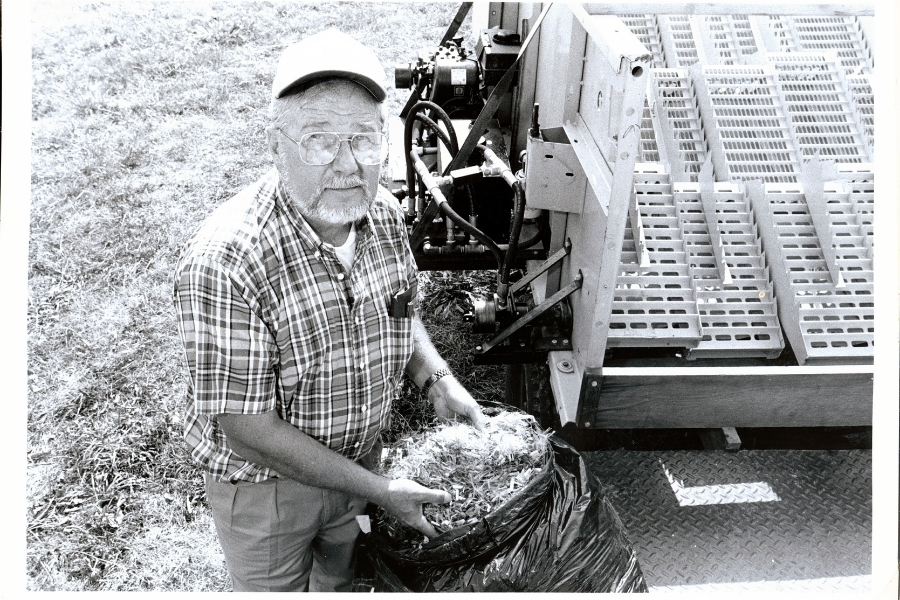
Our department through the years