



Category: Plant and Soil Sciences

Next-gen soil scientists
September 10, 2026 Written by: Molly Schafer | Photos courtesy of Moklesur Rahman and Shreeram Inamdar
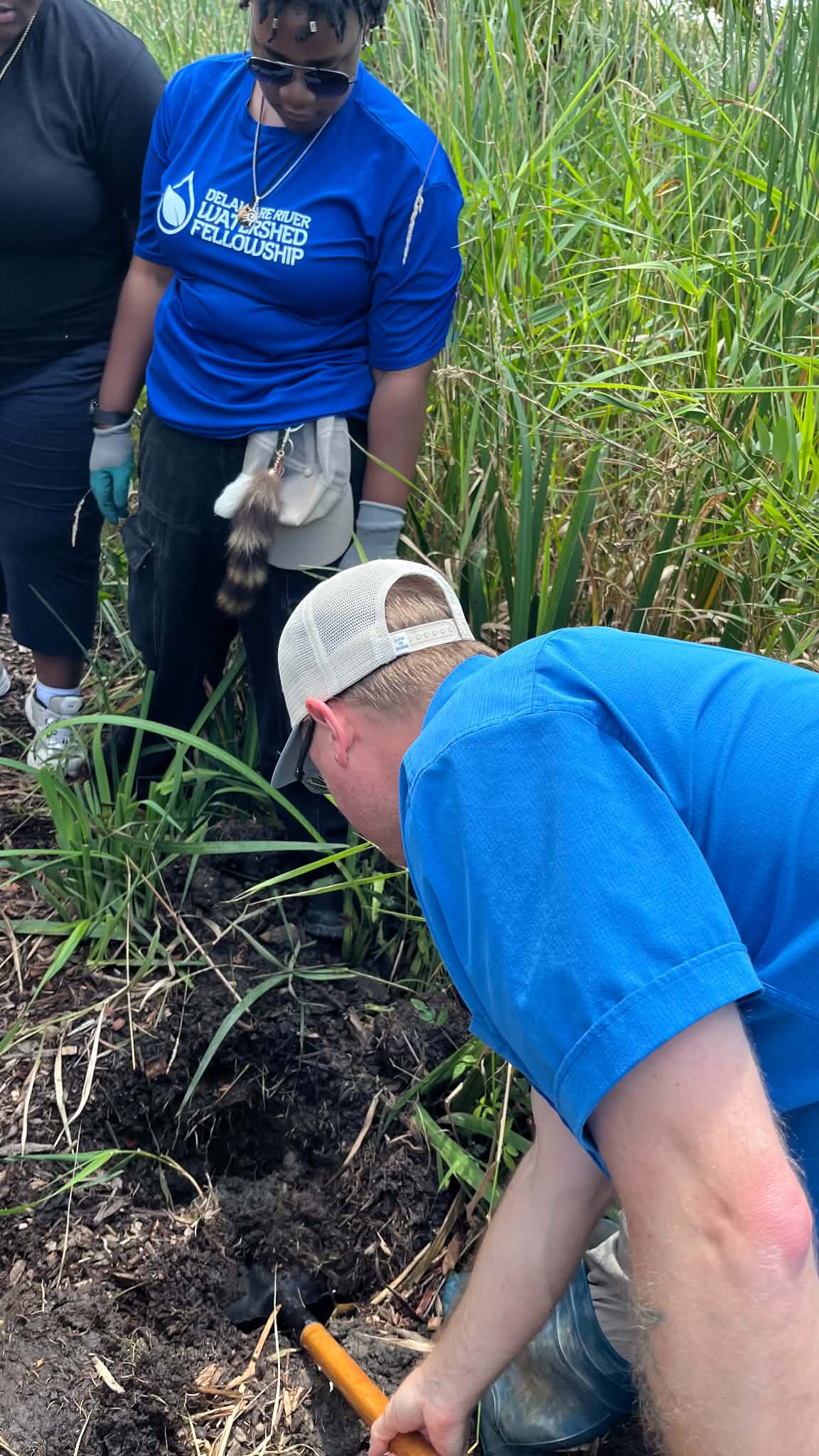
Delaware high school students got their hands dirty while learning about wetland ecology during a workshop led by researchers from the University of Delaware College of Agriculture and Natural Resources (CANR).
Workshop attendees gathered in the marsh alongside the Christina River at the DuPont Environmental Education Center (DEEC) in Wilmington. Moklesur Rahman, Eric Moore and Matthew Sena of UD’s Watershed Sciences Research Group, led by Shreeram Inamdar, professor of water and soil biogeochemistry, provided students with an immersive experience amid 212 acres of freshwater wetlands.
“When you engage all the senses, I think that definitely helps the learning process,” said Moore, a postdoctoral researcher in the Department of Plant and Soil Sciences. “Getting outside, feeling the soil in your hands and smelling the plants allows you to show students what we’re talking about. That helps them make connections, too.”

The students, who are Delaware Nature Society Trail Ambassadors, learned that soil is more than just dirt.
“There is a living component within soil, there is organic material, there are microbes actively breaking things down or cycling the nutrients,” said Moore. “Dirt is just what you brush off your shoes when you get home.”
The soil found in Delaware’s wetlands is a valuable resource, one that the trail ambassadors are learning to protect.
“Wetland soils are unique,” said Sena, a Ph.D. student in the Department of Plant and Soil Sciences. “They support diverse habitats, filter and purify groundwater, and have the ability to reduce excess levels of nutrients such as nitrogen. Wetland and riparian soils can also play an important role in keeping our streams clean.”

Wetlands cover nearly 25% of Delaware. They help to improve water quality and reduce flooding, as well as to provide habitat for birds, fish and rare plants.
Rahman, Moore and Sena are investigating the impact road salt has on nitrogen removal by urban and suburban wetlands in the state. Their research is funded by the U.S. Environmental Protection Agency (EPA).
“Excessive road salt adversely affects the ecosystem services provided by our urban wetlands,” said Rahman, a postdoctoral researcher. “Especially in terms of removing excess nutrients and pollutants like nitrogen.”
Rahman says that when excess nutrients and pollutants accumulate in the water, they stimulate the growth of algae and other less beneficial plants. Excessive algae reduces water quality and leads to low oxygen levels, negatively affecting fish and other wildlife.
Mother Nature even helped illustrate their point.
Two days before the workshop, Moore, Sena, and Rahman dug three soil pits around the marsh. The pits would show students how the soil changes the further away you get from the river. The researchers planned to explain how textural differences in the soil affect its ability to hold water.
The following day, it rained. Would the pits still provide a visual for the students?
“One pit was completely dry, the other pit was full of water,” Rahman said. “Because of textural changes, the coarse soil texture drained the water quickly, but the fine texture, like clay, held the water. So students saw the contrasting soil texture in the same wetlands within 10 to 15 feet.”

After hands-on opportunities for identifying wetland plants, Moore, Rahman and Sena encouraged the students to pursue education and research in plant and soil sciences.
“I learned how sodium levels in the soil affect plants and the surrounding water,” said Imani, one of the Trail Ambassadors. “The researchers from UD helped me understand soil and how keeping it safe from pollution is very important.”
Rahman said the students showed curiosity and enthusiasm for the subject matter. He is hopeful Trail Ambassadors will be among the next generation of wetland ecologists.
“If we don’t take care of our urban wetlands,” Rahman said, “it can affect their overall performance in terms of processing excess nutrients, pollutants and maintaining the water quality.”
