




Science in service to society
Photos courtesy of Joe Cornelius October 23, 2026
Alumnus accelerates agricultural innovation for smallholder farmers across Africa and Asia
What did you invent today?
As a child, Joe Cornelius faced this question most evenings around the family dinner table. His father wanted to know how Cornelius improved something in his daily life. This simple question inspired the budding scientist to seek innovation everywhere.
His parents, both decorated World War II veterans, emphasized the importance of service to others. Their guiding principles of curiosity and community took Cornelius from a small family farm in the Midwest to global leadership at Gates Agricultural Innovations (Gates Ag One), a non-profit subsidiary of the Bill and Melinda Gates Foundation. But not without a four-year stop in Newark.
“My journey reflects the University of Delaware’s enduring values of harnessing science in service to society,” said Cornelius, a 1975 alumnus who earned his degree in plant and soil sciences.
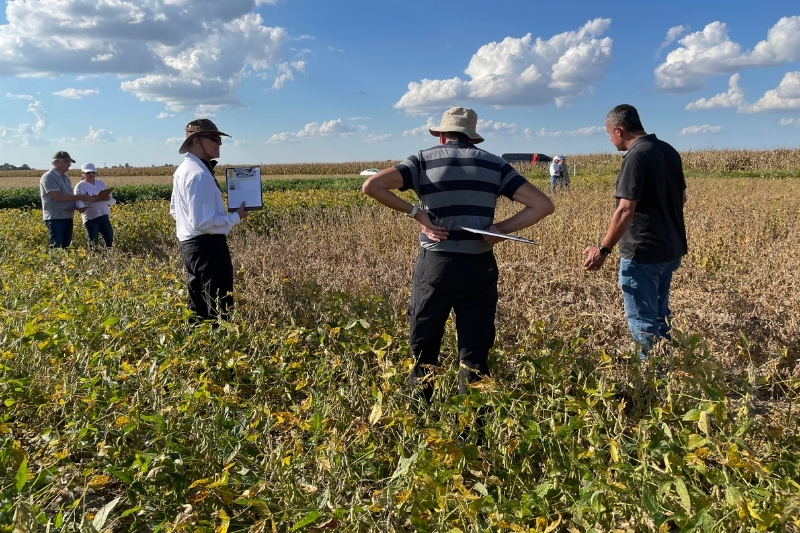
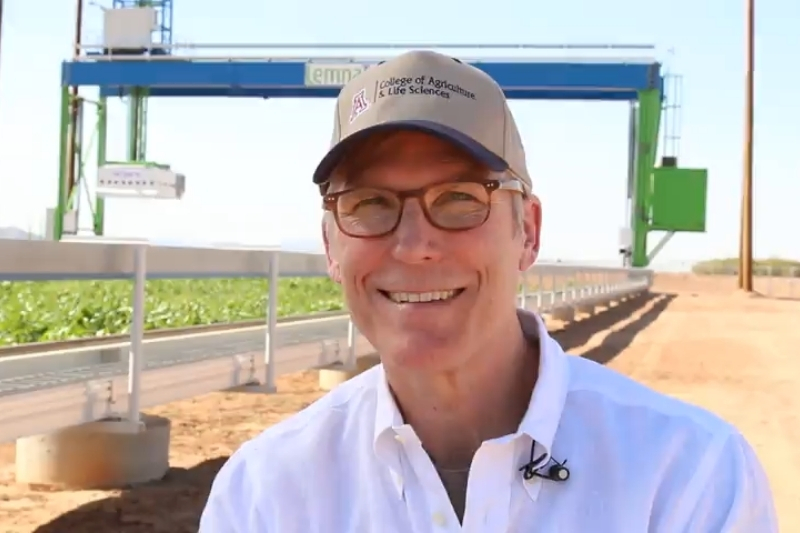
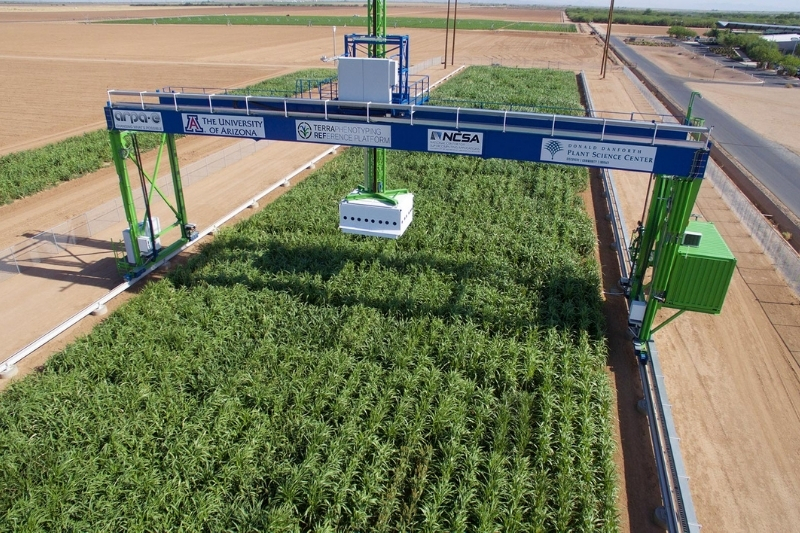
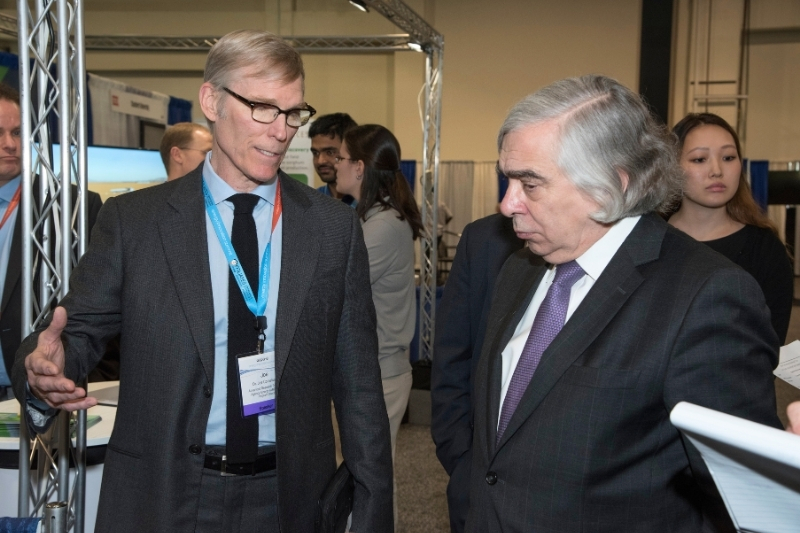
His 40-year career at the cutting edge of agricultural innovation includes serving as director of the Advanced Research Projects Agency for the U.S. Department of Energy, where he oversaw development of the world’s largest agricultural robot for food security crop improvement and executive roles at Bayer, Monsanto and Pfizer, where he developed cultural connections between science and society across six continents.
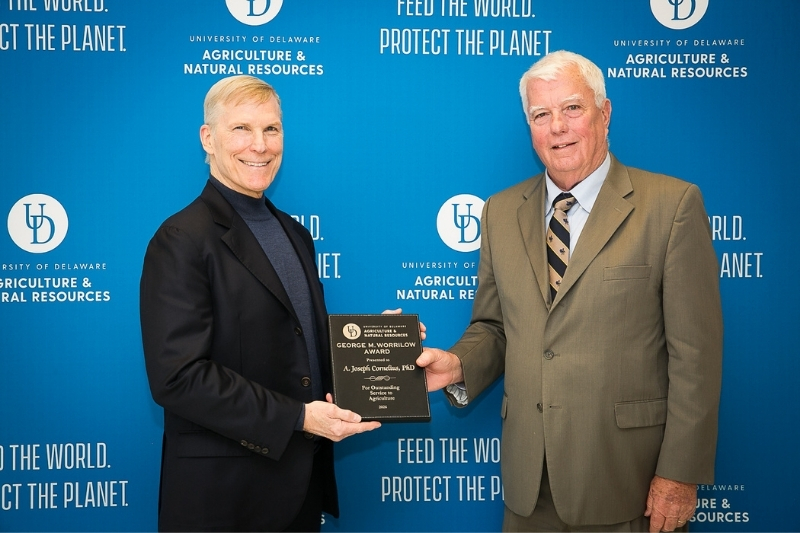
In April, the College of Agriculture and Natural Resources (CANR) awarded Cornelius with the George M. Worrilow Award. This prestigious distinction is awarded to a CANR graduate who demonstrates outstanding service to agriculture and natural resources.
“What makes this award especially meaningful is the name behind it,” Cornelius said. “George Worrilow represents the very best of Cooperative Extension, which, at its core, is about connection—taking knowledge and turning it into real-world impact for farmers, and their communities.”
That is exactly what Cornelius is doing as chief executive officer of Gates Ag One. The organization’s mission is to accelerate the translation of promising crop science into practical innovations for smallholder farmers in sub-Saharan Africa and South Asia.
“Science does not operate in a vacuum,” Cornelius said. “It is a tool to solve specific problems, and the most important question is always: What problem needs to be solved, and how do we help solve it in a way that works for farmers?”
Global Reach
Over the course of his career, Cornelius guided the launch of more than 50 agricultural innovations and startups across 30 countries, reaching more than 570 million farms worldwide. He’s worked to advance life-science biotechnologies and precision-farming tools, catapulting agricultural productivity.
The United States has benefited from an increase in agricultural yields, which has grown steadily since the 1950s due in part to advancements in crop protection, nutrient management, mechanization, and data analytics. But these innovations have not reached everyone.
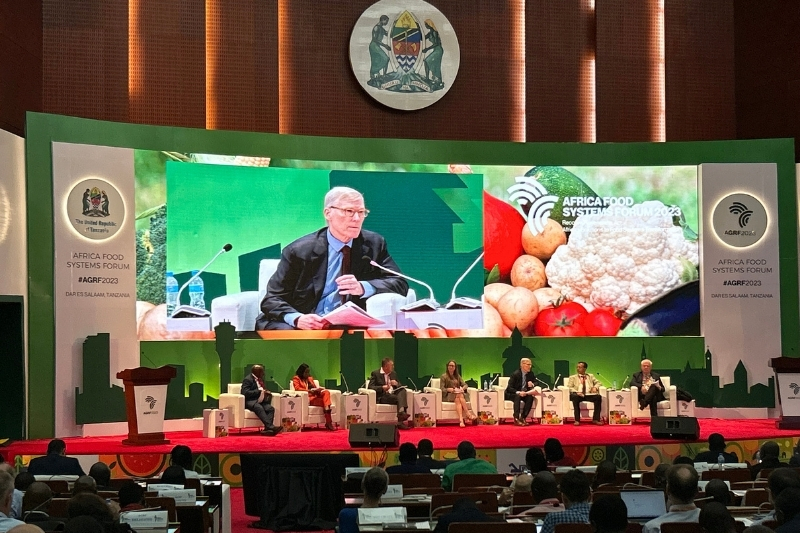
“One in four people on the planet will live in sub-Saharan Africa by 2050,” Cornelius said, “yet their crop yields are only 15 to 20 percent of those in similar growing regions in other parts of the world.”
At Gates Ag One, Cornelius seeks to address gaps in access to technology, infrastructure and support for “smallholder” farmers, who typically farm on two hectares or less and often have limited access to the latest seeds, tools, finances, markets or extension services.
“These farmers are not small in importance,” Cornelius emphasized. “They are essential to local food systems, family livelihoods, and rural economies. Our work starts from the view that smallholders are resourceful, practical and entrepreneurial. The question is not whether farmers can innovate; the question is whether the global innovation system is giving them the right options.”
Many smallholder farmers produce food under difficult conditions and without the technologies that farmers elsewhere can take for granted.
“Smallholder farmers are among the least responsible for climate change, yet they are among those most exposed to drought, heat, flooding, pests and disease,” Cornelius said.
To help, Gates Ag One acts like an agricultural innovation accelerator, prioritizing crops like cassava, cowpea, maize, rice, soybean and sorghum.
The organization helps connect a fragmented research and development pipeline, while reducing the time it takes for improved crops to reach the farmers who need them most. With an emphasis on open collaboration, Gates Ag One works through partnerships with national agricultural research and extension systems, universities, research institutes, private-sector innovators and development partners.
Delaware Roots
Cornelius chose UD for two reasons: sports and agriculture.
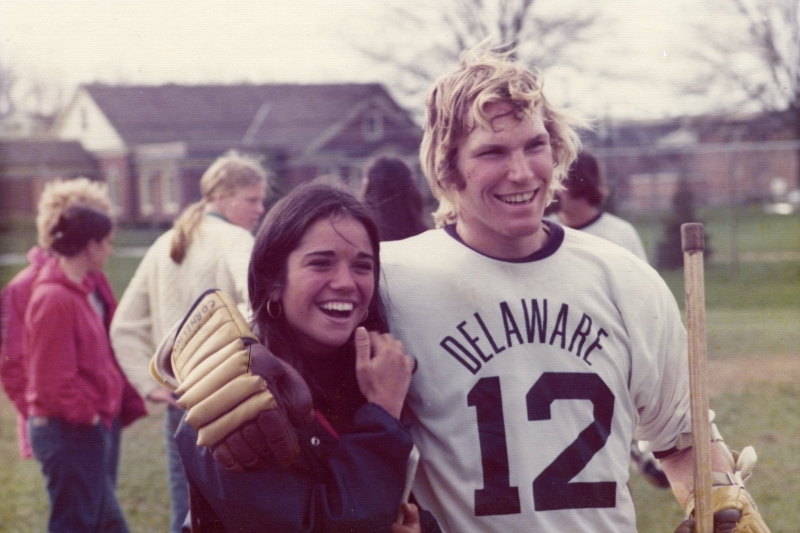
Cornelius’ older brother, Peter, was a starting defensive tackle for the Blue Hens’ champion football teams in the late sixties. Joe was recruited by both Tubby Raymond for football and Mickie Heiniken for lacrosse. He played on the lacrosse team throughout his UD career.
Cornelius says attending UD to study in the Department of Plant and Soil Sciences was one of the best decisions of his life. At UD, he found supportive coaches and mentors who helped him succeed on and off the field. It's also where he met his wife, Lynn Cornelius (Petrangeli), UD Class of 1977.
Today, Cornelius encourages students to stay curious and expand their educational view beyond one discipline.
“Agriculture is at the intersection of our greatest planetary challenges and needs biologists, engineers, data specialists, communicators, economists, policy experts, and entrepreneurs now, more than ever,” Cornelius said. “These are exciting times for agriculture.”
He envisions a future with more resilient crops, stronger food systems, healthier families and more stable rural economies worldwide.
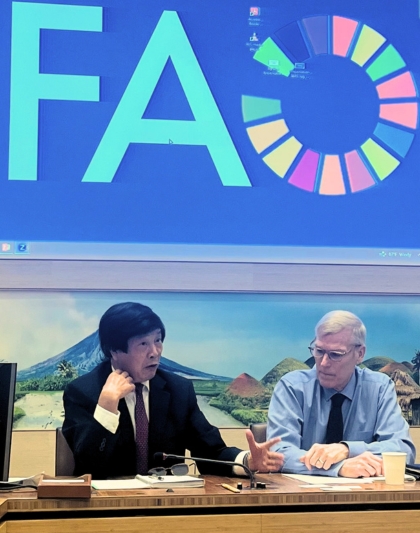
“Agriculture is one of the most powerful tools we have to address climate change, poverty, hunger and malnutrition, all at the same time,” Cornelius said.
He believes the best way to get there is with a multi-disciplinary approach.
“When I have seen progress come to life, it has almost always been in environments where experts from different backgrounds come together to tackle shared challenges in a spirit of collaboration,” Cornelius added.
That also includes listening to the people closest to the problem.
“Good innovation starts with understanding what farmers actually need, not assuming we already know,” Cornelius said. “Agriculture is foundational. It feeds us, clothes us, sustains economies and offers one of the most practical ways to improve lives at scale.”
Contact Us
Have a UDaily story idea?
Contact us at ocm@udel.edu
Members of the press
Contact us at mediarelations@udel.edu or visit the Media Relations website