



Nutrition and Eating Disorders
Nutrition and Eating Disorders
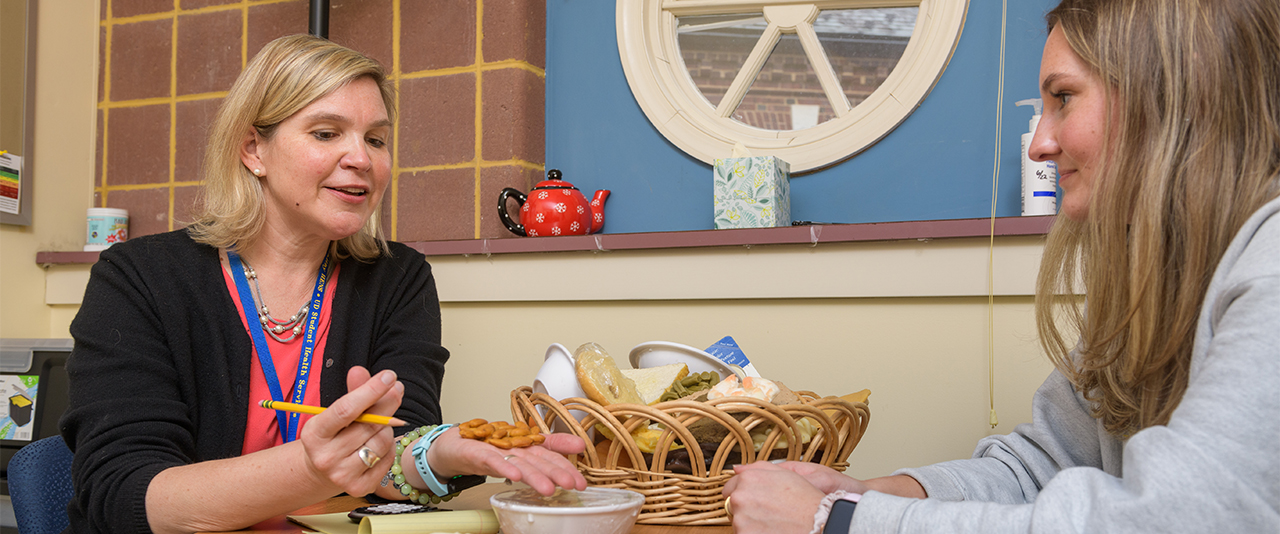
Nutrition counseling with registered dietitians is available to all UD students and covered by the UD Wellbeing Fee. Sessions are held in person or via Zoom, by appointment only and may be scheduled through the UD Health Portal or by calling Student Wellbeing.
Hens come in all shapes, sizes and colors
We work in a weight-neutral and food-neutral environment. We welcome your questions and concerns with eating, cooking, food and all things nutrition related. We want to help you find peace with your body and learn to trust your body in addition to providing nutrition education as needed.
In a typical nutrition visit, we will review your health history, nutrition habits and help you build a sustainable way of eating. We don’t create specific menus, but we will help you to build a plate for all occasions.
Additionally, we encourage you to schedule an appointment if you think you have symptoms that suggest an eating disorder, or you are recovering from an eating disorder.

Nutrition Services
Services include nutrition counseling and education for the following concerns:
- Cholesterol
- Diabetes
- Eating disorders (anorexia, bulimia, binge eating disorder) as well as disorders of preoccupation with food, weight and body image
- Gastrointestinal disorders (celiac disease, irritable bowel syndrome, etc.)
- Healthy eating and meal planning for general wellness and disease prevention
- Hypertension (high blood pressure)
- Sports nutrition or eating for exercise
- Vegetarian/vegan diets
- Weight management
Students with food allergies, food intolerances or other dietary restrictions should contact the Office of Disability Support Services at 302-831-4643 or dssoffice@udel.edu to coordinate campus resources specific to their dietary needs.
Questions specific to on-campus dining halls and available accommodations should be directed to Leigh Runyan, Registered Dietitian, Dining Services at 302-831-1008 or lrunyan@udel.edu.
Nutrition Basics
There’s a lot of nutrition advice out there, and not all of it is helpful, realistic or suited to college life. The basics can be simpler than they seem.
A good starting point is three meals and 1–3 snacks throughout the day. Aim for meals that include a carbohydrate, protein and produce. For example, try a bowl of Greek yogurt with oats, walnuts and berries.
For snacks, pair a carbohydrate or produce with a protein or healthy fat. Examples include an apple with nut butter or cheese with crackers.
Understanding the Basics
Your stomach empties every four to five hours. You may need to eat every two to three hours if you don’t eat much at one time or have high calorie needs.
People are different, but long periods without eating can be difficult for a college student’s brain. Fasting for 10 to 12 hours overnight can be helpful for some people, but remember that everyone has different energy and nutrient needs.
Your brain uses carbohydrates as its primary fuel source. About half of your daily calories should come from carbohydrates, and it’s helpful to include them with meals.
Choose high-fiber carbohydrates and limit refined carbohydrates when possible.
Good sources include:
- Oats
- Whole-wheat breads
- Brown rice
- Potatoes
- Fruit
Despite what you read online, you may already be getting enough protein.
Protein is essential for building new cells, muscles and tissue, and it’s important to include protein throughout the day.
Protein does not have to come from animal products. It can come packaged with a carbohydrate, such as peas or black beans, or with a fat, such as nuts or nut butter.
Consider how much protein you’re already getting before purchasing extra high-protein snacks, such as chips or cookies.
Fat is also essential.
Fat might be present in a protein-rich food with your meal, such as salmon, or it might be a food you add, such as avocado or olive oil.
Saturated fat is linked to higher rates of heart disease and high cholesterol, so choose sources of unsaturated fats, such as:
- Olive oil
- Avocado oil
- Canola oil
- Flaxseed
- Nuts
- Olives
- Avocado
Yes, we still need fruits and vegetables.
Plants are a great source of fiber, vitamins and minerals. Try to include fruits or vegetables with every meal, with a goal of five to nine servings per day.
All foods fit.
Eating is not solely about nutrition. It can be about tradition, celebration, exploring, travel, comfort or fun.
Some desserts may not be optimal for nutrition, but as long as these foods do not make up the majority of your intake, you can still maintain good health.

Mindful Eating
Slow Down, Tune In, Enjoy
Between classes, studying, work and social life, eating can feel like an afterthought or even a source of stress. Mindful eating isn't about restriction or perfection. It's about slowing down, paying attention and giving yourself permission to enjoy your food.
Eating quickly means your body's fullness signals don't have time to catch up. It takes time for your brain to register that you're satisfied. Slowing down isn't just good manners—it's good biology.
Try the 20-Minute Rule
Try to take at least 20 minutes to eat a meal. Set a timer once to see how different it feels when you give yourself more time.
Simple Ways to Slow Down on Campus
- Put your phone face-down—or across the table—during the meal.
- Chew your food well. You don’t need to count bites.
- Put your fork or spoon down between bites.
- Take a few slow breaths before eating to shift your body out of 'rush' mode.
- Eat sitting down whenever possible, even in the dining hall.
Food is more than fuel. It's culture, memory, celebration and connection. Mindful eating means noticing and actually enjoying those things, not just scanning your phone while inhaling a burrito bowl.
- Engage your senses: Before you eat, notice the smell, color and texture of your food.
- Savor the first bite: The first bite is often the most flavorful. Give it your full attention.
- Eat with others: Shared meals can make eating more enjoyable and naturally slow your pace.
- Notice what you like: Ask yourself, “What flavors stand out?” or “What textures do I enjoy?”
- Ditch the guilt: Enjoying food is not a character flaw. Pleasure is a legitimate part of eating.
- Try a gratitude check: Even a quick thought like "This actually smells great" can bring your attention back to the meal.
The 80/20 approach means that roughly 80% of what you eat supports your body—vegetables, protein, whole grains and healthy fats—while the other 20% is about the foods that make life enjoyable.
80% Nourishing Foods
Foods that give your body what it needs to function, including energy, focus, strength and nutrients.
Examples: Fruits, vegetables, lean proteins, whole grains, legumes, dairy and healthy fats such as nuts, avocado and olive oil.
20% Joy Foods
Foods that make life enjoyable—eaten with full permission and zero guilt. No labels, no moralizing.
Examples: Late-night pizza with your friends, birthday cake, Grandma’s recipes, a random Tuesday gas station Slurpee or dining hall cookies.
The 80/20 approach is a general pattern over time, not a daily math problem. Some days are 60/40. Some weeks are different from others. This is normal. The goal is balance over the long run, not perfection at every meal.
Before you eat, try asking yourself these three questions. It takes less than a minute:
- Am I actually hungry right now, or am I bored, stressed or procrastinating?
- What does my body actually want to feel like after this meal—energized, satisfied or comfortable?
- Can I slow down and be present for at least part of this meal?
Remember that mindful eating is a practice, not a test.
You don't have to eat mindfully at every meal to benefit from it. Even one or two more intentional meals a week can shift how you feel about food.
Be curious, not critical—with your food and with yourself.
Eating Disorder Support
We recognize the need for education and support around eating disorders and preoccupation with food, weight, and body image. Eating disorders are complicated medical and psychological conditions that affect a wide range of individuals, including people of all genders, ages, races, religions, ethnicities, sexual orientations, body shapes and weights.
Research has shown that a multidisciplinary approach to treatment is most effective for long-term success for an eating disorder. Student Health Services (SHS) and the Center for Counseling and Student Development (CCSD) work closely together to support students with disordered eating. Where appropriate, we offer coordinated care with medical doctors, dietitians and psychological counselors. An appropriate treatment plan will be established based on the level of care required and services available on-campus and/or off-campus, to promote recovery and reduce the risk of relapse.
You can schedule an appointment at 302-831-WELL, whichever is more comfortable. We can then coordinate our integrated services with your partnership.
Concerned about a friend? Resources for being a support person are available.