


Category: Research
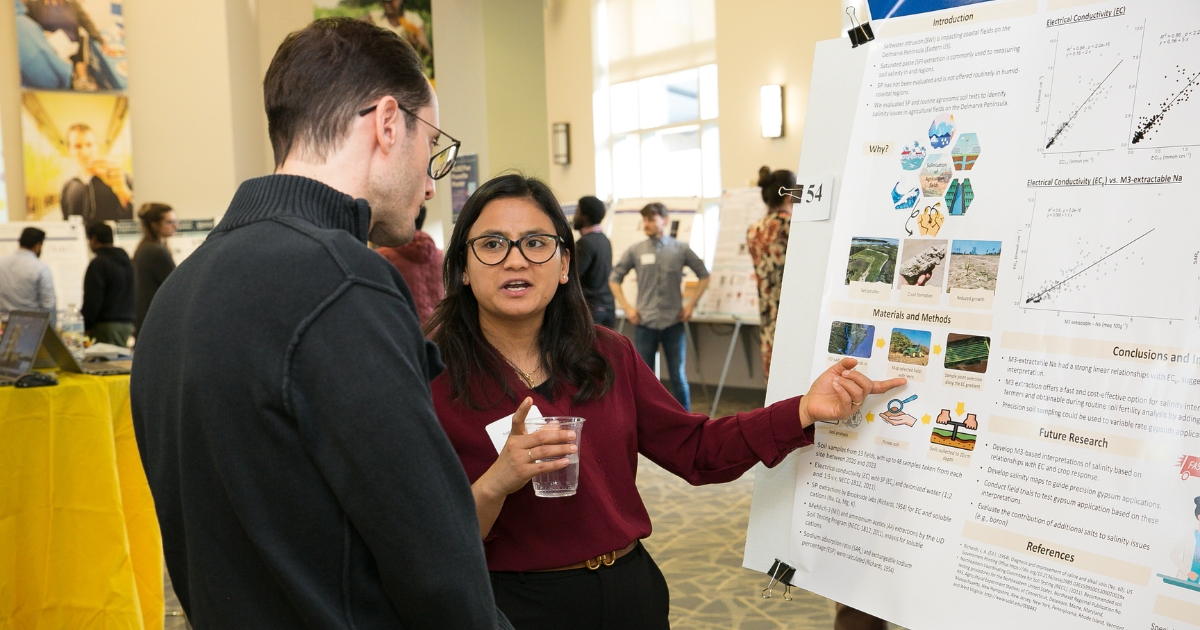
Students from across the college share their research at Fall 2024 symposium
December 03, 2024 Written by Nya Wynn | Photos by Nicole Curran
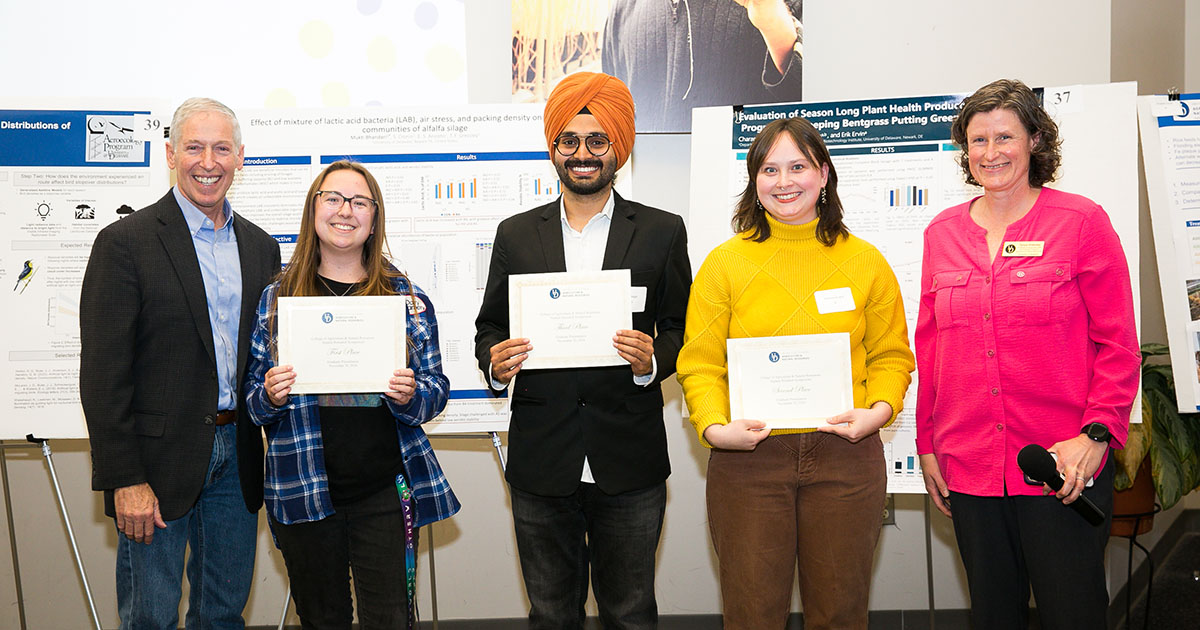
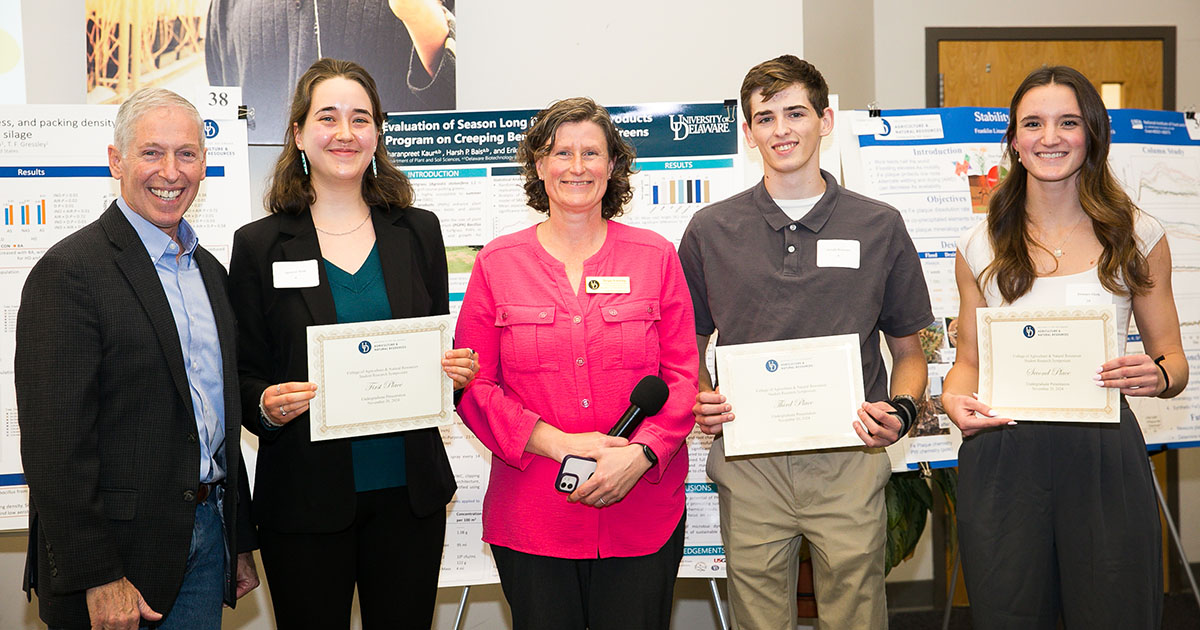
The Fall 2024 UD College of Agriculture and Natural Resources (CANR) Student Research Symposium showcased 47 undergraduate, graduate and postdoctoral researchers. Students from all the 13 undergraduate majors and graduate programs attended to show the diverse research happening at CANR.
“This symposium provides us with the opportunity to learn about this amazing work,” Tanya Gressley, associate dean for graduate programs, said to the audience in the Townsend Hall Commons. “Thank you to the students who presented their work today. Your research moves us closer to solving some of the world’s most pressing challenges and building a healthier, more sustainable future.”
Although various different disciplines were present, they all echoed Gressley’s statements about the importance of building a healthy and more sustainable future with their research.
Destiny Mann, second-year M.S. in Entomology student, presented her research on how lesser mealworms can be used to reduce and upcycle food waste, earning her first place in the master’s student category.
“I looked into the most common types of food waste, including poultry waste which is a topic close to home in Delaware,” Mann said. “Once the larvae digest the food waste, it can be used to make protein sources for fish and poultry, as well as for humans. Additionally, the frass [solid waste produced by insects, especially larvae] can also be used to make fertilizer for crops.”
Mann expressed that through her time at UD she’s grown a stronger appreciation and passion for increasing accessibility for sustainability efforts using insects.
“After graduating my masters. I hope to get my Ph.D. and ultimately want to teach other people how they can use insects to compost their waste and use it for fertilizers,” Mann said.
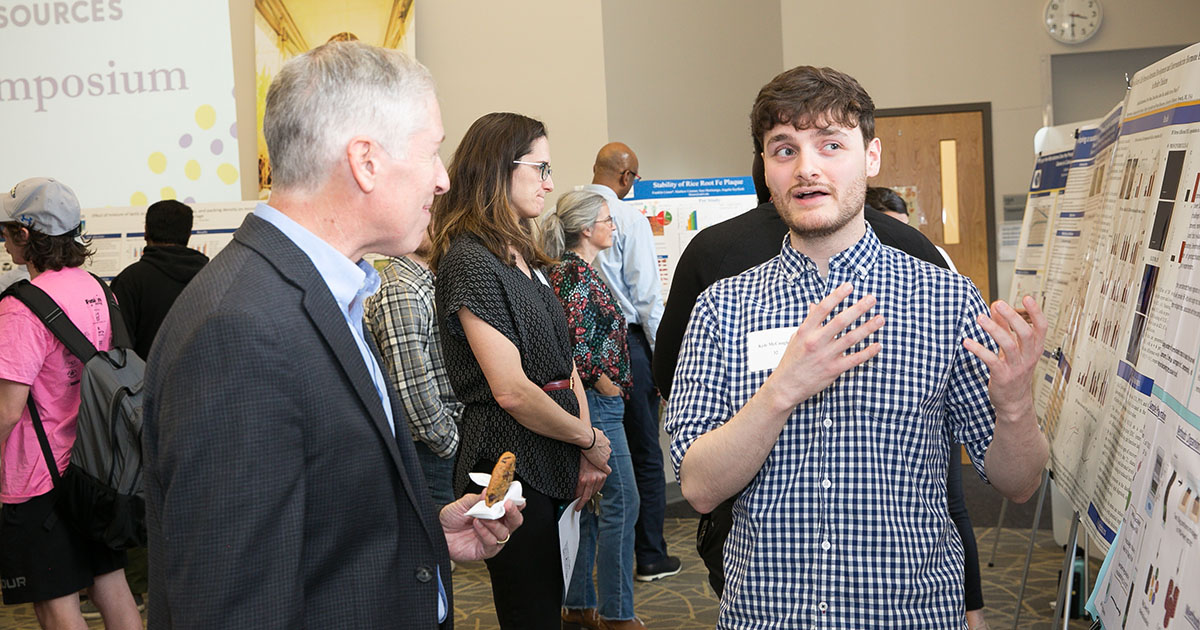
Within the undergraduate category, Shelby Serrano, a UD Class of 2026 animal biosciences undergraduate student, presented her research on making more nutrient dense silage with bacteria. Silage, a type of preserved hay, is fed to ruminant animals in places where fresh feed is not available year round due to fluctuating environmental conditions.
Serrano’s research involved both hands-on fieldwork and data analysis with bioinformatics techniques. She hopes to be able to take everything she’s learned and apply it in her future studies, as she intends on going to graduate school for animal nutrition.
“Even if my future career is not directly related to silage, doing this project really taught me what it was like to have ownership over a project, process and analyze data and just learn about what different things mean and why they’re cool,” Serrano said.
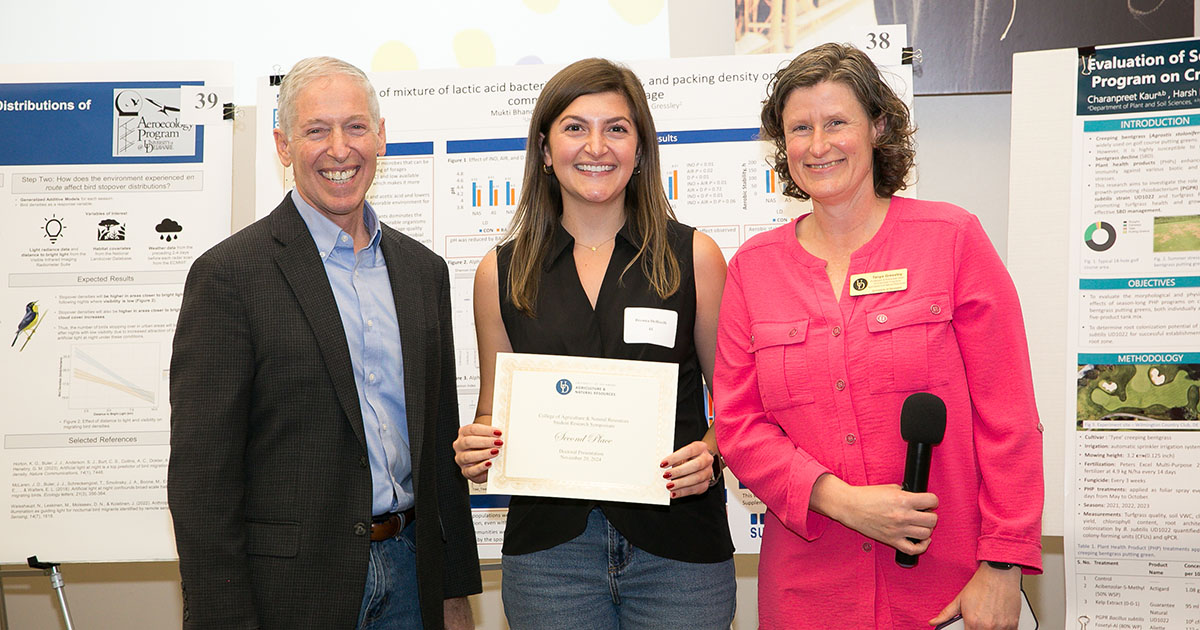
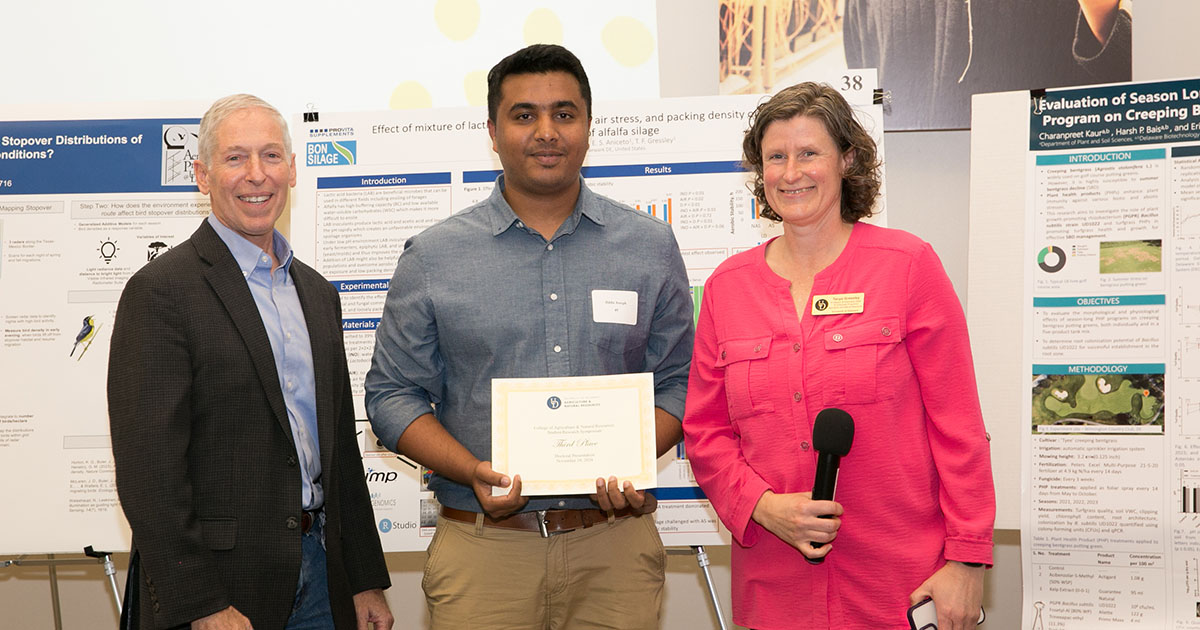
Fall 2024 award winners
Undergraduate
- First place: Spencer Toth – Exploring Viral Diversity Across Ecosystems: Insights from Soil Bradyrhizobium Phage Genomics
- Second place: Delaney Oeth – An In-Vitro Biocompatibility and Ex-Vivo Histological Analysis of Porous AA-MMA Copolymer Scaffold
- Third place: Joseph Romano – Evaluating early vigor in maize genotypes under Pythium stress
Master’s
- First place: Destiny Mann – Comparing Growth of a Waste Upcycler Using Benchtop and Mass Rearing Methods
- Second place: Marissa Jerden – Effect of Sulfur Amendments on Arsenic Speciation in Flooded Rice Paddy Soil
- Third place: Bali Singh – Method development to optimize production of Pythium graminicola zoospores
Ph.D.
- First place: Abdallah Hadimundeen – Effects of Early Life Stress on Intestinal Development and Enteroendocrine Hormone Expression in Broiler Chickens
- Second place: Brenna DeRocili – Surveillance and AMR detection of Microbial Communities in Farms Across the Mid-Atlantic
- Third place: Jiddu Joseph – Evaluation of the Antibiotic-Potentiating Efficiency of Methyl Trans Cinnamaldehyde against Salmonella enterica Typhimurium
Postdoctoral
- Winner: Jeonghwa Kim – A Comprehensive Overview of Maize Landraces