



Category: Cooperative Extension
Building a Bridge about Birds in Bridgeville
June 08, 2026 Written by Michele Walfred, Communications Specialist (ret) | Photo credit: Michele Walfred
When the Bridgeville Library reached out to the University of Delaware Cooperative Extension for public program ideas to schedule, Jill Jackson, Sussex County 4-H educator, immediately thought of her UD colleague Georgie Cartanza, state poultry Extension agent. Jackson and Cartanza often collaborate on embryology projects geared to local elementary schools. A big hit with students, Jackson and Cartanza didn’t want local home-schooled students to miss out on the experience.
In May, 22 students, ranging in grades from elementary to high school, along with their family educators, learned about the resources available to set up incubators provided by Delaware 4-H and experience a hands-on animal science project. Chicks hatched through this project often continue their journey in local backyard flocks as layers or show chickens.
Cartanza, who also grows commercial organic broiler chickens in Kent County, sees these visits with students as a pathway for conversations about how commercial production works and its value to Delmarva. It is an opportunity to dispel myths about chickens, such as the use of steroids, which is not permitted.
“I want to help them understand that when they see chickens on the trucks heading to the processing plant, how important the poultry industry is to our local area, the care that is given to the birds while the chickens are in our custody and what we do to protect them,” Cartanza said.
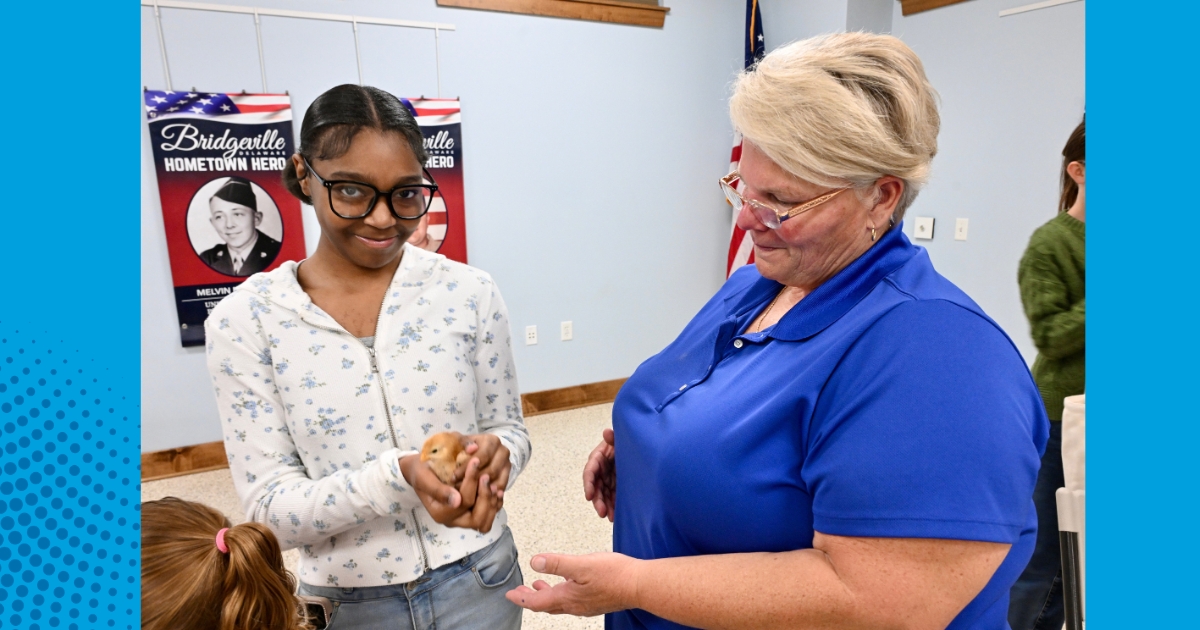
Cartanza packed a lot of information into her two-hour presentation, which included the different types of chickens, those that lay eggs, and those used for meat.
Peeping inside large clear containers that Cartanza brought along were nine-day-old chicks that the students gently cradled. “The kids asked great questions and were definitely curious,” Cartanza observed.
Cartanza pointed out that the Leghorns, White-Crested Black Polish, Rhode Island Reds, Barred Plymouth Rock, and Ameraucana chicks that emerge from the 4-H incubators look different from the Ross breed that arrive at her farm as yellow puffballs.
“It built an understanding of why we look different, touching on the concept of genetics and DNA,” Cartanza noted.
Cartanza brought large visual aids and a variety of equipment detailing what it is like to raise 37,000 chicks in each of her four poultry houses, each the size of two football fields.
“They were inquisitive about how the target temperature changes as the birds grow, starting at 90 degrees and finishing at 65 degrees. I explained how tunnel ventilation works in the poultry house and how we keep birds comfortable during hotter temperatures,” Cartanza said.
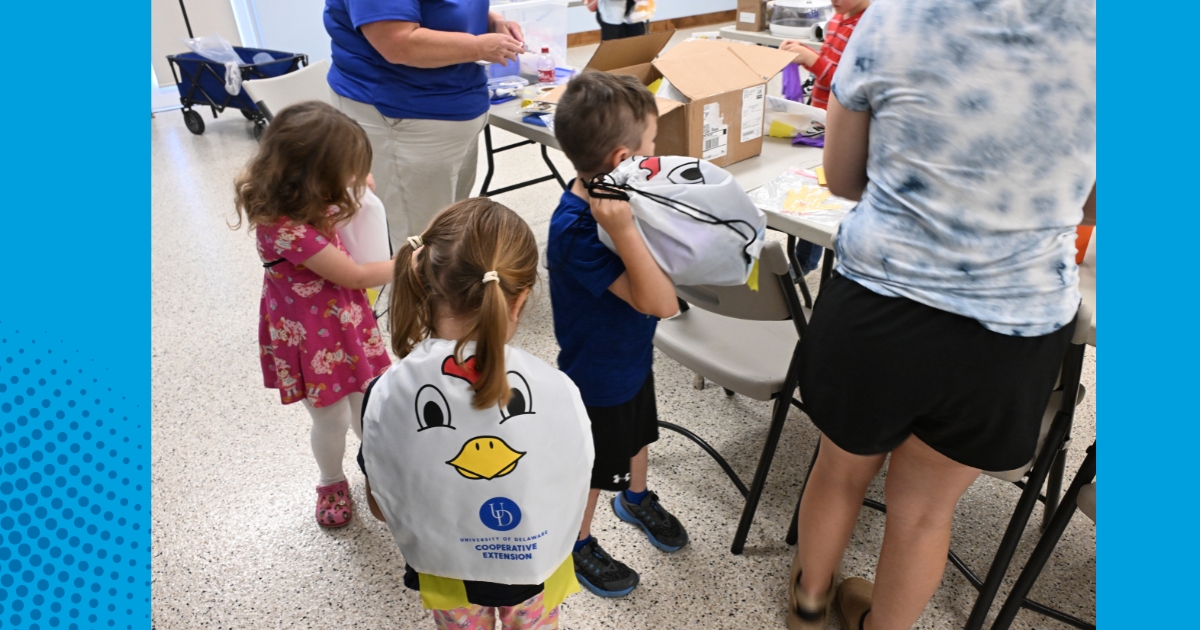
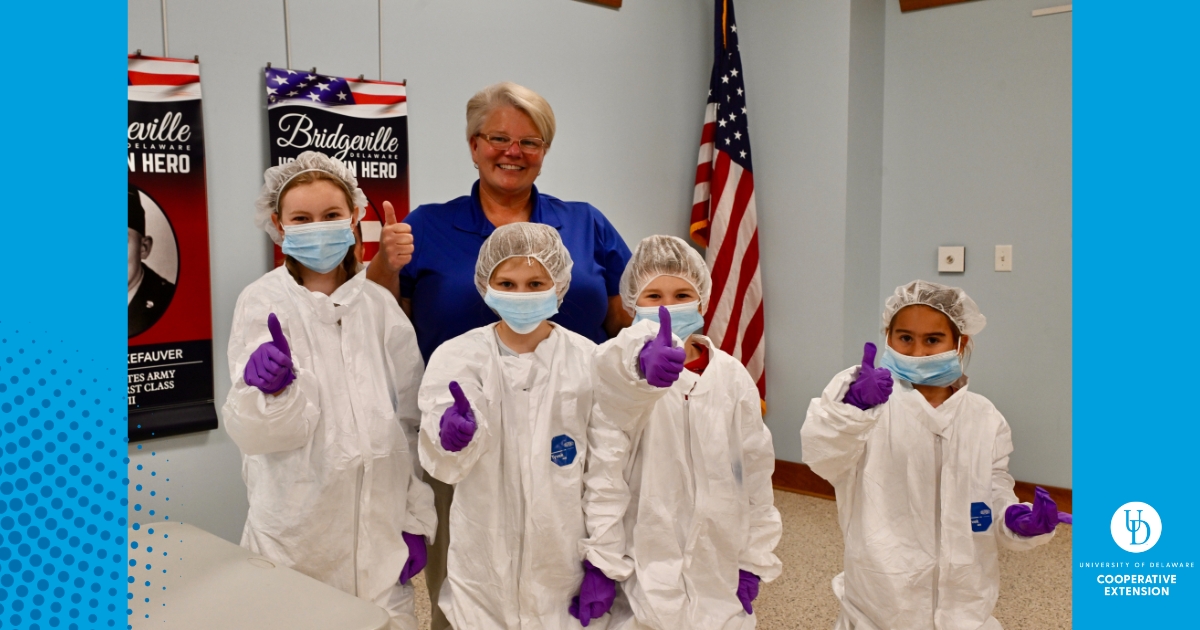
A special segment of Cartanza’s outreach provided an important biosecurity lesson. “Being some of them had backyard flocks, it was a chance to hit home how important it is not to wear clothing and shoes that have been off the farm or to a feed supply store and return back to their chickens,” Cartanza emphasized. A handful of students volunteered to don a full regalia of personal protective equipment - Tyvek suits, booties, gloves, hair nets and masks. They looked like poultry pros and happily modeled their new fashion pieces that any poultry farmer would appreciate.
“The visit to the Bridgeville Library was a great opportunity for me to engage with a diverse age group, even some of the parents had questions!” Cartanza remarked. “Ultimately, I hope these conversations build a bridge of understanding that helps our poultry industry continue to thrive in Delaware.”