


Category: Plant and Soil Sciences

From the rainforest to Rio
April 14, 2026 Written by Molly Schafer | Photos by Olivia Frear, Emily Focht, Jackson Whitcomb and courtesy of Zach Hammaker
Surrounded by Brazil’s Solimões River, Zoe Yiournas relaxed on the balcony of the floating lodge that would be her home for the next five days. As she swayed in a rope hammock, caimans surfaced in the water, and unfamiliar bird calls filled the air. Beyond the river, the Amazon rainforest stretched as far as the eye could see. A flowering banana tree caught Yiournas’ attention; she studied its shape and structure, sketching its likeness in her journal.
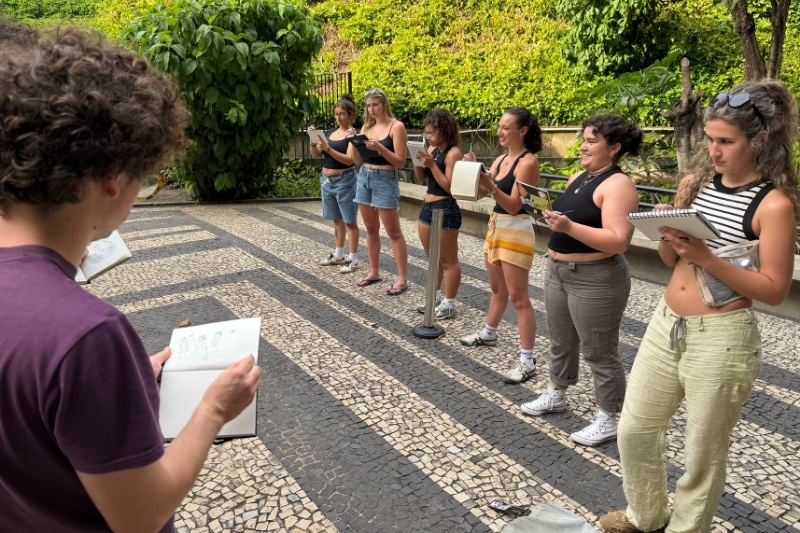
Yiournas was in the Amazon on a University of Delaware study abroad course titled Landscape Exploration of Brazil. The program includes two courses from the Department of Plant and Soil Sciences: Plants and Human Culture (PLSC 100) and Representation 1: Landscape Drawing (LARC 103). Honing observational skills through drawing is a focus of the program, which takes place over 26 days in Brazil during UD’s Winter Session.
Zach Hammaker, assistant professor of landscape architecture, teaches the course. Hammaker says that slowing down, observing nature, and reflecting through daily journal prompts helps students connect with themselves and the world around them. The lack of wifi access in the Amazon helped make space for these analog activities.
“Everyone enjoyed unplugging from social media and the internet for such a long period of time,” said Olivia Frear, a senior wildlife ecology and conservation major. “In this immersive environment, surrounded by new things to see and explore, I didn’t miss it at all.”

Hammaker said learning about plants and culture hands-on in the Amazon Rainforest is a once-in-a-lifetime experience.
“It’s an opportunity to see an ecoregion that has thousands of endemic species, meaning species that only live there in niche environments,” Hammaker said.
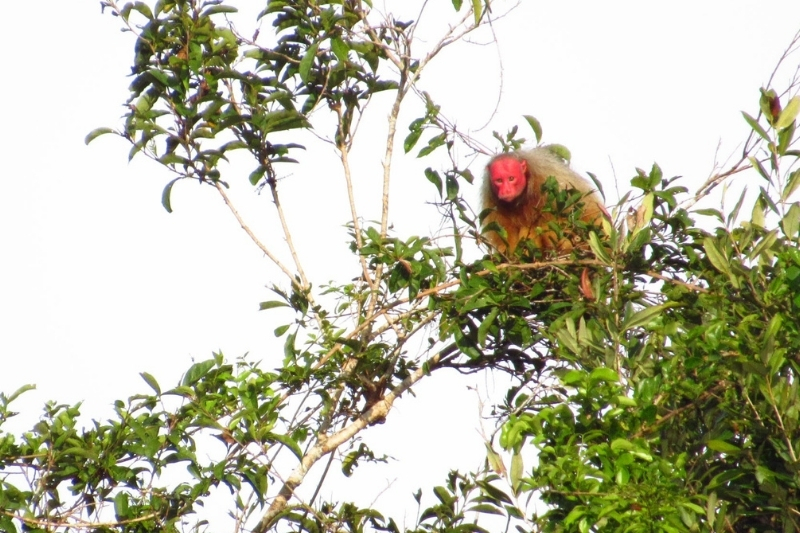
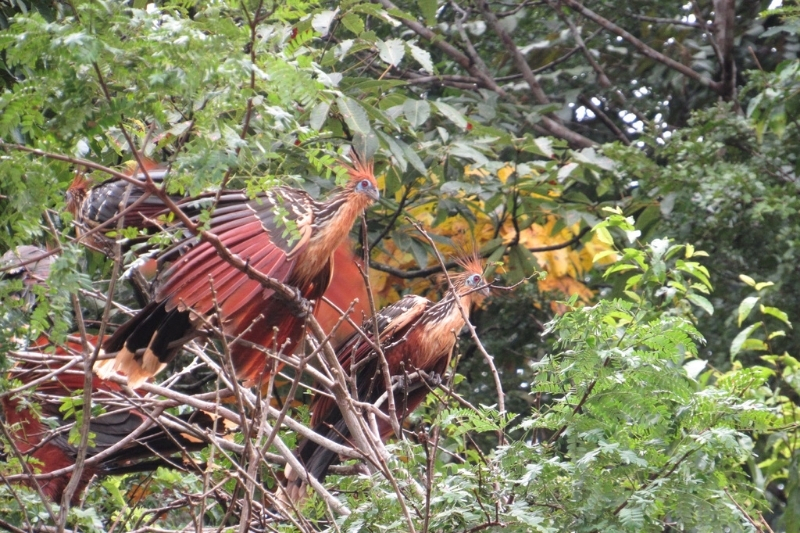
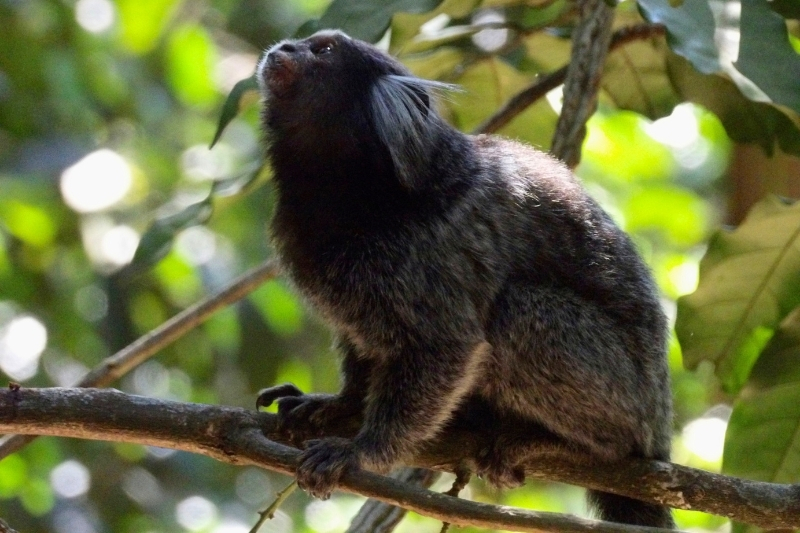
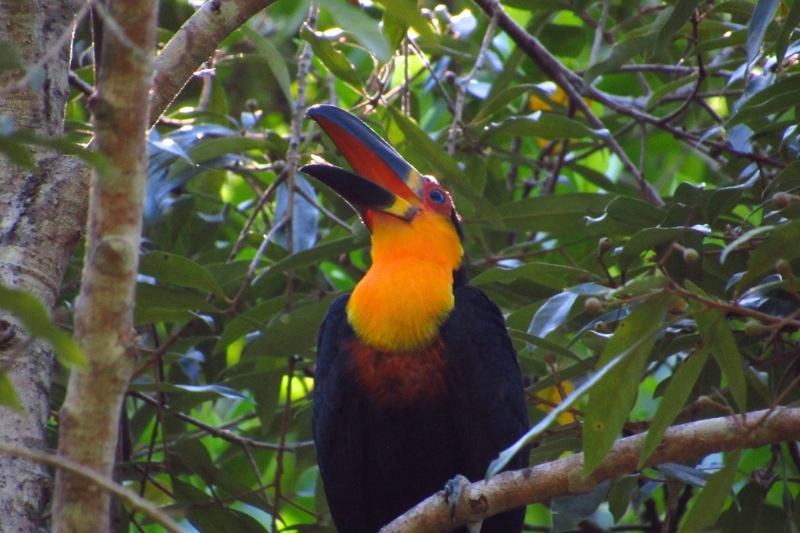
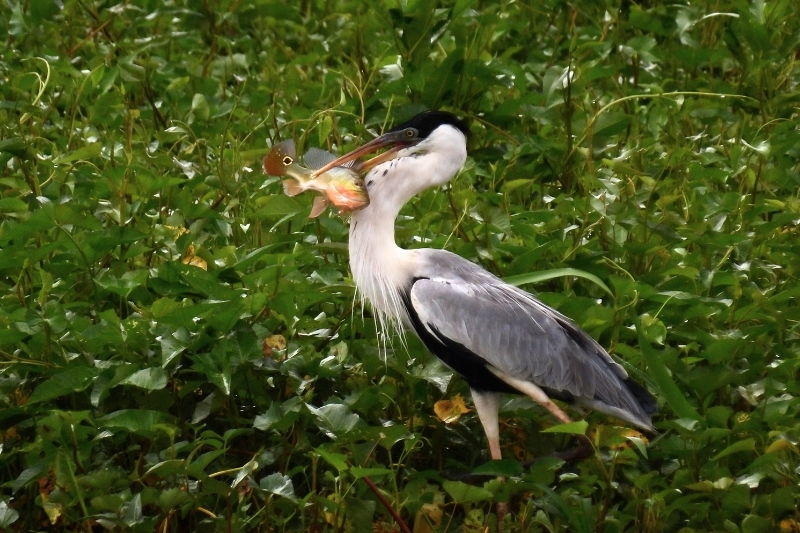
In addition to tropical plants, students observed toucans, macaws, sloths, and several species of monkeys, including Uakari monkeys, in the wild.
“Howler monkeys have a jarring and unique call,” Frear said. “They have a special bone in their throat which allows them to amplify their sound for miles. It’s a little frightening at first; they sound like they’re in the trees, howling and grunting at you, but they’re actually a good distance away and minding their own business.”
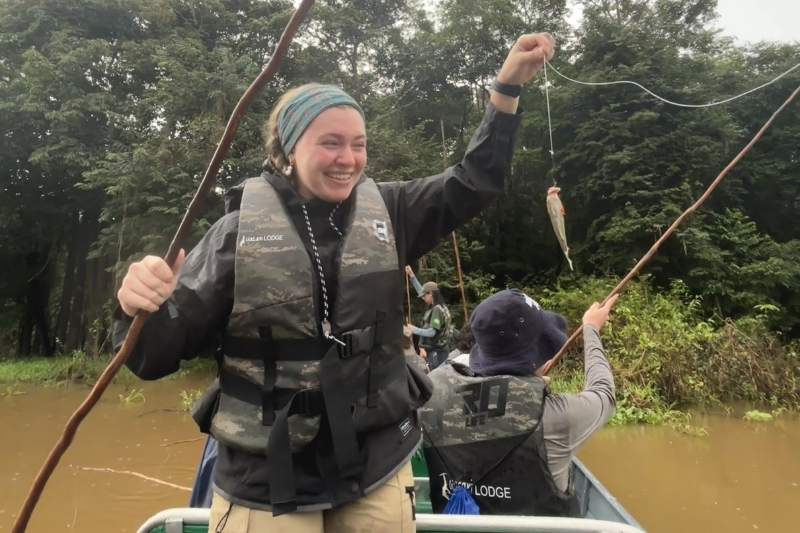
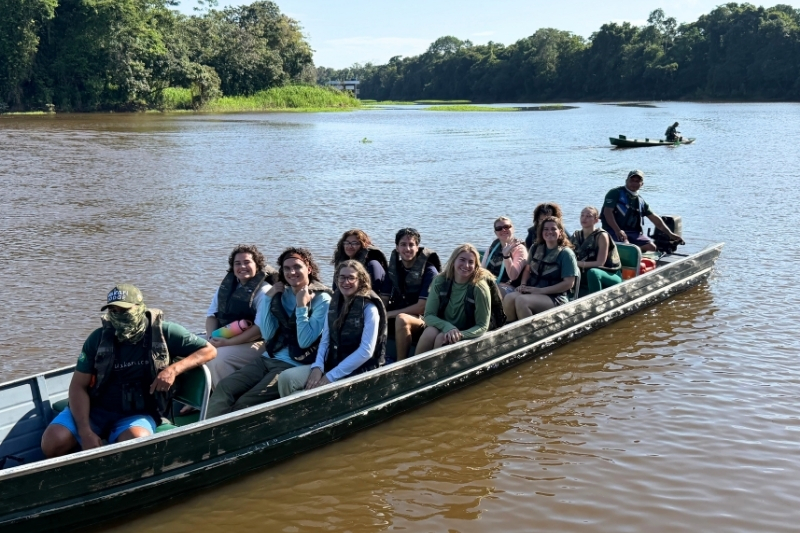
Uakari Lodge, which hosted the students, is managed through a shared governance arrangement between the Mamirauá Institute and the communities of the Mamirauá Reserve. In addition to their studies, the Blue Hens went boating, piranha fishing, and hiking. They also visited local communities.
“Our tour guides were locals who lived in the area their entire life,” said Frear. “They knew the ins and outs of the space and the animals. We learned the science along with the cultural significance of the area.”
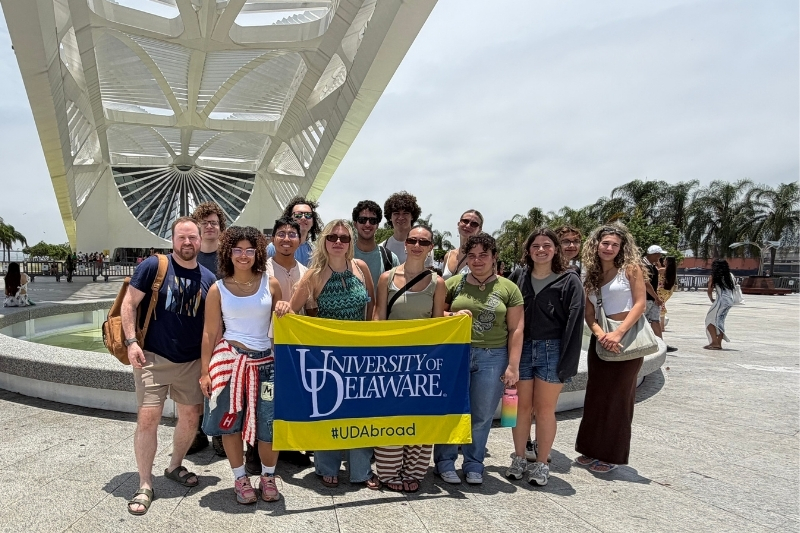
When the course relocated from the rainforest to Rio de Janeiro, the wifi was back on, but a newfound sense of wonder tempered the urge to plug in. Traveling to another country can shift your perspective.
That perspective shift is an experience the students share with Brazilian landscape architect Roberto Burle Marx. As a student, Marx, who is credited with introducing modernist landscape architecture to Brazil, studied abroad in Germany. He visited the Botanical Garden in Berlin, where he was surprised to see a display of rare plants composed of Brazil's native flora. Eurocentric garden design was popular in Brazil at the time, valued over native Brazilian species. The exhibit inspired Marx to elevate the everyday flora of his country.
“Burle Marx was at the forefront of bringing the use of native plants, certainly to Brazil and into South America, but his influence was much broader,” Hammaker said. “He brought to light the significance and importance of using native flora in landscape architecture.”
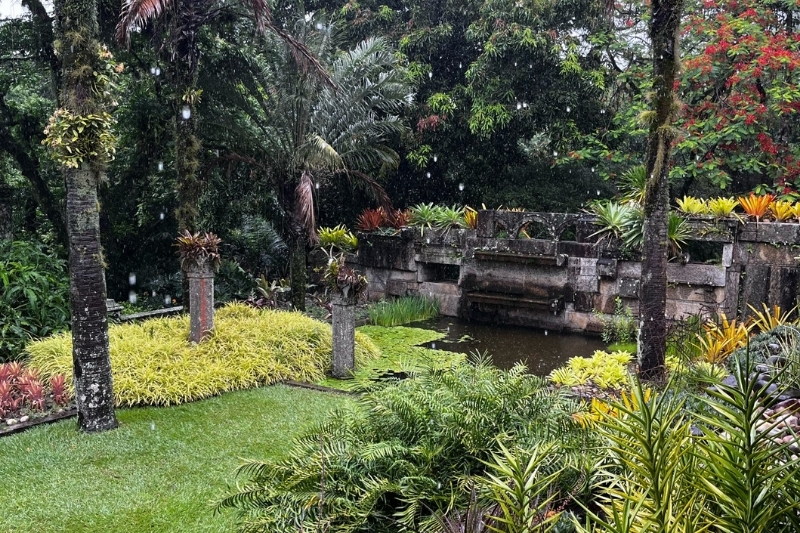
During a tour of Burle Marx’s home and studio, Sítio Roberto Burle Marx, students walked in Burle Marx’s footsteps. The Sítio is a UNESCO World Heritage site, of importance for environmental and cultural preservation. The house is a unique Modernist design, and the property boasts more than 3,500 plant species. Burle Marx went on to design more than 2,000 public and private gardens, including the Cascade Garden at Longwood Gardens, his only design in North America.
“I think Burle Marx’s story is a great lesson for the students to understand that culture and our relationship with plants are intertwined,” Hammaker said.
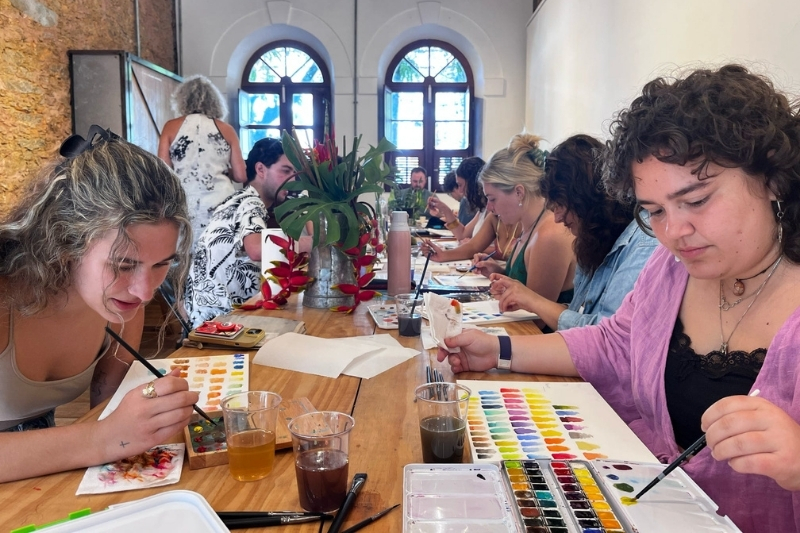
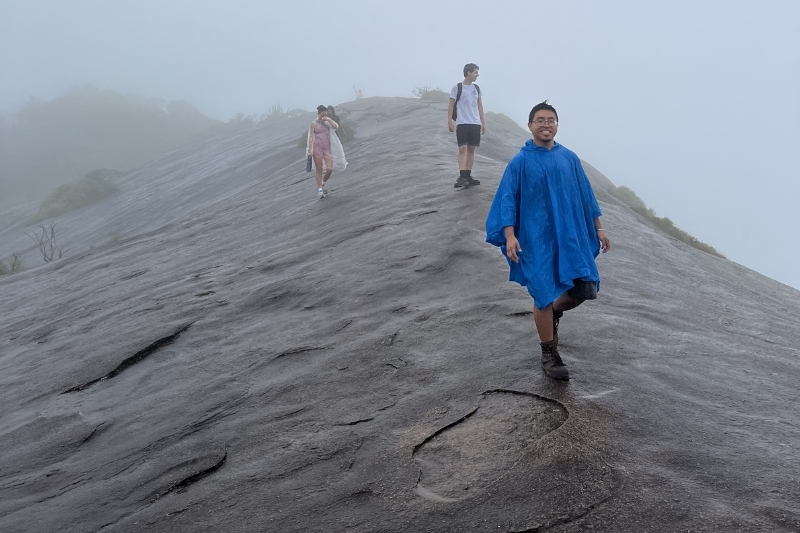
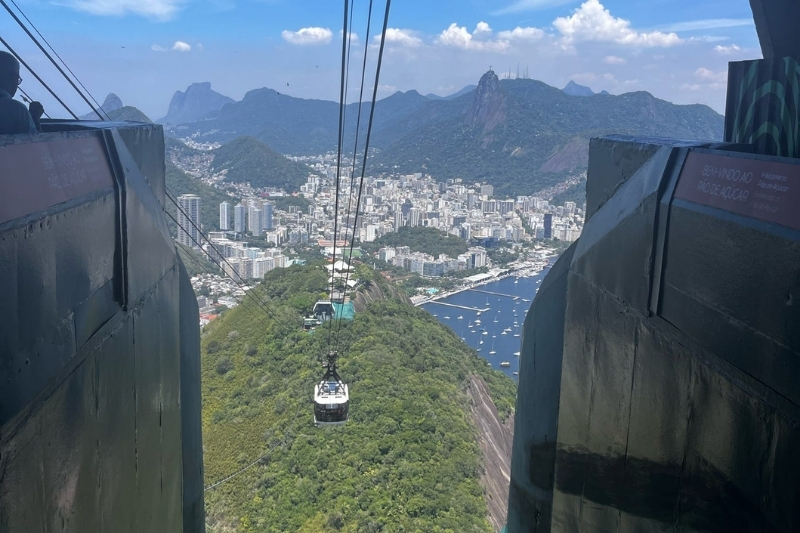
From their base in Rio de Janeiro, students observed natural and artificial landscapes, including Sugarloaf Mountain and Petrópolis, the summer residence of Brazilian emperors and aristocrats in the 19th century. Wherever they went, the Blue Hens got out their sketchbooks and completed natural or architectural drawing assignments.
“Students are exposed to many aspects of culture throughout the course,” Hammaker said. “In the landscape drawing course, we observe the landscape, but ultimately, the world. How do you then reflect and internalize that and redraw it or represent it? I’m giving the students the tools to begin to do that.”
Jeremy Webb, a junior studying landscape architecture, was impressed with the use of plants in urban areas.
“In Rio, there are plants along the sidewalks, and there is a canopy of trees almost everywhere, even on the city streets,” Webb said. “It felt a lot calmer than other cities I’ve been to.”
Webb said the trees helped reduce the heat island effect, which occurs when cities experience warmer temperatures than surrounding rural areas.
“There are environmental benefits to having plants on the sidewalk; it filters runoff and gives rainwater a place to go rather than pooling on the pavement,” Webb said.
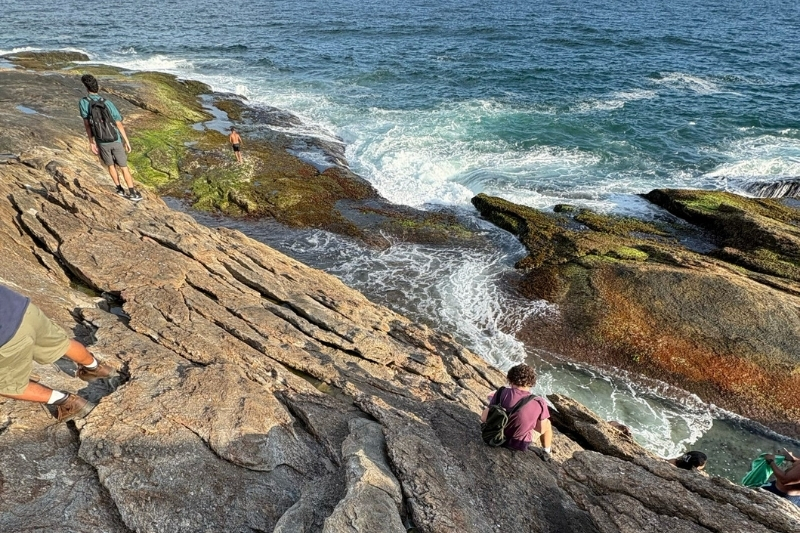
Webb, who normally shies away from cities, appreciated Rio's unique designs.
“Seeing the design choices with plants and the paving style on the sidewalks, tiny stones arranged in a pattern, throughout the city inspired me,” Webb said. “I now have ideas for urban layout and planning, things I don’t usually think about.”
The active city lifestyle also inspired Yiournas, who is planning to return to Brazil. Frear brought back an appreciation for Burle Marx’s work; she shares his outlook on plants.
“Just because it lives in your backyard doesn’t mean it’s not special,” Frear said. “It’s easy to lose appreciation for the things that you see every day, but every part of nature is miraculous when you look at it closely enough.”