


Category: Research

Showcasing research across the College of Agriculture and Natural Resources at the 2025 student symposium
December 03, 2025 Written by Katie Peikes | Photos by Katie Young
Fifty undergraduate, graduate, and Ph.D. researchers showcased their work at the 2025 University of Delaware College of Agriculture and Natural Resources (CANR) Student Research Symposium.
The annual symposium, in its ninth year, gave UD CANR students an opportunity to highlight the important research they’re doing and practice communicating their research intent, methods, and results to a broad audience. It also brings faculty, students and staff together to celebrate the college’s research from across the departments of Plant and Soil Sciences, Animal and Food Sciences, Entomology and Wildlife Ecology and Applied Economics and Statistics. The research covered a variety of topics, including deer ticks, chicken embryos, blueberry yields, dark chocolate, indoor hydroponic farming, and community resilience.
“Our research interests are vast here at CANR,” Tanya Gressley, associate dean of graduate programs and professor of animal and food sciences, addressed the audience in the Townsend Hall Commons. “We have faculty and students working in widely different fields that are all essential to agriculture and natural resources. This symposium provides us with the opportunity to learn about this amazing work.”
Julia Stolker, a UD Class of 2026 pre-veterinary medicine major, showcased research on how tick genera distribution has been changing in Missouri over the last three years. Working with researchers from the Tyson Research Center at Washington University in St. Louis, Stolker’s research has unearthed that species of ticks that are normally more active in summertime are being found in larger amounts deeper and deeper into the winter, likely due to changing weather conditions, such as warmer temperatures.
“Summer ticks are extending their ranges when they normally wouldn’t be out,” Stolker said. “The reason why that’s so interesting is it could change the dynamics of disease in humans, in wildlife and in agriculture by having the presence of these ticks carrying their own unique types of diseases further in the winter.”
This study has been Stolker’s first exposure to academic research.
“It was fascinating to have this data,” Stolker said. “Every dataset tells a story and you start analyzing things. Going through and finding that correlation makes it so exciting.”
Shem Elias, a Ph.D. student in plant and soil sciences presented his research to identify resistance in lima beans against root-knot nematodes, parasitic organisms that attack plant roots. Lima beans are a top economic vegetable crop in Delaware, with about 14,000 acres of green baby limas planted for processing each year.
Root-knot nematodes can hinder their development, so researchers want to be able to breed lima beans that can withstand them. Elias said it’s rewarding to see hard work pay off for research that started in 2020 and continues through next year.
“We are able to chip in and add one to three interventions of being able to solve challenges which producers face in the field,” Elias said, “and to help create sustainable ways to overcome these challenges.”
Elias has been working on this research with Alyssa Betts, associate professor and Cooperative Extension specialist in plant pathology, and Emmalea Ernest, an Extension fruit and vegetable specialist.
Before announcing award winners in the undergraduate, master’s and Ph.D. categories, Gressley praised CANR’s research for its significance and impact.
“Your research moves us closer to solving some of the world’s most pressing challenges,” Gressley said, “and building a healthier, more sustainable future.”
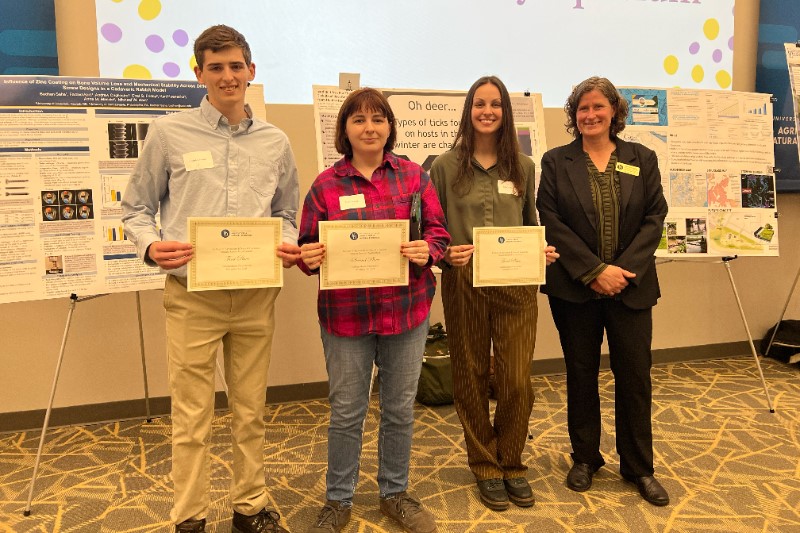
Fall 2025 award winners
Undergraduate:
First place: Joseph Romano — Assessment of Pythium storage stability through maize plant infection assays
Second place: Katie Deitsch — Neighborhoods of 9: Flooding and stormwater
Third place: Julia Stolker — Ixodidn't Ask For This: Monitoring Hard Tick (Ixodidae) Community Composition From Hunter-Harvested Deer
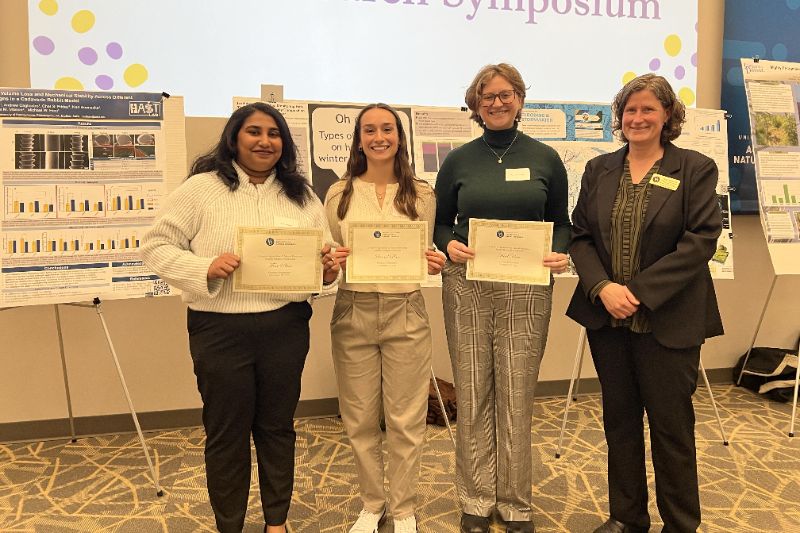
Master’s:
First place: Sanya Boby — Hepatic Metabolic Dysregulation and Developmental Changes Induced by Glucose Overload in a Chicken Embryo Simulating Gestational Diabetes Mellitus
Second place: Isabella Ferraro — Acute exposure to micro-nano plastics trigger intestinal oxidative stress and damage in enteroids and broiler chickens
Third place: Peyton Easton — De novo whole genome assembly of the mosquito Aedes grossbecki
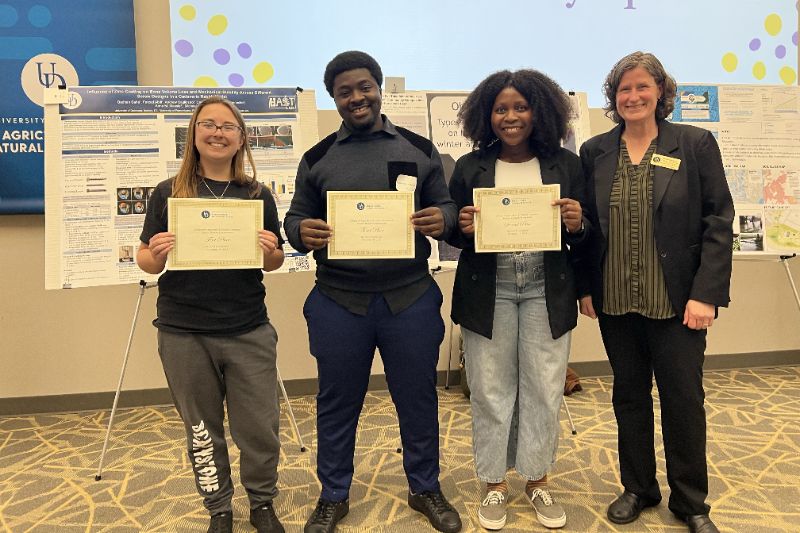
Ph.D.:
First place: Destiny Mann — Demonstrating Food Waste Upcycling with Black Soldier Fly Larvae
Second place (tie): Thabu Mugala — Environmental Drivers of Carabid-Slug Dynamics: Which Beetles Matter?
Second place (tie): Abdallah Hadimundeen — In Ovo Hyodeoxycholic Acid (HDCA) Administration Enhances Intestinal Development, Enteroendocrine Cells, and Barrier Function in Broiler Embryos