



Category: Animal and Food Sciences
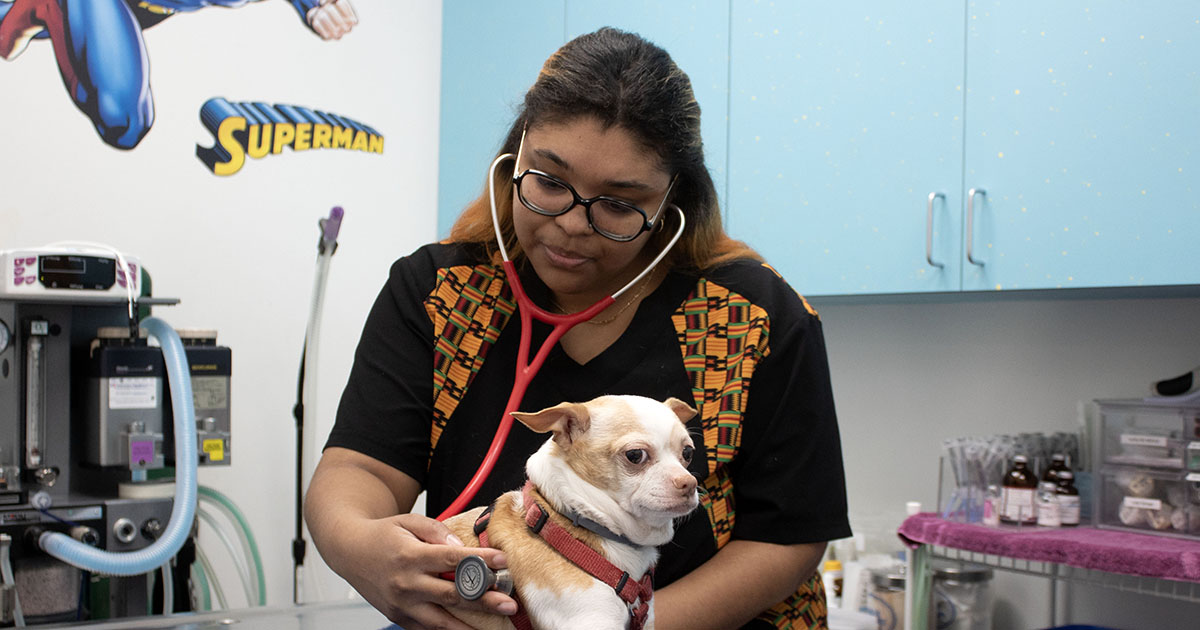
UD’s non-thesis master’s in Animal Science prepares Alena Brown for a career in animal care
July 10, 2024 Written by Molly Schafer | Photos by Jeremy Wayman
University of Delaware alumna Alena Brown is determined to become a veterinarian. It is a goal she set during her senior year of high school while volunteering at an animal shelter.
“My goal is to go to veterinary school,” Brown stated. “I was not accepted the first time I applied, so I wanted to improve my application and grow my skills.”
Brown decided UD’s non-thesis master’s of science in Animal Science program was the best choice to accomplish her goal.
“The non-thesis master’s program helped me improve my vet school application and made me a more competitive candidate,” Brown underscored. “I gained a lot of skills that I can use in veterinary school.”

Designed for college graduates or working professionals, students can enroll full- or part-time and complete the degree in one to two years. Brown earned her degree while working full-time at Lantana Veterinary Center in Hockessin, Delaware.
“My professors were accommodating to my work schedule,” Brown said. “They would meet with me after class hours, via email, or even Zoom.”
An individual research experience is a popular component of the master’s program. Brown completed the requirement by working with Mark Parcells, professor of molecular virology, on antibody responses to COVID-19.
“It was so interesting to see how COVID works,” Brown remarked, “to understand the science behind antibodies and vaccines.”
While at UD, Brown learned many skills she uses in her current work as a veterinary assistant.
“I see how what I learned in class integrates into practicing veterinary medicine,” Brown said.
Specifically, Brown mentions laboratory work with gram stains, fecal tests, and studying parasites directly applicable to her veterinary assistant work. Brown even credits UD with conquering her fear of bugs. Well, maybe not conquering, exactly.
“Anyone who knows me knows I am terrified of bugs.” Brown laughs. “My Insect Pest Management (ENWC 611) class helped me to understand them better.”
Describing the course as her “absolute favorite,” Brown photographed bugs and learned how chemicals affect insects and pests affect agriculture. Many outside speakers from fields like veterinary medicine, plant science, and entomology visit the class to give their professional perspectives.
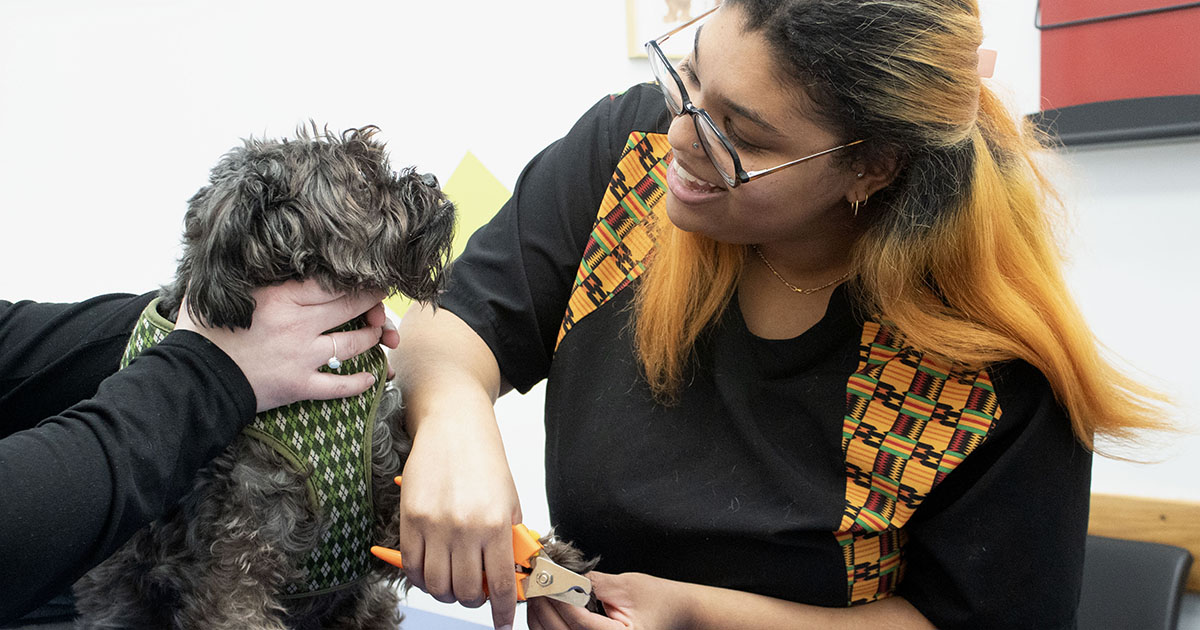
Brown encourages aspiring vets to seek opportunities to grow their skills, even if their career route is more challenging.
“My undergraduate university didn’t have pre-veterinary medicine as a major,” explained Brown, who majored in biology with a double minor in Africana studies and chemistry. “I had to reach out and ask around to find work experiences.”
Brown has worked as a kennel technician, an animal hospital receptionist, and shadowed a veterinarian. This summer, she is at the Philadelphia Zoo; as an animal care intern, Brown will help zookeepers provide routine husbandry to the zoo’s teaching and exhibit collections.
Brown is drawn to a career in veterinary science because of the array of job possibilities.
“There’s so much you can do,” Brown emphasizes. “There are veterinary microbiologists. Some veterinarians work in the marine sciences. Some veterinarians work for NASA. I want to research infectious diseases, work with wildlife or perhaps specialize in dentistry or radiology.”
Learn more about the non-thesis M.S. in Animal Science and the veterinary concentration.