



Category: Animal and Food Sciences
Meet our new faculty: Adam Beard
October 29, 2026 Interviewed by Molly Schafer | Photos by Cassandra Daley
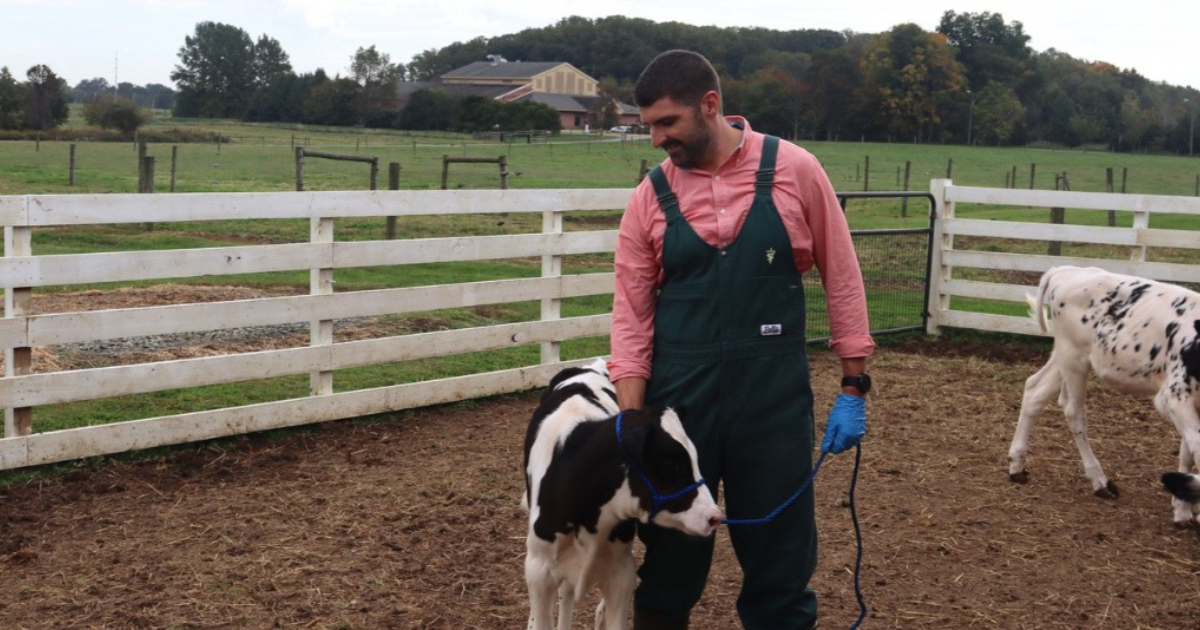
Adam Beard joined the Department of Animal and Food Sciences this fall as an assistant professor specializing in dairy cattle reproduction. Beard arrives at the University of Delaware from Cornell University College of Veterinary Medicine, where he held a postdoctoral associate position. Beard attended graduate school in Wisconsin, “America’s Dairyland,” so he jokes that specializing in dairy cattle was inevitable. His hands-on approach to teaching is a perfect fit for the College of Agriculture and Natural Resources. Beard looks forward to creating experiential learning opportunities for his students at the college’s on-campus farm and dairy operation.
When you teach, what is your favorite lesson or project where students have an “a-ha moment?”
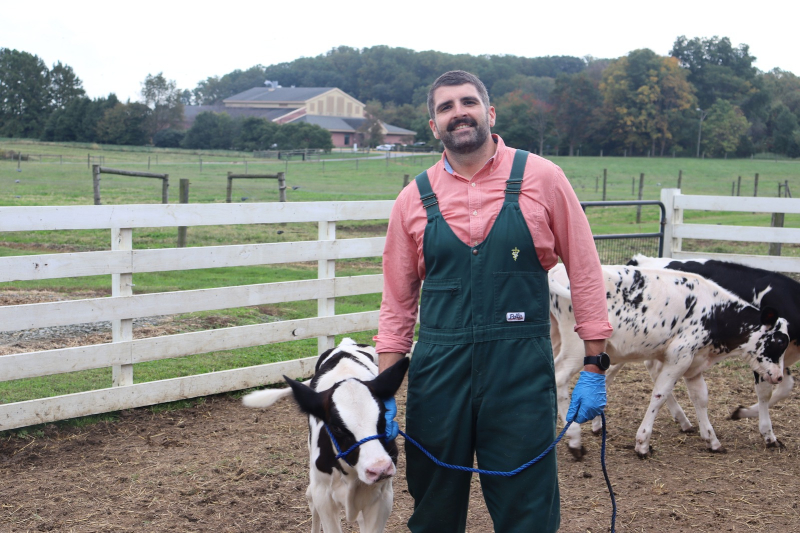
Currently, I am teaching our first-year students how to properly and safely work with dairy cows and calves. I enjoy seeing the students realize that they can learn from their peers. In our dairy handling lab, they are working in pairs with a two-month-old calf, and I have noticed them stepping back to observe one another and make corrections to their approach. Giving and receiving peer-to-peer feedback is a useful skill; I am excited to see students utilizing it in their first semester.
What course are you most excited to teach? What does the course cover? Why should students register for your section?
I am grateful to have the opportunity to teach and develop many courses related to dairy cattle, but I am most excited to teach Reproductive Physiology of Domestic Animals (ANFS 441). This course has not been offered regularly in recent years, and I am excited to offer it to our students.
The course will cover the basic biology of reproduction, including pregnancy, lactation, the underlying hormonal regulation of these processes, and considerations for species-specific animal management.
Reproductive management is one of the key considerations in livestock production, and the practices in place are primarily influenced by the animal’s biology. This course is a great addition to a student’s animal science and pre-veterinary training, as it builds foundational knowledge of biology across several species and provides the perspective needed for critical thinking about livestock management.
What made you fall in love with the study of dairy cattle reproduction?
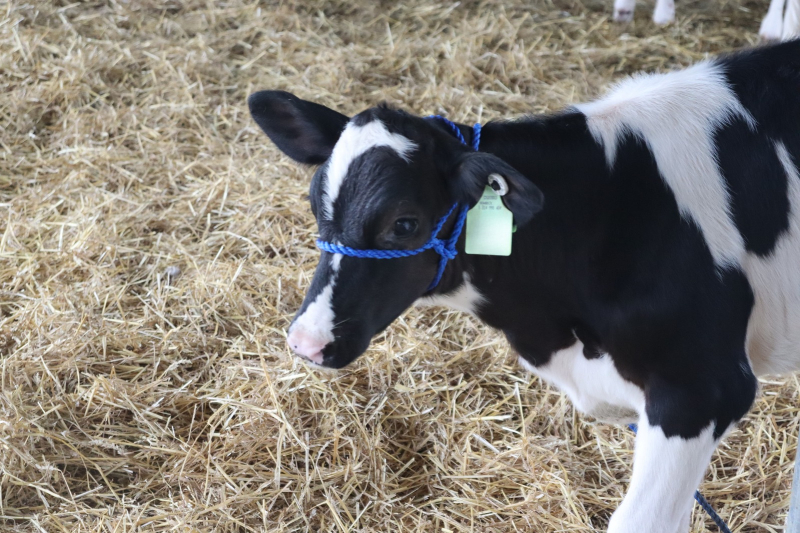
In animal science, every student will have a discipline that sparks their interest more than the others. For some, this may be nutrition, genetics, or immunology. For me, it was reproductive biology.
When I took a Physiology of Reproduction course in my junior year of college, I rented the textbook with a friend. I knew I was meant to study reproduction when I purchased the textbook after the course ended!
What drew you to the University of Delaware?
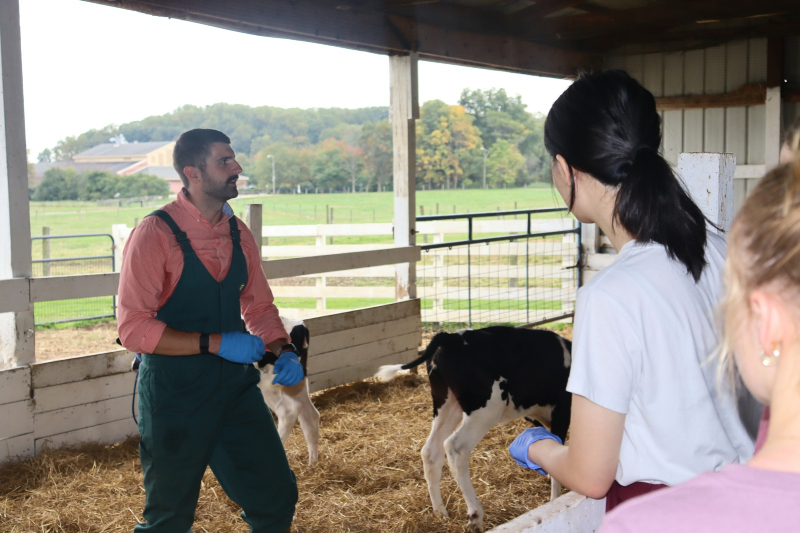
The Department of Animal and Food Sciences at UD and I share a common commitment to hands-on learning. In just week two of their college career, we have students performing physical exams on calves and learning how to milk cows. This is only possible because our farms are on campus.
At many other large universities, the teaching farms may be 30 to 45 minutes away, which greatly limits the courses I can offer and the hands-on learning opportunities that are available to students.
What are you most looking forward to in your first year as a Blue Hen?
I am a big fan of college sports, so I am looking forward to cheering on our student athletes! I have already attended Blue Hen baseball and football games, and I plan to go to many other events!
Where are your colleagues most likely to find you on campus?
If I am not in my office, I am either teaching at the dairy farm, grabbing ice cream at the UDairy Creamery, or out for a walk around South Campus!