



Category: Animal and Food Sciences
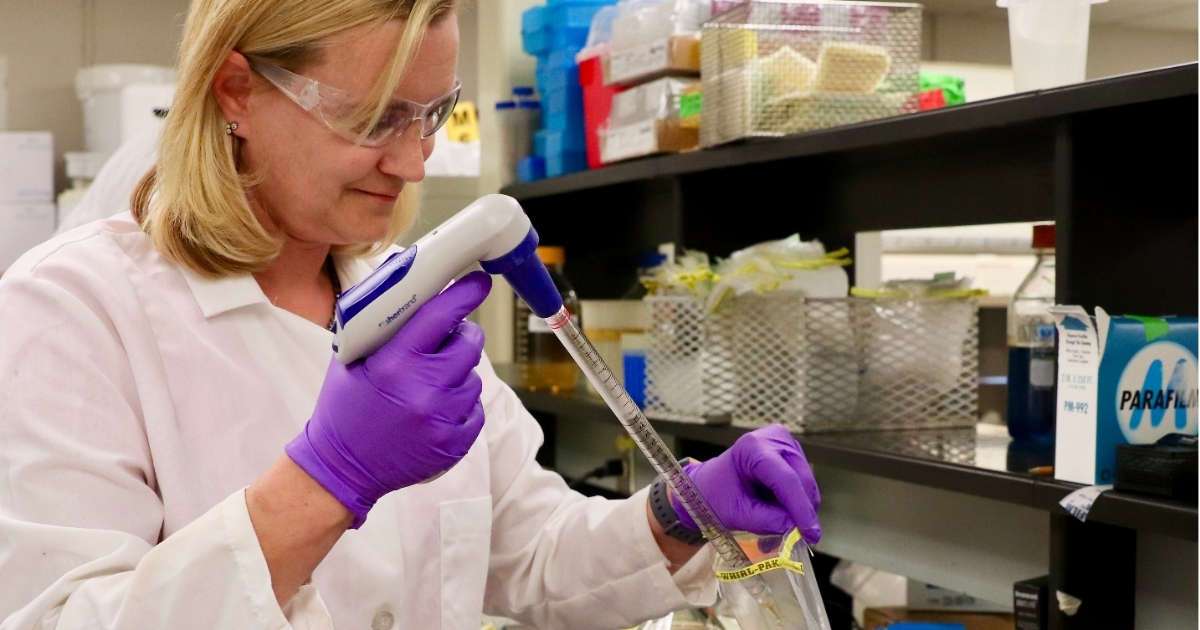
Kali Kniel leads the charge in safe food practices globally
April 18, 2024 Written by Nya Wynn | Photo by Monica Moriak
University of Delaware faculty member Kali Kniel traveled this spring to Geneva, Switzerland to join other experts from around the world as they discussed viruses and food safety issues of global importance.
The Joint Food and Agriculture Organization/World Health Organization Expert Meetings on Microbiological Risk Assessment (JEMRA) provides updated scientific information to support global needs related to food safety and security, and in this case to help to guide countries around the world on how to improve the control of viruses in food. This is in response to a Codex Alimentarius Committee, which provides international food standards. The JEMRA virus committee first met in September 2023 in Rome, where Kniel served as committee chairperson, when the group decided on the highest priority viruses and food commodities in which these viruses are spread.
“The group had not met for 12 years before this, so there was a need to update the scientific information regarding the global issue of food borne viruses and foods,” Kniel explained.
Various international experts presented regional data on foodborne viruses from around the world, and the group analyzed data of the most common food categories responsible for illnesses from different countries to come to a decision. The group determined that the highest priority viruses globally are norovirus, hepatitis A virus and hepatitis E virus, in that order.
According to JEMRA’s first executive summary, norovirus is estimated to cause 125 million cases of foodborne illness per year, from which 35,000 are fatal, while hepatitis A is estimated to cause 14 million cases of foodborne illness and 28,000 deaths each year.
These three viruses are mostly found in prepared food, frozen berries and shellfish. Both norovirus and hepatitis A have been on the world’s radar for many years, but within the past decade, hepatitis E has become a more formidable virus.
“One of the big takeaways of these two meetings is that we are stating that hepatitis E virus is worthy of more global prominence and is more important than it used to be,” Kniel said.
According to the report, an estimated 20 million people are infected with the hepatitis E virus yearly, leading to around 44,000 hepatitis E-related deaths.
Kniel returned to Geneva in February for their second meeting, where JEMRA determined different ways that people across the world can prevent the spread of these viruses and further educate people about them.
“We made recommendations at both meetings that the WHO and FAO promote capacity building for different countries,” Kniel said. “This means having more training for people to learn virology, study food borne viruses and build national labs, so that they can do surveillance and be able to work in food safety.
“I especially was proud that we were able to make those kinds of statements,” Kniel added. “If the Food and Agriculture Organization and the World Health Organization says something like that, or publishes it in their documents, then countries are more likely to look at it as serious and meaningful.”
This information being published through the FAO/WHO reports is especially important for countries that lack a strong method for virus surveillance or hospital infrastructure. Back on our side of the Atlantic, the U.S. Food and Drug Administration (FDA) and U.S. Department of Agriculture (USDA) do most of the heavy lifting when it comes to food safety and regulation, but many countries do not have these types of regulatory organizations that function the way they do in the United States.
JEMRA’s reports are used to update the Codex Committee on Food Hygiene’s (CCFH) standards on the control of viruses in food worldwide.
“Many countries rely on Codex for international food standards and to provide guidance on how to protect food safety,” Kniel said. “Our reports that JEMRA writes are what countries use to create guidance and regulations to protect their people.”
JEMRA advises on food safety measures for everyone across the world with the goal of reducing foodborne illnesses and increasing access to resources that will help countries fight outbreaks.
“One of the things I love about being in these meetings is the global recognition of food safety and foodborne illness,” Kniel said.
In her own UD lab, Kniel investigates transmission of norovirus and hepatitis A. This past year, Kniel furthered research analyzing how specific diseases can be transmitted through fresh produce, such as fresh and frozen berries or lettuce.
Additionally, Kniel contributes to evaluating gaps in prevention, control, and response to infectious diseases across the globe, especially in countries who lack the resources to effectively track the spread of and treat disease.
“We’re trying to make sure that everyone around the world has access to safe food, because it should not be something that’s limited only to higher income countries,” Kniel said.