




In our backyard
Photos courtesy of Madeline Brown, Alex McBreen, Catherine Morrissey, Scarlet Shifflett, J.D. Zimmerman and the Department of Natural Resources and Environmental Control Division of Parks and Recreation August 07, 2026
From research to recreation, UD celebrates 75 years of Delaware State Parks
This year marks the 75th anniversary of Delaware State Parks, and for faculty and students at the University of Delaware, there is much to celebrate. For Delawareans, the state parks are a source of peace, but at UD, they’re also a source of purpose. The parks provide a living laboratory for research, opportunities for experiential learning and a space for community service.
“The University of Delaware has been a great partner in better understanding and preserving our precious natural and historic resources in Delaware State Parks,” said Matthew Ritter, director of the Department of Natural Resources and Environmental Control (DNREC) Division of Parks and Recreation. “We are proud to have so many well-trained alumni on staff, a growing internship program connected with the University, and incredible resource sharing that continues to support our mission of responsible stewardship of our natural and cultural resources.”

The Delaware State Park system was officially founded in 1951 with three parks: Trap Pond State Park, Fort Delaware State Park and Brandywine Springs State Park. Today, there are 17 parks, five campgrounds, more than 170 miles of trails, historic sites, the Brandywine Zoo, the Indian River Marina, nature preserves and more, together protecting more than 27,000 acres.
“UD has been a great partner in better understanding and preserving our precious natural and historic resources.”
-Matthew Ritter, director of DNREC’s Parks and Recreation Division
“The parks offer our students a wealth of resources,” said JD Zimmerman, assistant professor of landscape horticulture and design. “Each park has a different character to it, and there is a lot of diversity from the Piedmont Hills of White Clay Creek to the bald-cypress forested wetlands of Trap Pond State Park to the beaches of Cape Henlopen State Park.”
Nature next door
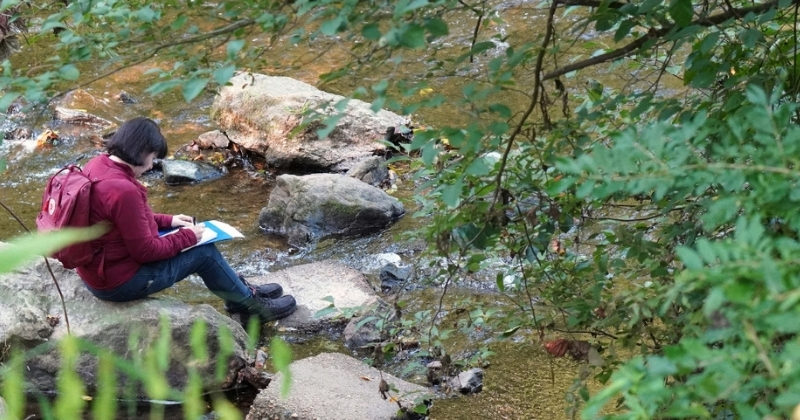
The University of Delaware campus borders White Clay Creek State Park, a 3,600-acre sprawling expanse of woodlands and a watershed that is part of the National Wild and Scenic River System. In this verdant setting, Zimmerman’s Native Plants of the Mid-Atlantic students sharpen their plant identification skills. Field trips to White Clay bring the course material to life for students of many disciplines. UD’s introductory geology course studies bedrock in the park, while ornithology students quietly walk the park listening for birds.

“The park gives ornithology students the chance to hear and observe forest birds in their primary habitat,” said Vincenzo Ellis, assistant professor in the Department of Entomology and Wildlife Ecology. “Walking quietly along the park’s trails feels a world away from the suburban environment we left just moments before.”
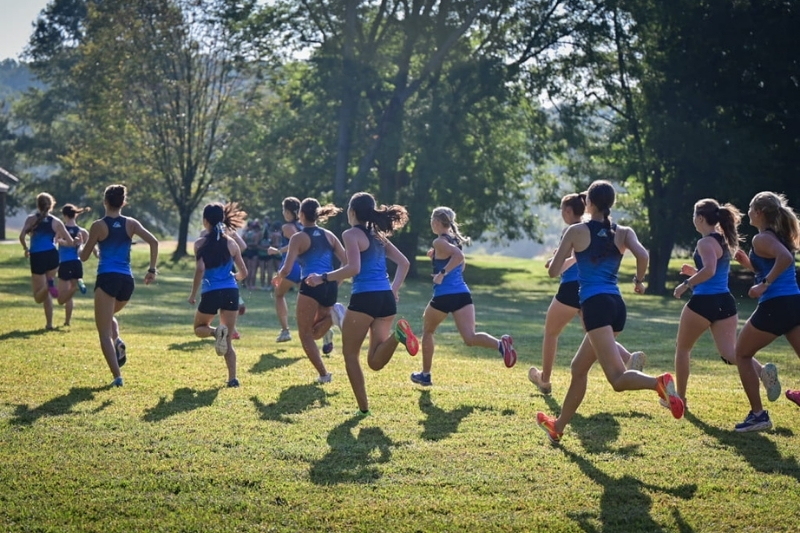
With more than 37 miles of trails, White Clay (as it is commonly known) remains popular with UD’s Cross Country team and club, which train there several times a week. The park's varied terrain and steep hills replicate the courses the team will compete on throughout the season.
“It’s a great atmosphere for our team to not only test their abilities while strengthening and improving, but also to reconnect with nature and give the mind a rest,” said Alex McBreen, a UD Class of 2027 student and club president.
Research with relevance
Close to campus, White Clay Creek, Lums Pond, and Brandywine Creek State Parks offer an outdoor laboratory where UD researchers study water quality and advance an ecological understanding of pathogens and vector-borne diseases, such as Lyme disease and Chagas disease.
“Natural, preserved areas like our state parks allow us to gather data from nature to understand how these pathogens are maintained in the environment and compare with areas that are more affected by human use,” said Ellis, who is also the principal investigator of the Disease Ecology Lab at UD. “Delaware State Parks have been indispensable to our research.”

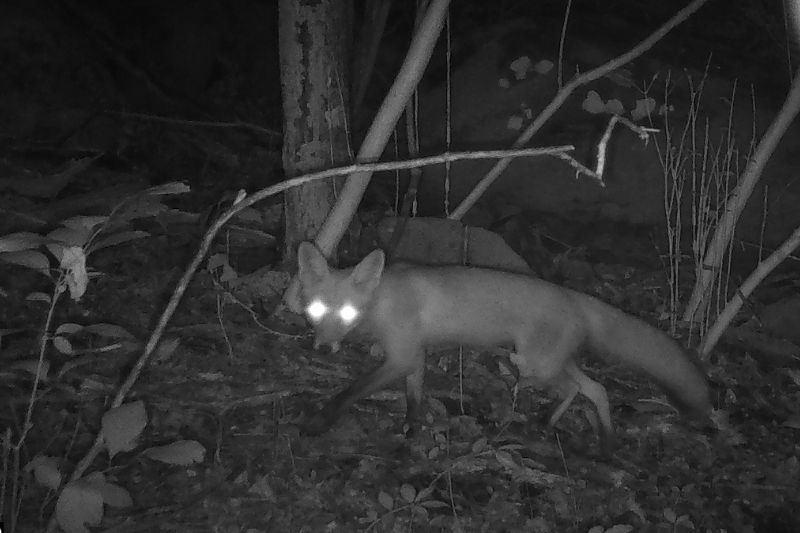
Doctoral student Scarlet Shifflett and alumna Ashley Kennedy, a biologist with the Delaware Fish and Wildlife, Mosquito Control Section, are developing a Delaware checklist of ectoparasites of medical and veterinary importance (mostly ticks and fleas) and the small mammals they parasitize.
Their collaboration has led to published data on flea diversity in Delaware and a better understanding of small mammal communities within Delaware State Parks. Through the project, they have donated specimens to the National Museum of Natural History in Washington, DC and the University of Delaware mammal collections.

As a land-grant university, UD’s mission includes sharing knowledge, research and resources with the community. This spring, Jennifer K. Peterson, assistant professor and medical entomologist in the Department of Entomology and Wildlife Ecology, shared her research on kissing bugs and Chagas disease during a public presentation at Lums Pond State Park
“The state parks have been incredibly valuable in our work in that they allowed us to estimate the distribution of kissing bugs in Delaware,” Peterson said. “Our goal is to collect baseline information on kissing bug habitats, hosts, and Trypanosoma cruzi (the protozoan parasite that causes Chagas disease) infection prevalence in order to better understand their epidemiological significance in Delaware and the greater Mid-Atlantic.”
Statewide service
But the parks provide more than natural landscapes in which to study birds, bugs and blooms.
The College of Education and Human Development’s Delaware Network for Excellence in Autism, housed within UD’s Center for Disabilities Studies, partners with the Delaware Natural Resources Police and New Castle City Police Department to conduct traffic-stop training. The program, held at state parks across the state, allows autistic drivers and passengers to work with the police in a safe, friendly space to practice a live traffic stop.
Delaware is rich in history, and the state parks help preserve the history of communities across the state.
Faculty and students in the Biden School’s Center for Historic Architecture and Design (CHAD) document historic structures in the parks, including the Lums Mill House and the Vogdes-Krapf farmhouse, a 19th-century building on the grounds of White Clay Creek, helping to inform restoration and preservation efforts.

Catherine Morrissey, interim director of CHAD and a policy scientist in the Joseph R. Biden, Jr. School of Public Policy and Administration, says the work helps preserve Delaware’s heritage including historic buildings and landscapes.
“Working with DNREC gives our students hands-on experience documenting historic buildings, researching Delaware’s past, and developing the skills they need as future preservation professionals.” Morrissey said. “At the same time, our work helps DNREC better understand, document, and manage the remarkable historic resources in its care.”
The Biden School’s Institute for Public Administration has partnered with Delaware State Parks to evaluate the impact of the Youth Conservation Corps, a paid summer program. UD’s Water Resources Center partners with the City of Wilmington Green Jobs Program to provide youth with green-collar work opportunities and education. Participants help transform Wilmington into a greener, cleaner, safer city while gaining hands-on experience.

UD Cooperative Extension’s Delaware Master Naturalist Program trains citizens as ambassadors and stewards of Delaware’s natural resources and ecosystems through science-based education and volunteer opportunities. From January through July of this year the Delaware master naturalists logged 785 volunteer hours in the state parks. Service projects include managing invasive plants, monitoring bird nests, planting trees, and creating pollinator gardens.
“The natural resources sector has consistently been asked to do more with less staff and less funding,” said Blake Moore, extension agent for natural resources who serves as program coordinator for Delaware Master Naturalists. “Our volunteers do amazing work to help meet the challenges of the mission of conservation.”

Endless enjoyment
Of course, the parks also provide plenty of recreational opportunities. With 17 state parks offering everything from disc golf to dolphin watching, there is something for everyone. Student organizations like the Outings Club or the Native Species Initiative, a group dedicated to invasive plant removal and forest restoration in the parks, take full advantage of parks throughout the state.
Kent Messer, S. Hallock du Pont Professor of Applied Economics, says he does some of his best thinking while jogging through Delaware's state parks with his UD colleague, Maik Kecinski, associate professor of applied economics and graduate director of the Center for Experimental and Applied Economics. Whether at Alapocas Run State Park or Brandywine Creek State Park, the miles often become brainstorming sessions on the economics of environmental protection and new ways behavioral economics can improve conservation outcomes.
If people protect what they love, it’s clear that Blue Hens, in partnership with the Delaware State Parks, will continue preserving Delaware’s natural and cultural resources for the next 75 years.
Contact Us
Have a UDaily story idea?
Contact us at ocm@udel.edu
Members of the press
Contact us at mediarelations@udel.edu or visit the Media Relations website