



Category: Plant and Soil Sciences
A voice for advancing Latinos in higher education
November 09, 2021 Written by Christy Mannering | Photo courtesy of Rodrigo Vargas
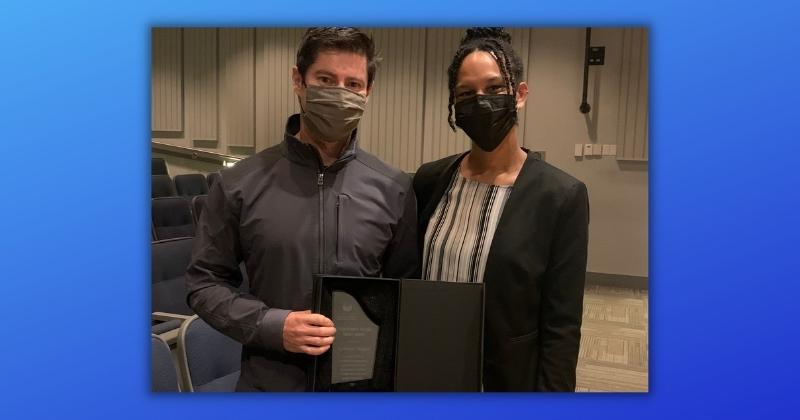
Rodrigo Vargas awarded the 2021 Latino/Hispanic Heritage Impact Award
Rodrigo Vargas, professor of ecosystem ecology and environmental change, in the Department of Plant and Soil Sciences, received the 2021 Latino/Hispanic Heritage Impact Award from the University of Delaware Latino/Hispanic Heritage Caucus.
The Latino/Hispanic Heritage Impact Award acknowledges the accomplishments and impact that staff, faculty and the Blue Hen collective have made in higher education and the surrounding community.
Currently, fewer than 2% of UD faculty members identify as Hispanic. Vargas is the first and only Hispanic faculty member in the College of Agriculture and Natural Resources.
Throughout his career, Vargas has defended the interests and needs of the LatinX community, becoming a role model for LatinX students both at UD and abroad.
“Much more is needed to increase diversity, equity, justice and inclusion across CANR and UD,” said Vargas. “It is extremely important to amplify the voices of minorities in science, technology, engineering and mathematics (STEM).”
Vargas has published over 150 scientific manuscripts which have received more than 11,000 citations, and he has been recognized as a Highly Cited Researcher by the Web of Science. In 2018 he received the Mentorship/Advancement award from the Hispanic/Latino Graduate Student Association and in 2021 the Mid-Career Faculty Excellence in Scholarship Award from UD. He has been named a 2022 Fellow of the Earth Leadership Program, joining more than 200 environmental leaders including Dr. Nancy Targett, former president and dean emerita of the College of Earth, Ocean and Environment.
Vargas has mentored multiple students from underrepresented groups in STEM. In 2017, he received a prestigious CAREER award from the National Science Foundation to study the response of Delaware’s salt marshes to climate change and support education of underrepresented students at UD.
“I truly appreciate the opportunity to share my experiences with students with whom I have much in common. I believe that the foundation for mentoring is to build strong relationships based on respect, empathy, humility and kindness,” said Vargas.
About the Latino/Hispanic Heritage Caucus
The goal of the Latino/Hispanic Heritage Caucus is to create a supportive environment in which Latino/Hispanic faculty, staff, and students can find support from caucus members with mentorship opportunities, advocating for a transparent campus environment, and developing recommendations for the recruitment and retention of Latino/Hispanic faculty, staff and students.