



Our Gardens
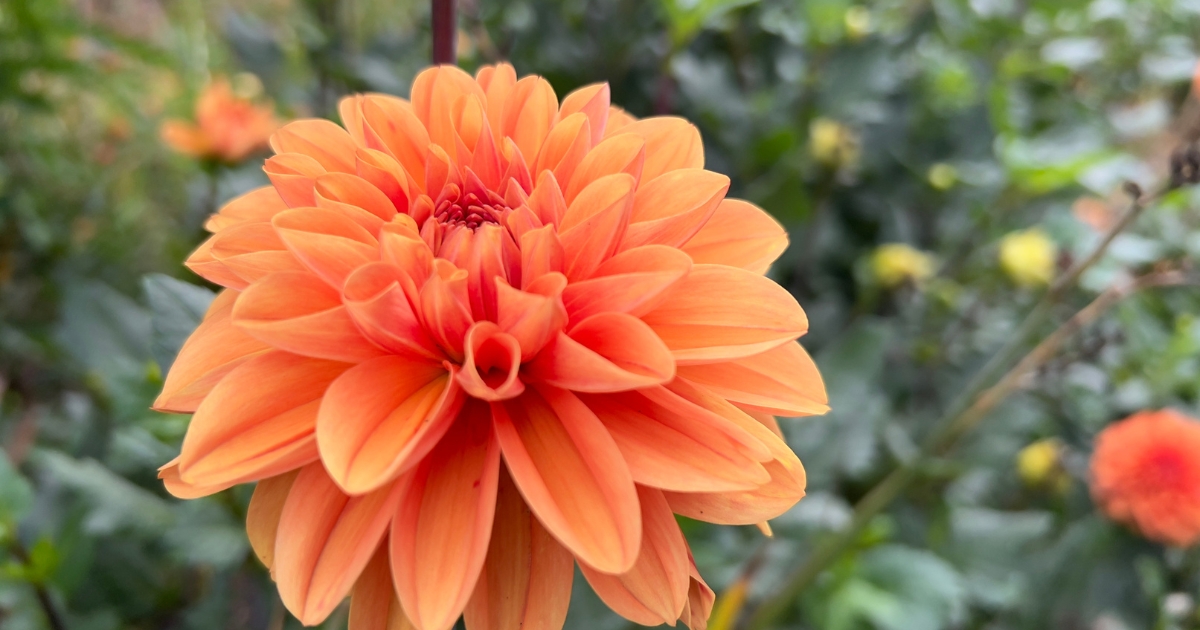
Since its founding, UDBG has collected plants to support the undergraduate and graduate curriculum in the College of Agriculture and Natural Resources. The diversity of plants and variety of garden styles offer beauty, respite, and horticultural interest through all seasons. Visitors are invited to enjoy a number of unique gardens within UDBG’s 15 acres of developed landscapes.
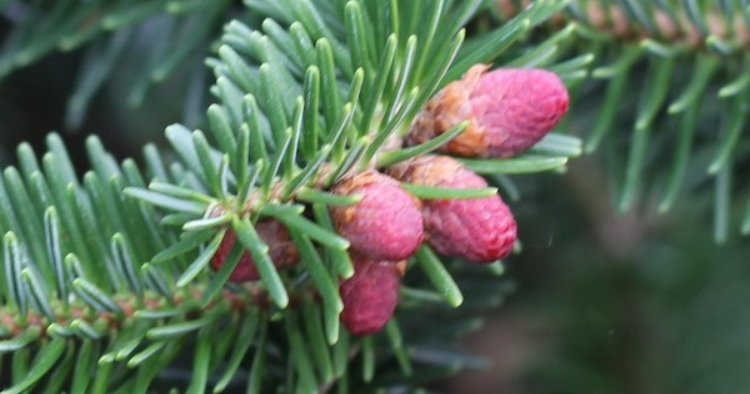
Emily Clark Garden
Located between Townsend Hall and College Ave, this garden displays a diverse collection of conifers, broadleaf evergreens, and deciduous flowering trees and shrubs that provide year-round interest. Established in 1996 through a generous donation by Emily C. Diffenback, this garden holds many of the UDBG’s most historically significant plantings.
Some plants in the Emily B. Clark Garden are the most mature specimens in the UD Botanic Gardens. A few notable specimens include California Incense Cedar (Calocedrus decurrens), Magnolia (Magnolia x loebneri ‘Leonard Messel’), and Golden Larch (Pseudolarix amabilis).
History
Mrs. Emily C. Diffenback of Wilmington, Delaware, was an alumna and former president of the Delaware Federation of Garden Club. Emily donated funds to establish and maintain gardens around the University of Delaware’s campus in 1966.
Professors of plant science Dr. Charles W. Dunham and Dr. Richard W. Lighty designed this namesake garden as a place of beauty, respite, and education for students at the college as well as graduate students in the Longwood Program in Ornamental Horticulture. Recycled soil from the Wolf Hall excavation site (referred to as “the knoll”) was used to form one large mound and several smaller ones, along with a low stone retaining wall running through the garden’s length.
The Emily B. Clark Garden was formally dedicated in May 1973. Featuring ornamental plants and notable donations like a Paperbark Maple (Acer griseum) from Millcreek Nursery (the former nursery of Mr. and Mrs. William H. Frederick, Jr.), it laid the foundation for a vast woody plant collection and an official Holly Arboretum designation.
Planters & Seasonal Displays
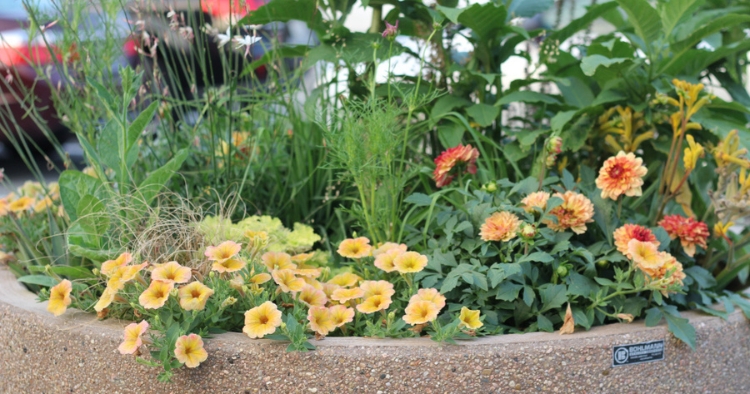
These designs enhance the parking lot and gathering areas with color and interest, creating a welcoming atmosphere while showcasing nonhardy plants not found in the permanent collections. Rotating displays give us the opportunity to highlight nonhardy or tender plants that are not featured elsewhere in our permanent collections, allowing us to showcase a wider diversity of species throughout the year.
Plant list for 2025 Planters
Townsend Parking Lot Planters
- Cephalaria gigantea
- Eucalyptus pulverulenta ‘Baby Blue’
- Anemanthele lessoniana ‘Sirocco’ ColorGrass ®
- Alstroemeria x hybrida Colorita ® ‘Lisa’
- Amaranthus cruentus ‘Hot Biscuits’
- Asclepias physocarpa
- Gossypium herbaceum ‘Albe Red Variegated’
- Hoffmannia ghiesbreghtii
- Ipomoea batatas ‘Bewitched After Midnight’
- Pereskia godseffiana
- Petchoa ‘French Vanilla’
- Salvia farinacea ‘Victoria’
- Acmella oleracea (syn. Spilanthes oleracea) ‘Peek-a-Boo’
- Carex flagellifera ‘Toffee Twist’
- Wedelia trilobata ‘Outenreath Gold’
- Canna ‘Pretoria’
- Canna ‘Phasion’
Creamery Courtyard Planters
- Hosta x Shadowland® ‘Diamond Lake’
- Sedum x SunSparkler® ‘Firecracker’
- Heuchera ‘Southern Comfort’
- Heuchera ‘Red Lightening’
- Carex oshimensis ‘Everillo’
- Carex testacea ‘Prairie Fire’
- Carex radiata
- Spiraea japonica Double Play® ‘Candy Corn®’
- Beta vulgaris ‘Bull’s Blood’
- Salvia officinalis ‘Purpurascens’
- Tulbaghia violacea ‘Variegata’
- Farfugium japonicum (syn. Ligularia tussilaginea) ‘Shishi Botan’
- Ajuga reptans ‘Golden Glow’
- Lavandula x intermedia ‘Phenomenal’
Charles Dunham Garden
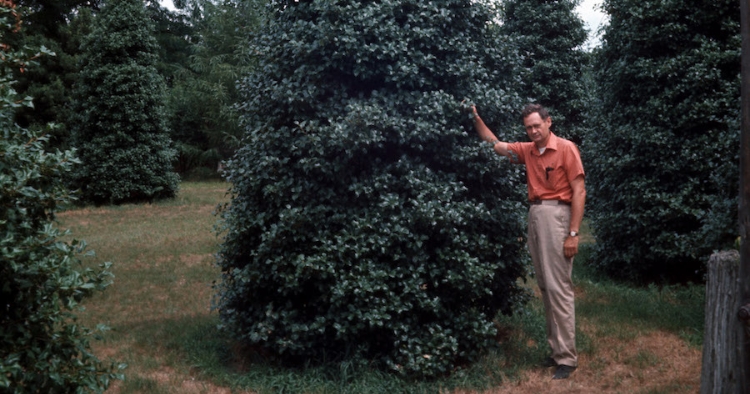
The Dunham Garden is a lush, flourishing shade garden designed with a primarily Asiatic plant palette. Located adjacent to the south entrance of Townsend Hall, the garden showcases canopy trees, flowering shrubs, and an array of groundcovers.
Towering, majestic Japanese Cryptomeria (Cryptomeria japonica) provide a visual barrier around the garden’s perimeter and shelter it from winds. Ribbons of different groundcovers nestled under the shrub layer illustrate plants that will tolerate dense shade. In spring, magnolias burst into flower, creating a ceiling of fragrant pink and white petals. An immense Willow Oak (Quercus phellos) provides shade to a paved courtyard.
History
The Dunham Garden was named in honor of Dr. Charles W. Dunham, who taught at the University from 1954 to 1984 and co-founded UDBG with Dr. Richard W. Lighty.
Designed by students from several Landscape Architecture classes and former UD Professor Gary Smith, the plantings include hollies and magnolias, two of Dr. Dunham’s favorite plants. The donations from various nurseries for this garden honor Dr. Dunham’s 30-year involvement in plant societies, collaboration with the nursery industry, and his role as an educator.
Dr. Dunham passed away peacefully on July 1, 2021, in Bethesda, Maryland. He was 99.
Fischer Greenhouse Garden
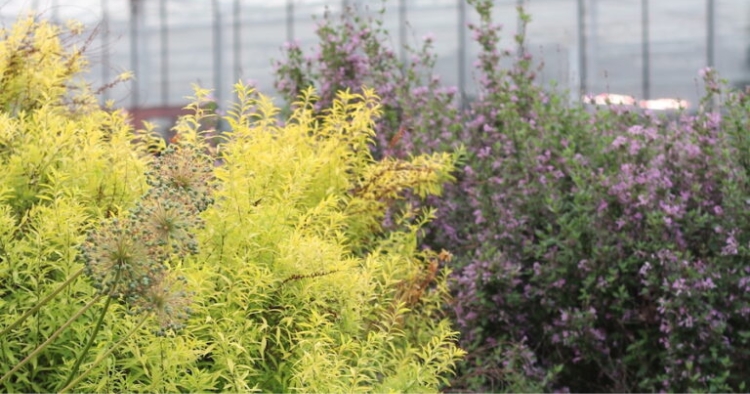
This garden surrounds Fischer Greenhouse and features sweeping garden beds that accentuate the building. Small trees, flowering shrubs, and herbaceous plants grace the greenhouse’s entryway, while a hedgerow with small ornamental and flowering trees borders the parking lot.
Throughout the garden, several mature specimens of hollies, including Foster’s Holly (Ilex xattenuata), American Holly (Ilex opaca), and English Holly (Ilex aquifolium), provide shade and winter interest. To the left of the greenhouse, the hydrangea collection provides visitors with an oasis of dappled shade, particularly in the summer.
History
In the 1960s, the Fischer Greenhouse garden was the site of a one-acre rose garden maintained by undergraduates in the horticulture program—a precursor to the current internship program.
Herbaceous Garden
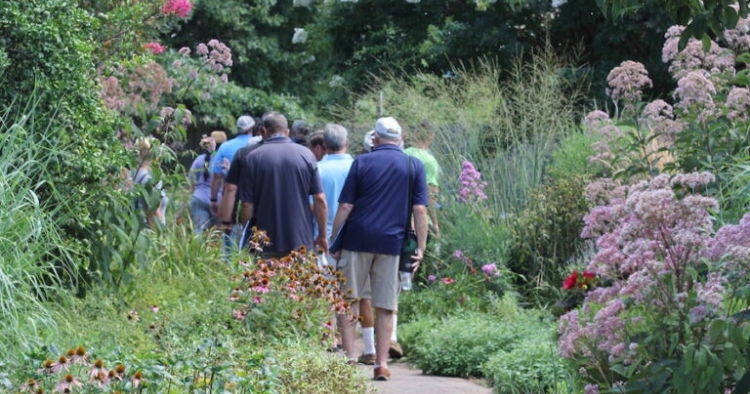
Originally designed as an outdoor laboratory, the Herbaceous Garden is now also a thriving public garden with an aesthetic focus and seasonal interest—an inviting space to study and relax.
This garden demonstrates the seasonal interest and aesthetic nature of herbaceous plants, creating inviting spaces for relaxation and study. This garden was historically used to help students learn herbaceous perennials and features curvilinear beds, a pavilion, brick paths, and connects to the Lepidoptera Trail.
History
The Herbaceous Garden was created in 1986 as an outdoor laboratory for students enrolled in the Herbaceous Plant Materials class. At its conception, plants were laid out in rows within rectangular beds maintained by an enthusiastic group of volunteers who later founded the membership group, UDBG Friends. In 1989, this group redesigned the garden into a series of curvilinear beds with mulch paths.
In the early 1990s, an undergraduate student studying landscape design redesigned the beds and paths with grass paths. In 2009, with a donation to create Crossan Circle, the paths were updated to brick pavers, making the garden accessible to all.
In 2013, three professional designers participated in a design charrette to create a more enticing entrance that would facilitate movement between the Landscape Color Trials, All-America Selections Display Garden, and the Lepidoptera Trail. The winning design created by 1980 Plant and Soil Science alumnus Shipley Allinson featured a wooden pavilion, swale, new borders, and a stone path leading to the Lepidoptera Trail.
The role of the Herbaceous Garden has evolved since its creation. In 2005, a change in the instructors of the herbaceous plant course ushered in a new wave of opportunities. With the garden no longer being the primary resource for students to study plant material, greater diversity and flexibility were introduced.
Trial Garden
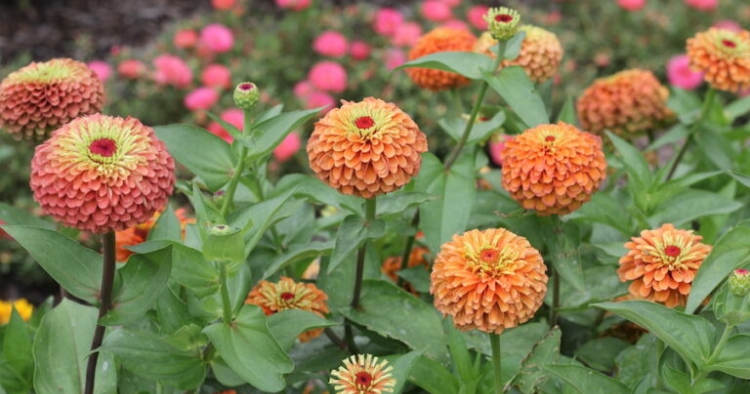
A vibrant display of award-winning annuals and tropical plants, this garden provides inspirations for homeowners while highlighting top-performing, low-maintenance plants. Our trials are evaluated biweekly by UDBG staff.
The Landscape Color Trials and All-American Selections Display Garden feature bold sweeps of colorful annuals, tropical plants, and tender perennials. Inspiration abounds with award-winning plants, just-released annuals, and creative trellising using repurposed furniture, fences, and other recycled props.
Many of the Trial Garden’s displays have won the prestigious All-American Selections award, an honor given to plants consistently ranked the best performing in trial gardens throughout the U.S. Every two weeks between summer and fall, a UDBG staff member ranks each trialed plant’s foliage and flowers.
Searching for low-maintenance plants? Explore these beautiful, adaptable and low-maintenance options. All plants grown in the Trial Garden are watered and fertilized for only a week or two after planting, then must subsist on only rainwater for the rest of the growing season.
Lepidoptera Habitat Trail
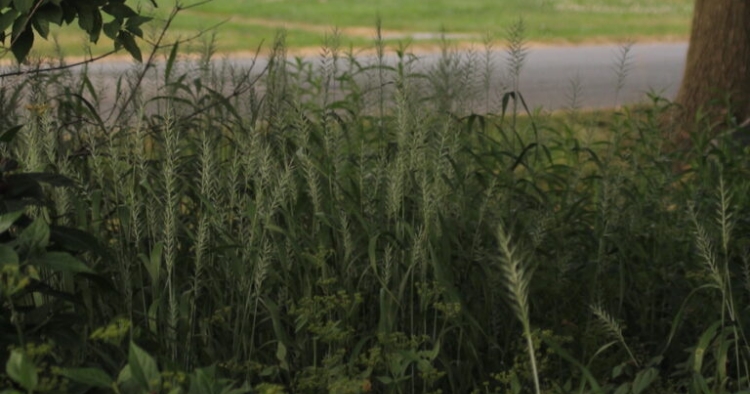
A garden of trees, shrubs and perennials primarily indigenous to the Eastern United States. The adjacent interpretive trail supports butterflies, moths, and skippers (collectively known as the Order Lepidoptera) during both their caterpillar and adult stages of life. Ideal for observing not only butterflies and moths, but birds as well.
Ideal for observing birds, butterflies, and moths, this garden displays many trees, shrubs and perennials indigenous to the Eastern United States. The plantings border a grassy lawn (formerly the site of the turf research area and a small golf course), and those along the road’s edge act as an important corridor to UD’s research area, Ecology Woods.
Notable areas of the garden include the Boreal Forest, which contains mostly coniferous and some deciduous trees such as Sugar Maple (Acer saccharum), Paper Birch (Betula papyrifera), and White Spruce (Picea glauca). Visitors will enjoy walking beneath the canopy of trees in the hot summer months or eating ice cream on one of the benches or observation areas meant to simulate a backyard environment.
The adjacent interpretive trail provides food for butterflies, moths and skippers (collectively known as the Order Lepidoptera) during both the caterpillar and adult stages of their life cycle.
History
This plant collection was established in 1992 partially through a grant from the Delaware “America the Beautiful” project.
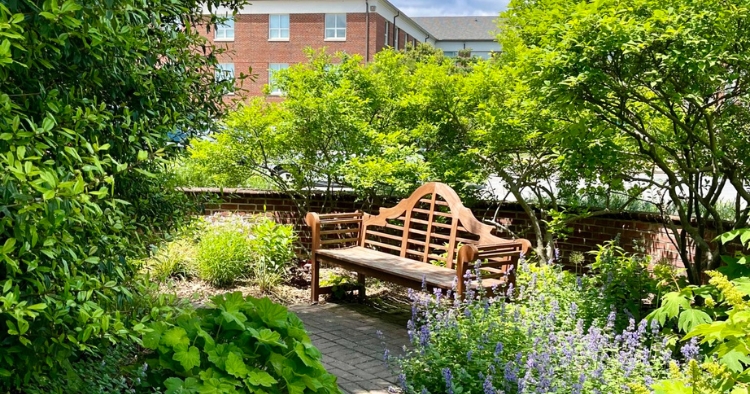
South Greenhouse Garden
A four-season garden surrounded by a low brick wall, deciduous hollies and oakleaf hydrangeas create the illusion of a secluded courtyard and provide inspiration for small space gardens.
The South Greenhouse Garden is full of ideas for homeowners who want to create a low-maintenance garden. The garden, sized like a small residential property, is surrounded by a low brick wall, deciduous hollies, and Oakleaf hydrangeas that create the illusion of a secluded courtyard.
A stunning display of flowers, berries, fragrances, and foliage underscore the four seasons of interest throughout the year. A proliferation of bulbs, daffodils, grape hyacinths, and spring snowflakes announce spring’s colorful arrival. Pineapple Lilies and resurrection lilies continue the bulb display into the summer when the array of true lilies explode into color. During the fall and winter, stately hollies catch visitors’ interest, and flowering sweet olive or false hollies fill the garden with their sweet, orange-blossom scent.
In addition to its multi-seasonal appeal, the South Greenhouse Garden is sustainable in design and maintenance. Designed by students and led by former Plant and Soil Science Professor Chad Nelson and Professor and Director of Landscape Architecture Program Dr. Jules Bruck, it comprises tough, low-maintenance plants that require minimal water and no fertilizers or pesticides to keep them healthy.
As you walk through the garden, you will notice that garden beds have replaced traditional turf lawns, making the garden more colorful, diverse, and wildlife and human-friendly.
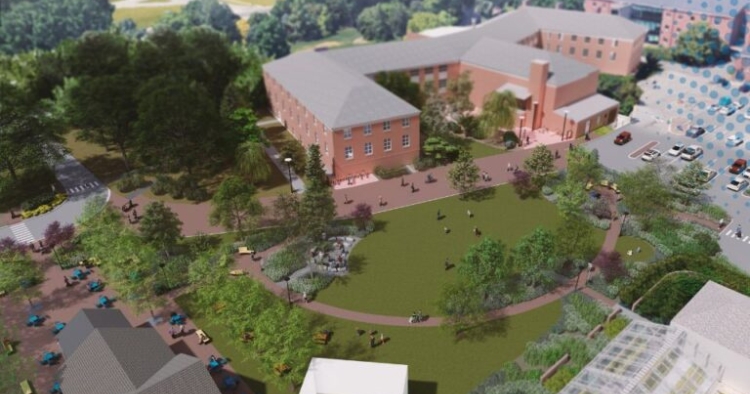
Townsend East Lawn and Garden
The UD Botanic Gardens and the College of Agriculture and Natural Resources are collaborating to transform a portion of the Townsend Hall parking lot into the Townsend East Lawn and Garden. This addition creates an intentional connection between the existing areas of UDBG’s landscape while fostering a welcoming entry point that improves wayfinding, safety, and accessibility to campus amenities and collections.
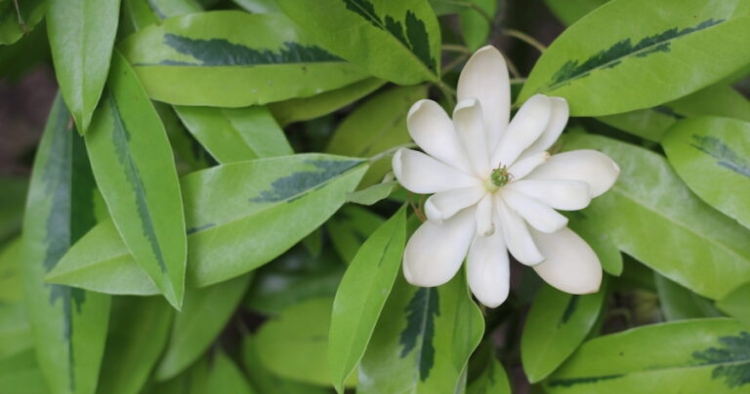
Townsend Hall Courtyards
Using the heat passively generated from the surrounding building, the courtyards feature a unique selection of plants that are not normally able to grow in Delaware’s climate.
The Townsend Hall courtyards feature unique plants that ordinarily cannot grow in northern Delaware. The microclimate created by the warmth and shelter of the building keeps the two courtyards at the back of the building warmer in winter. These conditions allow USDA Zone 8 and some Zone 9 plants to thrive in this protected spot.
A wide range of broadleaf evergreens, including Daphniphyllum macropodum, Camellias, Southern oaks, Evergreen viburnums, Sweetspires (Itea sp.), and Mahonias, provide a year-round display. Plants such as False holly or Sweet olive (Osmanthus americanus), Magnolias, and Paperbush (Edgeworthia papyrifera) fill these courtyards with their fragrance during the spring and fall semesters.
With its diversity of marginal evergreen trees, shrubs, the Townsend Hall Collection is a fabulous garden for viewing plants rarely seen in Delaware.
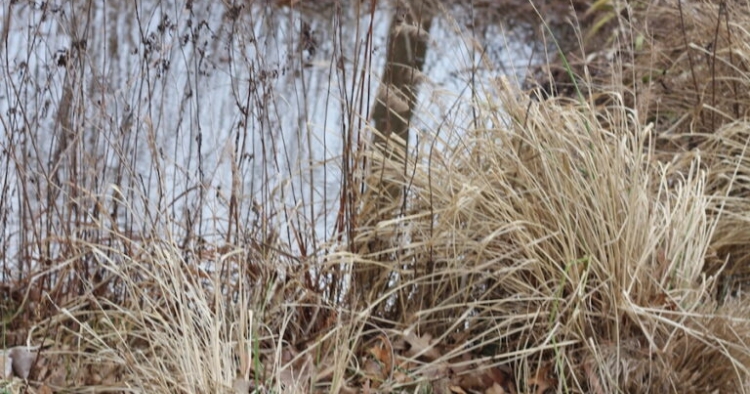
Wetlands
The Wetlands strikes a unique balance between ecology and aesthetics. Hibiscus creates bright pops of color in the landscape while providing an excellent food source for butterflies and hummingbirds, while River birch (Betula nigra), an iconic figure in most mid-Atlantic wetland natural areas, provides root stabilization and is a food source for insects.
In addition to improving water quality and enhancing habitat, faculty and students also use this site for research and education related to water quality, soils, ecology, and horticulture.
History
As visitors stroll through the Wetlands, they may be surprised to learn that this beautiful area used to be a dairy cow pasture at the UD Farm. The cows compacted the soil over time, creating a hardpan (impenetrable layer of soil) that prevented water from draining properly.
In the fall of 2008, the site was transformed into a thriving ecosystem that reduces runoff, improves water quality, increases plant diversity, and supports wildlife. It also serves an important function as an immersive environment where visitors can fully experience wetland wildlife.
The garden was designed with the Delaware Department of Natural Resources and Environmental Control. It features two bays, a low berm to capture water, and scattered stumps for structure and habitat. Students studying landscape design at UD developed the planting plan for trees, shrubs, grasses, and native wildflowers, with Professors Chad Nelson and Doug Tallamy supervising the planting efforts.
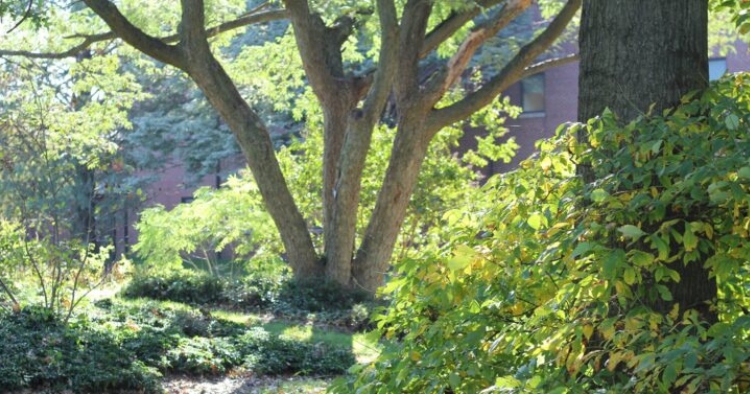
Worrilow Hall Gardens
An extensive collection of viburnums, witch hazels, winter hazels, hornbeams, and oaks located outside of Worrilow Hall. The rolling topography encloses the garden and provides unique opportunities for display.
The Worrilow Hall Garden displays an extensive collection of viburnums, witch hazels, winter hazels, hornbeams, and oaks. Visitors will find a number of rare shrubs and trees, such as Parrotiopsis (Parrotiopsis jacquemontiana), and Chinese zelkova (Zelkova sinica), seldom seen in most gardens and landscapes.
History
In 1999, Dr. John Frett, professor of landscape horticulture and UDBG’s first director, started a project to establish plantings around Worrilow Hall. The goal was to extend plant collections for teaching purposes.
Kirk Himelick, a former professor of landscape architecture, designed a series of curvilinear mounds and beds that would serve as the project’s backbone. He also created a large central lawn that would later be used for events such as Ag Day and children’s summer camps. A fortuitous municipal construction project provided the soil fill needed to shape the garden, and a donation of plants from Princeton Nursery kicked off the collection.