


NUTRITION AND DIETETICS
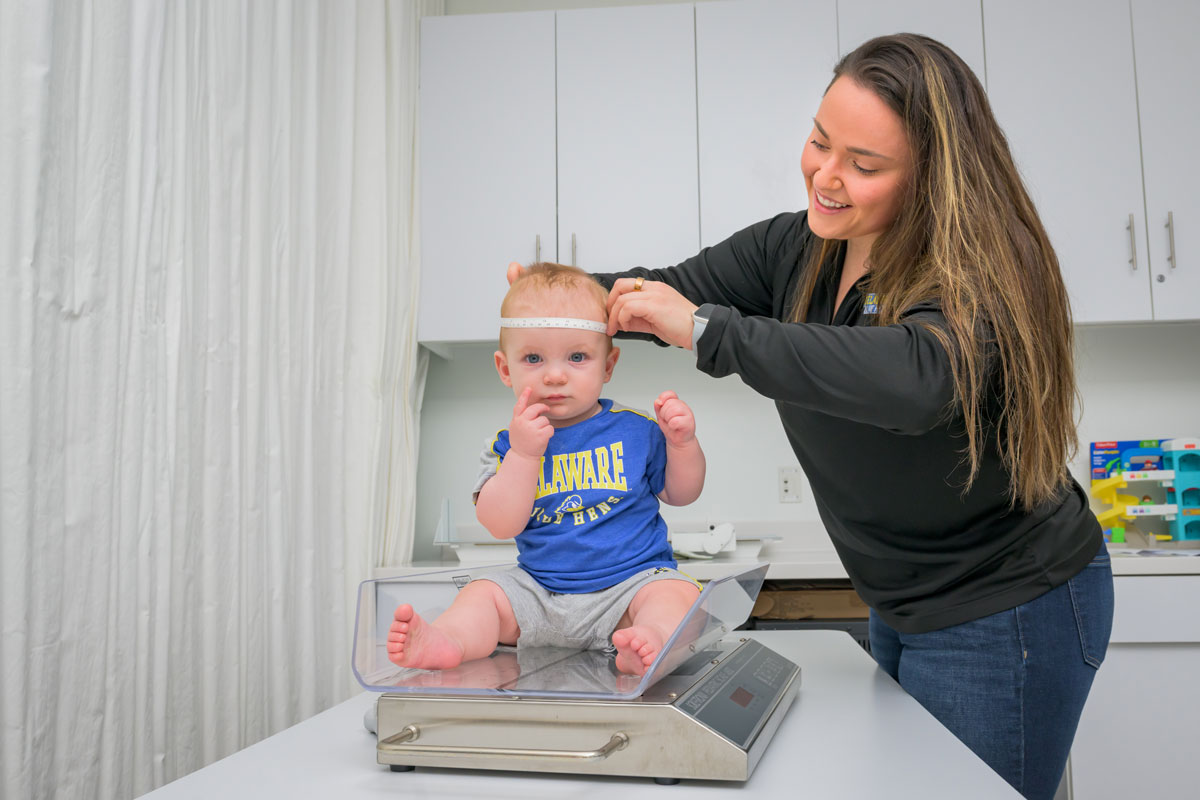
What is Nutrition and Dietetics?
The Nutrition and Dietetics major is a great fit for students who are passionate about food, health, fitness, and helping others live healthier lives.
Whether your goal is to become a Registered Dietitian Nutritionist (RDN) or explore careers in healthcare, wellness, sports nutrition, public health, or the food industry, you'll build a strong foundation in nutrition science and human health.
Along the way, you'll take courses in topics such as nutrition, metabolism, food science, and nutrition counseling, while gaining hands-on experiences that help you apply what you learn in real-world settings.
What Can I Do with a Degree in Nutrition and Dietetics?
A degree in Nutrition and Dietetics can open the door to a wide range of career opportunities. Graduates go on to work in hospitals, healthcare systems, community and public health programs, sports and wellness organizations, food and nutrition companies, and research settings. For students who want to become Registered Dietitian Nutritionists (RDNs), the program provides the coursework needed to continue on to supervised practice and the next steps toward earning the RDN credential.
About the program
The Nutrition and Dietetics (Didactic Program in Dietetics) major is the first step leading to the credential of the Registered Dietitian Nutritionist (RDN). Learn more about the admission requirements, program completion requirements, program mission, goals, and objectives, steps required to become a Registered Dietitian, and the program costs.
Entering freshmen and transfer students may be admitted directly into the Nutrition and Dietetics major (Didactic Program in Dietetics): https://www.udel.edu/apply/undergraduate-admissions/apply-to-ud/
The Department of Health Behavior & Nutrition Sciences Academic Advisors (302-831-2252) are available to meet with prospective students interested in the Nutrition and Dietetics major. In addition, the Nutrition faculty participate in recruitment events organized by Admissions, such as Discovery Days in the summer.
Learn more about admission requirements.
Students who have already completed a bachelor’s degree and want to complete the DPD requirements at the University of Delaware must apply for admission to the University of Delaware. Prior to application these students are encouraged to meet with the DPD Director.
The Didactic Program in Dietetics (DPD) adheres to the University of Delaware academic calendar, including semester start and end dates, holidays, and academic deadlines.
The Bachelor of Science in Nutrition and Dietetics is a 120 credit program that combines University requirements with specialized nutrition and dietetics courses. While we provide a sample of the required coursework to help you see what your journey might look like, every student’s path is unique and can be tailored to their interest and goals.
As an accredited Didactic Program in Dietetics (DPD), our program allows eligible graduates to earn a Verification Statement from the DPD Director. This important document confirms that you have completed the required coursework recognized by the Accreditation Council for Education in Nutrition and Dietetics (ACEND). The Verification Statement is a key step for students planning to pursue supervised practice experiences and ultimately become a Registered Dietitian Nutritionist (RDN).
Verification Statement
The Verification Statement also supports students in becoming a Nutrition and Dietetics Technician, Registered (NDTR), another valuable credential in the nutrition and healthcare field. Graduates pursuing the NDTR credential must also successfully pass the national registration examination administered by the Commission on Dietetic Registration (CDR).
For more information about Verification Statements “Frequently Asked Questions,” click here.
Students with a Degree
Students who have already completed a bachelor's degree and want to complete the DPD requirements at the University of Delaware, must apply for admission to the University of Delaware.
The program director will review the student’s transcript to determine which DPD courses will need to be taken in order to receive a verification statement. Transcript review for DPD course requirements will be limited to individuals who meet at least one of the following criteria: a) resident of the State of Delaware; b) graduate of University of Delaware with at least a bachelor’s degree and/or student accepted by the University of Delaware. Other students will have their transcripts reviewed by the Registrar’s Office. The University of Delaware regularly evaluates courses from other institutions. Please use UD’s Transfer Credit Matrix to review the courses at your current or previous institutions to see which courses have already been evaluated and their UD equivalent courses.
For students who previously earned a minimum of a bachelor’s degree and have returned to meet the DPD requirements, they have a maximum of five years to meet DPD requirements from the date of acceptance in order to receive a Verification Statement. If the student needs more than five years, the student will be required to meet the DPD requirements currently in effect.
Coursework requirements to receive a Verification Statement from the University of Delaware
To receive a Verification Statement from the University of Delaware Didactic Program in Dietetics (DPD), the following courses MUST be taken at UD:
- HBNS321 Quantity Food Production and Service (3 credits)
- HBNS322 Management Food & Nutrition Services (3 credits)
- HBNS327 Onsite Food Production (3 credits)
- HBNS360 Introduction to Public Health & Community Nutrition (2 credits)
- HBNS404 Dietetic Professional Skills Seminar (1 credit)
- HBNS450 Medical Nutrition Therapy I (3 credits)
- HBNS451 Medical Nutrition Therapy II (3 credits)
- HBNS460 Community Nutrition (2 credits)
- HBNS461 Community Nutrition Field Experience (1 credit)
Retention and Remediation Procedures
Students are expected to maintain an overall cumulative grade point average of C (2.00 GPA) to be in good academic standing and to be awarded the Bachelor of Science degree in Nutrition and Dietetics (DPD Program).
A minimum grade of C- is required in CHEM 104, CHEM 213, CHEM 214, CHEM 215, CHEM 216, KAAP309, and KAAP310.
A minimum grade of C- must be achieved for credits to count toward the fulfillment of all core HBNS nutrition courses. A minimum grade of C- in HBNS nutrition 200-level courses must be achieved to proceed to upper-level courses. Students must retake a course until a C- or higher grade is achieved.
Students are expected to discuss their academic program with their advisors and inform them of their progress. Faculty advisors and students are encouraged to discuss relevant academic issues with the DPD Director.
Mission Statement: The mission of the Didactic Program in Dietetics (DPD) at the University of Delaware is to provide a comprehensive and high-quality curriculum that prepares graduates to successfully enter a post-baccalaureate program, an ACEND-accredited supervised practice program, and/or a variety of employment opportunities related to nutrition and food.
Goal 1: Graduates will be prepared for acceptance into graduate school or a supervised practice program.
- At least 25 percent of program graduates apply for admission to a supervised practice program prior to or within 12 months of graduation.
- Of program graduates who apply to a supervised practice program, at least 90 percent are admitted within 12 months of graduation.
- Of Program graduates who apply to a graduate program, at least 80 percent are admitted within 12 months of graduation.
- At least 80 percent of students complete program requirements within 6 years (150% of planned program length)
Goal 2: Graduates will obtain the knowledge and skills required to be successful in an ACEND accredited supervised practice program.
- At least 80% of supervised practice program directors who respond to a survey will rate our graduates’ preparation as “Exceeded expectations” or “Greatly exceeded expectations” when asked to select from greatly exceeded expectations, exceeded expectations, matched expectations, and did not meet expectations.
- The program’s one-year pass rate (graduates who pass the registration exam within one year of first attempt) on the CDR credentialing exam for dietitian nutritionists is at least 80%.
Goal 3: The program will foster experiential learning and leadership opportunities to enrich education and preparation for professional practice.
- At least 60% of graduates will have completed 75 hours of nutrition or health related experience (volunteer or paid) outside of course work prior to graduation
- At least 60% of graduates will have served in leadership roles in student organizations, University programs and/or organizations, and/or professional organizations, as peer mentors or teaching assistants prior to graduation.
Program outcomes and data are available upon request.
Transforming Lives through Food and Nutrition: youtube.com/watch?v=sDl5eFfUweg
Completing the DPD program is the first step leading to certification as Registered Dietitian Nutritionist (RDN or RD) by the Commission on Dietetic Registration (CDR).
Next Steps:
- Complete a minimum of a master's degree granted by a college or university accredited by a U.S. Department of Education recognized accrediting agency or foreign equivalent, and coursework through an Accreditation Council for Education in Nutrition and Dietetics accredited Didactic, Coordinated, Graduate or International program.
- Complete required supervised practice/experience through an ACEND-accredited Dietetic Internship, Coordinated Program, Graduate Program, or an Individualized Supervised Practice Pathway offered through an ACEND-accredited program.
- Pass a national examination administered by the Commission on Dietetic Registration.
- Meet requirements to practice in your state. Many states have regulatory laws (i.e. licensure) for food and nutrition practitioners. All states accept the RDN credential for state licensure purposes.
- Stay up-to-date in dietetics through continuing education. After successfully passing the national exam and earning the credential, RDNs maintain ongoing professional development in order to stay up to date on the latest research, recommendations and best practices.
For more information about educational pathways to become a RDN click here.
Detailed information regarding the cost of obtaining a Bachelor of Science degree from the University of Delaware may be found in the UD catalog: http://catalog.udel.edu/
No additional costs are associated for students enrolled in the DPD, although highly recommended is Academy of Nutrition and Dietetics student membership ($58 per year)
Student Guide to University Policies: http://www.udel.edu/stuguide/
Tuition and fees withdrawal and refund information is found here.
Financial aid resources: https://www.udel.edu/students/student-financial-services/
Scheduling and Program Calendar
The Didactic Program in Dietetics follows the University of Delaware academic calendar:
www.udel.edu/registrar/cal/main.html
Student Experience Spotlights
Our students have been extremely successful in pursuit of their educational and career goals.
Continuing with UD
Abigail's classroom and extracurricular experiences, and support she received in the Health Behavior & Nutrition Sciences department prompted her to stick around as a Blue Hen for the MS/DI program.View Abigail's video testimonial to learn more.
Research filled Summer
Katherine spent a summer examining the effects of wild blueberry consumption on cardiovascular health and cognitive function in the older adult population View Katherine's video testimonial to learn more.
Student Testimonials
See why our students chose to major in Nutrition and Dietetics at the University of Delaware.
Accreditation
The Nutrition and Dietetics major is the first step leading to the credential of the Registered Dietitian Nutritionist (RDN). At the University of Delaware, a student enrolled in the Nutrition and Dietetics major is completing the requirements for a Bachelor of Science degree and the Didactic Program in Dietetics (DPD) accredited by the Accreditation Council for Education in Nutrition and Dietetics (ACEND).
The University of Delaware’s DPD is currently granted accreditation status by the Accreditation Council for Education in Nutrition and Dietetics of the Academy of Nutrition and Dietetics (120 South Riverside Plaza, Suite 2190, Chicago IL 60606-6995, (800) 877-1600 ext 5400). ACEND is the accrediting agency for education programs preparing students for careers as Registered Dietitian Nutritionists (RDN or RD) or Nutrition and Dietetics Technicians, Registered (NDTR).
After completing the DPD, a master's degree and ACEND-accredited supervised practice program is required to become a Registered Dietitian Nutritionist. At the University of Delaware, students may complete an accelerated master’s degree:
- by enrolling in the BS in Nutrition and Dietetics/MS in Human Nutrition 4+1 program followed by an ACEND-accredited dietetic internship, such as UD’s Dietetic Internship, or:
- by enrolling in the combined MS in Nutrition and Dietetics/Dietetic Internship (MS/DI) which fulfills the master’s degree and ACEND-accredited supervised practice requirement, after completing the DPD.
ADDITIONAL LINKS
Connect


Tower at STAR: 100 Discovery Blvd, Newark, DE 19713 | Health Sciences Complex: 540 S. College Ave, Newark, DE 19713 chs-info@udel.edu Phone: 302-831-1060