





Roadmap for farmers
April 23, 2026
UD experts help farmers navigate a complex global market for agriculture
As planting season begins for Delaware’s farmers, they face a myriad of risks, natural and human-made hurdles, which make their livelihoods uncertain. Imagine going to work faithfully and not knowing whether you will get paid for your effort. Well, that is what American farmers face every day.
To a favorable degree, these risks are mitigated in Delaware by experts from the University of Delaware College of Agriculture and Natural Resources, who conduct research and trials to identify the best crop varieties and cultural practices that reduce these challenges.
Delaware Cooperative Extension agents and specialists communicate UD’s research to farmers and growers so they can make informed decisions and create a reliable roadmap for success.
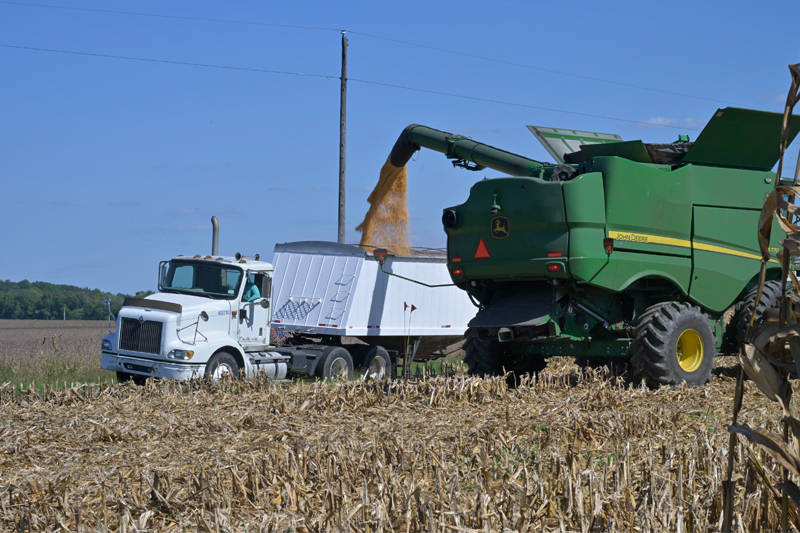
Twentieth-century American humorist and social commentator Will Rogers once said of farmers, “The farmer has to be an optimist, or he wouldn’t still be a farmer."
But farmers can’t rely on hope alone. A successful, modern farmer is part scientist, environmentalist and economist all rolled into one. Competency in all skillsets is essential to compete locally and globally, as well as preserving a family farm operation into the future.
Optimism has its place. But each farmer must also be a realist.
Jim Minner is one. Minner grows the “bread and butter” grain crops that are vital across Delaware: corn, soybeans, wheat, barley and a little bit of produce on 550 acres in the Felton-Harrington area.
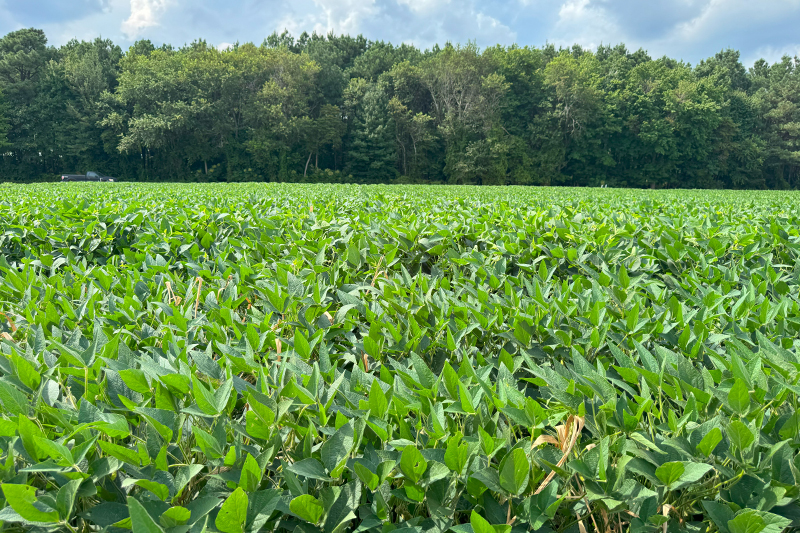
He’s also embraced commodity markets and the complex nuances that inform his planting and marketing strategy.
”The markets were tachycardic,” Minner said of the 2025 growing season. “You can’t panic.”
Farmers like Minner push through the unpredictable nature of their vocation. Weather conditions are a humble, volatile reminder that outcomes don’t always meet expectations. Prolonged droughts, floods and sustained heat stress also increase the risk of disease and pests.
But human-made events are difficult to plan for. Across the world, any one issue or combination of events, trade, tariffs, wars, fertilizer prices, international alliances, and governmental policy shifts in real time — global agricultural markets immediately and directly affect First State farmers.
With new uncertainties looming, Minner turned to Nate Bruce, UD Cooperative Extension farm business management specialist and asked him to revive the Grain Marketing Club, a gathering of small grain farmers whose activity in the club ebbed and flowed over the years in Delmarva.
“The Grain Marketing Club began again after several grain producers made comments that they were struggling with the market volatility seen post-COVID and after the Ukraine-Russia conflict began,” Bruce said.
The club assembles quarterly with one central goal — to help farmers fully grasp the cost of production. Bruce informs farmers on commodity market supply and demand and relays how current news events impact prices. He provides interactive tools so farmers can plug in crops, and acres and evaluate the “what if” scenarios to better strategize how much of what crop to plant. Bruce recently shared a labor-cost tool for farmers who use temporary farm workers through the federal H-2A visa program.
Bruce also contributes a monthly grain outlook report to UD’s Weekly Crop Update.

“Farmers need to figure out what the break-even price is to try and achieve a profitable sales price,” Bruce said. “They need to know what the return on investment is for each input and machinery pass they make in a field. Growing any crop, whether it’s a commodity crop, vegetable, or forage, necessitates understanding the cost of production.”
Bruce describes the profit margins as “razor thin” and the tightest he’s observed in years. He predicts no sign of change.
“Farmers cannot control the market they are given — only the choices on how they raise a crop to market,” Bruce said.
“That's the main reason I wanted to get this program going, because there are too many people who don’t contract their commodities,” Jim Minner explained. “They take whatever they get at the mill. That’s a terrible way to operate.”
Operating differently and encouraging farmers to dive into the many layers of the commodities market is the bailiwick of Kofi Britwum, assistant professor of farm management and agricultural economics.
His presence at the meetings is to encourage farmers to step out of their production comfort zone and explore how markets can mitigate the risk.
“Obviously, farmers are pros when it comes to the production side, right? But they could always use more education when it comes to marketing and selling,” said Britwum, a faculty member in the Department of Applied Economics and Statistics. “When is it a good time to sell? How much do I store versus how much do I sell at a time, right? What marketing instrument should I use? What is the outlook?”
Britwum knows the marketing instruments are tough to grasp. He and his colleagues are on hand with resources if farmers want to explore other marketing options, beyond negotiating a price with the local grain elevator.
“And so we are here to say it’s not that difficult, or help them work through it,” Britwum explained. “We offer more exposure; that is what we can do. But we are not advocating for one over the other.”
The tag team of Bruce’s experience in production economics and Britwum’s expertise in behavioral economics resonates powerfully with farmers.
Bruce and Britwum have recently been awarded a grant through the Northeast Extension Risk Management Center to provide the Delmarva Grain Marketing School series next winter. These programs will be offered in all three states of Delmarva and will help farmers refine their grain marketing strategies.
“There is a human element to grain marketing that sometimes takes precedence over the production economics side of things,” Bruce reflected.
Both Bruce and Britwum have observed that farmers are quick to adopt new production technology, but are more averse to trying something new outside of their comfort zone when it comes to adopting new marketing or crop insurance strategies.
To counter that reluctance, the team invites agriculture professionals to speak during club meetings. Jim Minner is proof that familiarity leads to better choices. He appreciates the agenda Bruce and Britwum plan for each meeting.
“If people would utilize this program, it would help them advance,” Minner said. “We have to adapt.”

Contact Us
Have a UDaily story idea?
Contact us at ocm@udel.edu
Members of the press
Contact us at mediarelations@udel.edu or visit the Media Relations website