




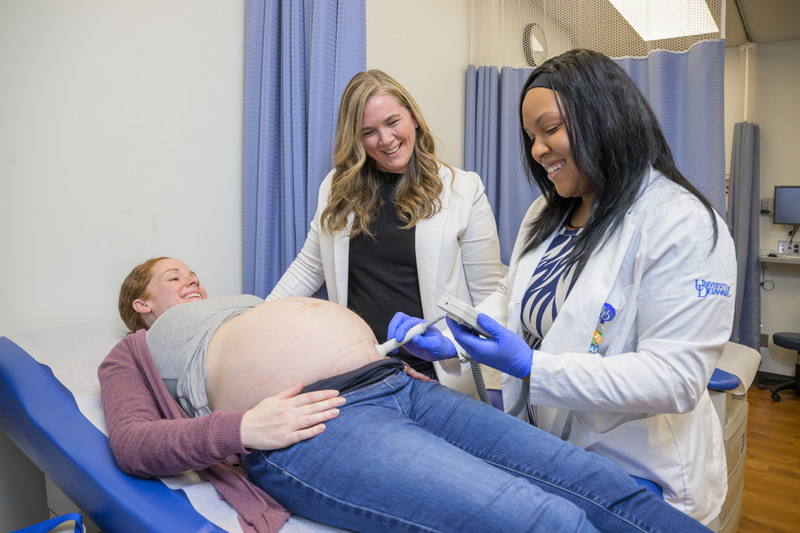
Strengthening maternal care
Photos by Kathy F. Atkinson May 27, 2026
UD’s School of Nursing launches Delaware’s first nurse-midwife master’s program to address maternal healthcare shortages statewide
Sixty-seven percent of pregnant women in Kent County and nearly half of pregnant women in Sussex County who experienced a stillbirth or infant death have late or no access to prenatal care, according to the Maternal and Child Death Review Commission (MCDRC).
Amanda Watson, director of the nurse-midwife program and assistant professor of nursing at the University of Delaware College of Health Sciences, saw the provider shortage and lack of access to care firsthand as a certified nurse-midwife and former clinical operations director for women’s health at La Red Health Center in Georgetown. Sussex County has three birthing hospitals, but none are equipped with a NICU, which creates significant challenges.
“None can deliver a baby under 36 weeks of gestational age, so everyone below 36 weeks must be transferred to Kent or New Castle counties for care if they’re presenting in labor and are stable enough for transport,” Watson said. “Otherwise, the baby will be delivered prematurely and transported if they’re not stable, separating mom and baby.”
Dr. Garrett Colmorgen, director of obstetrics and maternal-fetal medicine at Bayhealth, said the state has made limited progress in addressing those issues.
“We’ve not moved the needle enough,” Colmorgen said.
In response to those gaps, UD’s School of Nursing (SON) will launch the state’s first nurse-midwife master’s program and post-graduate certificate this fall, supported by a $1 million state investment.
“The program is in direct response to workforce needs and healthcare shortages in the state and aligns with our mission in the School of Nursing to promote nurses at the earliest levels to the advanced practice level,” said Elizabeth Speakman, chief nurse administrator and senior associate dean of SON.
She added that current nursing students wanted to see a program like this.
“We’ve had undergraduate students tell us they want to continue their experience as a Blue Hen through a nurse-midwife program, so we expect this program to be quite popular, especially with our direct admission pathway,” Speakman said.
The full-time, two-year program, led by Watson, will launch this fall with an eight-student cohort that will complete clinical rotations at Christiana, Bayhealth and Beebe hospitals, as well as The Birth Center in Newark.
“We will prioritize students living and working in Delaware to make a quicker impact on the workforce shortage,” Watson said.
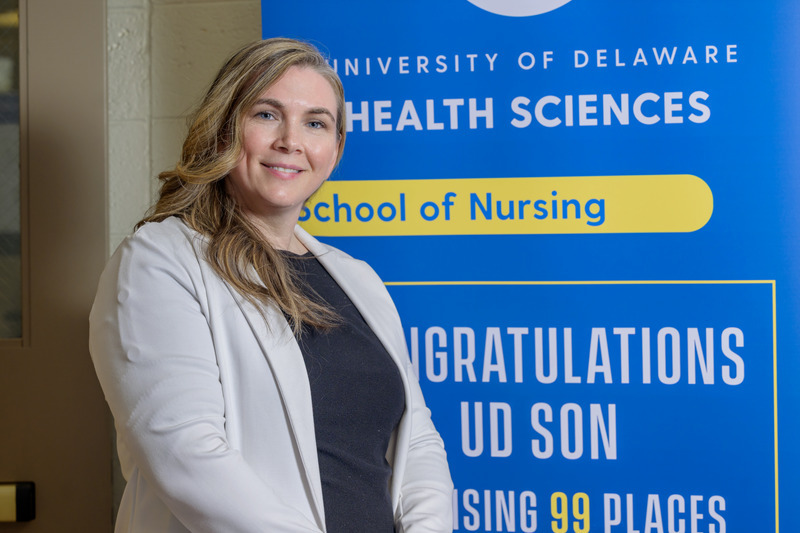
The pipeline strategy is central to the program, said Dr. Meena Ramakrishnan, a consultant and epidemiologist with the MCDRC.
“More nurse-midwives who train here, know Delaware and its resources, make connections and stay here to practice, is an important step toward improving outcomes,” Ramakrishnan said.
Watson said the program reflects what makes change possible in Delaware’s healthcare system.
“I saw a flawed healthcare system in this state, and I’m blessed to be in a state small enough that people who want to fix the problem are given opportunities to affect change,” she said.
Inside Delaware’s first nurse-midwife program
Curriculum in UD’s nurse-midwife program extends beyond clinical training in pregnancy care. Students will be encouraged to volunteer with the MCDRC, the Delaware Perinatal Quality Collaborative and other organizations actively working to address maternal health gaps.
“Together, we will devise innovative ways to deliver healthcare in holistic ways, respond to gaps in social determinants of health, and advocate for women in policy settings while bridging the gaps we see in outcomes, so women stop falling through the cracks,” Watson said.
April Lyons-Alls, a registered nurse and health equity advocate who worked for the MCDRC, said UD’s nurse-midwife program will help students understand systemic barriers patients face beyond clinical care.
“Students entering midwifery practice must understand the gaps and challenges that many pregnant women face on a population level,” Lyons-Alls said. “You’re not just treating moms and babies. You must be cognizant of the systems and challenges they traverse.”
Colmorgen added that nurse-midwives can play an important role in postpartum care.
“After delivery, the focus shifts to the baby, and moms often neglect themselves,” Colmorgen said. “UD’s nurse-midwife program will help us add clinicians who can better support that part of the cycle.”
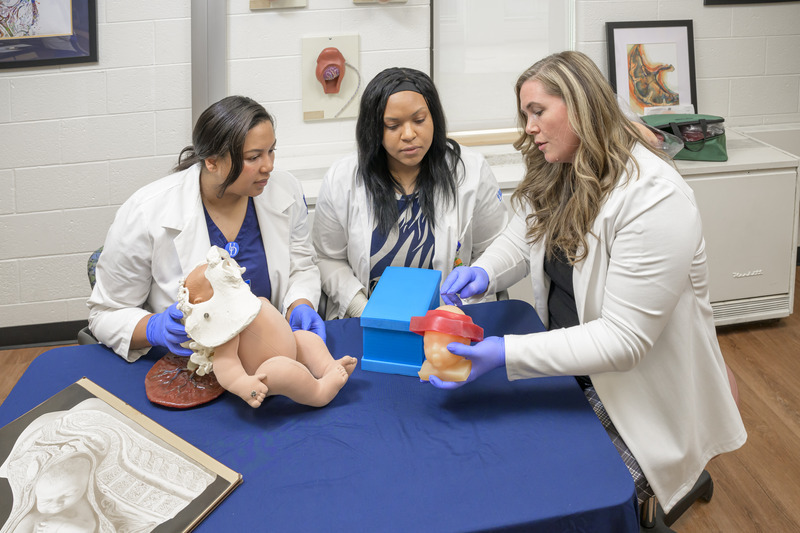
Students will also train in UD’s internationally accredited Center for Simulation Innovation, Interdisciplinary Education and Entrepreneurship (CSIIDEE), where they’ll build clinical skills in a controlled environment before entering their clinicals.
Over time, Watson said, as cohorts graduate and enter the workforce, they can become preceptors, helping train the next generation of certified nurse-midwives in Delaware.
“UD’s nurse-midwife program will provide a substantial boost to the workforce both locally and regionally and improve outcomes for moms and babies in the state,” Watson said.
Contact Us
Have a UDaily story idea?
Contact us at ocm@udel.edu
Members of the press
Contact us at mediarelations@udel.edu or visit the Media Relations website