




Fitness builds bonds
Photos by Kathy F. Atkinson and courtesy of Cacilia Rollet March 09, 2026
Program pairs veterans with UD ice hockey players for high-intensity workouts and lasting camaraderie
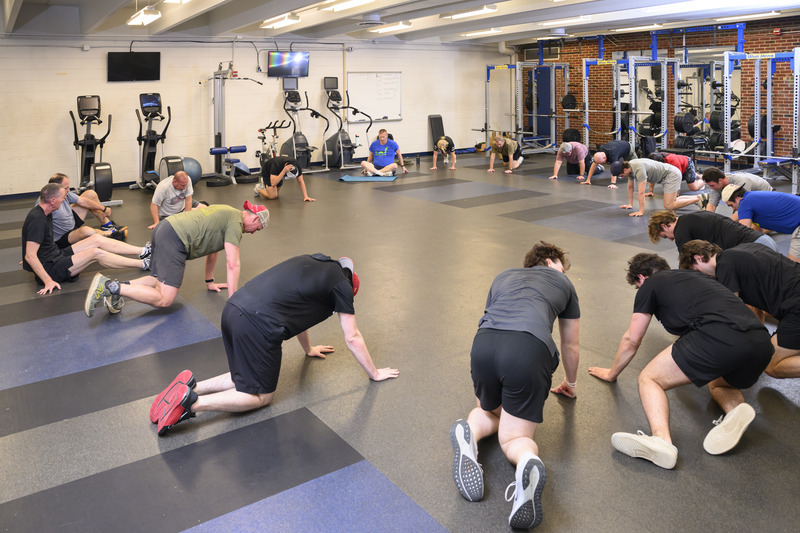
When Demetrius Pinder is working out in the weight room at the University of Delaware Field House, he feels like he’s returned to basic training.
“It’s high-intensity training,” he said. “It’s like I’m back in boot camp.”
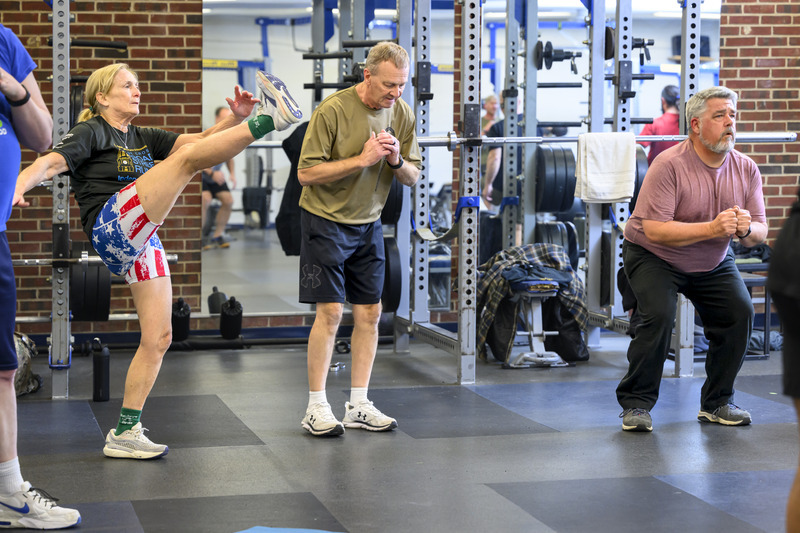
The retired Army Reserve specialist works out twice a week with members of UD’s men’s ice hockey club team through a new iteration of the Veterans and College Athletes Together (VCAT) program within the College of Health Sciences. Over 12 weeks, the veterans engage in 60-minute high-intensity full-body workouts.
Pinder joined last semester, after his doctor flagged health concerns.
“My cholesterol and kidney function have improved, and I’m more flexible,” he noted.
At sunset, when it’s warmer, the group, led by personal trainer Dave Berger, runs up the stairs at Delaware Stadium.
“It’s the best workout of the week — a far better workout than I’d ever do on my own,” said Andy Werner, chaplain for the Delaware Army National Guard.
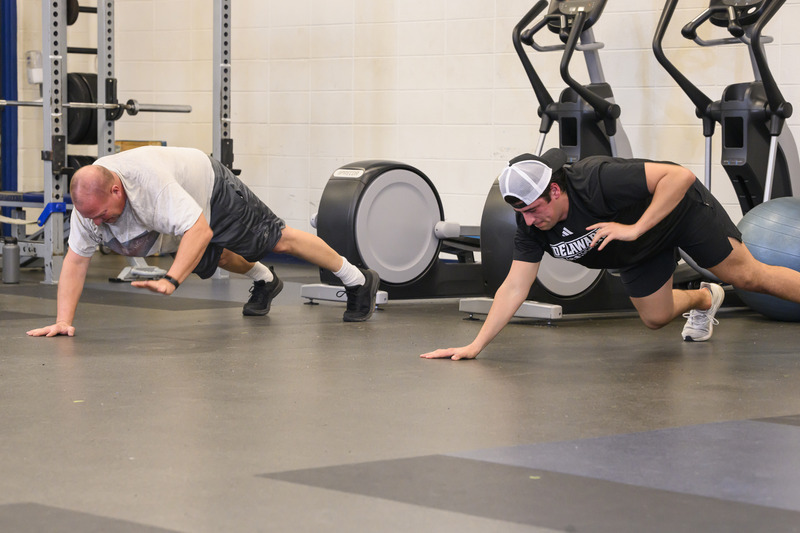
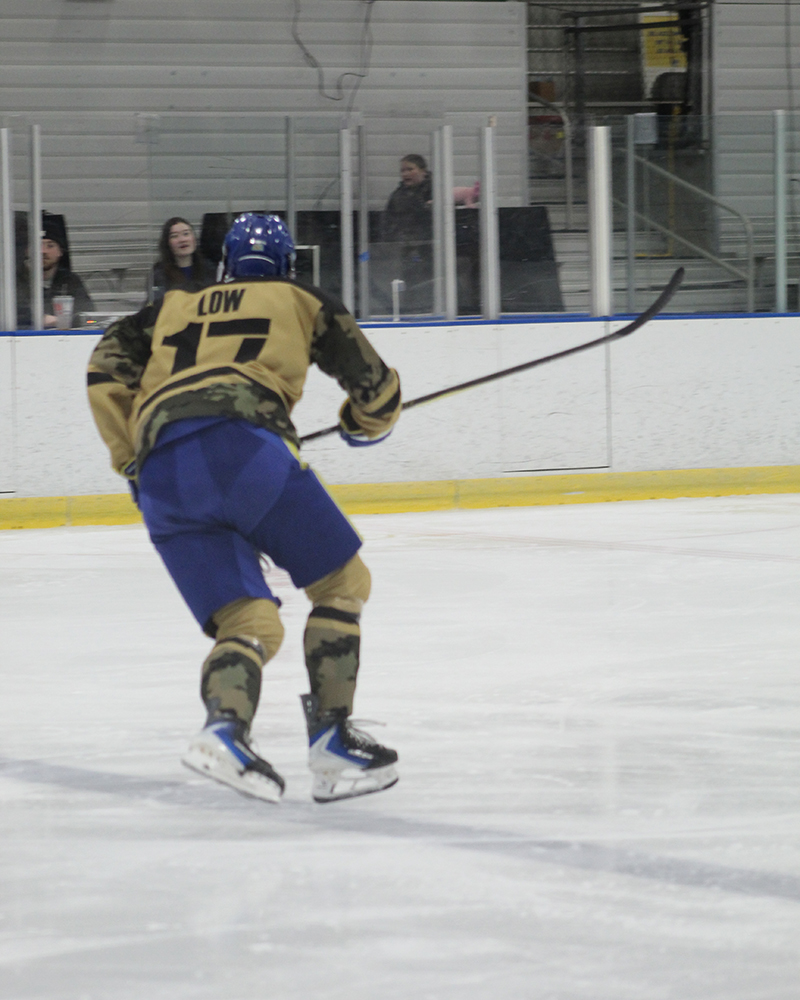
The veterans, ages 45 to 65, are pushed by athletes half their age. Andrew Low, a junior economics major and forward on the ice hockey team, was inspired by his grandfather, a Vietnam veteran.
“From day one, I thought it was the coolest thing ever,” Low said. “Getting to work out alongside these guys and pick their brains is such a privilege.”
Low said these workouts prove age is just a number.
“When you’re going push-up for push-up, as many as you can do in two minutes, you’re all winded by the end, and that’s the fun of it,” he said.
Ellie Bates, a senior sport management major who serves as student manager for the men’s ice hockey team, echoed that sentiment.
“I’m a fit, active 21-year-old, and when I see someone in their 60s doing push-ups faster than me, that gives me gratitude and the motivation to keep going,” Bates said.
The motivation flows both ways.
“Ellie hangs in there with us,” Werner said. “She has a positive attitude, and it’s just contagious.”
“Ellie pushed me through workouts, yelling, ‘You have one more in you! Just one more!’ and I really needed and appreciated that,” Pinder said.
Tracking their progress
Veterans participating in the exercise intervention receive Fitbits so Thomas Buckley, professor of kinesiology and applied physiology, and Scott Passalugo, a doctoral student in biomechanics and movement science, can track activity levels.
“Participants go from being minimally active — barely hitting daily activity thresholds — to blowing them away by the end,” Buckley said.
Many maintain activity levels post-VCAT.
“We’re seeing what we hope is a more permanent lifestyle change,” Buckley said.
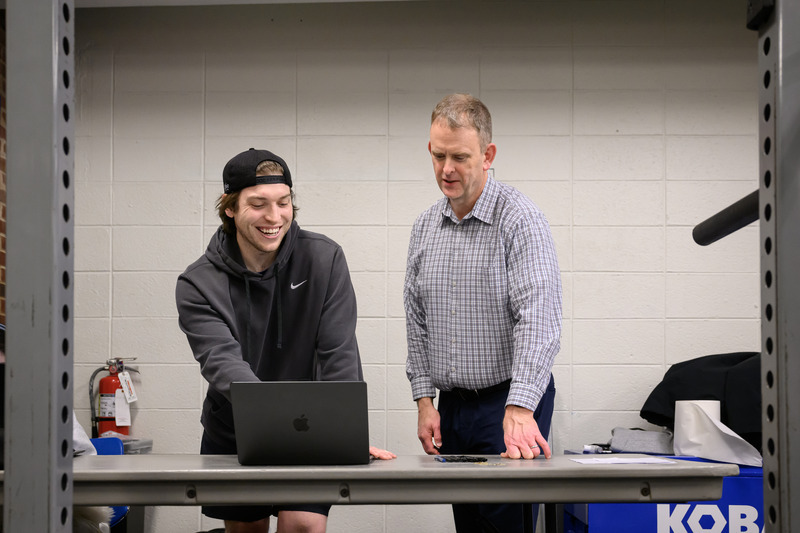
Passalugo, who leads recruitment and program evaluation, has made the program his own. He uses quality-of-life surveys to inform improvements and has incorporated grip strength and functional reach tests at the start and end of the exercise intervention.
“I’ve looked at their gait and posture, which is novel,” Passalugo said. “Their balance overall has improved, and they’ve reduced their fall risk.”
For many veterans, the transformation is tangible.
“I come home all sweaty, and my wife and daughter see the progress,” Pinder said. “It’s also good for the mind. Some veterans deal with depression, and VCAT lifts your spirits. It gives me something to look forward to.”
In the future, Buckley and Passalugo hope to incorporate nutrition and clinical exercise counseling.
A special bond
While improved physical fitness was expected, an unintended outcome has been the camaraderie between the ice hockey team and the veterans.
You’ll frequently find Ron Wilson, who served in the Army National Guard for more than four decades, cheering on his workout buddies from the bleachers at the Fred Rust Ice Arena.
“I really appreciate the players taking time to work out with a bunch of old veterans,” Wilson said. “I’m never going to get younger, and they whip me into better shape and give me a chance to socialize. Too many veterans feel like they don’t have a reason to live, and VCAT gives them a chance to be with others who understand what they’ve gone through.”
Low called Wilson the “ultimate warrior.”
“He’s tough as nails and never misses a workout. He’s always fighting for one more rep and pushes me to the max,” Low said. “I love seeing him at our games and waving to him from the ice.”
The VCAT workouts supplement Low’s routine but help improve his game.
“Whether it’s improving your shot or feeling stronger in your game, being around such incredible people who’ve sacrificed and served our country humbles you,” Low said. “It’s about doing something bigger than yourself.”
Contact Us
Have a UDaily story idea?
Contact us at ocm@udel.edu
Members of the press
Contact us at mediarelations@udel.edu or visit the Media Relations website