
Reflections of the past
Photos by Kate Pfister and Jackson Fox March 13, 2026
UD students honor Marian Coffin’s legacy at the Philadelphia Flower Show
University of Delaware students brought a part of campus history to life at the 2026 Philadelphia Flower Show.
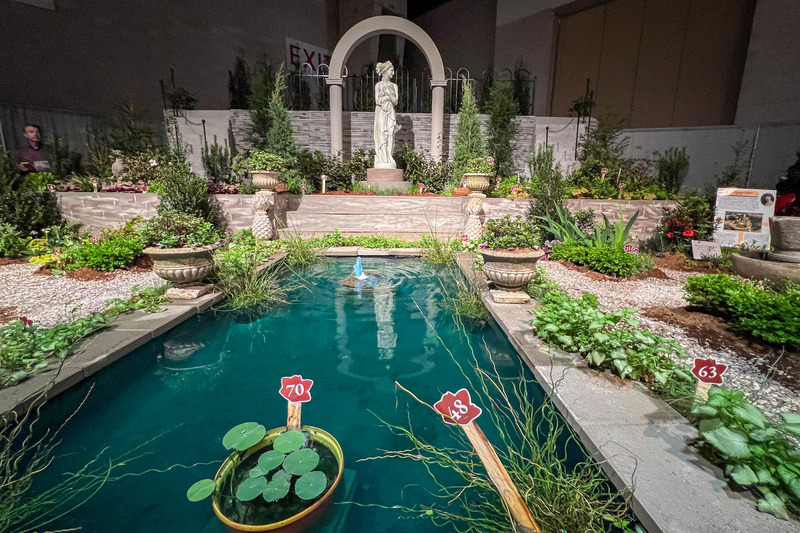
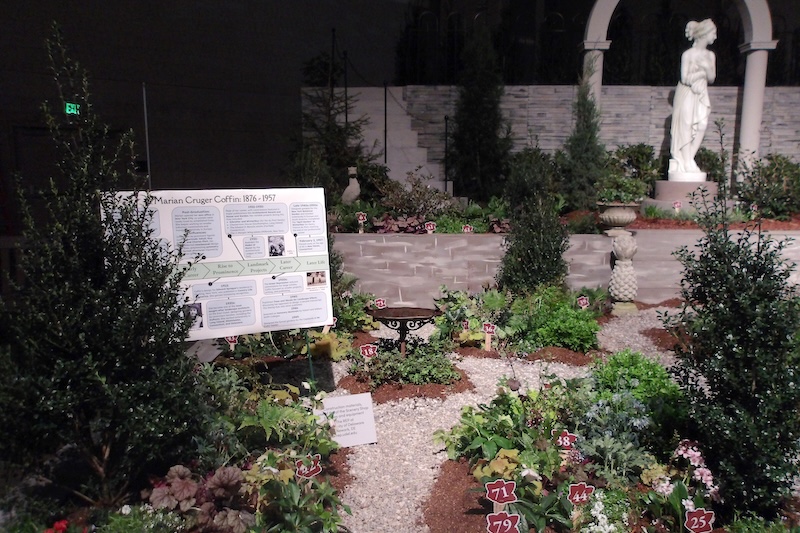
The student organization, UD Philadelphia Flower Show Club, showcased its exhibit, “Reflections of the Past,” at the Pennsylvania Convention Center from Feb. 28 through March 8. The exhibit paid tribute to Marian Cruger Coffin, who designed The Green. Coffin was a landscape visionary and pioneer who lived from 1876-1957 and broke through what was then a male-dominated field.
“Coffin paved the way for a lot of people,” said senior Sarah Nolt, an honors art conservation major and co-president of the UD Philadelphia Flower Show Club. “She created a place for women in landscape architecture.”

Jackson Fox, co-president and a junior landscape architecture major, praised Coffin for her influence from the past to the present in landscape architecture.
“She was one of the first female landscape architects ever, and that was really revolutionary,” Fox said. “We wanted to highlight that history that was unique to Delaware and really important in horticulture and landscape architecture, and garden design and styles.”
Coffin attended the Massachusetts Institute of Technology for its landscape design program between 1901 and 1904, but was not awarded a degree because women were not eligible for degrees at that time.
Being a woman in her field, Coffin faced a lot of barriers to enter the workforce, so she started her own landscape architecture firm in New York City, and hired women to help them get their start, paving the way for women in landscape architecture.
Coffin also found work through connections and her reputation. She had a background in socializing with higher class people in New York, so she was able to make connections and do a lot of work for people who were very notable. Coffin’s lifelong friend Henry Francis du Pont commissioned her to design the garden at his Winterthur estate. Today, Winterthur is a world-renowned institution for art.
“Coffin slipped through the cracks of history,” Nolt said. “She is known for her work because of her connection to the du Ponts.”
The UD Philadelphia Flower Show Club wanted to put Coffin in the spotlight. And with this year’s competition theme, “Rooted: Origins of American Gardening,” Coffin’s story was a natural fit. The students took home a silver medal for their hard work and vibrant exhibit.
“I’m really proud of the work that all our members put in this year,” Nolt said.
The exhibit was inspired by the Marian Coffin Garden at Gibraltar, which uses a series of terraces. These terraces start at the now-empty Gibraltar estate from the top of a hill and use a curved marble staircase to connect down to a flower garden.
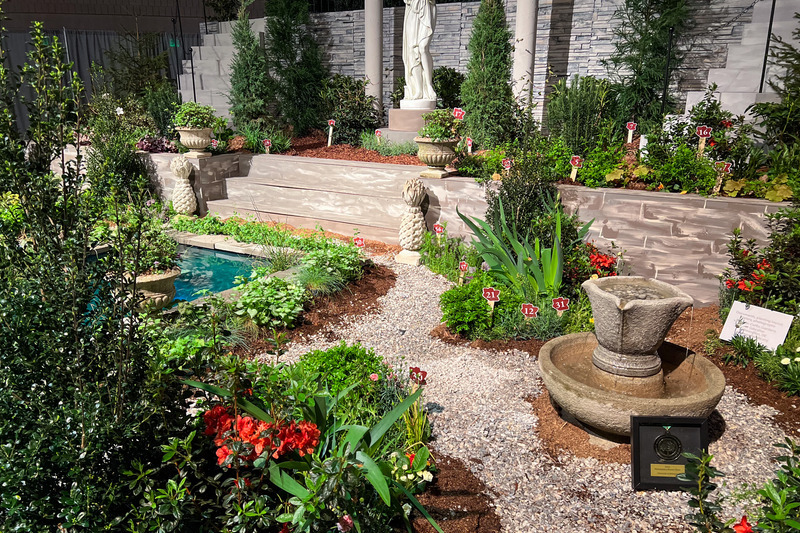
The UD exhibit used three terraces. The first level had two formal gardens, which were planted on opposite sides of a central reflecting pool to show symmetry. The second level showcased bushy plants, evergreens, a central arch, the statue and two staircases leading up to a third level. And the third level was the back wall of the exhibit, which included faux rock and was meant to showcase depth and perspective, concepts important to Coffin’s work.
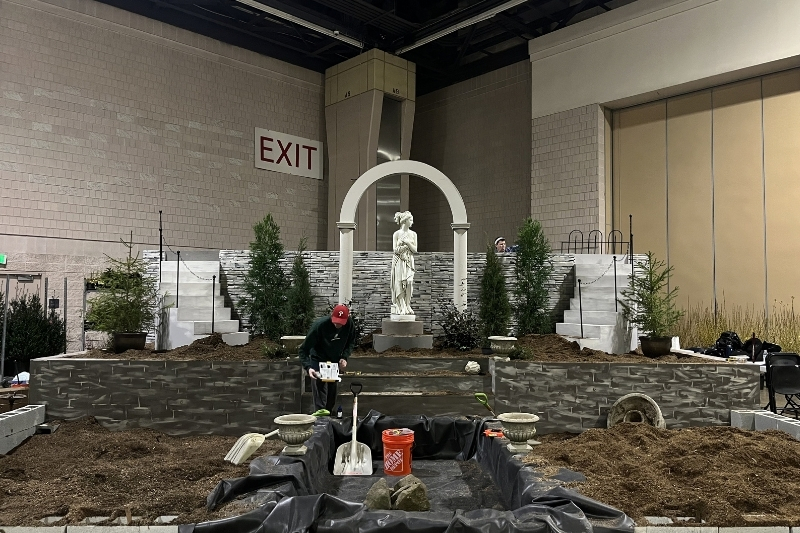
Coffin often used statues in the gardens she designed. The statue in the back of the exhibit was one of the first components installed.
“The big thing everybody sees when they walk up to the exhibit is the statue. It’s about 5 feet tall,” Fox said. The flower show club got the statue from UD’s Resident Ensemble Players. “While it’s not an exact replica or a real statue, it serves the purpose of a placeholder of a statue.”
The students researched the types of plants Coffin used and visited Gibraltar for inspiration. Fox said the club used irises, a spring-blooming perennial, all over the exhibit. They also used azaleas and rhododendron — evergreen flowering shrubs.
They planted autumn ferns, which Fox said are “great texture plants,” for a shady environment. And they utilized hellebores, an evergreen perennial that flowers February through April.
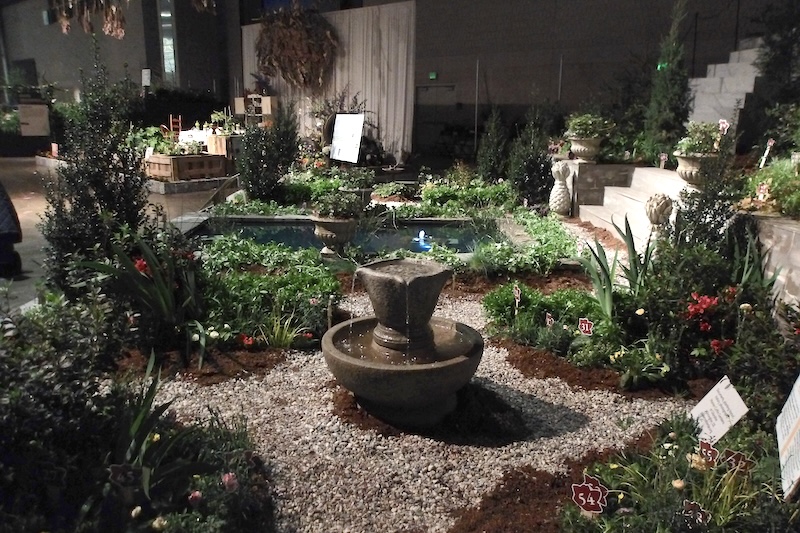
Fox said the student organization wanted to use various shades of color and lay it out like the colors of a rainbow.
“If you go to Gibraltar, you'll see that the garden is kind of laid out from purple to red in a rainbow, so we kind of wanted to emulate that,” Fox said. “One side has more reds, yellows, oranges, also whites and pinks, but more of those hot colors that really pop. You’ll see some irises in there and some dianthus.”
Nolt said Coffin’s legacy inspires her, as she connects to Coffin encouraging other women to get an education and to follow in her footsteps. Nolt hopes to do the same in her field.
“One of my goals in art conservation is to make it accessible to other people,” Nolt said. “There are a lot of barriers to get in, including access to higher education.”
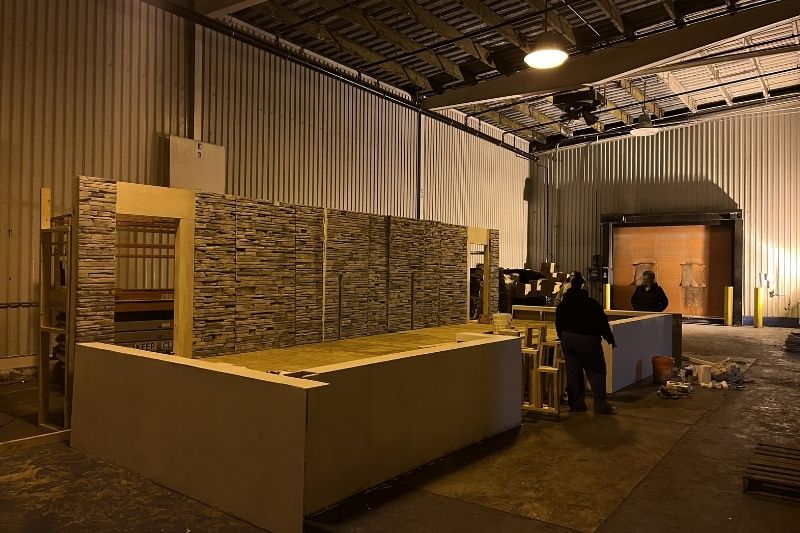
The club’s co-advisers, Stefanie Hansen and Karen Gartley, said they are proud of the effort the students put into developing the exhibit and final product.
“Learning to create something this involved through collaborative effort is no easy task, but is an important skill they can take with them long after this show is over,” Hansen said. “We feel they did a great job representing UD to the show's visitors.”
One thing the student organization didn’t expect to see was people throwing coins into the reflective pool. The group made over $100 in coin wishes. They hope to put the money into next year’s exhibit itself or into a trip to inspire it.
Contact Us
Have a UDaily story idea?
Contact us at ocm@udel.edu
Members of the press
Contact us at mediarelations@udel.edu or visit the Media Relations website