Category: Philanthropy

Philanthropy in Motion: Strength in Science
Momentum: Philanthropy in Motion is a collection of stories highlighting how philanthropy is driving progress and innovation all across our campus. It’s a celebration of those who believe in a better world – and who choose to invest in making it real.
It was Bob Lyons’ birthday, just two years after he had retired from his faculty position at UD, and he was sitting in a neurologist’s office, trying to process what he’d just heard. He could only wonder, “What’s going on?”
Lyons had Parkinson’s disease.
Parkinson’s, often called PD, is a neurodegenerative disease in which brain cells that produce dopamine are damaged or die. PD affects motor and non-motor systems, resulting in symptoms including tremors, balance problems, slowed movements, depression, loss of smell and more. While the disease isn’t fatal, it results in a diminished quality of life, and there’s currently no cure.
Once the initial shock had worn off, Lyons spent some time stewing over it and trying to rationalize it away. (Days he didn’t have any symptoms meant he didn’t really have Parkinson’s, right?)
He confided his diagnosis to a handful of people, including former colleague Dan Sarkissian, associate vice president of development. Sarkissian told Lyons about the Parkinson’s research happening at UD, and, as a former professor in UD’s Department of Plant and Soil Sciences, he was intrigued and eager to get involved.
“Before I retired, I conducted research with graduate students at several universities,” Lyons said. “However, now I was no longer a principal investigator. Instead, I was a research participant from an entirely different vantage point, which I found to be fascinating and eye opening. It’s truly a bonus getting to know the faculty, staff and grad students involved in this PD research, and I felt honored to be included. They are all top notch!”
One of those people is Associate Professor of Kinesiology and Applied Physiology Chris Knight, co-director of the Motor Neuroscience and Neuroimaging Lab at UD. Knight’s work investigates how the nervous system controls powerful muscle contractions and fast movements, as well as how they’re affected by Parkinson’s, aging and exercise.
One of Knight’s ongoing projects is an experimental exercise program called Speed Geezer. Participants engage in high intensity interval training on stationary recumbent bicycles for 30 minutes twice a week, alternating between bursts of intense pedaling and brief recovery periods.
Speed Geezer has been a hit: there’s a sense of camaraderie among patients and researchers, it’s a great way to exercise and alleviate PD symptoms, there’s minimal fall risk and participants’ mobility tends to improve or not decline over time. For countless Parkinson’s patients and older adults throughout the Delaware Valley, the program is life changing.
If it weren’t for a generous donation from UD alumna Jodi Cianci, AS88, and her husband, Chris Cianci, Knight’s research might not have focused on PD at all, though.
In 2011, Jodi Cianci was diagnosed with Parkinson’s, and she and her husband were eager to find ways to manage the effects without using traditional medications. After reading a study from the Cleveland Clinic that concluded pedaling a bicycle multiple times a week could help reduce symptoms, Jodi Cianci started taking spin classes. Less than two months later, Chris Cianci saw noticeable improvement in his wife’s fine motor skills.
The Ciancis later founded Shake It Off, Inc., a nonprofit that advocates for the importance of PD patients exercising. The couple was excited when they heard about Knight’s interest in exercise therapy for Parkinson’s and arranged a time to meet him. At the end of their first visit, the Ciancis gave Knight a check, already convinced his budding research would be invaluable.
“At the time, I was wondering if I could handle a research agenda that involved a population with such complexity because no two people with Parkinson’s disease are the same,” Knight said. “I was concerned because I didn’t think our environment could handle not just the size of the clinical population, but also exercise intervention studies, which are very intensive in time, resources and expertise. When Jodi and Chris shared their story, that’s when I made up my mind that we would take the risk and see where this goes. I wouldn’t be doing Parkinson’s-related research today if it wasn’t for their support.”
For more than a decade, Shake It Off has helped fund research projects, graduate students in Knight’s lab and data collection from patients outside of Newark. The Ciancis’ support has also allowed Knight to continue to develop innovative initiatives like Speed Geezer.
“Dr. Knight has made tremendous strides,” said Jodi Cianci. “Over the years, I’ve adjusted my workout routine based on his research. His findings give hope to Parkinson’s patients for better quality of life.”
As Knight’s work has grown, so, too, has support. The power of collective giving from individuals and families affected by Parkinson’s have helped Knight further delve into areas that are not often researched.
INNOVATING TREATMENTS
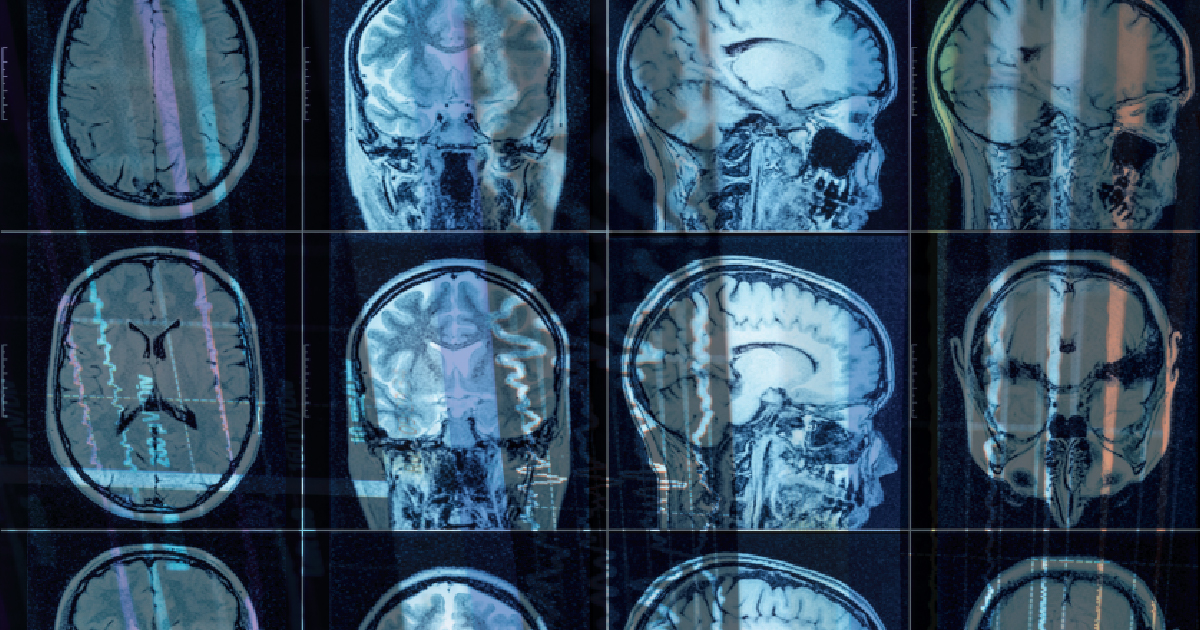
Developing more effective treatments for Parkinson’s requires a deeper understanding of how the condition affects the brain. Just ask Roxana Burciu, the co-director of UD’s Motor Neuroscience and Neuroimaging Lab and an associate professor of kinesiology and applied physiology, who uses advanced imaging techniques to study the disease.
While most Parkinson’s research focuses on early stages, Burciu is dedicated to studying the full spectrum of the disease and its subtypes. Because symptoms and progression can vary widely among patients, understanding the differences can help develop tailored interventions.
Addressing these challenges requires thinking outside the box. While some Parkinson’s symptoms, such as slowed movements and tremors, respond well to medication, others, like walking and balance, are often more difficult to control. Burciu’s current research explores safe, non-invasive ways to improve these functions.
In one project, small electrodes are placed on patients’ scalps to deliver low-voltage currents directly to the brain, similar to common techniques used to stimulate muscles. Burciu's unique study targets the primary motor cortex, which controls leg and foot movements, and places patients in a magnetic resonance imaging (MRI) scanner, allowing researchers to see how the brain responds in real time.
Securing funding for experimental work like this can be challenging. Thanks to support from UD’s Maggie E. Neumann Health Sciences Research Fund, Burciu has been able to conduct the innovative research.
“To change the way we treat Parkinson’s disease, we need to run pilot studies like these and explore ideas that go beyond conventional approaches,” Burciu said. “Many promising directions don’t fit easily into standard funding mechanisms right now. The Neumann Fund makes it possible for me to explore these innovative, early-stage studies that could lead to major advances in Parkinson’s treatment.”
The Neumann Fund was established in 2020 to support research designed to improve health and quality of life outcomes for children and adults with physical and developmental disabilities. While the fund resides in the College of Health Sciences, the intent is to support interdisciplinary research across all UD colleges.
The research fund was created with a gift from Donald J. Puglisi, 12H, and Marichu C. Valencia, 23H, in honor of their granddaughter, Maggie E. Neumann. Puglisi is a member of UD’s Board of Trustees and both he and Valencia serve on the President’s Leadership Council.
CREATING COMMUNITY
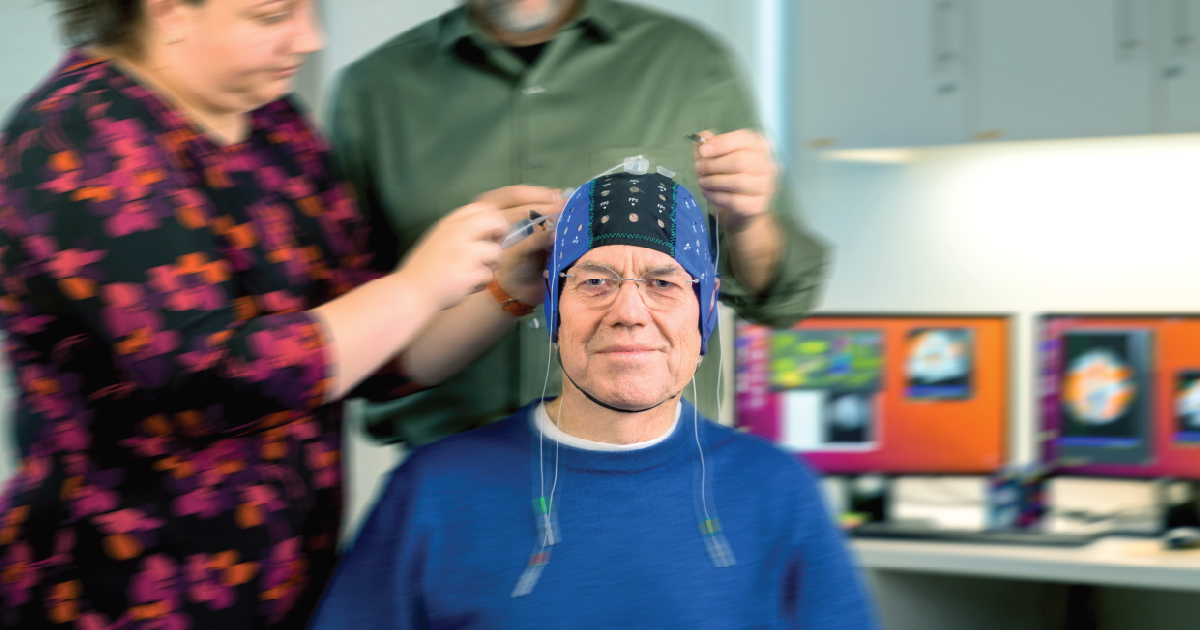
Over the past eight-plus years, Lyons has been involved in a multitude of research projects, which he hears about through UD’s Parkinson’s Disease Registry. Led by Burciu, the registry connects individuals with a variety of voluntary study opportunities, information and a supportive community.
Lyons has been involved with typical hand-eye coordination tests, timing how long it takes to button his shirt and exercise programs. Some of the projects are even fun, like an experiment where Lyons wore virtual reality gear. Walking on a treadmill while the horizon shifted, trying to trick him into thinking he would fall? That was really cool, like a game.
The other “fun” aspect of being involved in Parkinson’s research at UD is the welcoming community Lyons has connected with.
“Being involved in the research at UD has helped me come to a better understanding of what Parkinson’s is all about, and I think that’s really helpful in moving forward,” Lyons said. “I’m not that comfortable with large Parkinson’s support groups, but I have made some good friends with patients involved in the research here. Meeting those other people is interesting. There was a Parkinson’s symposium in Wilmington recently, so a couple of us went to see that.”
Burciu and Knight have noticed similar strong social connections with nearly all of their participants. They want that to extend to southern Delaware, too. By expanding UD’s research presence, they can help more Parkinson’s patients, investigate new treatments and establish close-knit communities across the state.
Meanwhile, Lyons is glad to continue spreading the word about Parkinson’s disease. It means people will better understand the intricacies of the disease and what it looks like. The local support network will grow, and the entire Parkinson’s community — patients, caregivers, researchers — will strengthen.
What it all comes back to is community. A patient who’s been involved in UD’s Parkinson’s research for about seven years even told Burciu as much: “I come because of the sense of community. I belong to a larger group.”
“Research is a team effort that brings together scientists, clinicians and patients,” Burciu said. “Every single participant helps us move closer to breakthroughs that can improve lives. Thanks to generous funding, UD is a hub for making real progress against Parkinson’s.”
Inspired by the impact of research and community? Click here to support Parkinson’s research at UD or volunteer by emailing pd-registry@udel.edu.
Keywords
- College of Health Sciences
- College of Earth, Ocean and Environment
- Athletics
- Lerner College of Business and Economics
- Delaware First Campaign
- Alumni Profiles
- Blue Hen Strong Fund
- Parent and Family Giving
- Alumni Voices
- Momentum
- Alumni News
- Volunteers
- Students
- College of Arts and Sciences
- College of Engineering
- Faculty News
- Campus News
- UDAA
- Biden School of Public Policy & Administration
- Planned Giving
- College of Education and Human Development
- College of Agriculture and Natural Resources
- Horn Entrepreneurship
- I Heart UD Giving Day
- Virtual Engagement and Resources
- Biopharma
- Affinity Club
- Honors College
- Scholarships
- Alumni Wall of Fame
- STAR Campus
- Black Alumni Organization
- Reunions
- Biden Institute
- Careers
- UD MakerNetwork
- Delaware Diamond Society
- Delaware Fund