




Freezer swap drives energy savings
Photos by Evan Krape October 16, 2026
Research Office leads charge to replace old freezers across campus
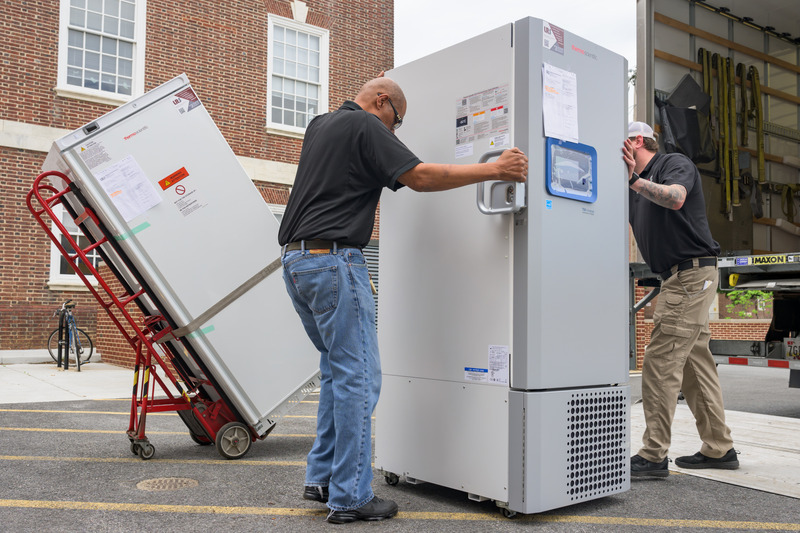
Inside a farm building on the University of Delaware's campus, a research freezer stood for 74 years. Built by International Harvester in 1952, the freezer had been around longer than most of the researchers who used it. Now, it's one of more than 120 freezers being replaced in a University-wide laboratory cold-storage upgrade program.
Funding of more than $700,000 for the project came from Energize Delaware — also known as the Sustainable Energy Utility — a nonprofit organization dedicated to helping Delaware residents and organizations improve energy efficiency and lower energy costs.
“Just one of these older units could use the same energy as a typical single-family home,” said Melinda Duncan, associate vice president for research and director of Delaware INBRE. “The new units use one-quarter to one-sixth the energy of the legacy freezers.”
The project is projected to save 257,000 kilowatt hours annually — the equivalent of the electricity used to power 24 homes.
With Energize Delaware funds needing to be used within the fiscal year, the clock was ticking to identify UD units eligible for a freezer replacement program supported by Thermo Fisher Scientific, a supplier of laboratory equipment and services to UD’s research enterprise. A team from the University’s Research Office, Procurement Services, Facilities Services and Campus Planning, Environmental Health and Safety, and several colleges set to work.
“We brought together a very knowledgeable and eclectic group of people that really had never worked together before,” said Tracy Shickel, associate vice president for corporate engagement in UD’s Research Office. “The project is a case study in breaking down institutional silos, which allowed us to enhance research productivity and resilience.”
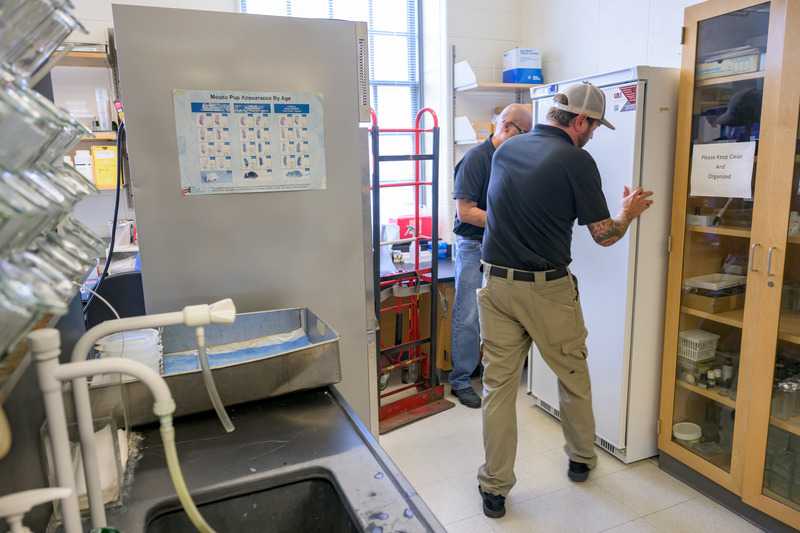
For facility and lab managers, it was a complex puzzle to coordinate decommissioning, delivery, and then setup of the new equipment. Each unit needed to be up and running at its target temperature before materials could be transferred and the older units removed.
Despite the logistical challenges, the replacement program is a boon for researchers.
“These research freezers are very expensive to replace,” said Duncan. “But the reality is that they basically hold scientists’ entire research programs. One of the big worries for all life scientists is that if their freezers go down, they can lose decades of research.”
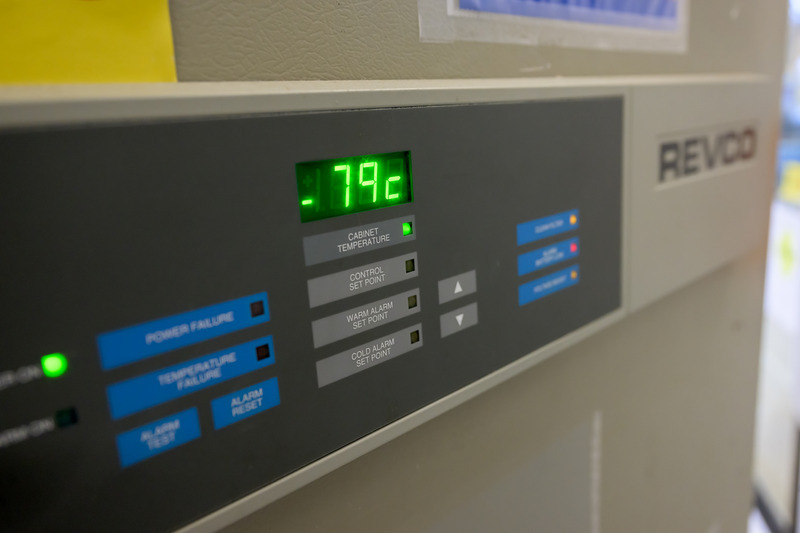
Many of the replaced units were low- and ultra-low-temperature freezers used to store biological samples at 20 degrees or 80 degrees below zero Celsius. Just a few examples of what can be found in research freezers include samples that support research into eye development and the side effects of cataract surgery, irreplaceable deep-sea sediments and samples from marine life, such as sharks, skates, rays and bony fish.
“My laboratory is currently working to describe seven new species of bacteria that we isolated from Delaware. So having these well protected in the cold is key,” said Jennifer Biddle, Mary A.S. Lighthipe Professor of Marine Studies and associate director of the School of Marine Science and Policy. A bonus, she said, is that the new freezers run more quietly, reducing background noise in the lab.
Lydia Schlitzkus from Delaware INBRE who managed project logistics, received more than 150 applications for replacement. The team needed to optimize the funding to replace as many freezers as possible.
“Strong supplier partnerships can create value well beyond the traditional purchasing transaction,” said Danielle LaSalle, a UD sourcing specialist in Procurement Services. “Our partnership with Thermo Fisher helped us find a way to stretch available funding, replace aging equipment and deliver significant energy savings, while ultimately supporting the researchers who depend on these freezers to protect critical research.”
The team estimates there are additional units in need of replacement and are currently seeking funding from Energize Delaware for another round of upgrades. Researchers with freezers that are at least ten years old are encouraged to apply for a replacement.
“We’re excited to have partnered with the University of Delaware on this project to increase energy efficiency and reduce utility costs by replacing the laboratory freezers,” said Drew Slater, executive director of Energize Delaware. “As Jen Kunz in our office has said, electricity existed in Newark longer with those freezers than without them. As we move forward, we’re excited to partner with the University on more projects in the coming year.”
Contact Us
Have a UDaily story idea?
Contact us at ocm@udel.edu
Members of the press
Contact us at mediarelations@udel.edu or visit the Media Relations website