




Research within reach
Photos by Evan Krape and courtesy of Lauren Genova November 04, 2026
UD launches platform to bring socially minded innovations to the public
The University of Delaware has launched an online Social Innovation Marketplace to help research-based innovations reach the organizations, communities and individuals that need them most.
The new portal serves as a centralized hub, showcasing UD’s social innovations and streamlining access for the public. External users can access and download social innovations for public use.
The initiative, led by the Office of Economic Innovation and Partnerships, expands UD’s innovation ecosystem by creating pathways for socially focused programs, tools, solutions, digital resources and other innovations to drive positive social change and enhance overall community well-being.
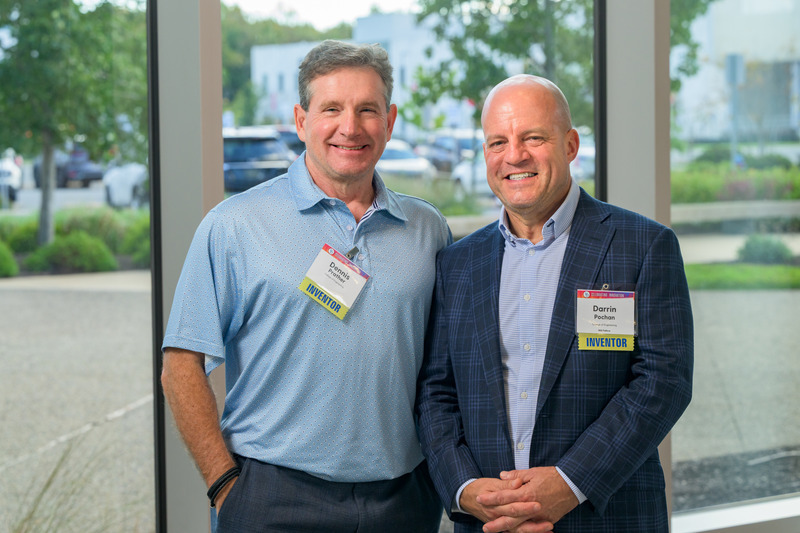
Fabrice Veron, interim vice president for research, scholarship and innovation at UD, announced the new social innovation platform at the University’s Inventors Recognition celebration, held Monday, Oct. 12 on the Science, Technology and Advanced Research (STAR) Campus. The annual event honors the ingenuity, dedication and impact of the University's growing innovation community, which includes over 400 UD inventors working to address critical societal challenges.
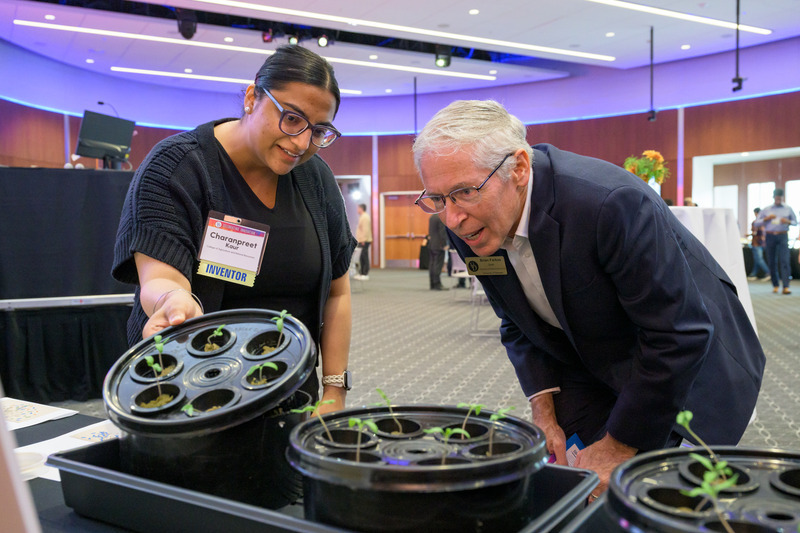
“The Social Innovation Marketplace is designed to connect people with ideas, and ideas with impact,” Veron said. “By making it easier for researchers, students, nonprofits and community partners to find one another, we’re creating new opportunities to address complex challenges together and deliver meaningful benefits to society.”
The innovations already available on the marketplace address a wide range of needs, from helping people manage chronic pain to making complex chemistry concepts easier to understand.
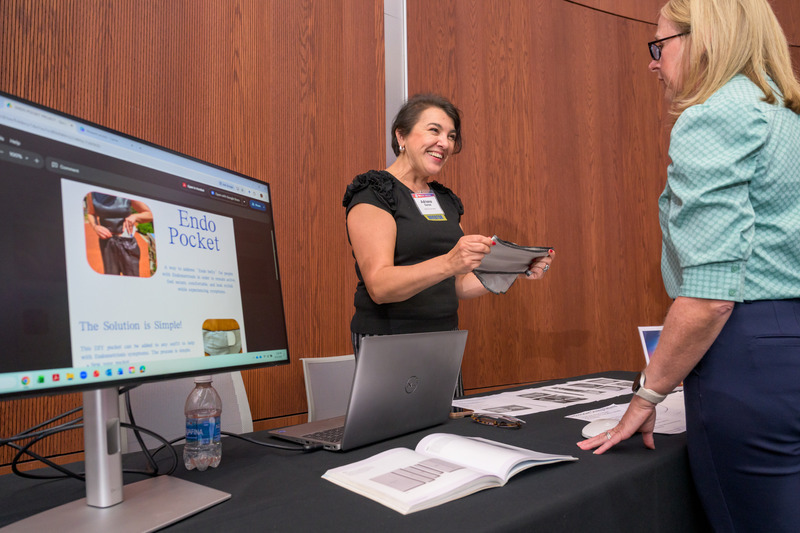
Among the social innovations now available is a hands-free solution that secures portable heat therapy devices for individuals experiencing pain associated with endometriosis or other chronic abdominal conditions. Designed to be worn under clothing, including trousers, the pocket enables quick access to discreetly insert or remove a rechargeable portable heating device.
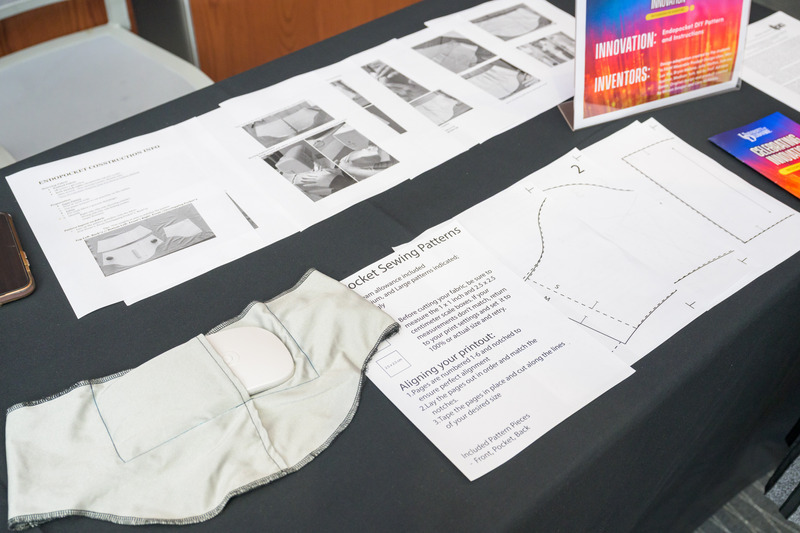
The project grew out of Adriana Gorea’s wearable product design class, the capstone course for students pursuing a functional wearable design minor in fashion and apparel studies. Gorea, associate professor of fashion and apparel studies, said the innovation also could be used as a concealed pocket for anyone looking to store everyday items like keys or a phone.
Gorea views social innovation as an opportunity for academia, particularly students.
“Students want their skills to help people. They are really interested in one-of-a-kind projects, and, in this case, they had the chance to create a large market ready innovation,” said Gorea, adding that making the pattern and instructions for creating the hands-free pocket available to the broader community “invites others to tap into their own ingenuity.”
Expanding pathways for research to reach communities
Meanwhile, Lauren Genova, associate professor of chemistry and biochemistry, has created a board game to help students understand quantum numbers — a key stepping stone to grasping more advanced chemistry topics. The game is designed for high school or college chemistry students and can be easily used in classroom or study group settings. The project began in Genova’s general chemistry course and was developed with the help of several students.
As she witnessed how helpful gamification was for student learning, Genova realized it could have broader reach if other educators adopted it. She shared the game with her faculty peers, but that’s as far as it went until she connected with OEIP’s Technology Transfer Office, which manages the University’s intellectual property.
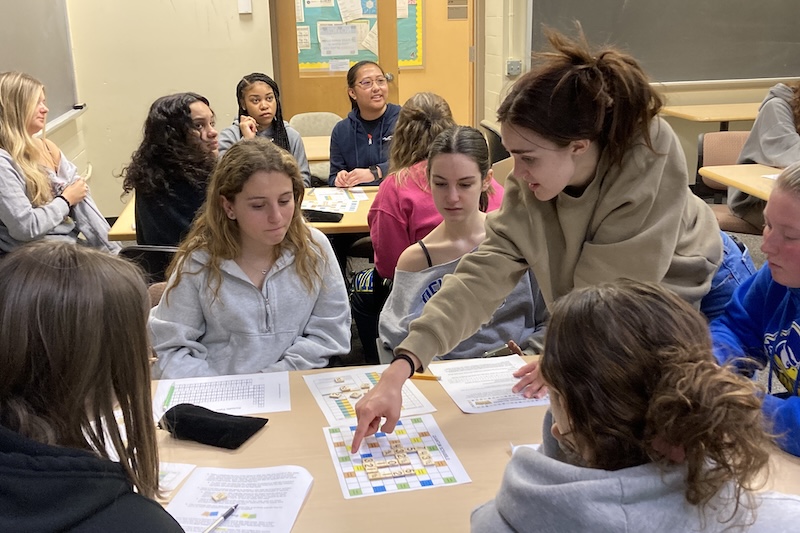
Now, Genova is hopeful the game’s increased visibility through UD’s Social Innovation Marketplace will allow her innovation to benefit students in Delaware and beyond. Earlier this year, Genova and colleagues published a paper about their approach in the American Chemical Society's Journal of Chemical Education. UD alumnus and paper co-author Yiben Wang, an assistant professor at Villanova, said the game has given his students greater confidence in their knowledge of quantum numbers.
“The game is a fantastic way to bring active learning into the classroom,” said Wang. “In the past, students would just fill out worksheets on their own. This game requires students to collaborate while competing against other teams, and that game-based approach makes learning so much more fun.”
And Genova is just getting started.
“We’ve got a new educational game under development,” she said.
Advancing UD’s societal impact
Innovation is central to UD’s mission as a research university.
Engaging students alongside faculty researchers is one way UD demonstrates its impact, preparing the next generation of innovators, entrepreneurs and changemakers while helping build the workforce that Delaware, the nation and the industries of the future will need.
Initiatives such as the NSF Accelerating Research Translation (NSF ART) program at UD, which focuses on creating the infrastructure and support necessary to move technologies into practice, are another. For example, UD’s Innovation Ambassadors are inventors who support their peers by sharing what they’ve learned about research translation to society.
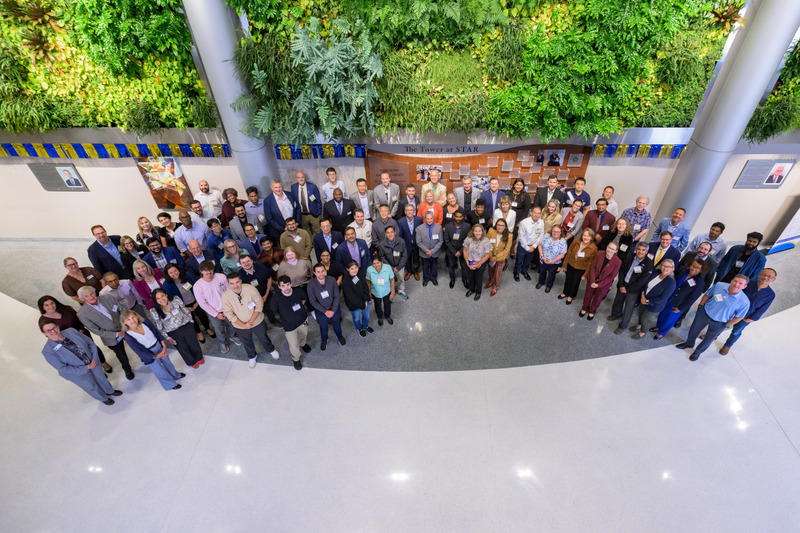
An inventors showcase at the Inventors Recognition event highlighted several technologies and innovations currently under development at UD. Alongside Gorea and Genova’s social innovations, other UD-developed technologies on display included a plant-beneficial microbe designed to boost crop health and productivity; light-triggered hydrogels for studying wound healing, an AI engine designed to turn academic content into study aids for students, and novel transistors essential to next-generation electronics.
These and other discoveries developed at UD all have one thing in common — impact.
“What makes these achievements especially meaningful is that their impact extends far beyond our campus,” said Veron. “The discoveries made at UD help fuel new companies, strengthen existing industries, create jobs, improve health outcomes and advance sustainability in Delaware and around the world.”
To learn more about the Social Innovation Marketplace, contact OEIP’s Technology Transfer Office at techtransfer@udel.edu.
Contact Us
Have a UDaily story idea?
Contact us at ocm@udel.edu
Members of the press
Contact us at mediarelations@udel.edu or visit the Media Relations website