




Conserving culture
Photos by Evan Krape, Kathy F. Atkinson and Dorothy Cheng and courtesy of courtesy of Margalit Schindler May 28, 2026
UD’s graduate art conservation program builds its endowment with major gift
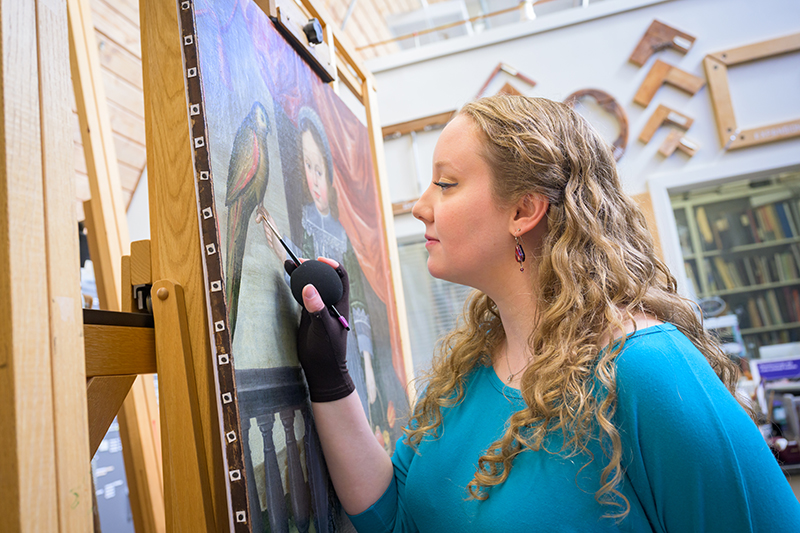
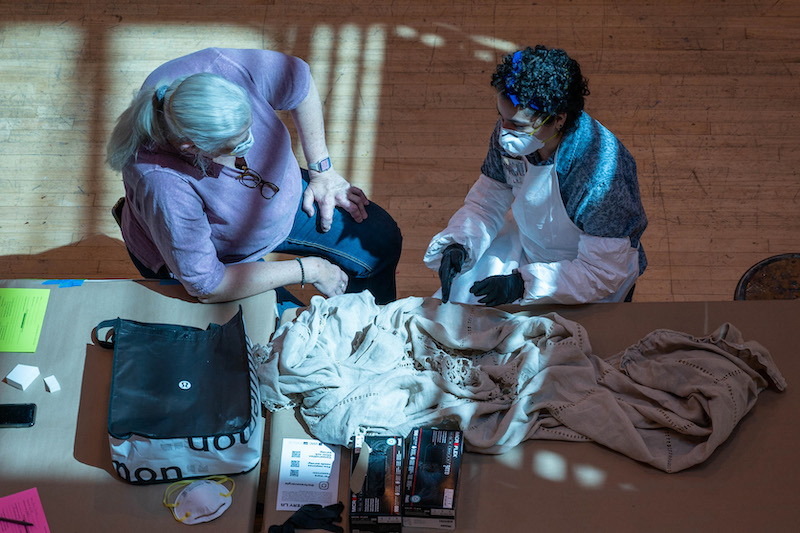
Faculty and alumni of the Winterthur/University of Delaware Program in Art Conservation (WUDPAC) have played key roles in saving and protecting the nation’s cultural treasures, from the Star Spangled Banner, the torch of the Statue of Liberty and the Emancipation Proclamation to helping families preserve their personal treasures after natural disasters like the 2025 Los Angeles fires or Guadalupe River floods.
In April, WUDPAC received a transformative $4.25 million endowment gift from the Sherman Fairchild Foundation in support of graduate education. This extraordinary investment builds on the Foundation’s longstanding commitment to the field and will provide permanent support for graduate stipends and tuition.
At a time of increasing uncertainty in arts and humanities funding, this endowment strengthens the program’s financial foundation, enhances long-term planning and reinforces the program’s ability to recruit and sustain outstanding and diverse cohorts of students.
This gift directly advances WUDPAC’s commitment to equitable access, student well-being and living-wage-aligned support, while reducing reliance on annual fundraising and allowing for more strategic use of institutional resources. It also helps secure the long-term excellence of WUDPAC — ensuring that the program can continue to provide rigorous, immersive training, foster global partnerships and prepare the next generation of conservation professionals.
This award is part of a broader investment in conservation education, with parallel endowment support provided to the Patricia H. and Richard E. Garman Art Conservation Department at SUNY Buffalo State University and the Conservation Center, Institute of Fine Arts, New York University.
“We are deeply grateful to the Sherman Fairchild Foundation for their leadership and partnership in strengthening and sustaining graduate education in art conservation,” said Debra Hess Norris, Unidel Henry Francis DuPont Chair of the Department of Art Conservation and professor of photograph conservation. “This support strengthens our ability to carry our work forward — with care, with purpose and with a deep sense of responsibility to the communities we serve.”
Shifting focus
Despite WUDPAC’s national prestige and impact, it did not escape sweeping cuts made by the National Endowment for the Humanities (NEH) in April 2025, losing a grant that supported graduate stipends.
In response, Norris worked closely with WUDPAC director Joelle Wickens, along with faculty, staff, alumni and supporters to secure alternative funding and ensure that the program’s work could continue unimpeded and that students would not face impossible financial barriers.

Over the past 12 months, WUDPAC has secured more than $5 million in endowment and spendable funds to support graduate education in art conservation. These transformative investments have come from organizations including the Wyeth Foundation for American Art, the Helen Frankenthaler Foundation, and the Ellsworth Kelly Foundation, as well as alumni and private individuals — many of whom were first-time donors to the program.
“Our work in the preservation of cultural heritage remains essential. It connects people to one another, to history, and to a shared sense of identity and understanding,” Wickens said.
Philanthropic support has been key to WUDPAC since the program’s founding in 1974, and the department’s collaborative approach to expanding partnerships and diversifying funding sources has helped ensure the program’s continued strength and stability.
Unparalleled opportunity
The knowledge and skills needed in art conservation take many years to develop. WUDPAC students take advantage of every opportunity to expand their knowledge, and this is possible through the funding they receive.
For example, third-year graduate student Daisy Diamond worked with Yup’ik communities in Alaska to preserve grass baskets in the Anchorage Museum.
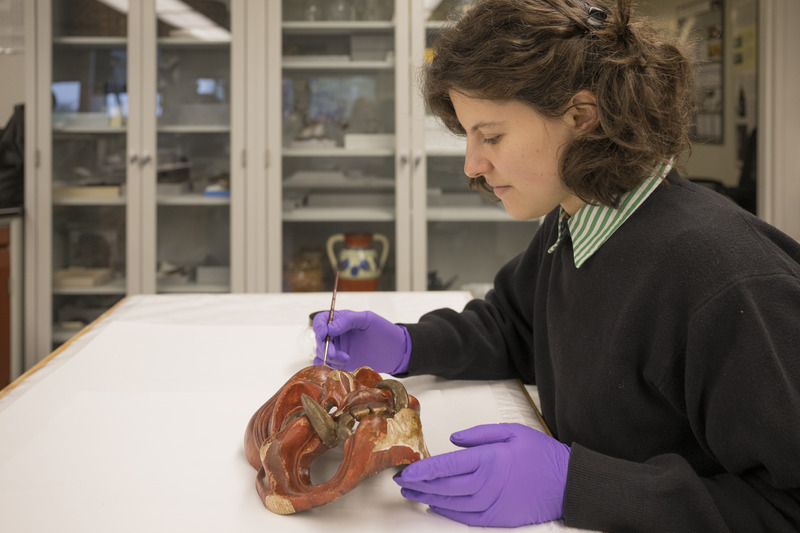
“The varied backgrounds represented by students in conservation training programs are absolutely essential to care for heritage belongings stewarded by communities and collections worldwide,” she said.
Second-year graduate fellow in painting conservation Elizabeth Glander will complete a 10-week internship at the Royal Museum of Fine Arts Antwerp, in Antwerp, Belgium, this summer, something that wouldn’t be possible without funding from WUDPAC. Learning from other conservators helps students develop expertise.
“No two paintings are alike in their condition or their treatment,” she said. “This exchange of knowledge and first-hand experience in a European paintings conservation lab will better prepare me to care for works traveling internationally or entering into an American museum while on loan.”
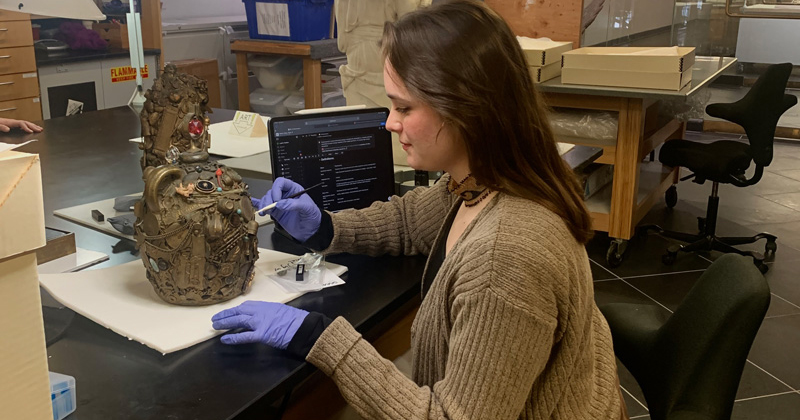
Leah Palmer, a recent graduate, said that WUDPAC funding has allowed her to work on projects across the world, including an archaeological dig in Turkey.
“Without funding, I would not have been able to pursue art conservation,” she said. “During my studies I have been able to complete conservation treatments, technical analyses and outreach projects, including treating Ming Dynasty stucco sculptures for a private client.”
Palmer also gained experience advocating for the arts on Capitol Hill through work with the Smithsonian American Art Museum.
“Because I had financial support, I have had truly once-in-a-lifetime opportunities that have deeply impacted me,” she said.
Contact Us
Have a UDaily story idea?
Contact us at ocm@udel.edu
Members of the press
Contact us at mediarelations@udel.edu or visit the Media Relations website