




Shining a light on academic freedom
Photos by Kathy F. Atkinson May 26, 2026
Constitutional scholar and UD experts discuss principles, protections and responsibilities
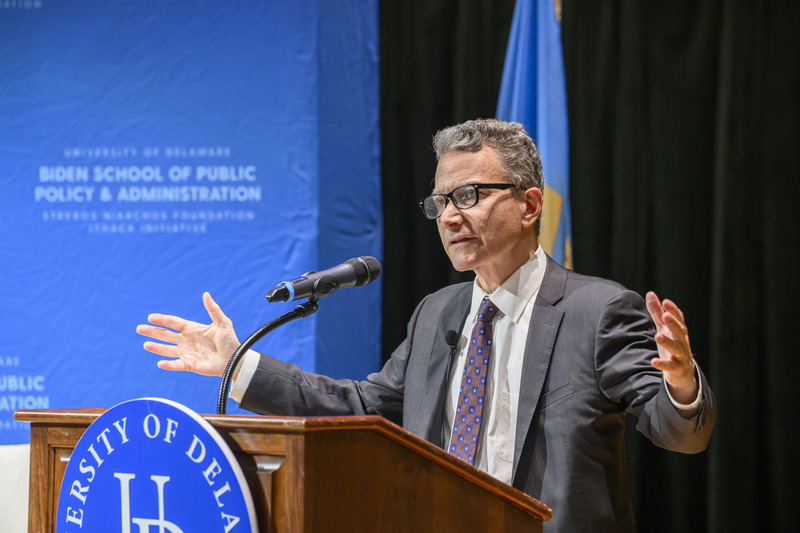
Academic freedom is an essential element of a robust higher education system, yet it is still often misunderstood by many, said Jeffrey Rosen, a noted constitutional scholar who was the keynote presenter at the “Academic Freedom: Principles, Protections and Responsibilities” event at the University of Delaware earlier this month.
“The legal meaning and scope of academic freedom is a highly undeveloped area of law,” said Rosen, one that “has come under attack from both the left and the right.”
Since 2021, 21 states have enacted laws that limit academic freedom. Though Delaware is not one of those states, the impact of these restrictions echo across higher education. Aspects of academic freedom, Rosen said, have yet to be tested in the highest court, but “given the many recent threats, academic freedom disputes with potentially enormous consequences could reach the Supreme Court soon.”
The event at Gore Recital Hall was part of the Presidential Shine the Light Series, designed to showcase UD’s expertise on the most critical issues of our time, said President Laura Carlson. The series “stands itself as a testament to academic freedom and a statement of the relevance of science and scholarly inquiry.”
Interim Provost Bill Farquhar said academic freedom “enables the vital work of our faculty — the teaching, research, innovation, and community service that are at the core of the University’s mission. … We must continually reaffirm the important role that academic freedom plays in higher education and strengthen the ways that universities can encourage open, respectful dialogue in increasingly complex environments.”
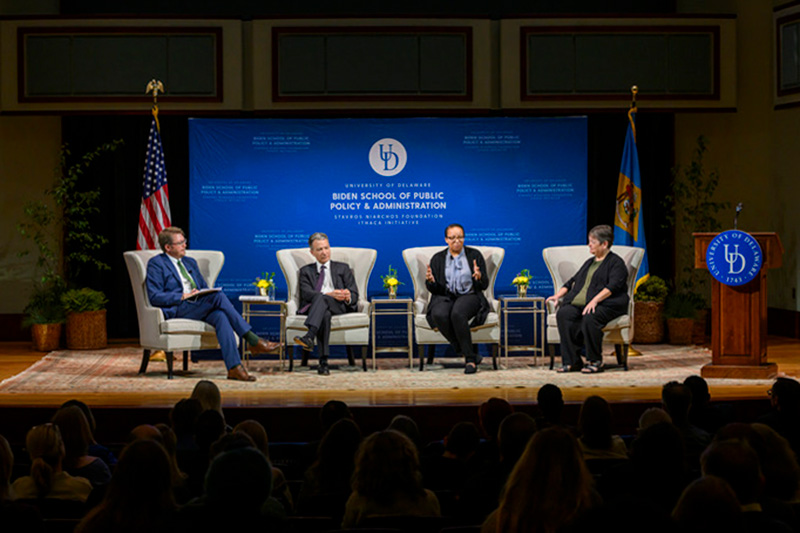
Rosen, the CEO Emeritus of the National Constitution Center, outlined the legal framework of free speech and academic freedom, tracing the history of foundational documents and court decisions that have been refined over the past 250 years.
A panel of experts deliberated the doctrines of academic freedom and reflected on how best to enact them in the modern world.
“The fragility of academic freedom is the distance between our soaring rhetoric and the harsh realities of trying to put them into practice,” said panelist Dominique Baker, associate professor of education and public policy.
The panel featured Rosen, Baker and Jennifer Lambe, associate professor of communication, and was moderated by Timothy J. Shaffer, Stavros Niarchos Foundation Chair of Civil Discourse and director of the SNF Ithaca Initiative in the Joseph R. Biden, Jr. School of Public Policy and Administration.
“It's important to have conversations about these things before we're in a crisis situation,” said Lambe. “That's really not the time for clear reflection for most people.”
The panelists discussed how faculty can encourage students in the exploration of differing ideas in the face of shortcuts and social media, which as Rosen said, “creates filter bubbles and echo chambers.”
“We have a responsibility to make up our own minds after evaluating the evidence,” said Rosen, who recommended daily reading — especially of primary texts. “It is a habit, and it's a superpower. You must seek out information sources with competing points of view.”
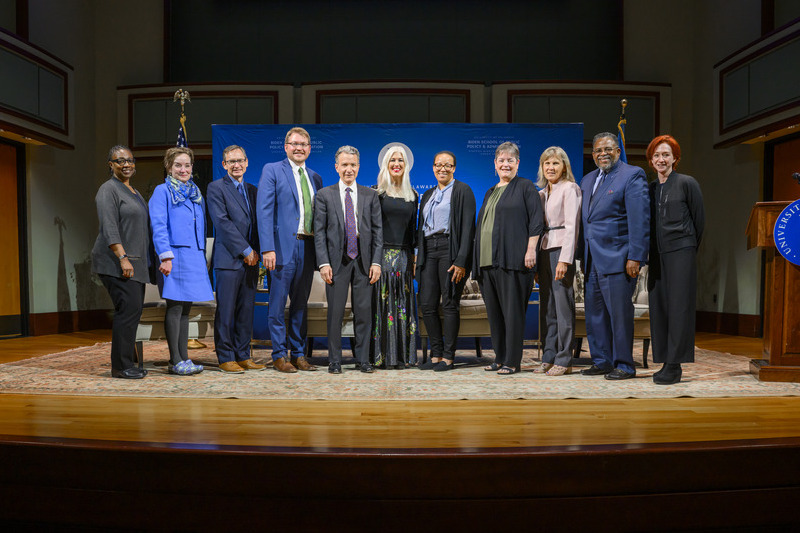
The event was presented by the Office of the Provost in collaboration with the American Association of University Professors - University of Delaware Chapter, the Faculty Senate, the Chairs’ Caucus, the Community Engagement Initiative and the SNF Ithaca Initiative.
Contact Us
Have a UDaily story idea?
Contact us at ocm@udel.edu
Members of the press
Contact us at mediarelations@udel.edu or visit the Media Relations website