
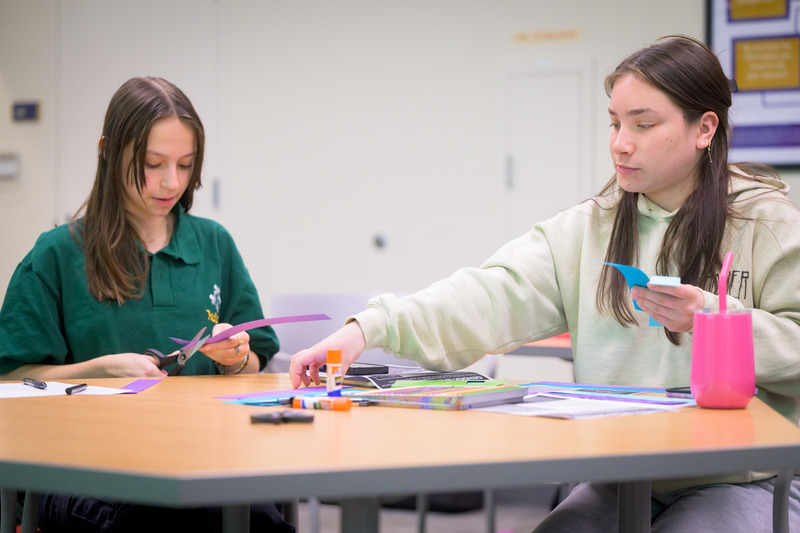
The art behind activism
Photos by Evan Krape March 25, 2026
UD students gather to learn about craftivism and gender-based violence
Crafting has always been a practical solution for human survival — making stone tools for hunting, pottery for storage, quilts for warmth. It can also be a powerful mechanism to voice opinions through creativity.
“Craftivism” describes the convergence of craft and activism and has been woven into the fabric of history. For example, in the early 1900s, women in the suffrage movement creatively designed banners, post cards and posters to engage in public demonstrations.
The University of Delaware’s Library, Press and Museum, in connection with the Department of Women and Gender Studies’ integrated curriculum for the Ida B. Wells Lecture and co-sponsored by the Center for Material Culture Studies, recently hosted its first craftivism workshop to raise awareness of gender-based violence. “Craftivism: The Intersection of Craft and Activism” covered the necessity of craftivism and its many forms and included an open invitation for attendees to create a collective craftivism piece that focuses on advocacy and support for survivors.
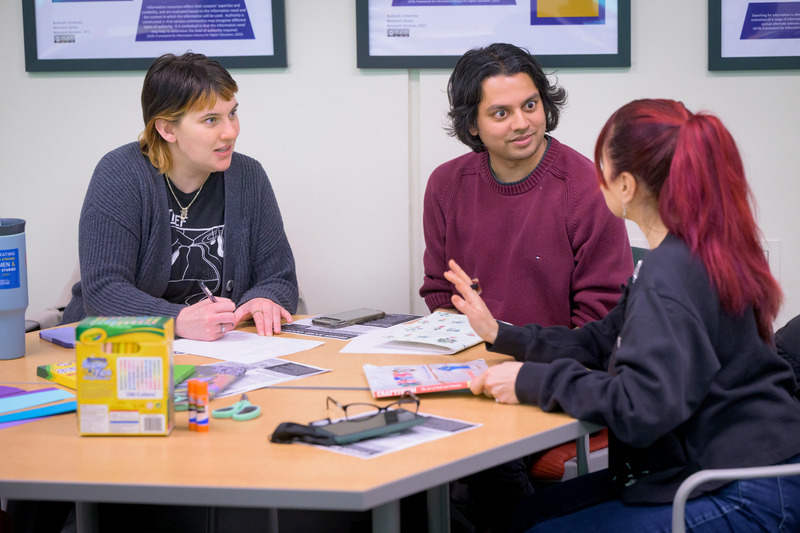
“Craftivism is important because it is a way to get people together and it is accessible to a lot of people,” said Amrut Mishra, a visiting research faculty in the Department of Women and Gender Studies. “It helps us have a connection to political action and a means to create the kind of world that we want to live in.”
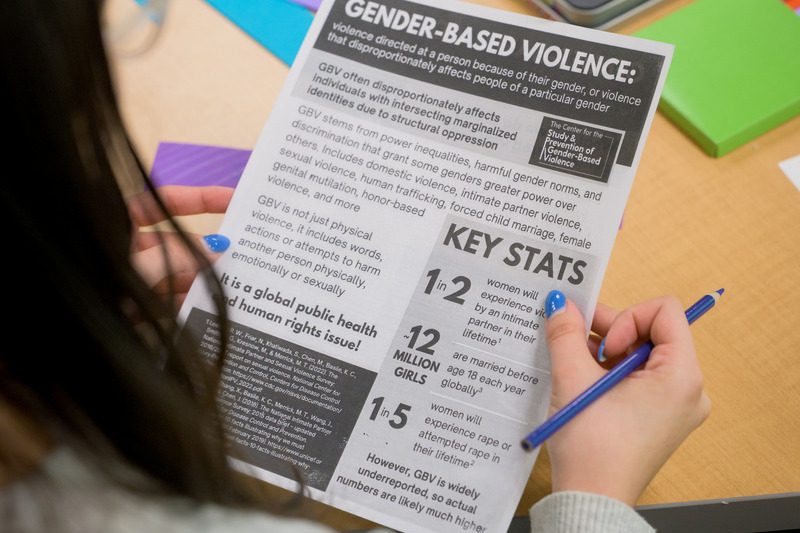
Statistics and resources about gender-based violence shared during the workshop helped to raise awareness.
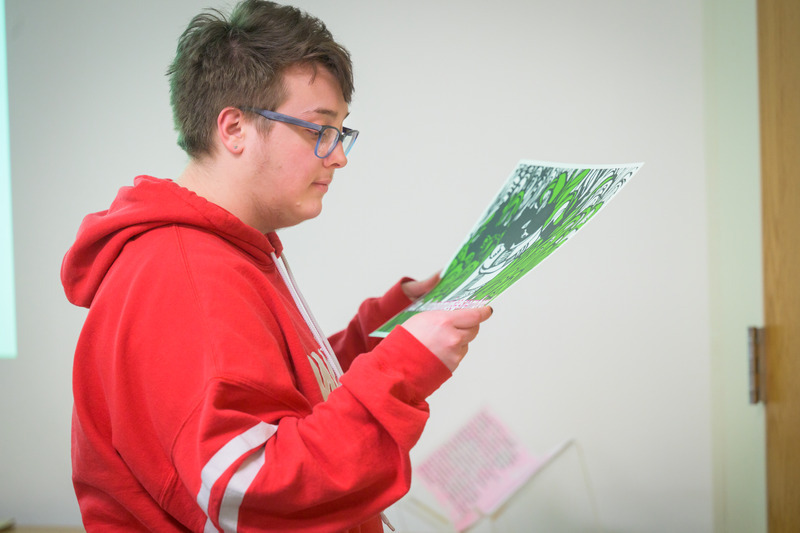
Bryce Leeson, first-year graduate student in fine arts, said the workshop taught him more about how to effectively describe craftivism and how to differentiate between craft and art.

“Artist books have an element of art and craft,” said Petra Clark, UD’s instruction librarian for Special Collections. “They are mediums used to teach and advocate for a cause from the artist’s perspective.”

Kaitlyn Tanis, UD’s history and social sciences librarian, spoke about Chilean arpilleras, which are hand-stitched, three-dimensional patchwork tapestries frequently depicting fire to symbolize destruction, political violence and resistance. Carly Gaynor, senior majoring in neuroscience and minoring in women and gender studies, said she saw them in Chile while studying abroad.
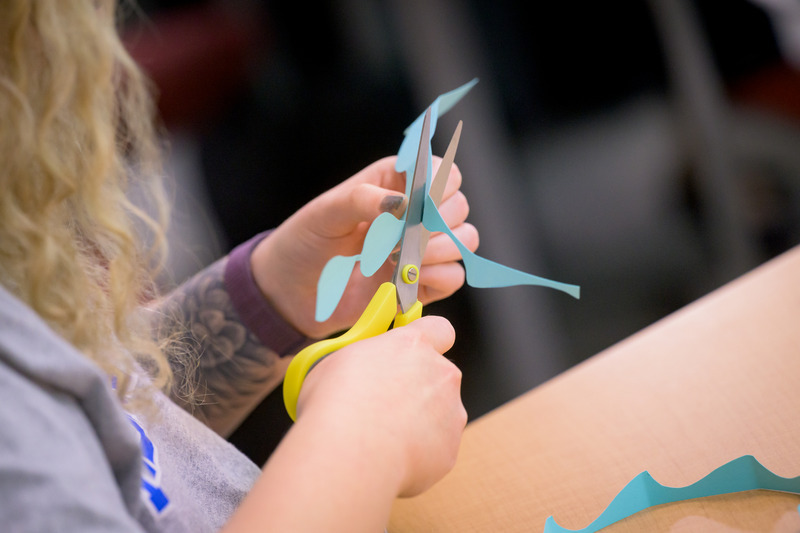
“Some people are introverts who feel strongly about things, and may not be at all of the protests, but do want to engage in other ways with topics and issues that matter to them,” said Alison Wessel, UD’s social sciences librarian in the Research and Engagement Department and one of the workshop organizers. “Our goal for this workshop was to create a space for people to use their hands and lend their voice to the topic of gender-based violence, or any issues that are impacting them right now.”
Contact Us
Have a UDaily story idea?
Contact us at ocm@udel.edu
Members of the press
Contact us at mediarelations@udel.edu or visit the Media Relations website