




Museums in the digital age
Photos by Gabrielle Clement, Logan Peterson and Jennifer Van Horn June 04, 2026
Innovative projects in art history and museum studies prepare students to shape the future of cultural institutions
Compare these two descriptions. The first: “A woman reclines on a sofa and a girl sits by her feet.”
The second: “A languid figure sinks into a plump sofa, propped up by a wide, flat cushion. Her drooped, willowy hands and slumped posture show exhaustion. However, the woman’s tidy space, fine accessories and fashionable dress match her serene expression, not a hair in her braided crown out of place. At her feet, an unkempt, high-spirited young girl with messy braids and rumpled clothes gazes in fascination.”
Bella Lam, a first year doctoral student in the Department of English, wrote the second description for “Reframing, Refocusing, Reimagining Disability” a new digital exhibition at Winterthur Museum and Gardens co-curated by students in Jennifer Van Horn’s seminar “Disability and American Art Histories.”
Designed specifically with blind or low-vision users in mind, the exhibition, along with the new Cyber Collections Aid project, demonstrates how the University of Delaware’s Department of Art History and Museum Studies and Public Engagement (MSPE) program are shaping the ways museums and cultural institutions function in an evolving digital landscape.
“This was the first museum exhibition I ever had the opportunity to be involved in curating,” Lam said. “I learned a lot about the importance of centering the lives, perspectives and experiences of people who are disabled. For many, disability is not only a limitation but something one adapts to and finds joy in.”

Even the smallest institutions must now maintain a digital presence, from online exhibitions to virtual programming.
“We’re in an exciting moment in the field,” said Van Horn, professor of art history and history. “Museums are becoming increasingly aware of the need for greater access.”
“We hope that students will go forth and continue to practice these skills at making collections accessible,” she said.
Communicating art history
“Reframing, Refocusing, Reimagining Disability” features 11 objects in the Winterthur collection from the 18th and 19th centuries and explores themes of caretaking, aging and disability.
“Art history is so visually focused,” said Gabrielle Clement, a second-year art history doctoral student. “We were really thinking about how to use the skills of description to make the visual world more accessible to people who might not be able to enjoy it in the same way.”
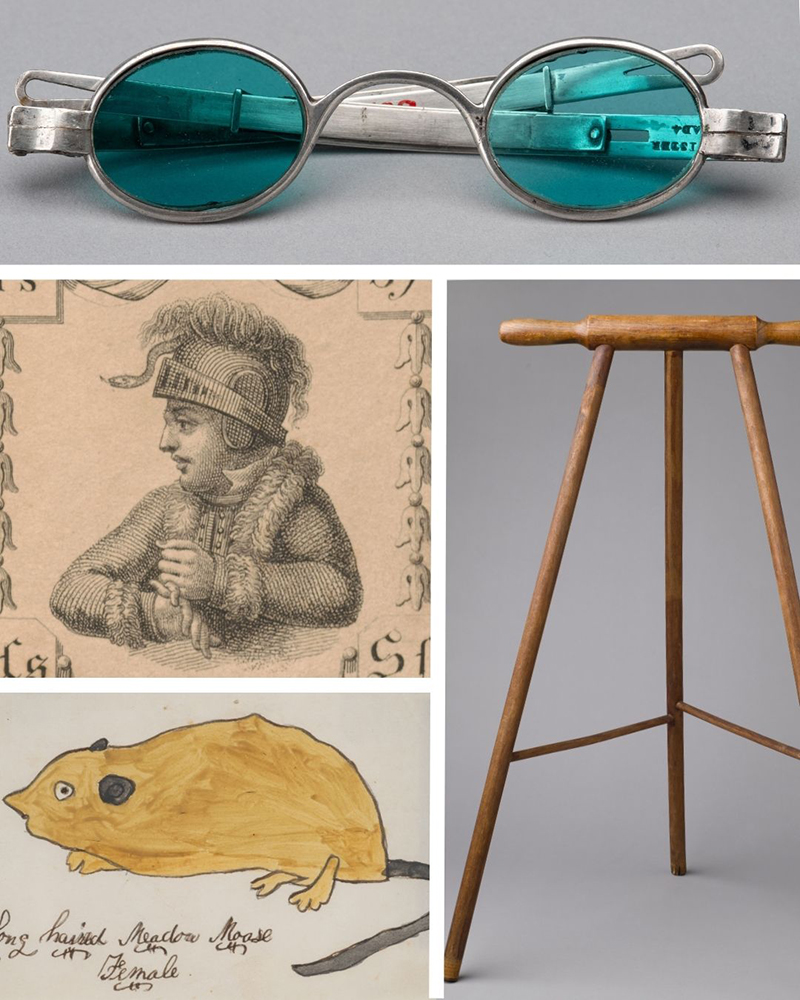
Students worked with Winterthur staff and accessibility experts from Philly Touch Tours, using a range of digital tools, including detailed alt-text descriptions like the one above and a platform optimized for screen readers.
When they learned that long alt-text can sound monotonous when read by screen readers, the students decided to include audio recordings of each description, adding a human element to the page.
“It’s bringing the person back into the digital realm,” Clement said.
Van Horn said that early on the class realized they needed to rethink the standard identification card in exhibitions that typically list the artist, title and date.
“We realized that we need to start with the visual description so blind or low-vision users know what the object is,” she said. “What is that? What are we talking about? How big is it? What does it feel like? You want those questions answered before you move into the specifics of how an item was used or made.”
The project also reflects the program’s interdisciplinary approach, with funding from UD’s Interdisciplinary Humanities Research Center and students from the Department of Art Conservation, Department of Art History and Department of English collaborating on methods from art history, disability studies, digital humanities and museum practice. Each object description went through multiple drafts shaped by feedback from accessibility experts and community members.
Learning and defining best practices
That combination of academic study and real-world collaboration is a hallmark of the MSPE program as well.
Founded in 1972, MSPE is one of the oldest programs of its kind in the country. Students pair coursework in art history with intensive internship requirements — 150 hours for undergraduate minors and 350 hours for graduate students — including at many premiere museums and institutions along the Washington, D.C.-New York corridor.
The program also supports local, underfunded and understaffed organizations through the Collections-Aid (C-Aid) program, an annual Winter Session internship where students work directly with partner institutions on a physical collections project.

In 2026, students worked with staff at the Middletown Historical Society on a variety of projects, including reinstalling an exhibition on fashion.
A different group tackled the newly launched Cyber C-Aid, which expands the program to the digital realm.
The inaugural project tasked students with updating an online resource developed at UD that serves as a repository for museum best practices with guidance on everything from conservation to public programing.
“It’s kind of like a Google for museums,” said Zara Anishanslin, associate professor of history and art history and director of the MSPE program. “You can go to one place and quickly find reliable information.”
By researching, revising and expanding the guide, students contributed to a valuable resource and gained critical experience in digital research, content management and user-focused design.
“When C-Aid started 14 years ago, it was a different moment in time,” Anishanslin said, “and now every museum, no matter how small or big, has to deal with a digital footprint. This is a way to keep our program on the cutting edge of how we train current and future museum staff.”
Name a museum in America, there’s probably a Blue Hen who is part of it.”
-Zara Anishanslin, associate history professor and MSPE director
Foluke Mary Oyawole, a third-year doctoral student in art history, had a previous internship with the New Castle Historical Society, where she saw firsthand how valuable it is for smaller organizations to stay current with digital best practices.
“When information is not digitized, sometimes even the organization is not aware of everything in their collection,” she said.
She also realized how easily policies can become outdated.
“We should maintain digital resources as living tools rather than static repositories,” she said. “Working on Cyber C-Aid deepened my understanding of how digital platforms shape access and ethical practices.”
With a network of alumni working throughout the nation’s cultural institutions and museums, UD’s training will continue to define the future of museums in the digital age.
“Name a museum in America, there’s probably a Blue Hen who is part of it,” Anishanslin said.
Contact Us
Have a UDaily story idea?
Contact us at ocm@udel.edu
Members of the press
Contact us at mediarelations@udel.edu or visit the Media Relations website