




Storm after storm
Photos by Evan Krape and courtesy of Facilities, Real Estate and Auxiliary Services, the Office of Emergency Management, Lori Snyder and John Shields February 12, 2026
Through significant snowfall and personal loss, the quiet devotion of UD’s custodial and grounds staff keep campus safe
In another snowstorm, Lori Snyder would have woken up to coffee and a kiss.
“Pack your bag with extra socks, gloves and pants,” her husband would have said, dust rag dangling from his pocket. His truck would be warm, country music playing on the radio.
Campus custodians for nearly three decades, Douglas and Lori Snyder would have arrived for their 8 a.m. shift as early as possible. “He always wanted to get ahead of the storm,” she recalled.

This year was different. The recent Arctic blast that brought significant snowfall and single-digit temperatures to Newark was her first as a widow.
It was hard, physically, standing on the steps outside of Kent Hall, clutching the railing with one hand and shoveling with the other. But Snyder kept her balance.
“I do it for the students,” she said. “Douglas, too.”

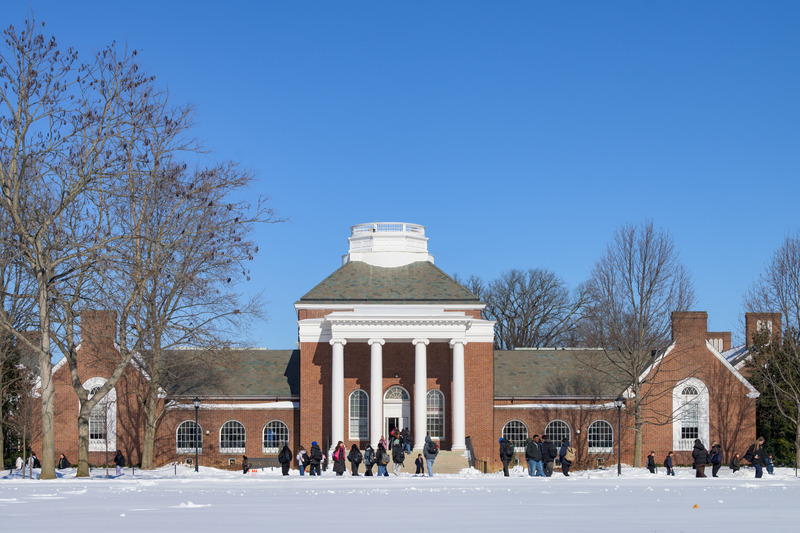
She wasn’t alone. Across campus, dozens of staff were braving the same wind and ice, each with their own reasons for showing up. For nearly two days straight, a crew of 45 custodians and 25 landscape service members cleared the snow and helped ensure the safe reopening of campus operations during the final week of Winter Session.
“I’m always fascinated at the willingness of our employees to be here,” said Sylvester Johnson, director of facilities custodial. “Yes, it’s their job. But it’s also a real testament to the care they have for UD.”

Blue Hens behind the scenes
It’s a care the University doesn’t take for granted.
“Safety first,” said Josh Twardowski, director of landscape services. Working in close collaboration with Johnson, the City of Newark and UD’s Office of Emergency Management, Twardowski made hotel reservations at the Courtyard Newark five days before snowfall for his 25-person crew, as well as for several other members of the Facilities, Real Estate and Auxiliary Services team. He also arranged for all meals, snacks and coffee in between.
Work for his team began at 3 a.m. on Sunday, Jan. 25 — and continued for 18 hours straight. The workers resumed Monday morning for another 12-hour shift, and on Tuesday, Jan. 27, campus reopened.

The rate of snowfall — sometimes over an inch an hour — presented challenges. “People would call to say, ‘No one has been here,’” Johnson recalled. “We’d say, ‘Yes, we have. Five times. It’s just coming down too fast.’”
In total, the University got 6.7 inches of snow, followed by sleet, ice and temperatures that exacerbated removal efforts. Salt stops working around 20 degrees. The north side of buildings remain in constant shadow. The brick pavers that look beautiful in photos present plowing nightmares. At one point during the storm, a pipe burst, diverting manpower for four hours.

“It’s Murphy’s Law,” said Landscape Services mechanic John Shields. “Anything that can go wrong, will.”
But those unforeseen quandaries also reflect his favorite aspect of the job: “I have to innovate on the fly. It’s MacGyver-esque.”
For nearly two days straight, Shields replaced tractor windshields and tires; changed hydraulic lines, lights and fuses; kept engines running. Then, he went home to his family and shoveled their driveway.
A legacy continues
Three weeks later, with spring semester in bloom, snow still blankets the campus lawn. The urgency of the storm has faded and the rhythms of daily life have returned.
Inside Redding Hall, as Honors tudents wake for classes, Lori Snyder moves steadily along the fourth floor, disinfecting the study lounge, wiping the windows, scrubbing the bathrooms. She saves vacuuming for later in the day, “after all the kids wake up.”
“I know this is their home away from home,” she said. “I want them to have a clean, healthy environment to live in.”

She remembers an article that once appeared in The Review. The date is missing, but the photo of her handsome husband is clear.
“Doug Snyder gleams with pride and joy and is an inspiration to us all,” the long-gone residents of Rodney C wrote in the student newspaper. “Thank you for allowing us to walk in the footsteps of a great man.”
In 2014, after nearly 27 years of custodial service, Douglas retired to receive dialysis care and treatment for Parkinson’s disease. Even then, Lori said, he wanted to help.
When he passed on Nov. 1, 2024, his body returned to UD — this time as a donor to the Anatomical Gift Program.
“He wanted to help research and give back to students,” she said. “That’s who he was.”
In many ways, it still is. In the quiet work of clearing paths, opening doors and caring for spaces most people pass without a second thought, Douglas Snyder’s legacy endures, carried forward by those who continue to show up, storm after storm.

Contact Us
Have a UDaily story idea?
Contact us at ocm@udel.edu
Members of the press
Contact us at mediarelations@udel.edu or visit the Media Relations website