

Reducing dementia risk
Photo by Evan Krape | Photo composite by Jeffrey C. Chase August 10, 2026
UD epidemiology study finds shingles vaccination linked to lower dementia risk in older adults
Nearly all adults now aged 50 and older were infected with the chickenpox virus as children. The herpes zoster (HZ) virus lies dormant in the nervous system for decades and can reactivate later in life as shingles, causing a painful, blistering rash.
Previous studies have shown that people who develop shingles face about a 20% higher risk of cognitive decline, including dementia.
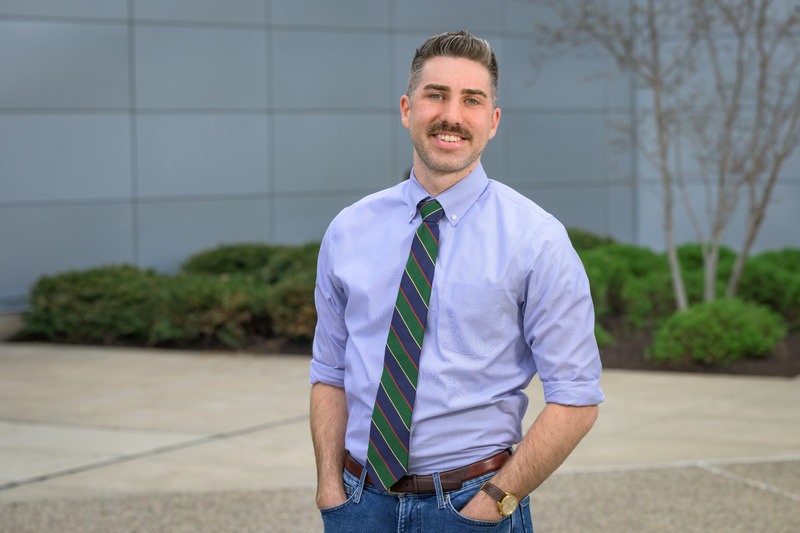
A new study, led by Daniel Harris, assistant professor of epidemiology at the University of Delaware College of Health Sciences, found that older adults who received at least one dose of the shingles vaccine had a 24% lower risk of developing dementia over four years compared to those who were unvaccinated. The research was recently published in Annals of Internal Medicine, one of the nation’s leading peer-reviewed medical journals.
The two-year investigator-initiated study was supported by funding from GlaxoSmithKline, which manufactures the shingles vaccine, and involved collaborators at Brown University, the Providence VA Medical Center and Rhode Island Hospital.
In the longitudinal study, Harris analyzed electronic health record (EHR) data from more than 500,000 people admitted to nursing homes served by PointClickCare. Using the data, he examined whether receiving the shingles vaccine within 12 months of admission or discharge was associated with a lower risk of dementia.
Only about 8,000 of the more than 500,000 people in the study chose to get the shingles vaccine, with most vaccinations occurring after discharge from a skilled nursing facility.
“While the final number of people who got vaccinated was quite small at 8,000, it’s still larger than most trials,” Harris noted.
Because people who choose to get vaccinated are often healthier, the researchers used a target trial emulation—a new design method in epidemiology that mimics a randomized trial using real-world health data—to reduce bias.
“We used analytic strategies to account for preexisting differences between individuals who received the vaccine versus those who did not, but we can only soak up what we can measure,” cautioned Harris.
Researchers employed a method common in lab sciences – a “negative control” analysis – to assess the extent of any bias. Results from the negative control analysis reduced the estimated benefit of the vaccine, but vaccination remained associated with a 12% lower risk of dementia over four years.
“There’s a lack of randomized trial evidence on the potential effects of the shingles vaccine on dementia risk, but there are methodological and analytical tools at our disposal to generate evidence in real-world databases; however, there are still threats to validity,” Harris said.
However, the findings are consistent with previous studies conducted in the United Kingdom that have linked shingles vaccination with a lower risk of dementia.
“The side effects of the vaccine are very low, and shingles can lead to serious complications like long-term nerve pain and vision loss.”
Harris also hopes the work inspires more public health campaigns highlighting the benefits of vaccines.
“Vaccines do more than help prevent the infection they’re originally intended to protect against,” said Harris. “They help prevent the consequences of infection.”
Harris points to COVID-19 and measles vaccines as real-world examples.
“Measles is not only deadly in childhood, but the virus can remain dormant in the brain and cause a severe and deadly neurological syndrome seven to 10 years after the initial infection. Measles vaccines prevent that from happening.”
Connecting the dots
In future research, Harris plans to use the data to investigate whether the shingles vaccine also helps prevent stroke.
“It’s clear that if you get shingles, your risk of stroke is elevated in the months to one year after infection, especially if the virus reactivates near the eye,” Harris said.
Stroke is also a major risk factor for dementia.
“We know the vaccine helps protect against shingles; we know shingles increases stroke risk, and stroke is a major risk factor for dementia,” Harris said. “Now, we’re trying to connect all those dots to see how the pieces fit together.”
He’s hoping to use the same EHR data to study the complex causal chain of events that could be stopped through infection prevention.
“The stroke that can follow shingles may be what actually triggers the dementia,” said Harris. “If we can help prevent shingles, we can help prevent stroke, and that could, in turn, help prevent dementia.”
Contact Us
Have a UDaily story idea?
Contact us at ocm@udel.edu
Members of the press
Contact us at mediarelations@udel.edu or visit the Media Relations website