




University of Delaware researchers use insects to upcycle food waste: youtube.com/watch?v=nIcvlQKvDsk
Fighting food waste
Photos by Kathy F. Atkinson and courtesy of Michael Crossley | Video by Sam Kmiec October 15, 2026
University of Delaware researchers use black soldier fly larvae to keep food scraps out of landfills
University of Delaware’s Michael Crossley has tasked scores of hungry flies with a big mission: Keep food waste out of landfills.
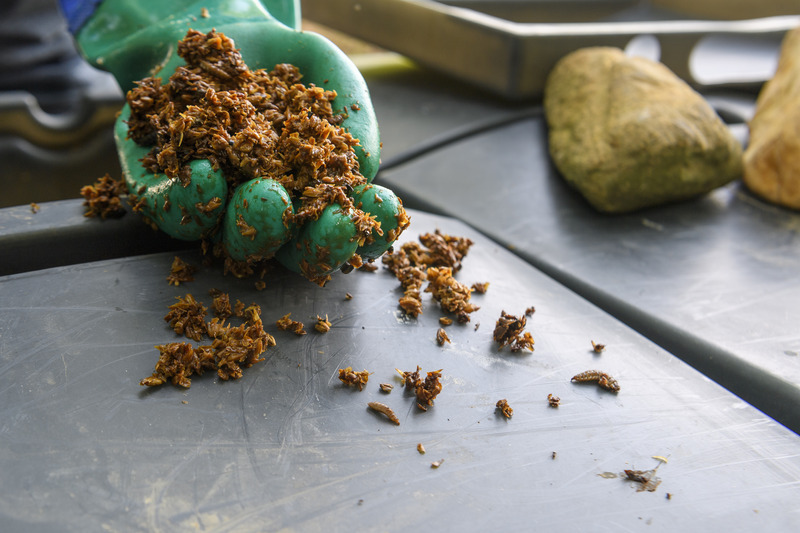
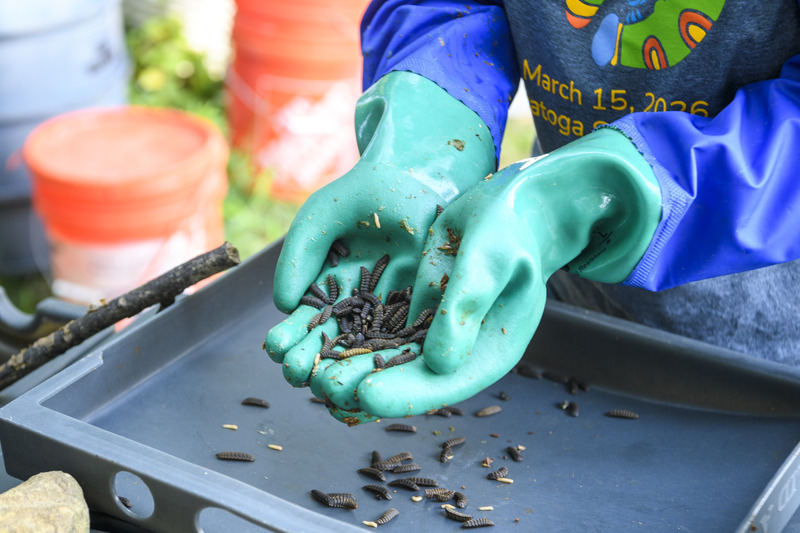
The UD assistant professor and agricultural entomologist is rearing black soldier fly larvae with his Agricultural Entomology Lab at UD’s Newark Farm. Fully grown black soldier flies are more than twice the size of a common house fly and don’t eat much. The larvae — the young, worm-like stage of black soldier flies — however, have voracious appetites. They can quickly break food scraps down into organic matter that can feed livestock and nourish crops.
“Black soldier fly larvae can consume more than their body weight every day,” Crossley said. “When you have thousands and thousands of larvae doing that, it quickly reduces waste before it gets smelly and attracts unwanted things.”
It’s an important task. Roughly half of U.S. land is dedicated to agriculture, yet about one-third of the food produced is never eaten. Much of that goes to landfills, where some foods can take years, even decades to break down. This process produces methane, a powerful greenhouse gas.
Crossley and his team are collaborating with local businesses to upcycle their food waste, using black soldier fly larvae to turn it into useful agricultural products (more on that below) and keep it out of landfills. The researchers hope to inspire organizations and local communities to upcycle their food waste with insects on their own.
Raising larvae
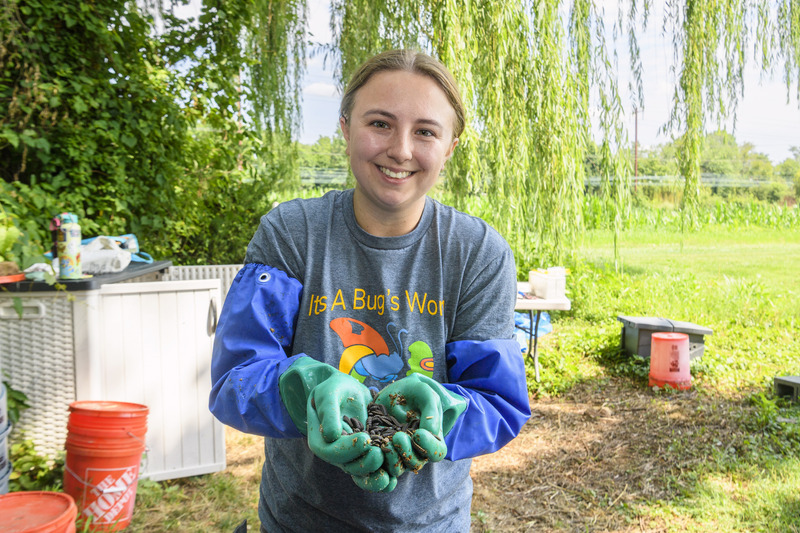
On a hot July morning, Destiny Mann checks on the black soldier fly larvae. Her T-shirt reads “It’s a bug’s world.” Indeed, it is. Insects outnumber humans about 1.4 billion to one.
“I consider myself a fly farmer,” said Mann, a second-year doctoral student in Crossley’s lab. “I’m very proud of it.”
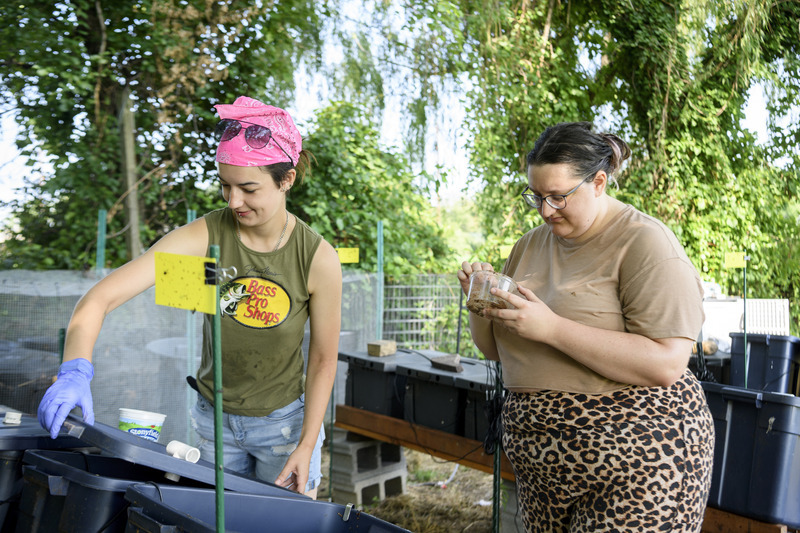
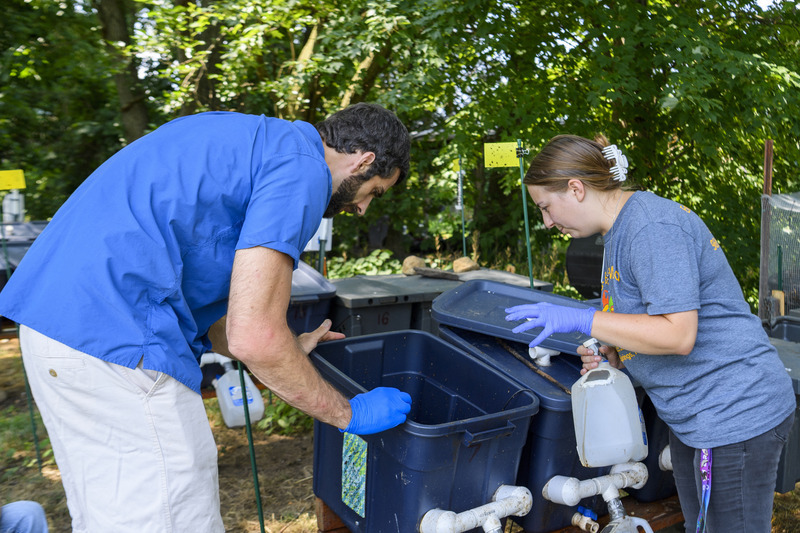
Mann and the team are trialing 30 bins with about 4,000 larvae per bin. The bins contain grain, produce and meat in various combinations, giving researchers insight into how well the larvae can break down the different types of food waste.
The food waste comes from Grain Exchange on UD’s STAR Campus, kitchen scraps are from UD’s Whitney Kitchen and brewery residue is from Dewpoint Brewing Company in Yorklyn, Delaware.
So far, the project has helped Grain Exchange STAR Campus keep nearly 1,800 pounds — about 40% of the restaurant’s annual food waste — out of the landfill, according to Peter Krause, general manager.
“It’s less waste we’re putting out … less waste we have to pay to remove,” Krause said. “There’s also a community benefit for us. We’re participating in the community, working with the University of Delaware.”
Once the larvae break down food waste, they leave behind poop, known as frass. Frass can be used as soil compost to help crops grow. The insects themselves, once they grow out of the larval stage and enter their much bigger prepupa stage, can be used as feed for chickens, pigs and fish.
Black soldier fly larvae don’t bite or chew on food waste. They essentially drool on it, releasing a potent mix of digestive enzymes that break the waste down.
Rotting food also attracts other animals. While putting the larvae to work, the researchers used cameras to determine whether any mammals could hamper their experiment.
They got some visitors.
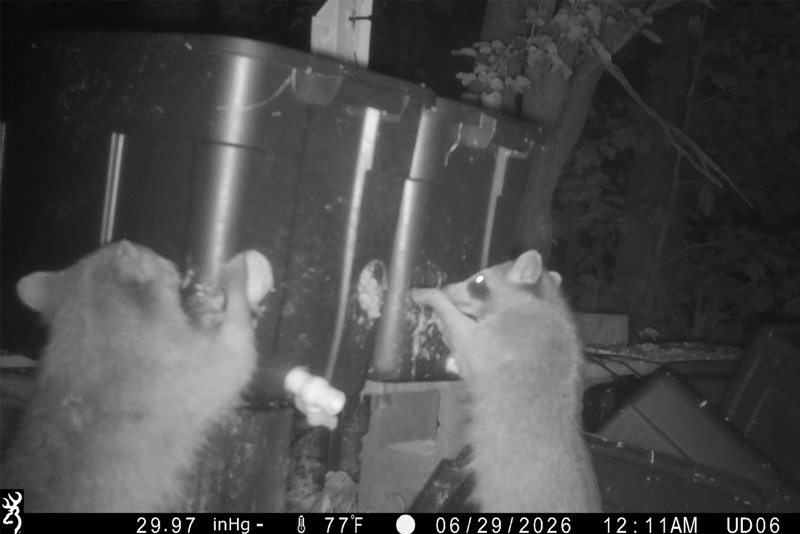
Once they added black soldier fly larvae to the bins, however, wildlife break-ins stopped. It’s possible the larvae rendered the food waste less smelly, making it less attractive to animals. It’s also possible larvae have their own natural odor that could repel them.
Mann said she wants to advocate for homeowners and businesses to upcycle their own food waste. That includes knowing what conditions might cause hungry mammals to show up.
“If mammals do damage these bins, I need to be able to tell homeowners and business owners that,” Mann said.
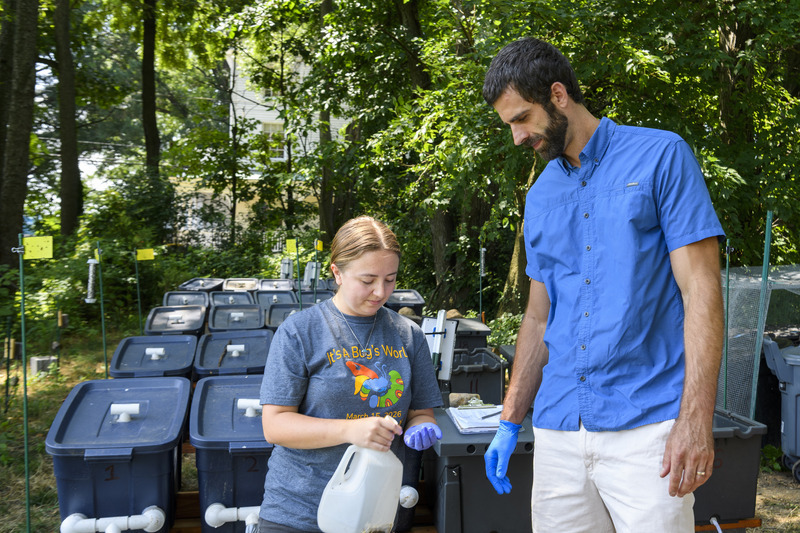
Upcycling with black soldier fly larvae is simple enough. Anyone can do it. It’s usually a small cost to get some larvae of your own (or if you live in the Southeastern U.S., they will come on their own).
“All you need is an old Tupperware tote to create a compost bin, with the help of black soldier fly larvae that speed up the decomposition process,” Mann said, “and you can reduce your food waste and the impact you have on the planet.”
Crossley’s family has been using these larvae to upcycle their own food waste for about four years, converting about 800 pounds into soil compost in their own backyard.
Protecting public health, encouraging community members
To get everyday people on board, Crossley’s lab needs to show it’s safe.
Elizabeth Heintzelman, a UD Class of 2028 animal biosciences 4+1 (B.S. + M.S.) student, and UD microbial food safety professor Kali Kniel are exploring that.
Heintzelman samples the food waste before it’s added to the bins, as well as the larvae excrement, for salmonella and other potentially disease-causing microbes.
“We want to eventually put this compost on crops that people will eat, or feed the insects to livestock,” Heintzelman said. “We need to make sure they are not going to make people or animals sick when they consume it.”
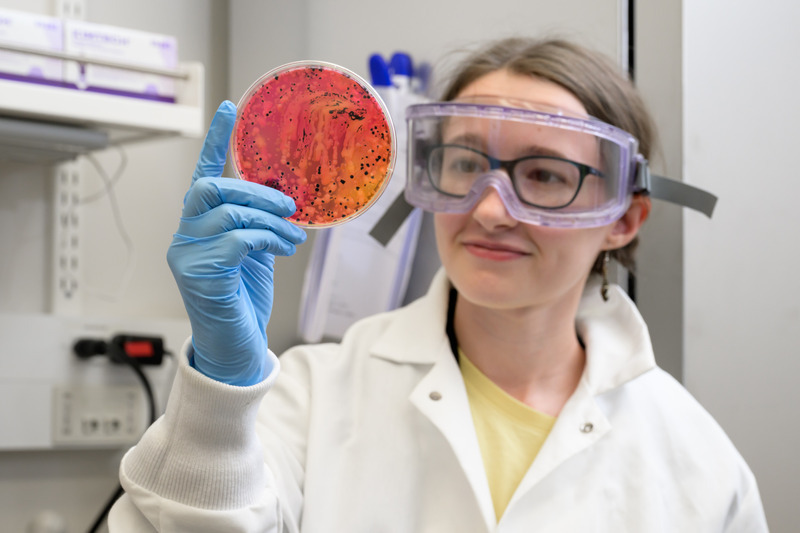
Crossley said people will need to cook the insects before feeding them to livestock and fish, noting Heintzelman's study found that when food waste is already contaminated, the same microbes also contaminate the harvested insects after they feed on that food waste. The frass will need to be cured, a process that sterilizes it and makes it safe to use.
“Pathogens do proliferate under certain conditions,” Crossley said. “Despite lab research showing that black soldier fly larvae can reduce dangerous microbes, they can’t seem to keep up when upcycling food waste on a large scale.”
Crossley believes it is worth the work. At his own home composting site, Crossley spreads the cured black soldier fly larvae frass on his garden that grows cabbage, kale and fruits.
Ultimately, Crossley wants to encourage community members that they can participate too.
“If everyone does this in their own home, keeping food waste out of the trash,” he said, “it makes a difference.”
This material is based upon work that is supported by the National Institute of Food and Agriculture, U.S. Department of Agriculture, under award number 2023-38640-39572 through the Sustainable Agriculture Research and Education program under subaward number FLW24-005.
Contact Us
Have a UDaily story idea?
Contact us at ocm@udel.edu
Members of the press
Contact us at mediarelations@udel.edu or visit the Media Relations website