





In Memoriam: David J. Farber
Photos by Duane Perry and courtesy of Kenneth Barner and the University of Delaware Archives and Records Management March 13, 2026
Internet pioneer who helped shape early networks leaves a lasting legacy at UD
David J. Farber, a former professor of computer science at the University of Delaware nicknamed the “grandfather of the internet,” died on Feb. 7 in Tokyo. He was 91.
“He was a pioneering architect of the modern internet, whose contributions to early networking research and national research networks helped shape the digital infrastructure of the world,” said UD’s Kenneth Barner, Charles Black Evans Professor of Electrical and Computer Engineering. “His legendary career spanned distinguished faculty appointments at the University of Delaware, the University of Pennsylvania, Carnegie Mellon University and other leading institutions, and his vision and leadership earned him induction into the Internet Hall of Fame.”
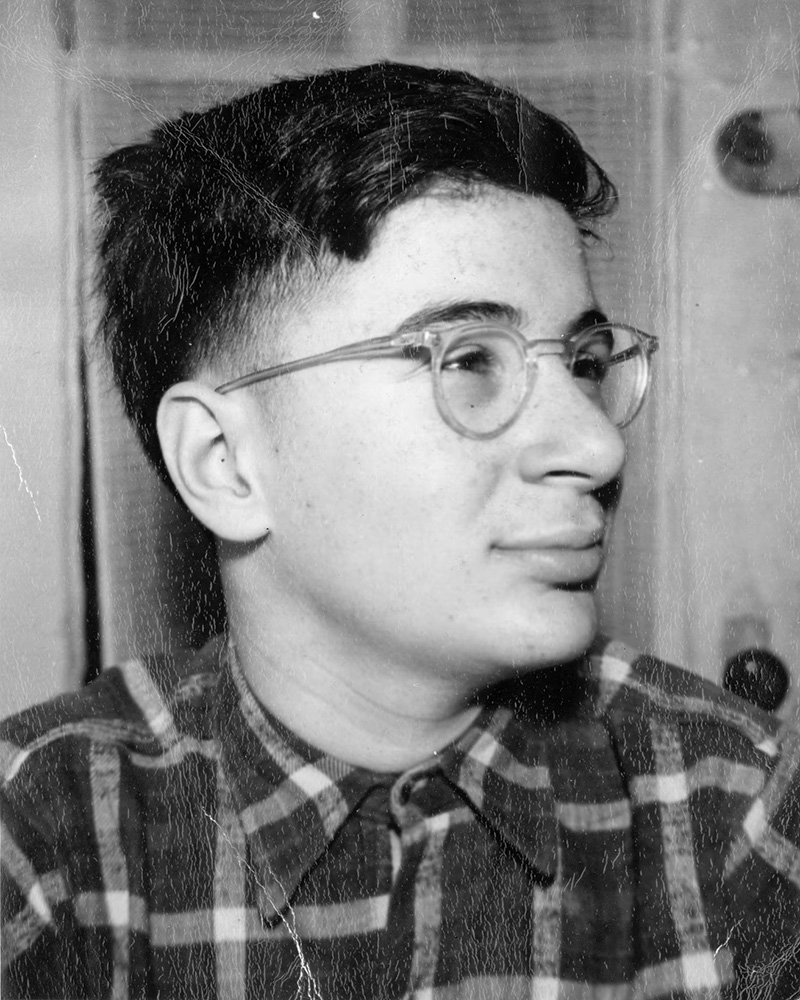
Born in New Jersey in 1934, Mr. Farber earned a bachelor’s degree in electrical engineering in 1956 and a master’s degree in mathematics in 1961, both from the Stevens Institute of Technology. He began his career at Bell Laboratories, where he helped design the first electronic switching system and develop the SNOBOL programming languages. He then held positions at RAND Corporation, Scientific Data Systems and the University of California, Irvine.
Internet innovation at UD
In 1977, Mr. Farber joined UD as a professor of electrical engineering and computer science. While at Delaware, he helped conceive and organize major American research networks, including the Computer Science Network (CSNET) and the National Science Foundation Network (NSFNET). CSNET connected university computer science departments, while NSFNET linked universities and supercomputing centers and became a backbone of the early internet.
“Through his leadership in CSNET and NSFNET at UD, he helped move networking from a research experiment to a far-reaching academic and industrial infrastructure that paved the way for the commercial internet,” said Charles Black Evans Professor Gonzalo Arce, who remembers Mr. Farber as a highly influential colleague.
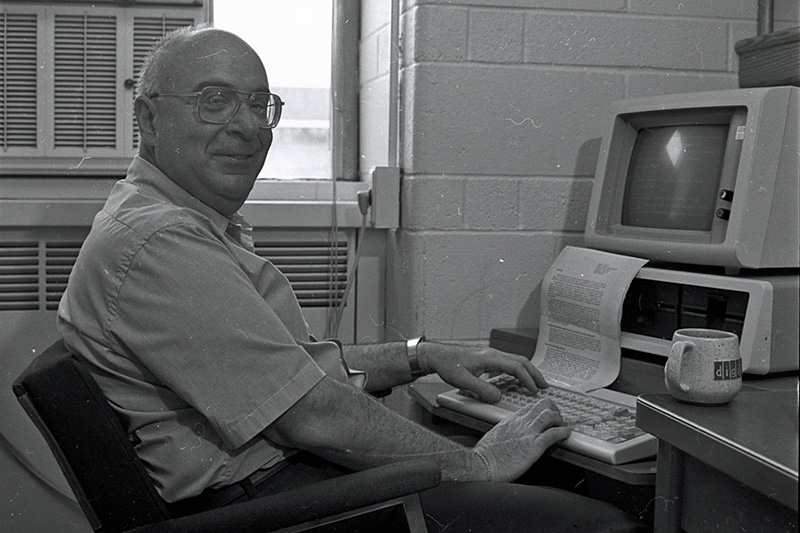
Mr. Farber also played a key role in establishing the Gigabit Network Testbed Initiative, funded by the National Science Foundation and the Defense Advanced Research Projects Agency. As chair of the initiative’s coordinating committee, he helped guide the development of high-speed networking technologies that would underpin the modern internet.
“He also brought this spirit of curiosity and engagement to campus life,” Arce added. “At faculty meetings, he would often display new electronic gadgets or mention notable items from his Interesting People (IP) mailing list, which he built into an intellectual community that connected people and encouraged discussion about the internet’s broader social impact.”
A continued connection to Delaware
After leaving UD in 1987 to join the University of Pennsylvania as a professor of computer and information science, Mr. Farber remained connected to Delaware, regularly engaging with colleagues in UD’s Department of Electrical and Computer Engineering.
“While he held influential roles in government and international research throughout his career, his commitment to the University of Delaware remained steadfast,” said Barner. “He was a foundational presence in our department, inspiring generations of students and faculty and anchoring our legacy as an innovator from the earliest days of the internet. His intellectual leadership, mentorship and passion for connecting people and ideas defined a remarkable life in service to technology and to the community.”

Mr. Farber was also part of a group of pioneering UD researchers sometimes referred to by colleagues as the “Daves of Delaware” — Mr. Farber, David Mills and Walter David Sincoskie — whose work in networking and communications helped position the University as an early center of internet innovation. Mr. Farber was the last surviving member of the trio.
At Penn, Mr. Farber was named the Alfred Fitler Moore Professor of Telecommunication Systems in 1993, a title that he held until he retired and took emeritus status in 2003. He also held appointments in the Wharton School of Business and the Annenberg School for Communication. He served as chief technologist at the U.S. Federal Communications Commission from 2000 to 2001 while on leave from the university.
After retiring from Penn, Mr. Farber joined Carnegie Mellon University as a distinguished career professor of computer science and public policy. He also rejoined the UD faculty in 2011 as a Distinguished Policy Fellow. In 2018, he moved to Japan to become a distinguished professor at Keio University and co-director of the Keio Cyber Civilization Research Center, continuing to teach until shortly before his death.
Mr. Farber received many of the field’s highest honors for his contributions to computing and the internet, including induction into the Internet Hall of Fame, the SIGCOMM Award for lifetime contributions to computer communications and the Internet Society’s Jonathan B. Postel Service Award. He was a founding board member of the Internet Systems Consortium, which supports core internet technologies, and served on the board of the Internet Society. He was a Fellow of the Institute of Electrical and Electronics Engineers, the Association for Computing Machinery and the American Association for the Advancement of Science.
“The department mourns the loss of a true giant,” said Hui Fang, professor and chair of UD’s Department of Electrical and Computer Engineering. “Having Dave as a member of our faculty across two different eras was a profound privilege. He brought a level of prestige and visionary thinking to the University of Delaware that inspired generations of engineers.”
“We honor his memory by continuing the pursuit of innovation that he championed throughout his extraordinary life,” she added.
Contact Us
Have a UDaily story idea?
Contact us at ocm@udel.edu
Members of the press
Contact us at mediarelations@udel.edu or visit the Media Relations website