
Politics and the pitch
Photos by Kathy F. Atkinson and John Eulberg and courtesy of Kassra Oskooii June 09, 2026
UD political science professor combines academics and hobby as a soccer referee
For a few weeks every four years, the FIFA World Cup offers a break from global politics, societal divisions and everyday concerns as football fans worldwide rally behind their favorite teams.
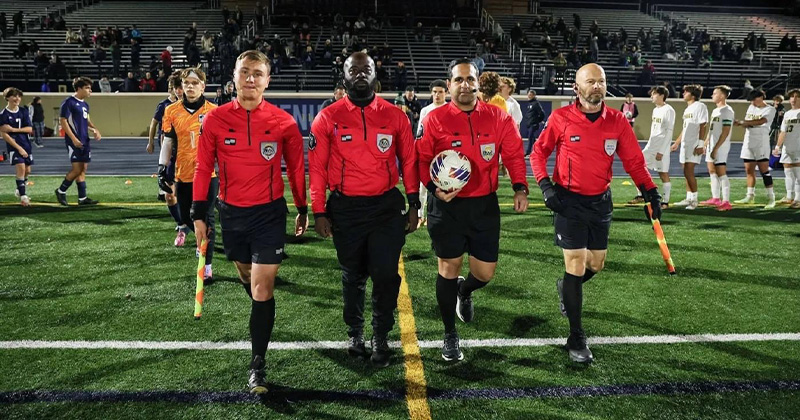
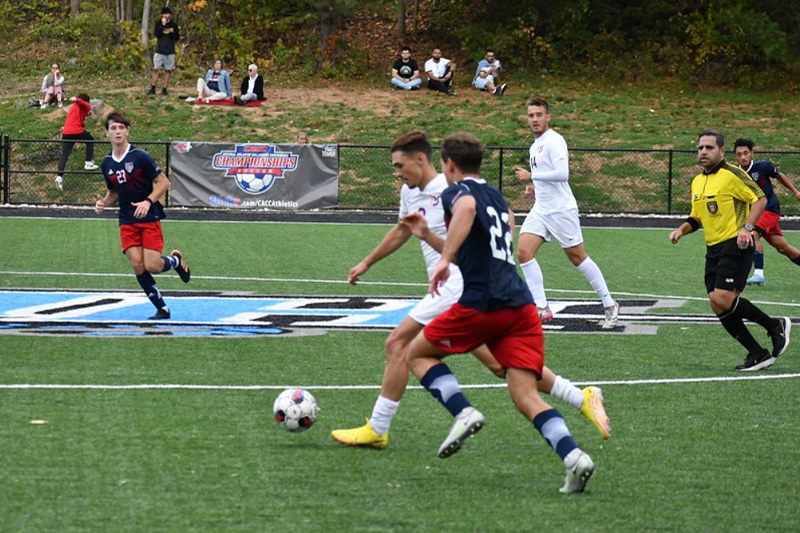
University of Delaware political scientist Kassra Oskooii is more than a sideline fan of the world’s most popular sport — he’s a referee. And while he may not be on the global stage, the associate professor has spent nearly two decades officiating semi-professional, college and high school games throughout Delaware and the country, managing conflict between players, coaches and even parents.
It's a long way from his beginnings. The first time Oskooii played organized soccer was as a 10-year-old political refugee living in eastern Germany. It was tough to learn a vastly new style from what he played on the streets of his native Iran, but it offered a new appreciation for the sport and its ability to bring people from different backgrounds together.
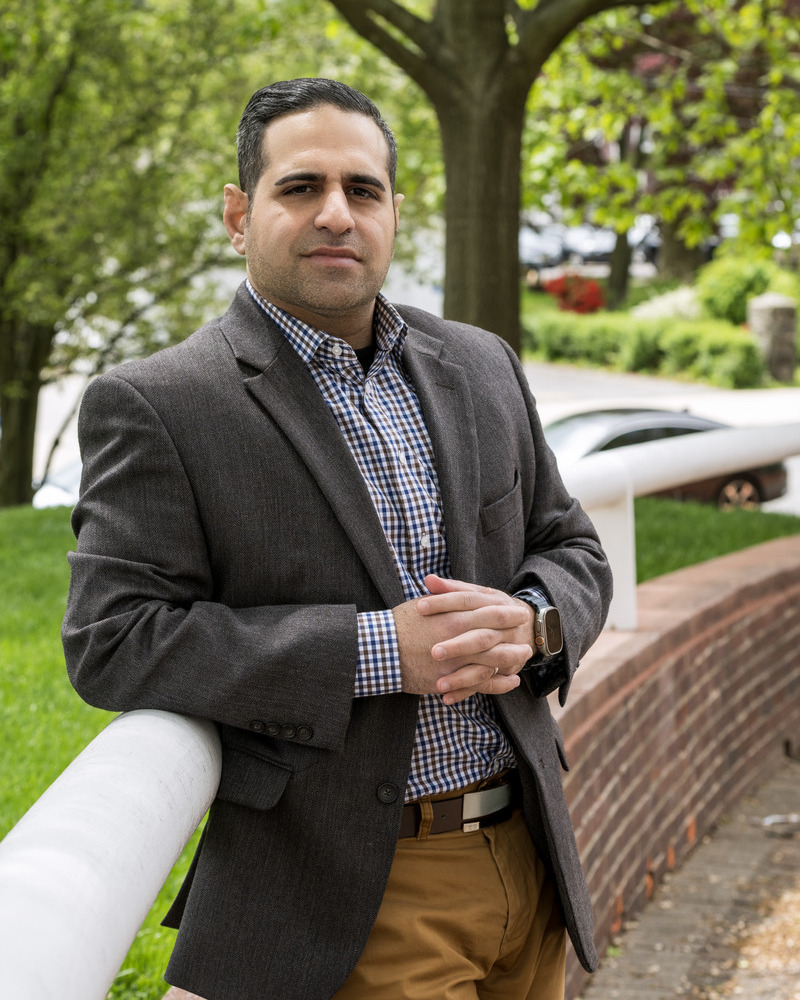
It’s also what led Oskooii to a sideline career as a referee. Here, the faculty member in the Department of Political Science and International Relations, and expert on voting rights and redistricting, discusses his experiences as a referee, the pressure World Cup officials face and the unifying (albeit fleeting) impact of the global tournament underway.
Q: Being a referee can be rough because it’s a position fans love to hate. What keeps you coming back after all these years?
Oskooii: I love the pressure. That may sound strange, but refereeing is about solving puzzles in real time. You're managing 22 players, coaches and countless personalities. You have to make decisions instantly, with only one look at a play. People watching from the stands or on television don't realize how difficult it is. Referees get one angle, one moment. There's no pause button. The challenge is what makes it rewarding.
Q: Many fans think refereeing is just about enforcing rules. Is that accurate?
Oskooii: Not only. It's also about managing people. You have to identify the leaders on the field, the players who can help keep teammates calm when emotions rise. Sometimes those leaders aren't even the captains. If players trust you, the game flows better. If they don't trust you, the game can fall apart quickly. Making correct decisions is essential, but communication is just as important. Players and coaches can get emotional. They don't always see what you see. Part of the job is getting them to accept the decisions that they don’t always agree with.
Q: How does what you do on the pitch compare with what World Cup referees experience?
Oskooii: The stakes are much higher, but the fundamentals are the same. World Cup referees still have to manage personalities and make very difficult decisions under immense pressure. One difference is that they have much more support.
In addition to having assistant referees and a fourth official on the field, they have a team of video review officials helping them. They also have access to technologies that don't exist at lower levels of the game. It’s harder for them to make a mistake, but it still doesn’t stop people from disagreeing.
Q: Does having that technology make the game better because it’s easier to make an accurate call?
Oskooii: Technology can help correct obvious mistakes, but is it better for the game? I'm not sure. Soccer is a sport where goals are rare and emotional. A team scores in the 89th minute and the stadium erupts. Then everyone has to stop and wait while officials review the play, hoping the goal stands. That spontaneous joy disappears. Trying to create perfection sometimes takes away from what makes the game beautiful. I guess I’m a traditionalist on this issue; I think video review has gone too far.
Q: Every four years the World Cup brings people together. What does that tell us about politics and society?
Oskooii: It can be a unifying moment, but it's temporary. Countries such as Brazil, Argentina and Germany have tremendous national pride during the World Cup. People unite behind their teams regardless of social class or political beliefs. But it’s a distraction. Once the tournament ends, people go back to their political camps and everyday life and struggles. The underlying political, economic or social challenges haven’t been solved. The unity is real, but it's short-lived.
Q: Is that your experience as a fan?
Oskooii: Absolutely. I grew up supporting the Iranian national team. Some of my earliest soccer memories involve watching Iran compete. But over time, because of my views about the Iranian government and its human rights record, that connection changed. What once felt like my team no longer feels like my team.

Q: So what should people remember as they watch the World Cup?
Oskooii: The soccer itself is incredible. The players, the skill and the drama are why people around the world watch. Recognize that the unity the World Cup creates is meaningful, even if it's temporary. The World Cup can bring people together for a month. It can't solve the problems that divide them.
Q: Which team are you cheering for this year?
Oskooii: I would love to see Germany go back to its glory. I love the way they play, I love their style. And, of course, I support our national team, the United States.
Contact Us
Have a UDaily story idea?
Contact us at ocm@udel.edu
Members of the press
Contact us at mediarelations@udel.edu or visit the Media Relations website