





Degree of the future
Photo illustration by Jeffrey C. Chase | Photos courtesy of Ryan Zurakowski June 26, 2026
A new approach to drug discovery starts in Delaware
The University of Delaware has launched the nation’s first master’s program in quantitative systems pharmacology (QSP), a fast-growing field that aims to make drug development more efficient, predictable and cost-effective.
Today, bringing a new drug to market costs an estimated $1 billion, with many potential therapies failing along the way. One reason? Traditional drug discovery often focuses on single biological targets, like a disease-causing protein variant, even though the human body is a complex, interconnected system.
QSP takes a different approach, integrating computational modeling with experimental data to better predict how therapies will behave in the body.
Pharmaceutical companies and regulatory agencies are increasingly adopting these methods. But as demand grows, so, too, does the need for scientists who can work fluidly across biology, mathematics and computation.
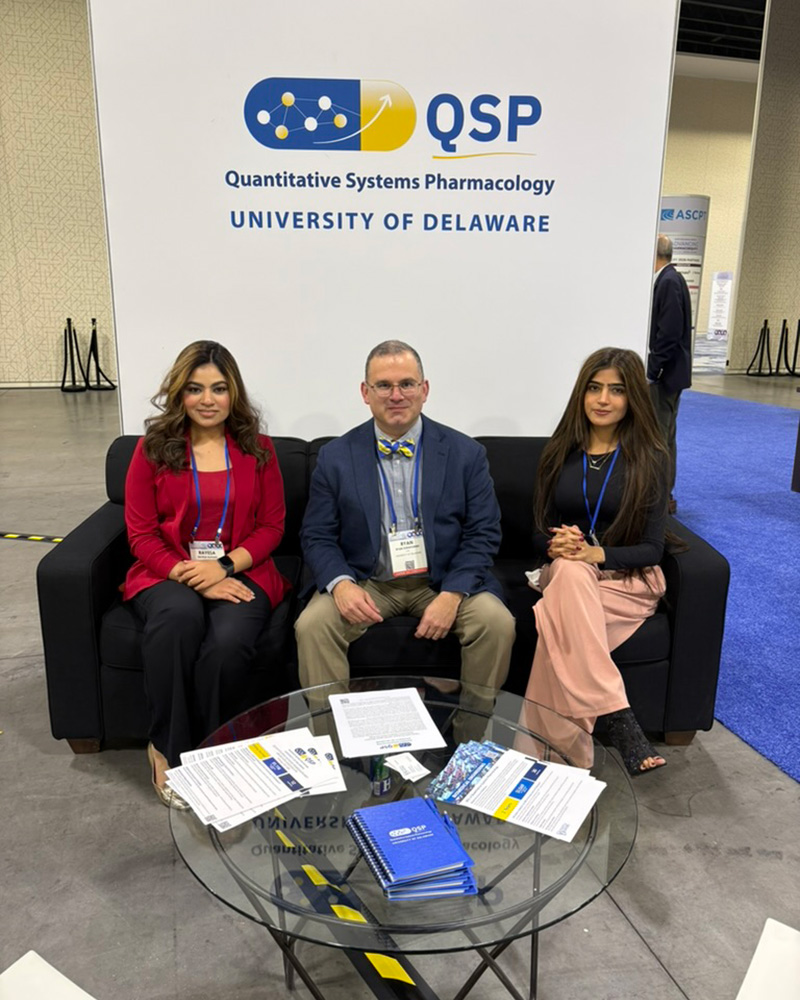
Biomedical engineering professor Ryan Zurakowski has worked in QSP for years and seen this gap firsthand. Many of his former doctoral students land high-level positions at pharmaceutical companies, only to find themselves without the teams and talent they need.
“They’re directors, but they don’t have enough people under them. They’re doing everything from curating the data as it comes in to writing the final reports,” he said. “There is a real need for junior scientists in these roles, but there simply aren’t enough people trained for them.”
To address this shortage, UD launched its QSP master’s program this year, built from the ground up with direct input from industry partners. The University also introduced a new 4+1 pathway for biomedical engineering undergraduates to earn a bachelor and master’s degree in an accelerated timeline.
Building a talent pipeline
To design the new program, Zurakowski conducted more than 30 interviews with industry experts and assembled an advisory panel with experience spanning pharmaceutical development and regulatory agencies.
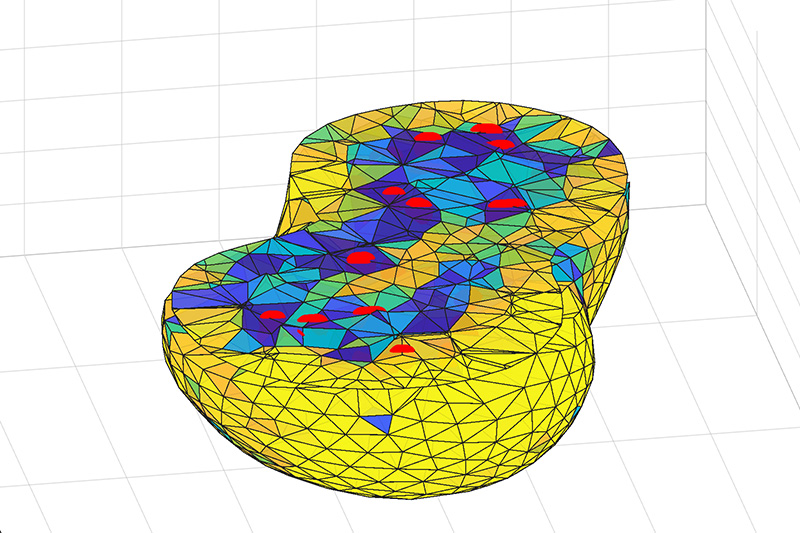
The resulting curriculum builds on existing biomedical engineering coursework while emphasizing practical skills in applied modeling, simulation and data analysis. Students learn how to build and test models that predict how drugs move through and affect the body, and they gain exposure to real-world application through guest lectures, industry-led modules and hands-on projects or internships.
That industry alignment is already making an impression. When Tara Caprinolo, a current 4+1 student, interviewed for a summer internship at a modeling company, her interviewers were surprised by her major.
“I described my coursework and walked them through every step of my big modeling project,” Caprinolo said. “They told me, ‘That’s exactly what we do.’”
Caprinolo hopes to work in early-stage drug development, using computational models to predict how different therapies and dosing strategies would affect the body before clinical trials begin.
At UD, she and her classmates also learn how modeling can be used beyond initial studies, such as to assess safety risks or estimate pediatric dosing when only adult data are available.
QSP is especially valuable in rare diseases, where small patient populations make traditional clinical trials difficult. Models can also help translate lab results into predictions on how therapies may perform.
“As data become richer and computing power grows, QSP will play an even greater role in guiding dosing, patient selection and translation from preclinical to clinical stages,” said Sasan Paryad-Zanjani, a 2025 doctoral graduate and a senior scientist in translational modeling and simulation at Pfizer.
A leader in the field
As use of QSP continues to expand, Zurakowski expects UD’s program to grow alongside it. Within five years, he aims to enroll 50 to 60 students annually, drawing a mix of early-career scientists and working professionals looking to pivot into the field.
Students say the program is already opening new pathways. Saeed Nasimi Pilehroud, a mechanical engineering graduate student balancing QSP coursework with a full-time job, has witnessed how a background in mathematics and engineering can translate directly into drug development.
This fall, UD launched an online certificate for working professionals in the pharmaceutical industry. Plans are also underway to expand the 4+1 pathways to other engineering disciplines and applied mathematics programs, bringing more students into the field.
At the undergraduate level, students in UD’s biomedical engineering program are now introduced to QSP through a required course, with plans to further integrate industry partnerships into senior design projects.
These efforts build on UD’s longstanding strengths in cross-departmental work, including collaborations in biomedical and chemical engineering and the on-campus National Institute for Innovation in Manufacturing Biopharmaceuticals.
Zurakowski sees the QSP program as a natural next step.
“As therapies become more complex, the challenge of understanding how they behave in the body becomes greater. That’s exactly where QSP comes in,” he said. “We’ve had strong expertise here for a long time. Now we’re connecting it into a broader pharmaceutical engineering ecosystem.”
Contact Us
Have a UDaily story idea?
Contact us at ocm@udel.edu
Members of the press
Contact us at mediarelations@udel.edu or visit the Media Relations website