



Mpox
Mpox
UD is working with the CDC and Delaware Division of Public Health (DPH) to educate our campus, prepare for and respond to mpox.
Mpox is a disease caused by a virus in the poxvirus family. It can cause fever, swollen lymph nodes and a rash. Mpox is spread through close contact, including prolonged face-to-face contact and skin-to-skin contact. It is contagious from the time symptoms begin until the rash has healed and new skin has formed. This can take two to four weeks.
Frequently Asked Questions
Mpox is a disease caused by a virus in the poxvirus family similar to smallpox. Symptoms from mpox are usually less severe than smallpox.
Infections with mpox are rarely fatal, but symptoms can be painful. Secondary skin infections can cause scarring and complications, as well.
Mpox symptoms usually start within three weeks of exposure to the virus and may include:
- Flu-like symptoms (fever, headache, muscle aches, swollen lymph nodes).
- Followed by a rash one to four days later. The rash usually begins around the mouth or face, then spreads to the hands, feet, arms, legs and trunk. Some individuals only develop a rash on or near the genitals and/or anus.
- The rash changes from small, flat red or dark spots to tiny blisters (vesicles) and then to larger, pus-filled blisters or pustules. The rash can take several weeks to heal.
- A person is contagious from the time their symptoms begin until the rash is completely healed and new skin has formed. This can take two to four weeks.
- If you have symptoms of mpox, contact SHS by calling 302-831-WELL. Let them know if you have a rash or a concern about mpox. Employees should contact their healthcare provider.
- Your healthcare provider can test for mpox, if indicated.
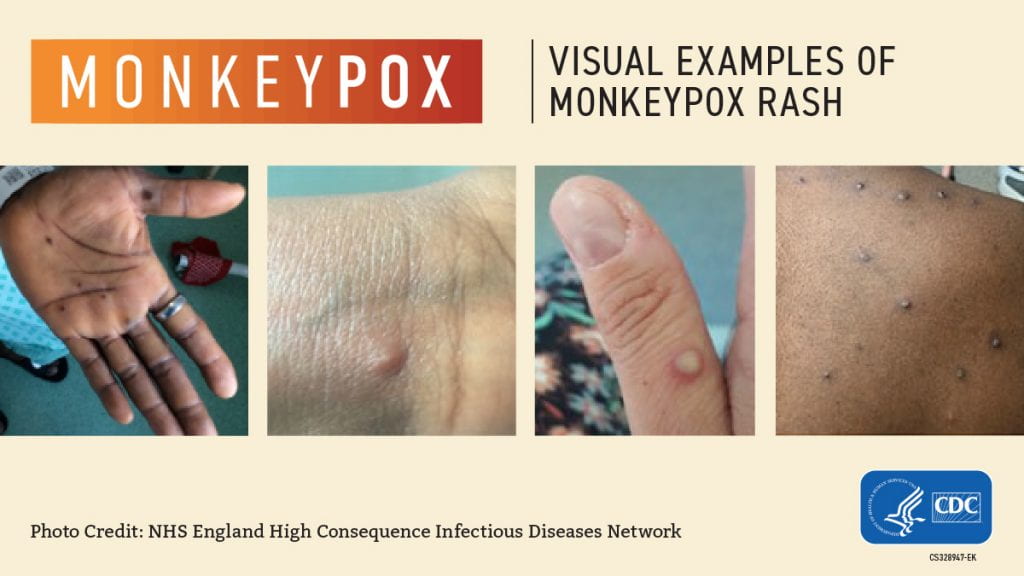
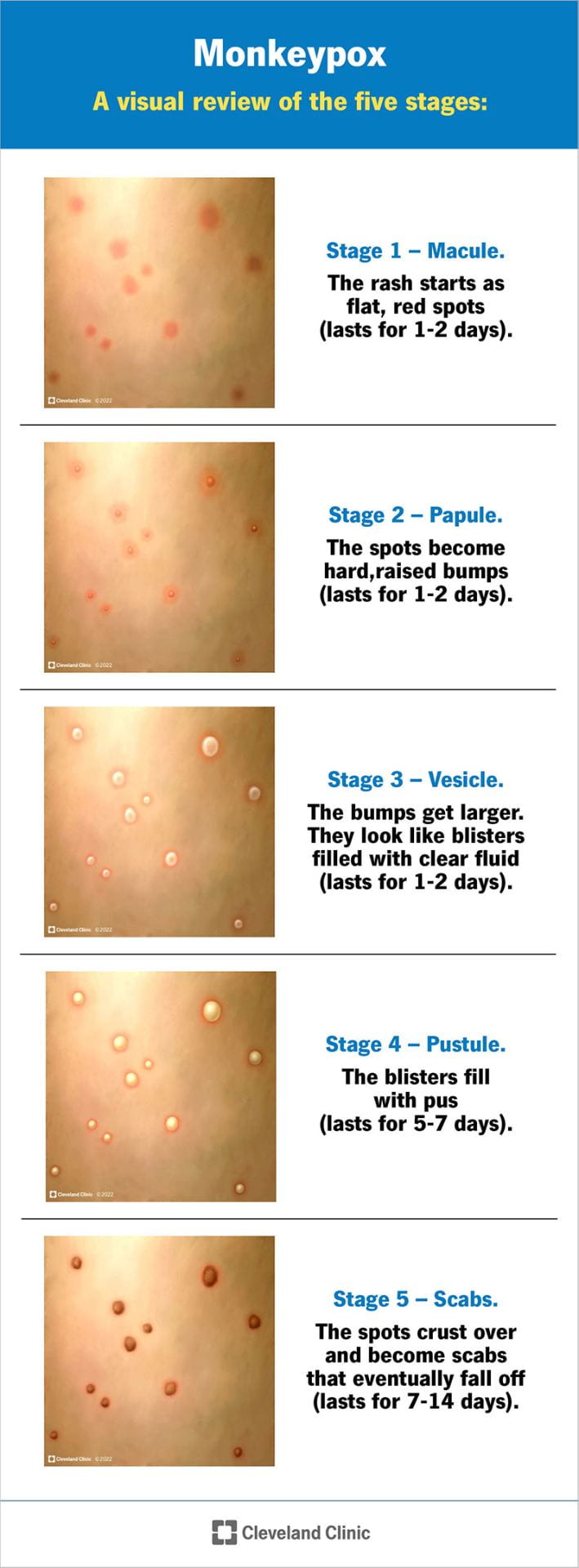
Mpox testing is only available from a healthcare provider. There are no home tests available. Healthcare providers can only test for mpox once a rash has developed. A swab (like a Q-tip) is taken from a few lesions. Test results take three to five days. Students should reach out to SHS for possible testing. Faculty and staff should contact their healthcare provider.
Mpox spreads in different ways. The virus can spread from person-to-person through:
- Direct contact with the infectious rash or scabs.
- Respiratory droplets during prolonged face-to-face contact (less than three hours) or during intimate physical contact, such as kissing, cuddling or sex.
- Touching cloth items such as clothing, sheets or towels that have been used by someone with mpox.
- Touching contaminated items such as door knobs, electronics and environmental surfaces that have been used by someone with mpox.
- Sharing drinks, utensils and toothbrushes.
It is currently unknown if mpox is sexually transmitted. Unlike COVID-19, mpox does not spread by persons without symptoms or by casual contact.
- It is important to note that anyone can get mpox if they have very close contact with someone who is infected.
- Mpox spreads in close-knit social groups. A person’s individual risk is dependent on the amount of interactions with at-risk social circles and spaces.
- Your level of risk increases if you have multiple sexual partners or are engaging in social activities where there is skin-to-skin contact.
- Currently, cases are predominantly among men who have sex with men. This may include men who identify as gay, bisexual, heterosexual or any man who engages in sexual activity with other men.
- Wash your hands often with soap and water or use an alcohol-based hand sanitizer.
- Avoid close contact with and handling linens of people with mpox.
- Avoid touching contaminated objects that have been used by people with mpox.
- Avoid enclosed spaces where there is intimate or sexual contact.
- Avoid parties or clubs where there is direct, personal, skin-to-skin contact.
- Have open discussions with any sexual partners about symptoms of mpox and do not engage with anyone with potential symptoms.
- Get vaccinated if you are eligible.
There are increasing cases of mpox in the United States. At this time, the risk of mpox in Delaware is believed to be low. However, anyone in close contact with a person with mpox can get it and should take steps to protect themselves.
Unfortunately, condoms do not prevent mpox. Condoms are still important, as they help prevent sexually transmitted infections like HIV, gonorrhea and chlamydia.
Your level of exposure to someone with mpox depends on the timeline of their symptom onset, the duration you spent together, the proximity and the activity.
If you had a known intermediate- or high-risk exposure to someone with mpox:
- Monitor for symptoms for 21 days.
- Call SHS at 302-831-WELL if symptoms or a rash develop. Employees should contact their healthcare provider.
- Get vaccinated (see vaccine resources at the end of this page).
- Clean any shared spaces.
As of October 4, 2022, vaccines are available to:
- People with known or suspected exposure to mpox
- Individuals who are HIV+
- Individuals taking PrEP for HIV prevention
- All gay, bisexual, transgender or nonbinary persons who have sex with men
- Females having sex with gay, bisexual, transgender or nonbinary males
- Transgender women or nonbinary persons assigned male at birth who have sex with men
- Sex workers of any gender and sexual orientation
- Immunocompromised persons (including those with cancer, solid organ or stem cell transplants, those taking immunosuppressive therapy and individuals with autoimmune disease)
- Those treated for a sexually transmitted infection (STI) in the last six months
- People experiencing homelessness
- People in prison
- Healthcare workers who are providing direct patient care to confirmed or suspected mpox cases in areas such as emergency departments, urgent cares, federally qualified health centers, DPH clinics, STI/HIV or sexual health clinics and those at occupational risk, such as laboratory staff that handle mpox specimens
For vaccine information and appointments, please contact DPH at 866-408-1899 or DPHCall@delaware.gov. See the bottom of this webpage for additional vaccine resources in Delaware.
Follow the instructions from the CDC and your medical provider. The University of Delaware expects that individuals who test positive for mpox will comply with Delaware Division of Public Health communications and recommendations, including isolation and contact tracing. Individuals will need to isolate until they are no longer contagious and all scabs/lesions have resolved and new skin has grown (which can take two to four weeks). Students must return home for their isolation period. If returning home is not possible, students should reach out to their RA. Detailed isolation and cleaning instructions for mpox can be found on the CDC website.
Employees should reach out to their HR liaison for questions about leave or returning to work.
Most people with mpox recover fully within two to four weeks without the need for medical treatment. Antivirals, such as tecovirimat (TPOXX), may be recommended for people who are more likely to get severely ill, like patients with weakened immune systems. TPOXX is currently only available through the Strategic National Stockpile.
Sorry, no results found.
State and Federal
- DHSS Mpox
- CDC Mpox
- CDC Reducing Mpox Transmission in Congregate Living Settings
- CDC Disinfection of the Home and Non-Healthcare Settings
- Division of Public Health: Mpox
Vaccination Resources
DPH Clinics
Call the DPH Hotline at 866-408-1899 to schedule an appointment with a public health clinic.
More Resources for Students
DPH Mpox and Vaccine Information Center
1-866-408-1899
DPHCall@delaware.gov