
A mission beyond discovery
Photos courtesy of Project Recover, Liam Trageser and Kendall Richardson May 22, 2026
After helping locate a missing WWII aircraft, UD alumni will travel to Arlington to honor the airman finally being laid to rest
For many UD students, the introduction to Project Recover begins as a study abroad experience. But for those traveling to Arlington this month to attend the interment of a long-missing World War II airman, the work has become something far more personal.
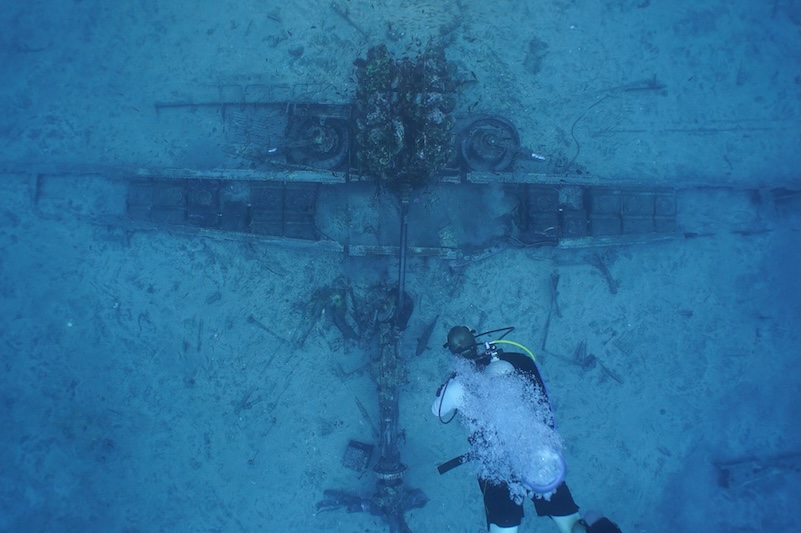
On May 29, more than a dozen Blue Hens will attend the interment of 2nd Lt. Jason K. Goldwater, a navigator aboard a B-25 bomber that crashed during World War II. The aircraft was located in 2017 during a Project Recover mission, launching a yearslong recovery and identification process led by the Defense POW/MIA Accounting Agency (DPAA). Goldwater’s identification was officially confirmed last year.
Roughly one-third of the 34 students who have participated in UD’s Project Recover study abroad internship program since 2024 plan to make the Arlington trip on their own dime to attend the ceremony.

Led by Project Recover co-founder and UD Professor Mark Moline, the immersive Summer and Winter Session program has taken students to Micronesia in 2024 and 2025, and to Palau in 2026, where they work alongside researchers searching for Americans still missing in action from World War II. The experience blends history, marine science, robotics and field research in a way no classroom can replicate.
Students begin by studying the history of the war and its lasting impact on host nations throughout the Pacific. From there, instructors challenge them to think like researchers: Based on historical records, where should the search begin?

Students learn how to program, deploy and retrieve autonomous underwater vehicles used to survey the seafloor, then download and interpret sonar data to identify potential aircraft wreckage and plan future missions. Some students even dive alongside Moline and Project Recover crews to investigate targets firsthand, learning underwater archeological techniques and proper excavation procedures at recovery sites.
Along the way, Blue Hens are immersed in science and history, but also in the cultures and communities connected to the work. During the 2026 trip, students met with Palauan officials, including President Surangel Whipps, Jr.

For rising senior Liam Trageser, who participated in the Palau expedition earlier this year, the experience transformed history into something deeply human.
“One of the most inspiring moments for me was realizing we were in a completely remote corner of the world, searching for people who have been lost for over 80 years,” he said. “I thought, ‘Who else is going to look?’”
That epiphany stayed with Trageser throughout his time in the Pacific, from hiking through the jungles of Babeldaob (Palau’s biggest island) to encountering the wing of a B-24 bomber protruding from crystal-clear waters.
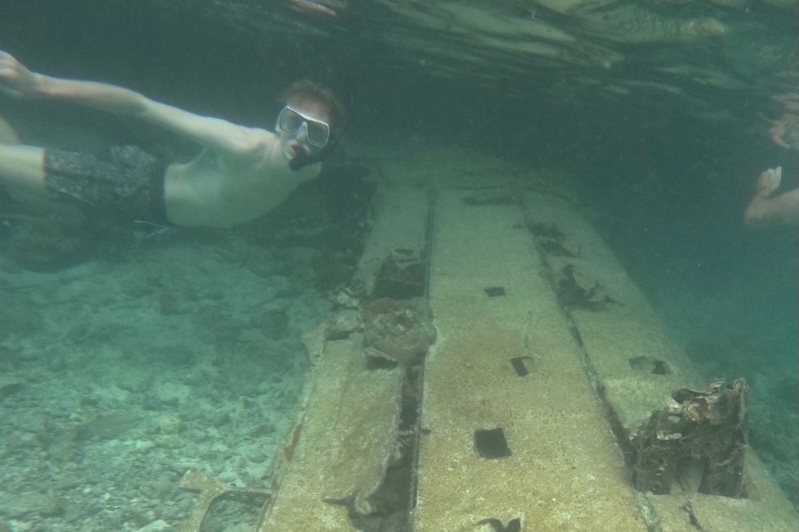
“It hit me how surreal it is that a land of such picturesque and sheer beauty is also the location of something so horrid,” he said. “Eighty years ago, war raged there, and this plane, filled with men my age, was shot out of the sky.”
The impact is profound. Now living in Ocean View, Delaware, and preparing to intern at the Fort Miles Museum as part of the Delaware State Parks, Trageser said attending Goldwater’s interment feels like witnessing the final chapter of a story that began thousands of miles away.
“Over the course of the month that I was with Project Recover, I was out on boats, hiking through the jungle and reviewing data, yet I didn't get to see the result of our work,” he said. “Being able to see the real-world impact that Project Recover has on people and communities when an individual is repatriated and interred is ultimately what all of our work is for.”
Contact Us
Have a UDaily story idea?
Contact us at ocm@udel.edu
Members of the press
Contact us at mediarelations@udel.edu or visit the Media Relations website