



Fresh eyes, real savings
Photos courtesy of Keith Goossen and Eva Grise June 15, 2026
UD's Industrial Assessment Center helps companies cut energy costs through free audits while training students
Imagine walking into a large manufacturing facility for the first time and, within hours, being expected to understand it well enough to recommend energy-saving improvements.
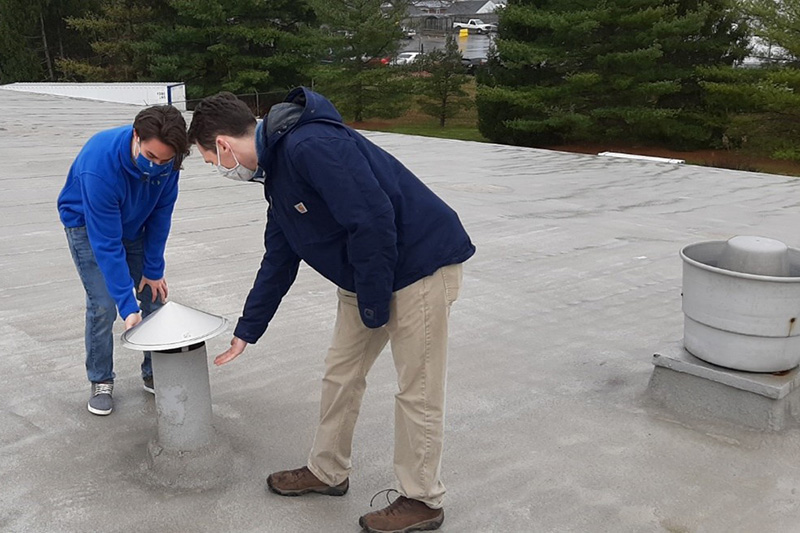
That’s the starting point for every energy audit conducted through the Mid-Atlantic Industrial Assessment Center at the University of Delaware, where interdisciplinary student teams work alongside director Keith Goossen to analyze complex industrial systems and identify opportunities for improvement.
The center provides free energy, productivity and waste assessments to small- and medium-sized industrial facilities, with primary funding from the U.S. Department of Energy (DOE). Goossen estimates that facilities ultimately implement about 50-60% of recommendations, leading to energy savings of roughly 10-20%.
“Had we hired a firm to do this work for us, it would have cost us thousands of dollars,” said Rick Murphy of Eagle Group, a foodservice equipment manufacturer, in a 2022 review of the center’s audit. “We really appreciate the time and effort.”

Goossen, an electrical and computer engineering professor, has conducted more than 600 audits since 2007. Each week, he leads one to two audits with teams of two to five students. Over the course of a single visit and follow-up analysis, the team translates their observations into formal recommendations delivered directly to clients, who run facilities ranging from manufacturing plants to churches and community centers.
"It's like starting from zero every time," Goossen said. "You're trying to understand a system that people have spent years working inside."
Inside an audit
The audit begins before the team sets foot inside a facility. Goossen reviews utility bills to understand how much energy a site consumes and where it is likely being used.
On-site, the team has to quickly familiarize themselves with the facility before identifying areas for improvement. That unfamiliarity is often an asset, said Priscila Barbosa, a doctoral candidate focusing on electromagnetics and photonics who has worked with the center since coming to UD five years ago.
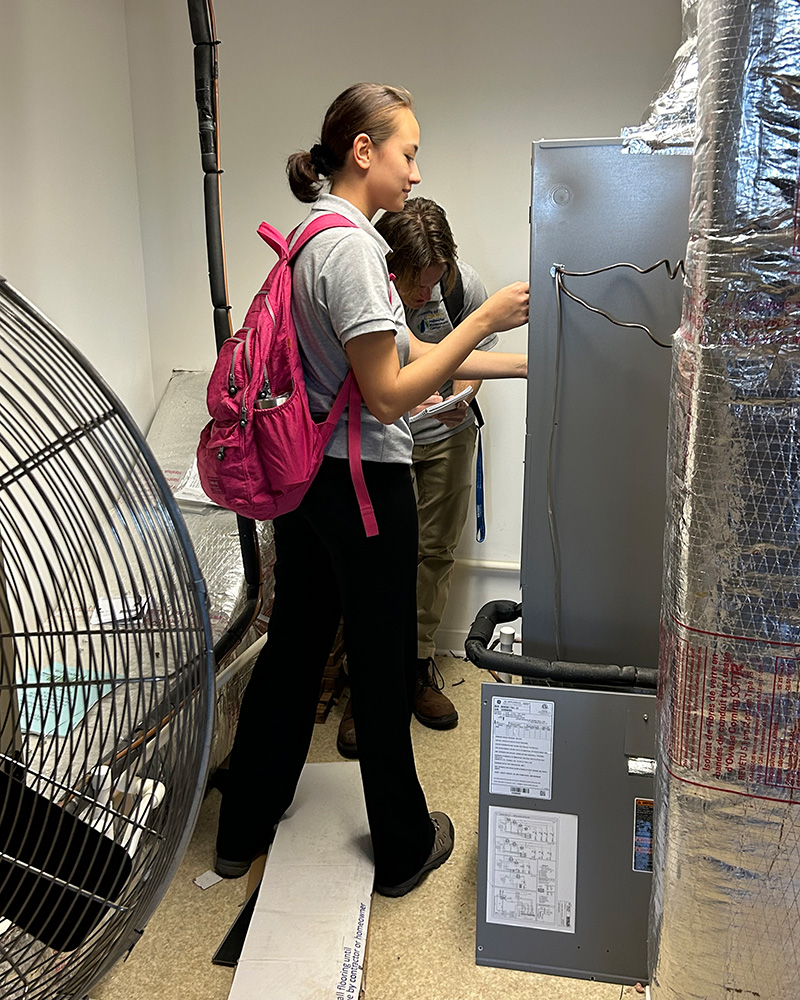
"The most challenging part is going into a new facility and trying to understand a process you've never seen before quickly, and without being disruptive,” Barbosa said. “They know their process better than anyone. We're just there as a fresh set of eyes, bringing ideas while respecting their expertise."
Every recommendation must meet a high bar: It has to be feasible and measurable.
“If you can’t quantify the savings, you can’t make the recommendation,” Goossen said.
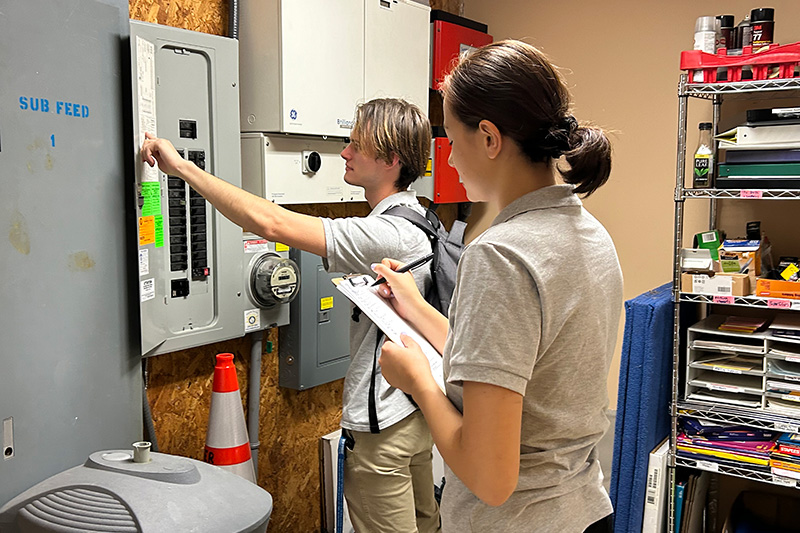
The team follows a structured approach during each audit. First, they look for opportunities to simply turn things off, such as equipment running unnecessarily or systems left on when not needed. Next, they look for ways to improve efficiency, which often requires Goossen to take measurements on live high-voltage equipment.
These measurements can surface opportunities that aren't immediately visible. At a corrugated paper plant, for example, the team examined a suction system. While measuring its electrical consumption, Goossen discovered that it was operating in a particular mode simply because it always had. After switching modes, the system ran just as effectively while using about 20% less energy, saving the plant roughly $100,000 annually.
Finally, the team looks for ways to recover energy, though recommendations in this area often have the highest barrier to adoption. Technologies like recuperative burners can capture exhaust heat from industrial furnaces and redirect it back into the process, but many plants are reluctant to modify core equipment or established processes. Navigating those conversations, Goossen said, is part of what students learn.
Skills beyond the facility
Many of the center’s students earn DOE-approved energy auditor certificates that attest to their technical training. But they also come away with skills that are harder to measure: the ability to find their footing in unfamiliar environments, communicate across disciplines and adapt under pressure.
"I've been to dairy facilities, coffee and beverage plants, asphalt plants, drywall manufacturing. You gain a broad perspective without having to spend years in each industry," Barbosa said. "This experience gives you a mindset: how to approach a new system, how to learn from it, how to identify key components."
For electrical engineering master's student Brice Carlson, that breadth extends to the people as well.
“I'm usually only in classes with electrical and computer engineering students,” he said. “But through this I've met mechanical, chemical, civil and environmental science students — people I probably wouldn't have met otherwise.”
After each visit, student teams divide the follow-up work, coordinating across areas of expertise to deliver reports within two to three weeks of each visit.
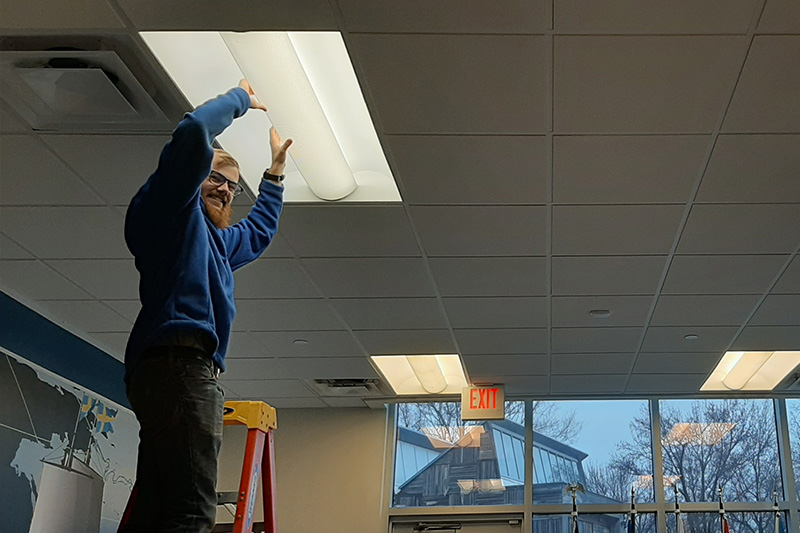
“It helps with teamwork, communication and making sure everything gets done on time, even when people have other priorities,” Carlson said.
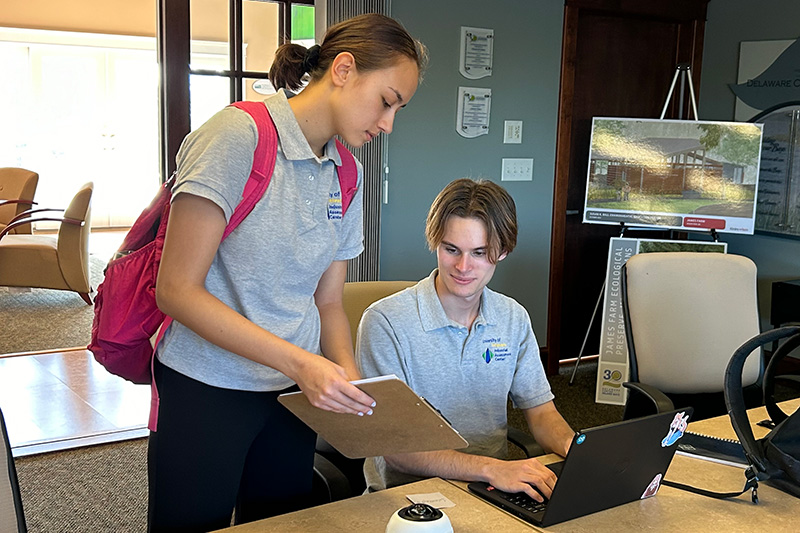
Eva Grise, a senior majoring in environmental science and Chinese studies and one of the few non-engineering students on the team, learned to turn technical notes into clear documentation and to hold her own in environments where she had no prior expertise.
“At first, being thrown into audits without much instruction was nerve-wracking,” she said. “But over time it helped me become more confident. I realized I can learn difficult things and adapt.”
That adaptability is now shaping what comes next. Grise plans to pursue a career in international relations, with a focus on global energy markets. The audits, she said, gave her the industry-level grounding to connect to those bigger questions.
It’s a trajectory that reflects the core goal of the audits: walking into a complex system with fresh eyes and leaving with a clearer, more actionable understanding of how it works.
Contact Us
Have a UDaily story idea?
Contact us at ocm@udel.edu
Members of the press
Contact us at mediarelations@udel.edu or visit the Media Relations website