




Cleaning up hydrogen energy
Photos by Evan Krape July 23, 2026
UD researchers develop a green recycling process to recover precious metals from hydrogen technologies
Hydrogen could play an important role in meeting the world’s sustainable energy needs. It can serve as a fuel source, an energy carrier and an energy storage medium.
However, the future hydrogen economy may hinge on iridium, a metal so rare that only about eight metric tons are produced worldwide each year — about the same weight as a mid-sized school bus. To help stretch the limited supply, University of Delaware researchers have developed a recycling process that recovers precious metals and other materials from used hydrogen-energy devices, such as electrolyzers and fuel cells, without producing toxic waste.
For example, proton exchange membrane (PEM) electrolyzers and fuel cells rely on catalysts made from iridium and platinum to produce and use hydrogen efficiently. PEM electrolyzers use electricity to split water into hydrogen and oxygen, allowing the hydrogen to be used as a power resource. PEM fuel cells release stored energy by converting hydrogen back into electricity.
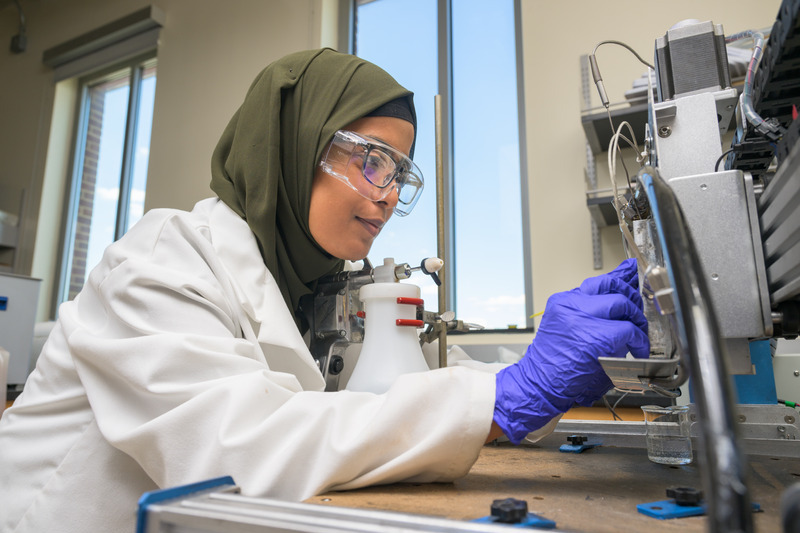
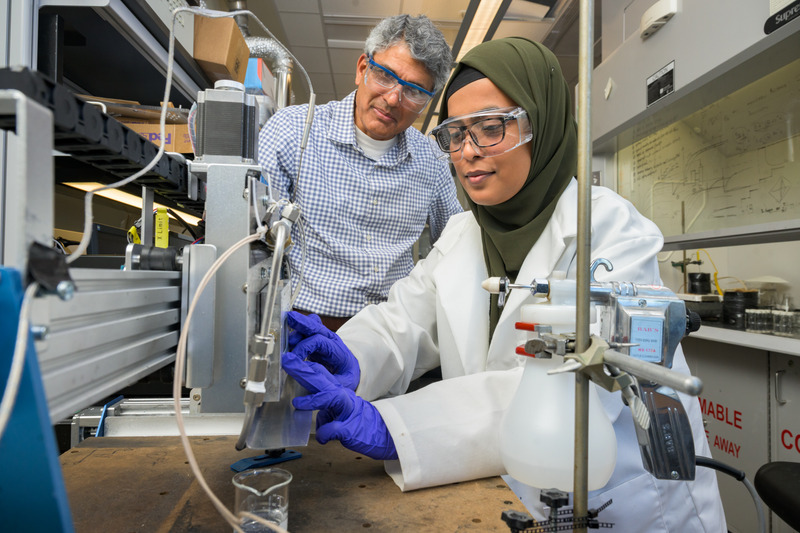
Platinum and especially iridium are difficult to obtain, expensive and in high demand. To recover these catalysts from used membranes, Safina-E-Tahura Siddiqui, a doctoral candidate in mechanical engineering working under the supervision of Ajay Prasad, developed a spray-jet method that enables recycling of both the precious-metal catalysts and the membrane itself.
“It’s like pressure washing the siding of your house. You just sweep across the surface and remove the catalyst material,” explained Prasad, Engineering Alumni Distinguished Professor of Mechanical Engineering and associate director of the Center for Clean Hydrogen.
The researchers reported their approach in the International Journal of Hydrogen Energy and have a patent pending through the Office of Economic Innovation and Partnerships, the unit responsible for managing intellectual property at UD.
Addressing a critical bottleneck
Recycling becomes more important as demand for PEM technologies grows. Platinum is typically found in very low concentrations in mined ore, while iridium is not mined as a primary material and is recovered only as a byproduct of platinum mining.
“Iridium is the major bottleneck in PEM electrolyzers because of this,” Siddiqui said. “That is why we are focusing on recycling them from spent electrolyzers instead of depending on mining or market supply.”
While recycling catalysts from used PEM electrolyzers and fuel cells is not a new idea, existing methods come with environmental drawbacks. Some rely on harsh chemicals such as sulfuric and nitric acid, which generate toxic waste streams. Others involve burning the membrane to produce ash containing platinum and iridium, a process that can release harmful fluorine-containing emissions.
In contrast, Siddiqui’s approach uses a controlled spray of isopropyl alcohol and water to detach the precious metals from the membrane.
“It is a green recycling method that uses no harsh chemicals and no burning,” said Prasad.
Recovering more than precious metals
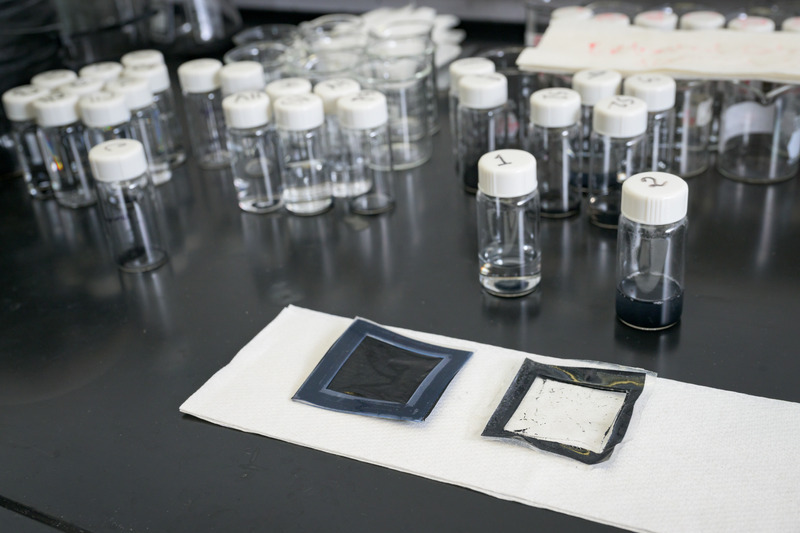
Unlike other recycling approaches that focus solely on recovering metals, the UD method preserves the membrane itself, while also extracting the platinum and iridium catalysts separately.
Preserving the membrane presents additional cost savings, as industry-standard membranes used in PEM electrolyzers and fuel cells account for 20% to 30% of the cost of the stack, the central assembly where the electrochemical reactions occur.
It has ecological advantages, too. These membranes are made of polymers classified as PFAS (per- and polyfluoroalkyl substances), also known as “forever chemicals,” that persist in the environment for decades and contribute to contamination concerns.
Additionally, keeping the recovered platinum and iridium catalyst materials separate as they are extracted from the membrane helps prevent separation difficulties further down the line during the recycling process.
Fine-tuning the technique
Though the principle behind the new recycling method is straightforward, the process requires careful control of jet velocity, solvent ratio, distance and temperature. Just as power washing a house works best when factors like water pressure and cleaning solution are optimized, the researchers had to fine-tune each variable in the recycling process.
Siddiqui began with small-scale beaker tests, immersing tiny pieces of catalyst-coated membrane in solvent, heating them and timing how quickly the catalyst detached. She then conducted hundreds of experiments with membranes roughly the size of a postage stamp, varying temperature, solvent ratio and exposure time to determine optimal conditions.
One challenge emerged when the membrane interacted with the solvent. In some cases, the membrane swelled to nearly twice its original size, causing it to sag and tear during the spray-jet process.
To overcome this problem, Siddiqui developed a heated vacuum bed that held the membrane flat while the catalyst layers were removed from each side.
Preparing materials for reuse
The researchers’ goals extend beyond recovering materials. In the next phase of the work, they plan to quantify recovery yields, characterize the recovered catalysts and membranes and test their performance in operating electrochemical cells.
Ultimately, they hope recovered catalysts and membranes can be reintroduced into new hydrogen-energy devices, helping create a more sustainable and resilient supply chain for next-generation energy technologies.
The work was supported by H2CIRC: Circular Recycling for the Hydrogen Economy, a consortium funded by the Department of Energy’s Hydrogen and Fuel Cell Technologies Office under award number DE-EE0011338.
Contact Us
Have a UDaily story idea?
Contact us at ocm@udel.edu
Members of the press
Contact us at mediarelations@udel.edu or visit the Media Relations website