




Teaching international teachers
Photos by Evan Krape, Zoe Pawliczek and Kaitlyn Diehl and courtesy of Nigel Caplan April 10, 2026
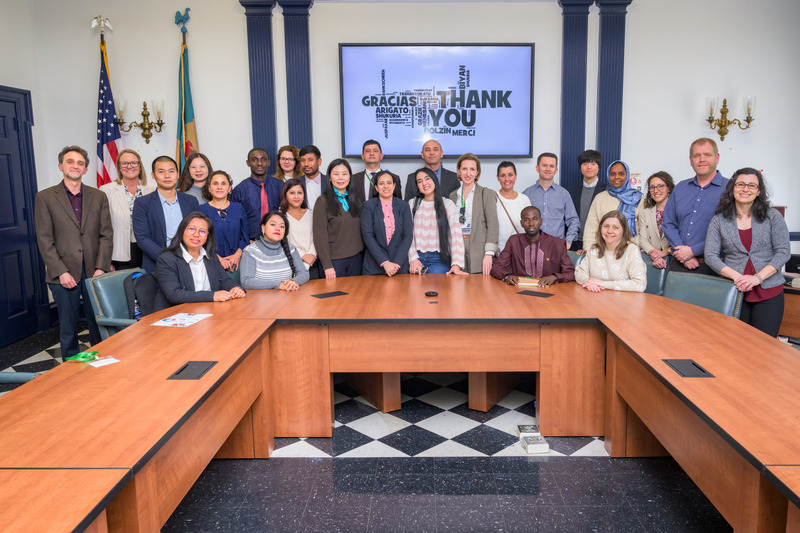
Educators from 18 countries participate in a training program hosted by the English Language Institute
In Senegal, some teachers have as many as 88 students. In Madagascar, students have limited access to the internet and libraries. So how do teachers incorporate 21st century skills into their classrooms?
A group of 21 teachers from 18 countries found the answer as they learned new techniques during a two-week training program hosted by the University of Delaware's English Language Institute (ELI).
The program was part of an initiative sponsored by the U.S. Department of State’s Bureau of Educational and Cultural Affairs (ECA), which was administered by their partner, FHI 360, a nonprofit organization. The ECA designs educational, professional and cultural exchange programs as a way to build relationships with professionals in other countries.
“Working with these participants allows us to showcase the best that the United States has to offer whether that’s education, diplomacy or multilingual and multicultural opportunities,” said Cheryl Ernst, ELI director. “It’s a badge of honor for our program and the campus because of the recognition that the delivery brings to UD.”
Challenges teaching abroad
Hailing from Senegal, Costa Rica, Nigeria, Mongolia, Albania, Turkmenistan, Madagascar, Russia, Belarus, Egypt, Kenya, North Macedonia, Taiwan, Algeria, Uzbekistan, Japan, Brazil and Nepal, the teachers brought a wide range of backgrounds and challenges to the program.
“Our classrooms are overcrowded with over 45 students per class, and we can only afford one teacher per class — meaning there is no assistant to support them,” said Nermeen Adly, an EFL teacher at Abu Qurkas Official Language School in Egypt. “This places a heavy burden on the teacher, who must manage all the students alone, including those with behavioral or learning difficulties.”
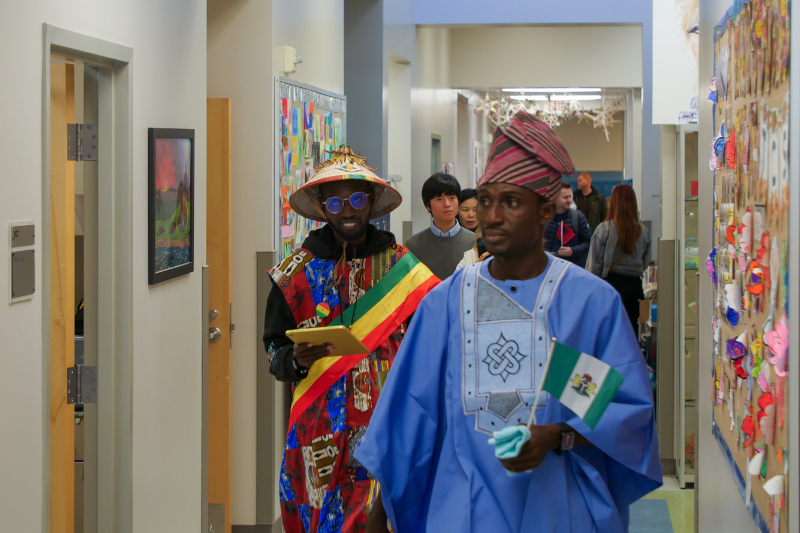
Like many of the teachers, Mamy Ratovoson, an adult EFL teacher and teacher trainer at the English Teaching Program in Madagascar, finds a lack of technological resources as her biggest challenge.
“Students have limited access to materials such as libraries, and internet availability is also restricted,” she said.
Integrating 21st century skills
The program focused on how to integrate 21st century skills — the 4C’s: communication, collaboration, creativity and critical thinking — into the classroom.
“The 4C’s cover the scope of what it means to learn a globalized language; not just how a language is learned, but how it is used,” said Nigel Caplan, ELI professor and program coordinator. “Hopefully what we’re doing through this program and the 21st century framework is promoting connections and challenging some of the disconnections in a world full of misinformation and disinformation.”
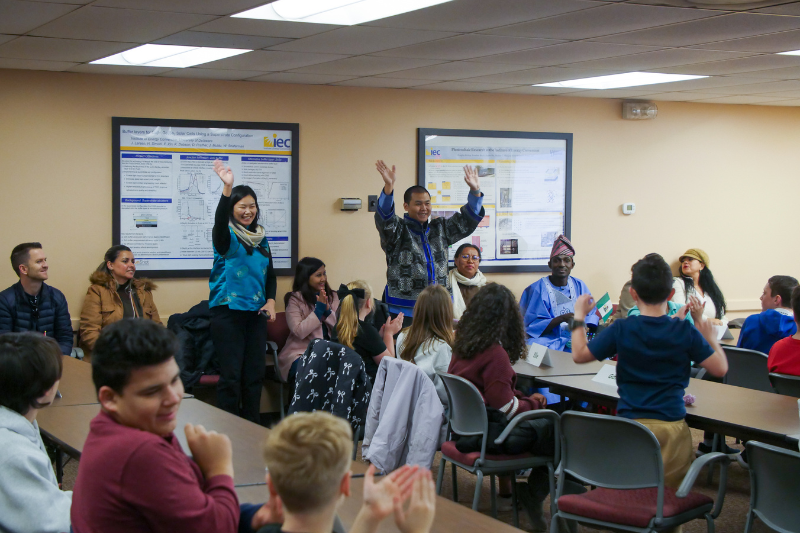
The teachers built their skills through field trips and experiential learning and collaboration on projects, such as a unit on sustainability where they upcycled trash to create a handbag or skirt out of plastic. They also learned ways to incorporate drama or musical projects into their teaching.
Ratovoson found these exercises particularly useful.
“I was already familiar with the 4C’s, but I had not fully explored my creativity,” she said. “I will start incorporating drama or reader’s theater in the future. The workshops were very innovative as the presenters made the ideas feel practical and easy to apply.”
Given the range of resources available to the teachers in their home countries, Phil Rice, an assistant professor at the ELI who taught and led the program alongside Lindsei Pereira da Silva, an assistant professor at the ELI, made the skillsets scalable and primarily focused on how to engage and motivate students with limited technology or materials.
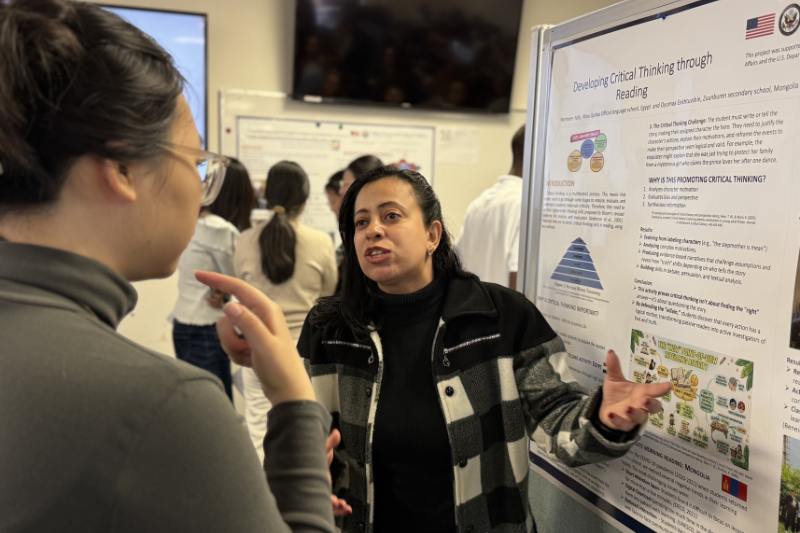
At the end of the program each group did a poster presentation. Rice and Pereira da Silva were inspired by the teachers’ passion and commitment to their students despite their challenges back home.
“Their dedication was really motivating,” said Rice. “I was impressed by how much Cheikh Amadou Tidiane Niang, the teacher from Senegal, is doing with limited resources and a class size of 88 students. He was very cheerful and motivated. One of the Nepali teachers, Bishnu Karki, travels 50 kilometers on a motorbike every day.”
Shining a spotlight on Delaware education
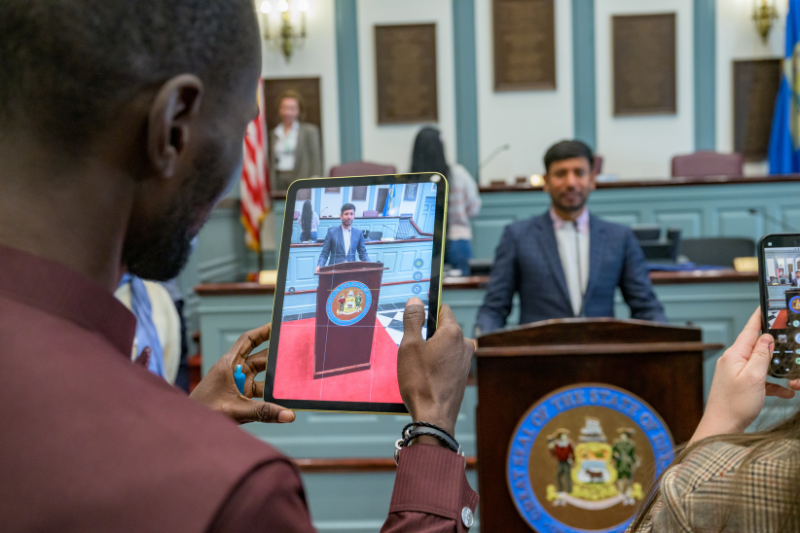
The teachers had the opportunity to see how Delaware educators implement 21st century skills in real time through tours to local schools like ASPIRA Academy and UD’s The College School. They also attended the Delaware Charter Network annual conference, CharterCon, toured Legislative Hall in Dover, and met with Maria Rodriguez, the Multilingual Learner Education Associate at the Delaware Department of Education, who shared how Delaware supports the one in six multilingual students across school districts and charter schools.
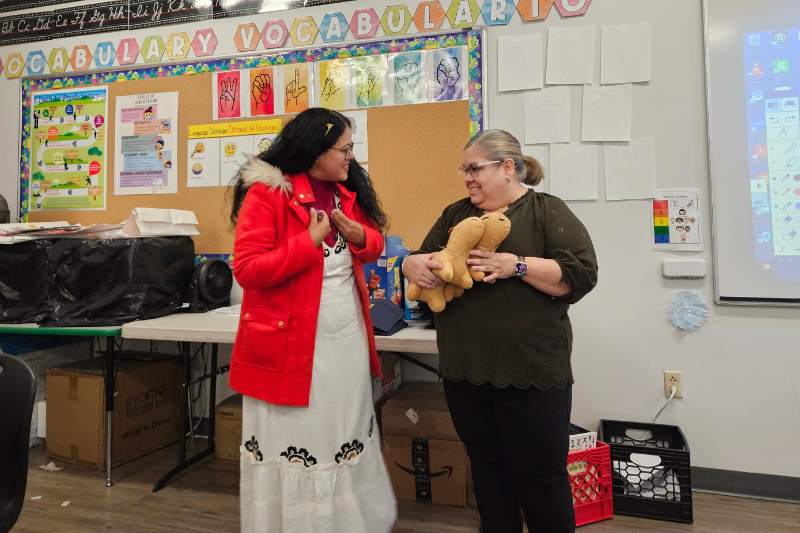
Ratovoson was very inspired by the school visits. She found that “the rapport between teachers and students, the availability of resources and effective classroom management work in synergy to create a highly-positive learning environment.”
Adly was most impressed by The College School and hopes to start applying what she saw to classrooms in Egypt.
“They take a holistic approach, caring for students socially, emotionally and mentally. The way teachers and the principal handle misbehavior — embracing the idea that we are not perfect but we want to be excellent and viewing mistakes as part of the learning process — is very different from what we see in Egypt.”
Global impact
Adly also plans to share the new teaching methodologies with her colleagues through professional development workshops.
“While the Egyptian curriculum emphasizes 21st-century skills, the ministry does not offer professional development to help teachers understand their importance or how to implement them,” she said. “Now, I possess that knowledge and have learned practical ways to apply it in my classroom, even with limited resources.”
Most of the teachers had never been to the U.S. before, even though some of them teach classes on American culture and history, in addition to English. The program gives them a deeper understanding than what they see from media, movies and textbooks.
“There is no substitute for visiting a country and simply engaging and interacting and realizing that the world out there is not what you thought it was,” Caplan said.
Contact Us
Have a UDaily story idea?
Contact us at ocm@udel.edu
Members of the press
Contact us at mediarelations@udel.edu or visit the Media Relations website