





Understanding sustainable development
Photos courtesy of Kent Messer, Helena Owen, Kristian Tolbert and Ava Ferry April 24, 2026
Patagonia study abroad teaches students to consider ethical implications of environmental decisions
Magdalena Island in Chile is home to sea lions, skuas and seagulls. But the stars of the show are the penguins — more than 100,000 of them. It’s one of the largest penguin colonies in Patagonia.
Eleven University of Delaware students visited the national park in January as part of a transformative 2026 Winter Session study abroad in Patagonia. Amidst all the “oohs,” “aahs” and Magellanic penguin selfies, Kent Messer posed a question to his group.
“When we go to a national park where there are penguins, but other animals living there too, how should we manage that national park?” the S. Hallock du Pont professor of applied economics asked. “Should the penguins be given (conservation) priority, and if so, why?”

The response was overwhelming: The students valued the penguins. Messer used that as a teaching moment about ethical challenges. The penguins could thrive best if people never visited the island, but those visits cost money that goes toward protecting the penguins. Messer said ethics was at the heart of his question.
“Is it really about the animals?” Messer said. “Or is it about humans enjoying the animals and therefore we take care of them?”
For three weeks in January, the 11 intrepid Blue Hens encountered multiple questions like this while thinking critically about sustainable development issues in Patagonia for the course Sustainable Development in Patagonia (APEC 100). Students applied policy and economic analyses to issues ranging from natural resources to environmental protection to poverty alleviation.
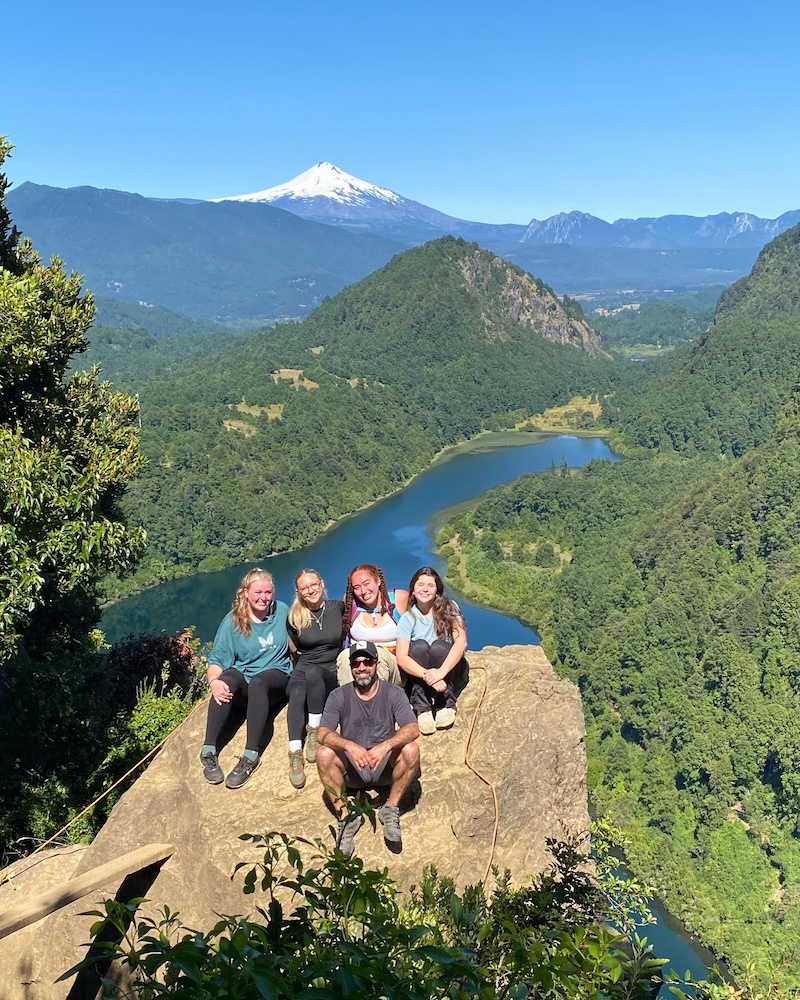
Beautiful scenery surrounded the group at every turn — stunning volcanoes, dramatic glaciers, crystal blue lagoons, towering trees and more. The eye-opening experience on this brand new UD study abroad taught students sustainable development is more than just promoting recycling; it’s about using natural resources to meet today’s needs while still saving them for future generations.

The lesson about the penguins was clear. They are just one part of Magdalena Island’s whole picture, said Cain Carter, a sophomore environmental and resource economics major.
“This is an ecosystem,” Carter said. “If one bird doesn’t thrive, then other animals don’t thrive.”
Whenever the group was on the road to their next destination, they chatted about all things sustainable development, from human welfare to forestry. Ava Ferry, a sophomore energy and environmental policy major, said lectures were always engaging.

“We all cared about what we were learning,” Ferry said.
Each new day felt like a “top 10 day of her life.” Some of her favorite moments included exploring a volcano, seeing ancient evergreen Araucaria trees and getting to know an Indigenous group that the Blue Hens stayed with for a few days.
From seeing penguins, to spending time in Chile’s capital city Santiago, to visiting stunning snow-capped mountains, Messer packed the brand new study abroad itinerary.
“Every day was its own creation,” Messer said.
Sustainable development from street art
Messer took the group to a UNESCO World Heritage Site in Valparaiso, formerly a booming maritime hub. The opening of the Panama Canal reduced ship traffic there, and the town’s economy suffered. People graffitied the town, which snowballed into street art; artists then painted the town, reviving Valparaiso through art. Tourism took off.
One part of town has an iconic piece of street art covering two steps. In white, capital bubble-like letters, on the top step, “we are not hippies” is painted; on the bottom step, “we are happies.” The background is filled with multiple colors of triangles.

Messer said happiness is more than just money. Public art brings beauty to and enriches communities, ultimately bringing tremendous happiness to peoples’ lives.
“I was trying to think outside of the traditional economic lens. This is development, and it’s pretty sustainable. You’re beautifying peoples’ lives and they are happier,” Messer said. “You’re not damaging resources other than some paint. And you’re thinking about other expressions beyond just economic development.”
Agnes Cruz, a senior student studying biological sciences with a minor in chemistry, said the graffiti was meaningful.
“Having different artists come in and paint boosts the economy so much,” Cruz said. “I thought it was so cool that the small beach town could have so much economic growth just from graffiti.”
Growing up in a Mexican household and visiting Chile before, Cruz was excited to participate in the study abroad to see more of the country and learn more about its history.
“Every part of the study abroad added something new to how I saw the world,” Cruz said.
Living with Mapuche
Students also learned about sustainable development through the eyes of the largest Indigenous group in Chile.
The creative and entrepreneurial Mapuche community uses natural things in the environment to make crafts. They sell crafts through markets, balancing tourism with protecting their culture.
The Blue Hens stayed with the Mapuche community in family homes and ate meals with them for three days. The students worked on handcrafts. They learned a traditional Mapuche game. They learned how the community fought against colonization for centuries and saw their deep connection to the land today.
“We weren’t just learning about their culture,” Cruz said. “We were really living it.”
The Mapuche live in a region covered by Araucaria trees. They use the trees’ fallen seeds in food and sell seeds in markets to make a living. Students walked through an Araucaria forest and saw the roughly 100-feet-tall trees, one of Ferry’s favorite parts.
“These forests are sacred to the Mapuche community,” Ferry said. “They are a symbol of resistance. They use the pine cone part for all things food and medicinal, and have been doing so for hundreds of years.”
Embracing Patagonia’s natural beauty
Overall, Cruz said the beauty of Patagonia was a whole other level.
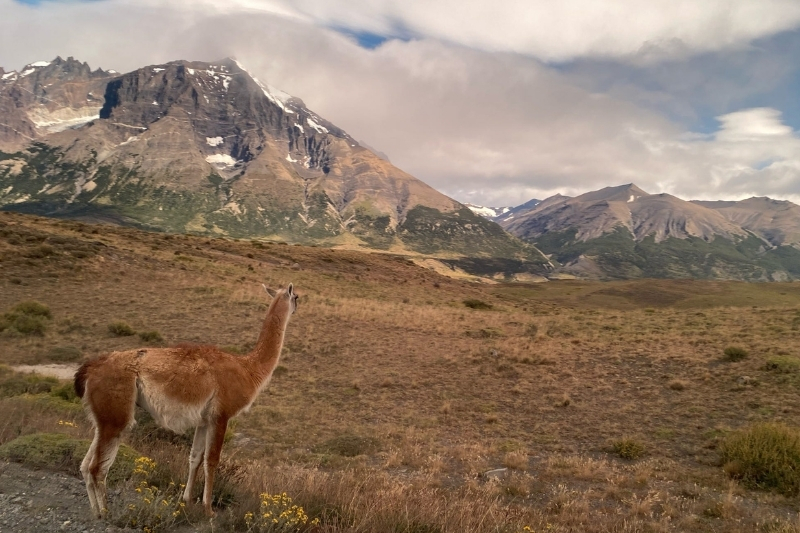
“Being surrounded by the mountains and the glaciers that we went to, and just the open space in general, made everything we’d been learning about sustainability so urgent and real,” she said.
Cain Carter, the environmental and resource economics major, agreed. The study abroad program showed him sustainable development can be applied to nearly anything.
“Whether you’re looking at a tree, how do we conserve that or use it as a resource?” he said. “Or if you’re looking at architecture, how is that sustainable, how does that contribute to development?”
Carter’s favorite moment was exploring Torres del Paine National Park. Its turquoise lakes and stunning glaciers were unmatched and unforgettable.
“You feel like you’re looking at a green screen,” he said. “It was insane.”
Messer will again offer the program in Winter 2027. Carter said he recommends it to anyone.
“You won’t get this experience in the classroom,” Carter said.
Contact Us
Have a UDaily story idea?
Contact us at ocm@udel.edu
Members of the press
Contact us at mediarelations@udel.edu or visit the Media Relations website