



Accelerating STEM education
Photos courtesy of Brynn Bailey and Emma Carpenter September 14, 2026
Animal science students fill a critical need for secondary STEM educators
Across the globe, STEM-related fields are among the fastest-growing career paths.
The next generation of innovators and problem-solvers needs quality STEM education to prepare for roles in science and technology. While the field is growing, the supply of highly qualified STEM teachers is shrinking. Since 2020, reports of STEM teacher shortages nationwide have increased, especially in secondary education.
To help address this need, the University of Delaware offers a STEM Education 4+1 accelerated degree. Through this program, undergraduates in various STEM majors across the University can earn both a bachelor’s and a master’s degree in five years, culminating in a year-long student-teaching residency in a Delaware school district.
UD senior Emma Carpenter recognizes the impact a knowledgeable and engaging instructor can make on a student’s life. It’s the reason she chose a STEM degree.
“In high school, I took every science class that was offered,” Carpenter said. “I had great teachers as role models who pushed me to pursue pre-veterinary medicine and advanced STEM classes.”
Carpenter is a pre-veterinary medicine major with a minor in biology. She will graduate from UD with a B.S. and add an M.S. through the 4+1 program.
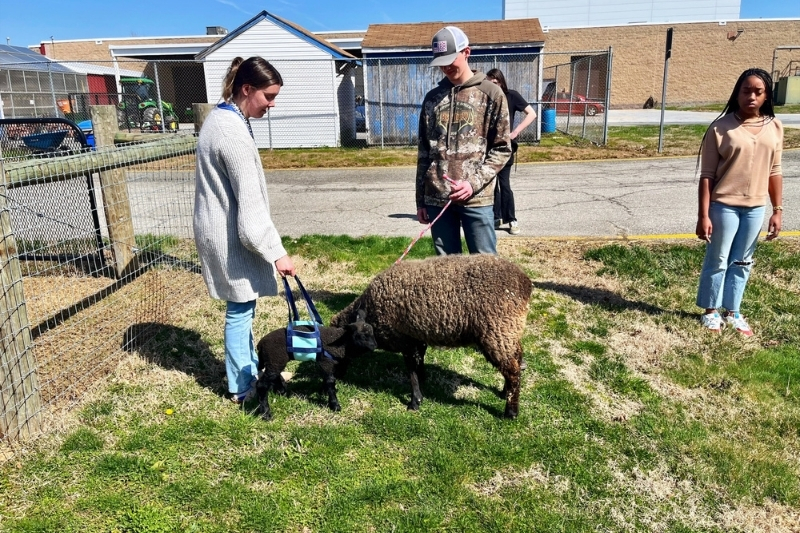
Sarah Wessel, agriculture teacher in Gettysburg Area School District, is a 2025 graduate of UD's STEM education 4+1 graduate program. Wessel also spent a year teaching in the Appoquinimink School District.
“Good agriculture teachers are needed everywhere,” Wessel said. “It’s important that more people understand where their food comes from.”
Wessel has an insider perspective on agriculture. She grew up on a farm where she bred and sold goats to pay for college. She brings years of experience raising and showing livestock through FFA and 4-H to her role as an educator.
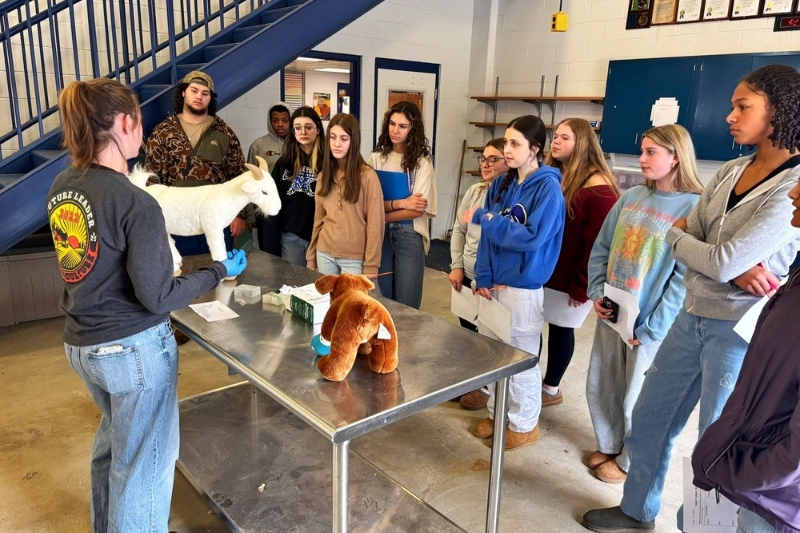
Combining farm animal experience with a master’s degree in STEM Education is a winning combination for Wessel. The high school where she teaches six classes has a barn on campus. Wessel uses the space for experiential learning with livestock, including goats, chickens and pigs.
“We had piglets that came from a farrowing house where they had not interacted with humans,” Wessel said. “My class had to get them comfortable with people, and by the end of their time here, the pigs were eating out of their hands.”
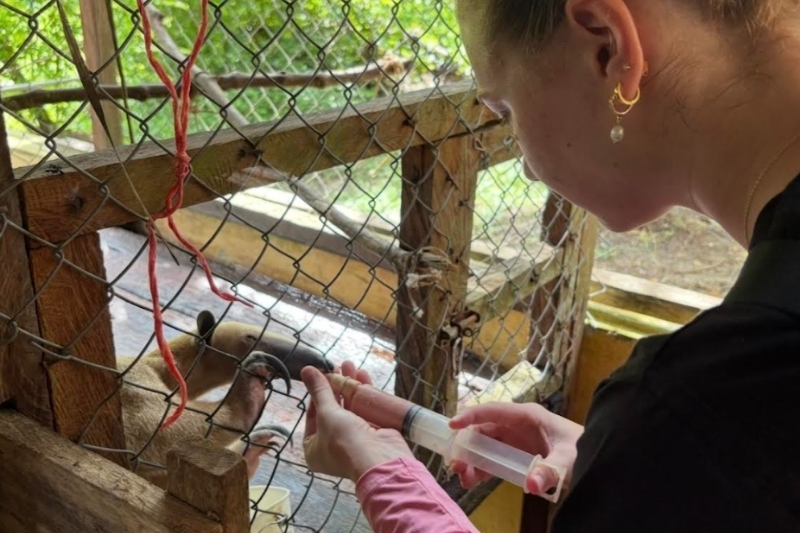
Over the summer, Wessel will continue her role as FFA advisor as she helps her students prepare to show livestock at the county fair. She will also lead her students in the FFA convention, a three-day event in State College, Pennsylvania.
“If they learn something and they have fun, I consider it a win,” said Wessel. “Even if they lose their contest.”
Wessel said her teaching residency was invaluable.
“That year in the classroom, getting to know the students and community really well, helped to cement for me that I want to teach,” Wessel said.
Mark Akubo, assistant professor and director of secondary science education and M.S. STEM education programs in the College of Arts and Sciences, says the M.S. STEM education program focuses on both STEM content and pedagogical proficiency, the latter gained through residency experience.
“Students have access to paid residency such that for a whole year, they engage in honing their teaching skills while they also receive stipends, with prospects of retention as teachers of record upon graduation,” Akubo said. “The residency approach positions the pre-service teachers for employment and provides school districts with access to a recruitment pool.”
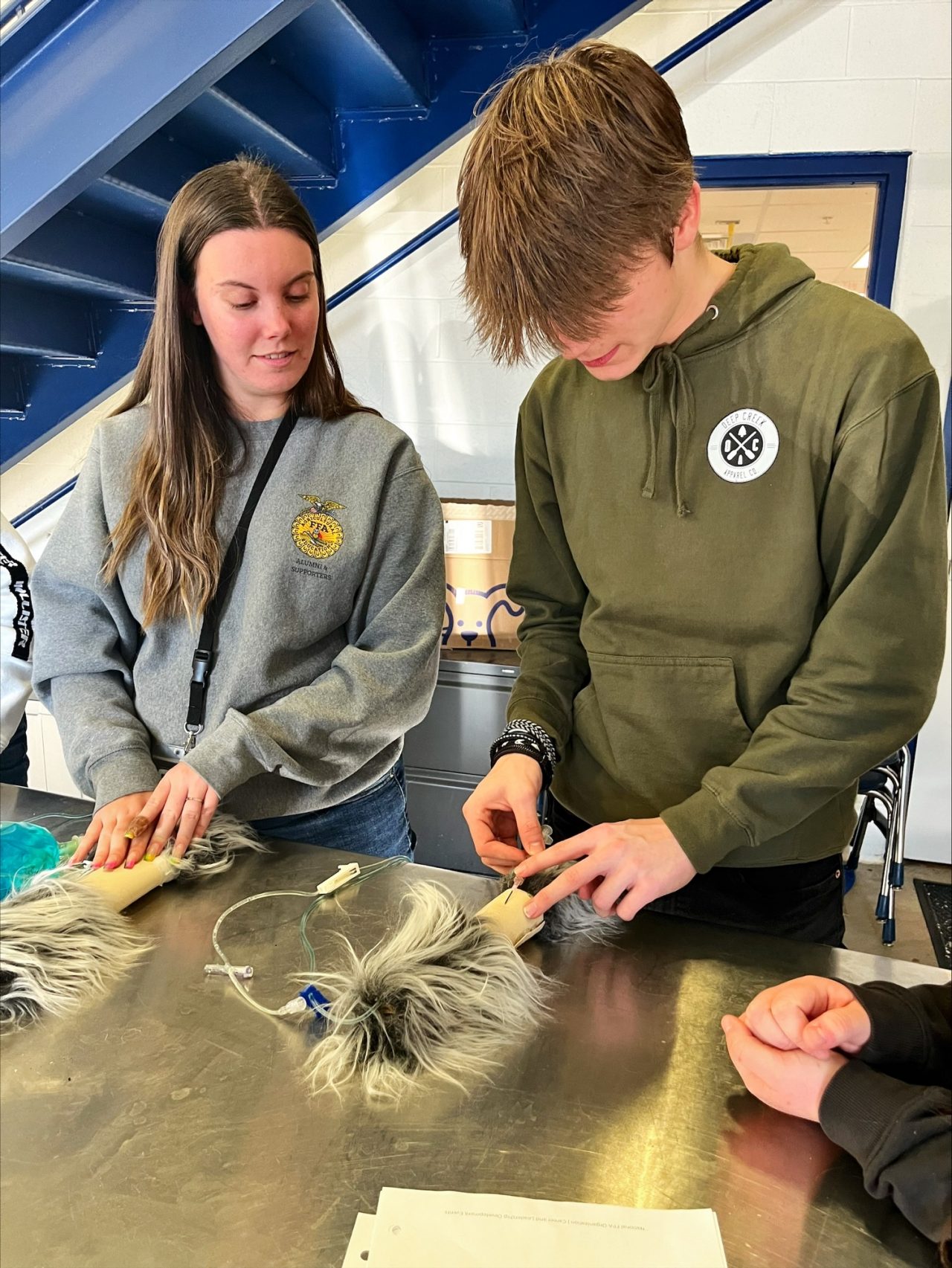
At UD, Carpenter finds role models in professors like Stephanie DeMarco, adjunct assistant professor of veterinary medicine, D.V.M.
“Dr. DeMarco is amazing; she’s a practicing veterinarian and also teaches the Clinical Pre-Veterinary Experience class,” Carpenter said. “Each week, we get hands-on experience. We practice putting on bandages, the proper way to draw up medication in a syringe, and work with blood samples.”
Tara Gaab, assistant professor of animal science, taught Carpenter during her first year at UD.
“She was the first professor who opened my eyes to the idea that I can do both teaching and practicing veterinary medicine,” Carpenter said of Gaab.
Carpenter looks forward to another eye-opening experience when she begins her teaching residency.
“After taking classes and planning lessons, I’m excited to be in an actual classroom in front of students,” Carpenter said.
The students are Wessel’s favorite part of the job.
“I know it’s cliché, but interacting with them every day and seeing them learn and grow is really rewarding,” Wessel said.
UD’s STEM education 4+1 gave Wessel a head start in her teaching career.
“A lot of teachers don't pursue a master’s until later on in their career because they don’t have the time. And I’m seeing that now; there's no free time to do that,” Wessel said. “Completing a master’s degree in one year and your student teaching at the same time, there are a lot of benefits and not a lot of drawbacks.”
Carpenter looks forward to giving back by being a role model.
“Teachers are the most important role models in people's lives; they have been in mine,” Carpenter said. “I would love to express my love for science and hopefully push more students to pursue STEM classes and careers.”
Contact Us
Have a UDaily story idea?
Contact us at ocm@udel.edu
Members of the press
Contact us at mediarelations@udel.edu or visit the Media Relations website