




“We all have an essential role to play in enacting this vision in our daily interactions with each other and in our service to the world.”
A Message from President Laura Carlson
It is a privilege and a joy to serve as president of the University of Delaware. This position is so much more than a role – it is a lifestyle. I love this community, and I am deeply committed to our purpose and our people.
The Blue Hen pride shown by our students, faculty, staff, alumni and friends is inspiring. We each bring our unique identities and experiences to our community, and together we create OurUD.
At the University of Delaware, we …
... inquire with impact by starting with the needs of state, the nation, and the world, and then generating, translating and refining knowledge and solutions
... create with connections by leveraging our unique assets, our nimbleness and our partnerships to strengthen our community
... innovate with intention by infusing entrepreneurial thinking into our cross-disciplinary research, scholarship, teaching and learning
... grow with purpose by sustaining the advances of the past while building excellence within new frontiers
... welcome with promise by fulfilling our obligation to enable a transformative education for all students, taking them from where they are to where they need to be
... educate with outcomes by opening doors for Blue Hens to thrive and succeed throughout their whole life’s journey
... work with trust by assuming good intent, encourage diverse viewpoints, and respect and value everyone’s contributions
... belong with joy by living out our conviction that our community is worthy of our attention and our intention
... stand with pride by being confident to define ourselves and stand in an image of our own creation.
We all have an essential role to play in enacting this vision in our daily interactions with each other and in our service to the world.
I look forward to seeing you around campus and beyond.
Yours in UD,

Laura


Aundrea DeVuono-Young

PRESIDENT'S STUDENT ADVISORY COUNCIL
The President’s Student Advisory Council (PSAC) provides President Laura Carlson with insights and feedback on important student-centered topics and develops workable recommendations to address students' concerns.

STAFF COUNCIL
The Staff Council advises President Laura Carlson on staff perspectives related to campus culture, professional growth and wellness, and improvements to the staff experience. Council members serve as advocates for UD staff, and they represent staff perspectives as the University considers changes in policies and procedures relevant to other staff members. Members are appointed for two-year terms and represent staff from across varied units, employment levels, and length of time at the University.
Inauguration Recap
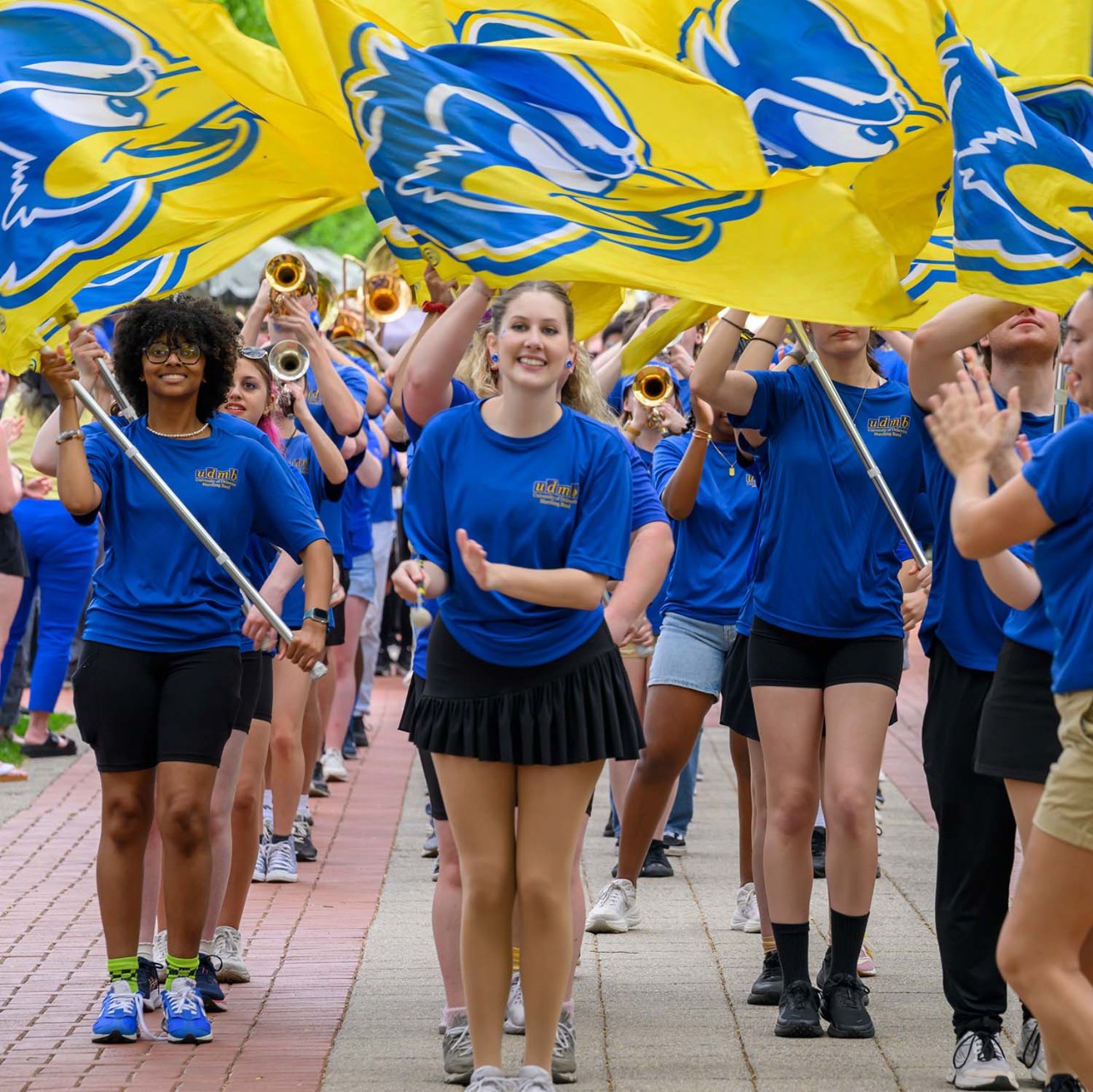
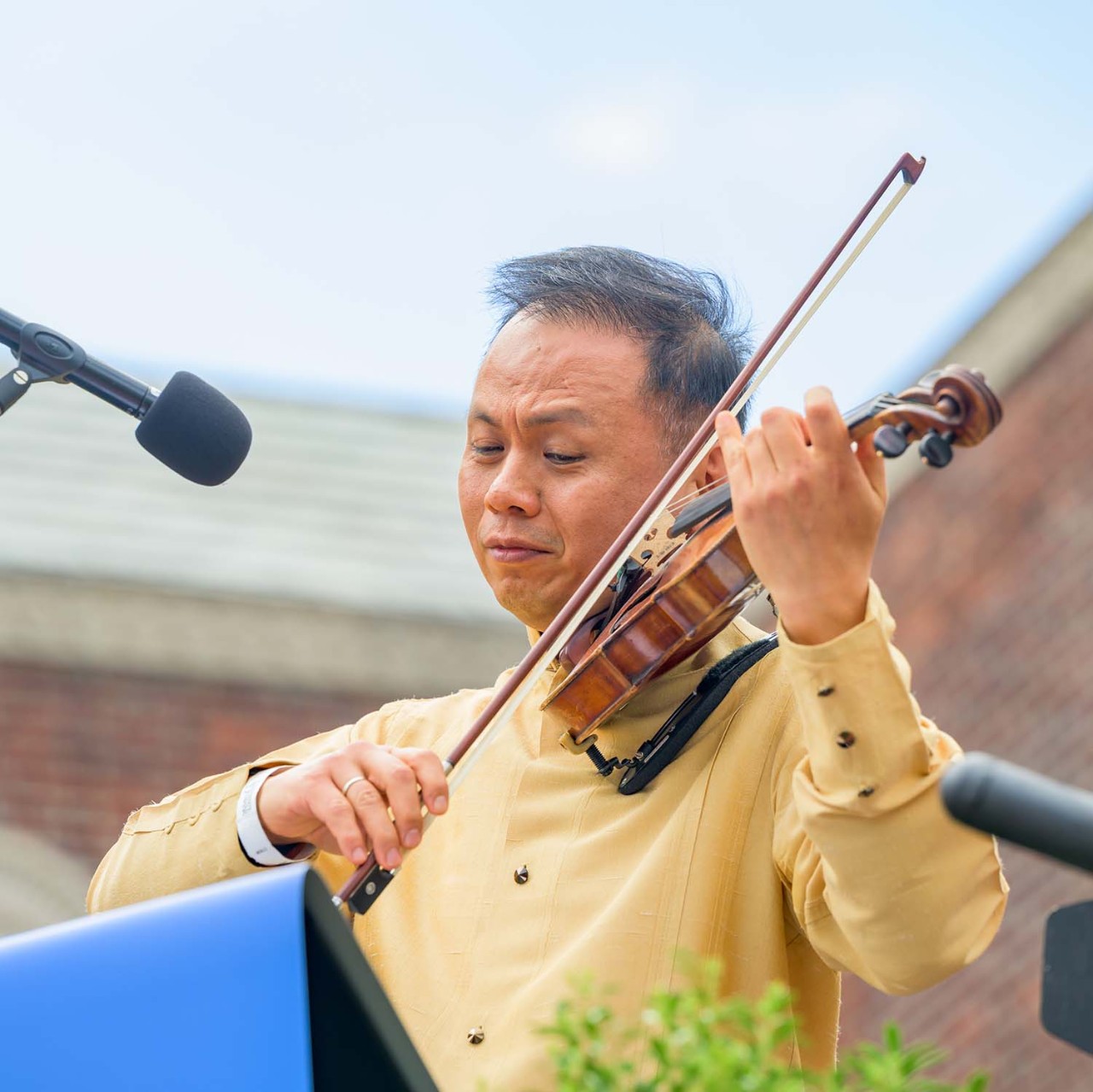
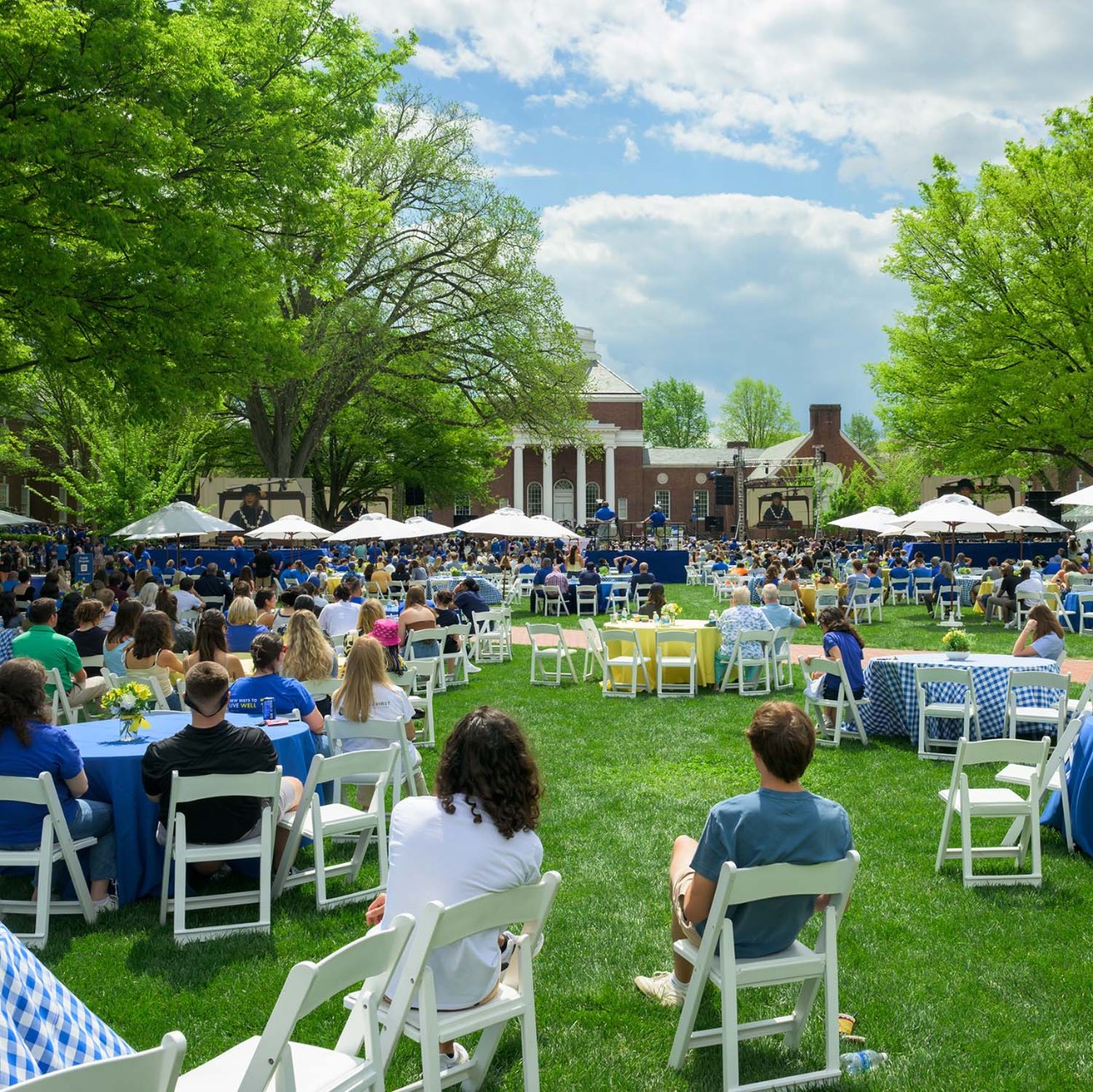
The Blue Hen community gathered on The Green on Friday, April 17, to celebrate the inauguration of Laura A. Carlson as the University of Delaware’s 29th president. The tradition-filled ceremony featured hopeful messages about UD’s future, musical performances and a few familiar faces.




The taste of summer — July 14, 2026
"I cannot live without books" — June 26, 2026
Conversations about AI — May 14, 2026
Post-Inauguration Edition: An Open Thank You Note — April 24, 2026
Pre-Inauguration Edition: It's All About Us — April 15, 2026
Book Spine Poetry — March 26, 2026
The Power of Advocacy — March 12, 2026
Shine the Light — Feb. 24, 2026
Back to class, Spring 2026 edition — Feb. 9, 2026
Resolution Check-in — Jan. 23, 2026
Welcome to Our Day #1 (redux) — Jan. 1, 2026
Reflections — Dec. 18, 2025
Take a Moment — Dec. 4, 2025
Simple Joys — Nov. 21, 2025
Allow me to make some introductions — Nov. 6, 2025
A Love Note to Research — Oct. 23, 2025
Words Matter — Oct. 9, 2025
Applause — Sept. 24, 2025
Love of Learning — Sept. 9, 2025
Gratitude — Aug. 28, 2025
Connections — Aug. 7, 2025
Back to Basics — July 18, 2025
Welcome to Our Day #1 — July 1, 2025
SUMMER 2026 AI CONVERSATIONS
This initiative will bring together key campus conversations about artificial intelligence across teaching, student learning, research, innovation, workforce development and operations.
UD is already engaged in several AI conversations, including teaching and academic integrity, student learning and workforce preparation, research and innovation, institutional operations and the pace of AI change.
The Working Group is intended to weave these conversations together through a consistent discussion framework focused on current state, opportunities, risks and guardrails, required capabilities, and next steps. The goal is to build a shared campus-wide understanding of AI’s impact and identify clear next steps to guide UD’s continued AI readiness and strategic planning work.
DISCUSSION SCHEDULE AND NOTES
Five in-person discussions are scheduled for July and August from 11:30 a.m. to 1:30 p.m. at the President's House, 47 Kent Way. Each session will include a working lunch and a focused discussion, with notes and themes captured for follow up.
See the schedule below; notes from each discussion will be added when they are available.
AI and Teaching (Pedagogy) - Discussion Summary
July 14, 2026 Opening Remarks: Dr. Meghan McInnis-Domínguez, Associate Professor of Spanish
Classroom use, academic integrity, guidance and guardrails.
A. Current State: What is already happening?
● Pedagogy is strategy vs. teaching is technique
● Very divided – embrace and repel CTAL resources and information for best
● practices (evolving)
● Challenged to completely rethink the way professors teach
● Course vs. curriculum perspective – it’s ad hoc
● Many use AI because resources are limited
● UD had not defined AI, there is not definition of AI
● Varying capacity to prioritize discussion and implementation
● Use of AI could increase if resources (e.g., journals) not available
● Students crave AI experience
B. Opportunities: Where can AI strengthen UD’s work?
● Administrative time saving (reinvest time into intentional work)
● Instructional design support
● Purpose/value proposition and need for clearer articulation
● Accessibility
● Assessment and shift to more in-person teaching
● Research advancement and data application
● Emphasize firsthand, experiential learning that helps students recognize what generative AI cannot fully capture, including experiences such as study abroad.
C. Risks and Guardrails: What concerns, risks, or guardrails require attention?
● Tools
○ Professors wanting different tools
○ Teachers trying to keep up with evolving methods and products
○ Paid vs. free
○ Privacy
○ Ownership of content
● Who sets the standards?
○ Departments
○ University
○ Professors
○ Students
● Liability issues
● Environmental dangers
● How to teach thought processes
○ Cognitive processing
● Alternative assessment
○ Presentations (time sync)
○ In-class assessments
● Uncontrolled vendor expansion
● Students are AI Guinea pigs
● Evaluating student output
○ AI plagiarism
○ Slop
● Disclosure of use of AI
○ Professors and students should disclose when using AI
● Subsidized now, what about the future?
D. Support Needed: What training, policies, resources, or capabilities are needed?
● What is the institutional guidance on which LMs to use/not use and for what?
● Solve for today and into the future
● Google Notebook:
○ Who will teach us how to use/training
○ Who will have access
○ What are the limitations
○ Departmental reps who train/teach their departments
● Central places for training ○ Hub for students/faculty
○ Resources
○ Application use
● Assessment: Where is it in our core curriculum? Gen Ed?
● Policy support
○ AI updates and changes too fast; problem keeping up
○ Policy focused on what NOT/CANNOT do with AI at the University
○ Policy surrounding transparency
● Data security
● Desire for an institutional repository
○ Sanctioned tools
○ Training
○ Course materials and AI integration ideas
○ How to on prompts
○ Link prompts associated with course exerciseLessons
○ Syllabi language
○ Activities
● Departments/colleges need to have their own discussions
○ Accreditation: what is required for the units
● Ethics and Family Educational Rights and Privacy Act
○ What is ethical? What is not ethical? (grading learning, assignments)
● UD needs to be able to defend pedagogical understanding with AI
● Teaching in many tools of pedagogy
● Understand the current AI literacy
● Student level needs
○ Heat map of curricula
○ Matrix of when/how AI is being used
E. Next Steps: What actions, pilots or decisions should UD consider?
● Develop a shared working definition of AI for teaching and learning while recognizing faculty authority over course design and instruction.
● Create a centralized AI teaching hub with tools, training, guidance, assessments, and effective classroom practices.
● Pilot an assessment of faculty and student AI literacy to identify guidance, training, range, and support needs.
AI and Student Learning - Discussion Summary
July 21, 2026
Opening Remarks: Erin Sicuranza, Director, Academic Technology Services
Durable skills, career readiness and academic program evolution.
A. Current State: What is already happening?
● Very siloed within UD
● Copilot and Gemini chat
● Library has AI Literacy program
● Handshake (one-stop shop for off-campus jobs and other career resources)
○ AI Fellowships in the last 6 months (90 students)
● First State AI: Working group for students
● Student facing chat bot currently with Admissions, IT, Library
● ATS (Academic Technology Services) - UD study aide
● Coursera: UD Google AI certificate program
● Canvas has the capacity for AI training - not yet activated
● MEEG one of the only department with AI communication in the curriculum.
● Paul J. Rickards, Jr. Teaching Innovation Grant for teaching innovation
● Considerations for Integrating AI Within Teaching and Learning
B. Opportunities: Where can AI strengthen UD’s work?
● Is AI a pedagogical tool or curriculum topic?
● Is this about student learning or student success?
● How do we create an equitable learning environment for AI?
● When introducing AI what assessments can be used to evaluate what students learned?
○ Reinvestment in durable skills (Information Literacy)
○ Skills transcript: AI skills learned with undergrad
● Make AI Literacy apart of the First Year Experience
○ Have intro course a part of new student orientation
○ How are students exposed to AI Literacy?
● UD has the opportunity to serve the community by partnering with high schools to help combat AI literacy gap
● Bridge the ‘arms race’ gap. Students will find a way to use AI with or without UD.
● Determine what sources UD will use to gain AI information
● Learn more about ethical implications
● Provide opportunities to learn more about how AI algorithms work; learn more about prompting.
● Create more individual AI courses
● How is the uptake of AI the same as vs.different from the introduction of calculators
● Now opportunity to conduct a survey to understand how AI is being used now within the UD community
● Value in plotting AI readiness along these dimensions:

C. Risks and Guardrails: What concerns, risks, or guardrails require attention? CONCERNS
● Students passing courses without learning anything
● Costs
○ Financial
○ Erosion of skills
○ Privacy
○ Environmental
○ Trust in AI and UD community using correctly
● Professors who are learning alongside students
● Things changing mid-semester and throwing off students
● A universal policy will not work becausel departments will use AI differently.
● Different use leads to inconsistent policies across the university.
● Usage on assignments and tests. Will UD be using AI to evaluate assignments Should professors and instructors disclose when they are using AI?
○ Statements of use within the syllabus?
● Does AI use lead to loss of creativity?
● Inequality of access to tools across the UD community.
● What are approaches to reduce skepticism?
● Worries about students developing parasocial relationship with AI
RISKS
● Cannot predict where AI will take us
● cognitive offload vs cognitive surrender
● Cognitive decline
● Majority of people are not using AI responsibly
○ Can we truly teach responsibility?
● Imposter syndrome will increase
● Accuracy - create a method of examination to gauge accuracy of AI response
● Lose experience of productive discomfort
● Different attitudes toward AI: Integration vs luddite
● Need to be aware of blindspots that come with use of AI
● Concerns around loss of intellectual property
GUARDRAILS
● Students need to learn how to properly cite AI tools. How to check if they do cite?
● Where does accountability come from? Peers?
● Should UD embrace AI in moderation?
● What are the implications for exams? How impact the testing center?
Questions for Consideration
● What is UD’s commitment to the community concerning AI?
● What are the workplace expectations with AI as a durable skill?
● What does someone need to learn in the age of AI to be successful?
● How can we teach students to be responsible with AI?
● What is UD losing by using AI?
● Can AI be used in research?
● What are peer institutions currently doing with AI?
D. Support Needed: What training, policies, resources, or capabilities are needed?
● What benefits and costs are associated with AI and learning
● AI create imposter syndrome
● Need support to gain clarity around why/when AI use is NOT acceptable.
● Orientations, intro classes, advanced classes
○ Fall vs. Winter courses (AI Bootcamp in the Winter)
○ Different departments offer different lengths of courses 8/15 wks
● UD to create own GenEd AI
● More intentional spaces to discuss the ‘big questions’ surrounding AI.
● Training for professors/faculty, staff, and students
● Understanding what LLM (Large language models) actually does
○ How to create good prompts
● Reaching out to Alumni. Create a panel to ask questions
● Free courses on how to understand algorithms
● Look to other peer universities to see what they are doing or in the process of doing with AI
● United talking points for students, faculty, staff about why AI skills are important
● Support will be needed in testing center
● Training on the use of tools
○ Copilot
○ Gemini
○ Canva
E. Next Steps: What actions, pilots or decisions should UD consider?
● Develop adaptable AI literacy goals that define what students need to learn to succeed throughout their UD learning experience and what they need to know and do to succeed in the workplace.
● Benchmark peer institutions and their approaches to AI in student learning to identify effective practices, policies, programs, and areas where UD can differentiate itself.
● Develop a foundational AI literacy experience for students, faculty and staff. The experience should address:
○ How AI works: ethics, responsible use, prompting, source verification, privacy, and the continued importance of durable skills.
○ How to use AI; what are the approved engines, what are strengths and weaknesses for each, when would you use what and why?
AI and Research, Innovation, and Workfoce Development — Discussion Summary
July 28, 2026
Opening Remarks: Sunita Chandrasekaran, Associate Professor, Computer and Information Sciences
Discovery, translation, competitiveness, industry needs and workforce alignment.
A. Current State: What is already happening?
Discovery:
● AI development and research are happening across individuals, labs, institutes, and departments, but these efforts are often siloed and not consistently shared
Translation:
● AI research and tools are not yet easily translated across internal units or from higher education into practical workforce applications
Industry Needs:
● Impact on entry level positions and job availability.
● Due to the need in industry, UD needs to change how students are prepped for employment
● Industry wants demonstrable abilities not certificates. Ability to compete within workforce
Workforce Alignment:
● Students without AI skills are behind
● Students need fundamental skills and understanding
● DuPont is currently using AI to reduce R&D by 10x
● MDavis uses AI in their network behavior analysis tools
● Fundamental knowledge is more important for job success that AI literacy
● Students are more effective when they have the skills to direct AI
B. Opportunities: Where can AI strengthen UD’s work?
Discovery:
● Expanded AI-enabled research opportunities for students and faculty across disciplines
● Use of AI to analyze, organize, and synthesize large datasets and information
● Baseline findings to support grant applications and research scaling
● Greater interdisciplinary collaboration across colleges, departments, institutes, and research centers
● Showcasing innovative applications such as the Poison Book Project and other research collaborations
Translation:
● Mechanisms to share AI-related research, tools, pilot programs, and best practices across campus
● A central hub or communication network for AI projects, resources, expertise, and events
● Campus-wide events such as AI in Action to encourage interdisciplinary engagement and knowledge sharing
● Translation of AI research and innovation into practical industry and workforce applications
Competitiveness:
● A secure AI sandbox with access to multiple models and guardrails for privacy, security, and cost
● Clear measures of when and why AI should be used, how it adds value, and how success is defined
● Strategies for managing token costs, institutional demand, and responsible scaling
● Processes that allow UD to respond quickly to changing technologies and workforce needs
● An integrated institutional strategy connecting teaching, research, innovation, and workforce development
Industry Needs:
● Stronger engagement with industry partners and alumni to align UD’s AI strategy, programs, and research with evolving needs
● More opportunities for students to learn directly from industry professionals and alumni
● (reverse) Mentorship connecting students with professionals across generations
● Integration of technical AI knowledge with human-centered workplace skills
● AI-powered simulations and role-playing tools for communication, decision-making, and workplace scenarios
Workforce Alignment:
● Greater student understanding of how AI is affecting careers, job opportunities, and workforce expectations with an understanding that it is a rapidly changing environment
● Understanding of the responsible, effective, and ethical use of AI in professional settings
● Continued development of critical thinking, communication, problem-solving, and other durable human skills
● Clearer distinction between AI-enabled critical thinking and uniquely human skills
● Guidance on appropriate and inappropriate uses of AI
C. Risks and Guardrails: What concerns, risks, or guardrails require attention?
Concerns:
● UD’s capacity to keep pace with rapidly changing AI tools, demand, and training needs
● Erosion of research, communication, critical-thinking, problem-solving, and judgment skills
● Lack of clarity around ethical use, citation, research quality, and platform-specific risks
● Difficulty keeping coursework and institutional guidance current
Risks:
● Use of unauthorized AI tools or personal subscriptions without appropriate review
● Exposure of sensitive data or intellectual property
● Inability to fully assess or control data, security, compliance, and cost risks
● Poor prompts, limited user knowledge, and inadequate review of AI-generated information
● Adoption of AI solutions that are unreliable, impractical, or difficult to scale
Guardrails:
● Provide clear guidance on what data may and may not be entered into AI systems
● Establish standards for IRB-, HIPAA-, FERPA-, and other protected information
● Tailor security and compliance requirements to the needs of different units
● Require appropriate review and verification of AI-generated information
● Assess whether AI tools improve learning outcomes and strengthen critical-thinking skills
Questions for Consideration:
● How much can UD trust AI platforms with internal information and data?
● Should UD develop a secure, university-supported AI environment?
● How many AI platforms can UD responsibly support?
● How can instructors identify inappropriate AI use?
● Do users understand the costs associated with AI?
● What skills are needed now and in the future?
● Could overly restrictive guardrails limit research and innovation?
D. Support Needed: What training, policies, resources, or capabilities are needed?
Trainings:
● Training on all the tools and tool usage
● High tailored training for all the different subgroups within the University — based on experience
● Create an ambassador program within UD to help support large group training
Policies:
● Could UD present a position statement? Difference between a position statement and policy statement.
● Does every college and/or department need to have its own position statement umbrella under the UD policy?
Resources:
● Infrastructure
● Criteria to determine whether AI appropriate to use in situations
○ Criteria to determine which AI tools are appropriate to use
What Is Needed:
● The development of a secure, university-supported AI environment that faculty, staff, and students can use confidently
E. Next Steps: What actions, pilots or decisions should UD consider?
● Pilot a secure internal AI sandbox with approved tools and guardrails for privacy, security, compliance, and cost.
○ This should contain a crowd-sourced repository of prompt templates and techniques organized by research discipline to facilitate safe adoption of AI assistance in research where appropriate.
○ Should also include citation templates to acknowledge use.
● Expand industry and alumni engagement to align student preparation and university research with evolving workforce needs
● Develop a university-wide position statement (vs. policy statement) on responsible AI use, with flexibility for colleges and departments to establish specific guidance
Topics: Administrative modernization, efficiency, and faculty/staff support
Topics: Monitoring AI progress, staying current and adapting responsibly as the technology evolves
Want to get involved?
Those who have already expressed interest in participating will receive a follow-up email with more details. If you have not yet reached out but want to be involved in all or some of the conversations, please email president@udel.edu.

PRESIDENTIAL SHINE THE LIGHT SERIES
The Presidential Shine the Light Series proudly showcases the University of Delaware's academic research and scholarship on critical issues of our time. The series stands as both a testament to academic freedom and a statement of the relevance of science and scholarly inquiry.

ONE IDEA, ONE SLIDE SUMMIT
This annual event provides an open and collaborative forum for faculty and staff to share their exciting ideas that advance academic excellence in research, education and impact.
During the academic year, President Laura Carlson and Interim Provost Bill Farquhar host monthly open Zoom-In meetings, open to all students, faculty and staff. The sessions, which include other University leaders, serve as an open communication channel for conversation, questions and sharing.
Zoom-In schedule:
Check back later for the Fall 2026 schedule!
PREZ RUNS AND PREZ WALKS
The weekly 5k Prez Run starts at 7 a.m. Thursdays at Mentors' Circle, rain or shine. The twice-monthly one-mile Prez Walk begins at noon from Mentors' Circle. Both are open to all students, staff, faculty and community members. If we need to cancel a Prez Run or Prez Walk for any reason, we will indicate that in the schedules below.
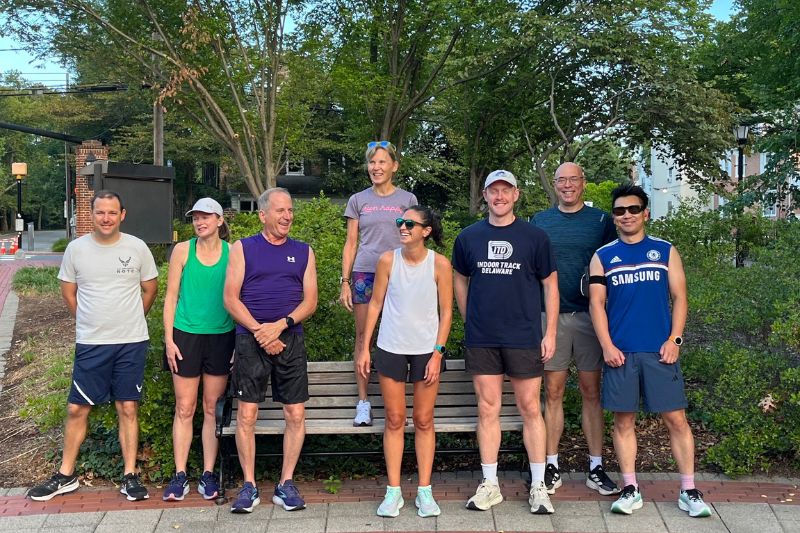
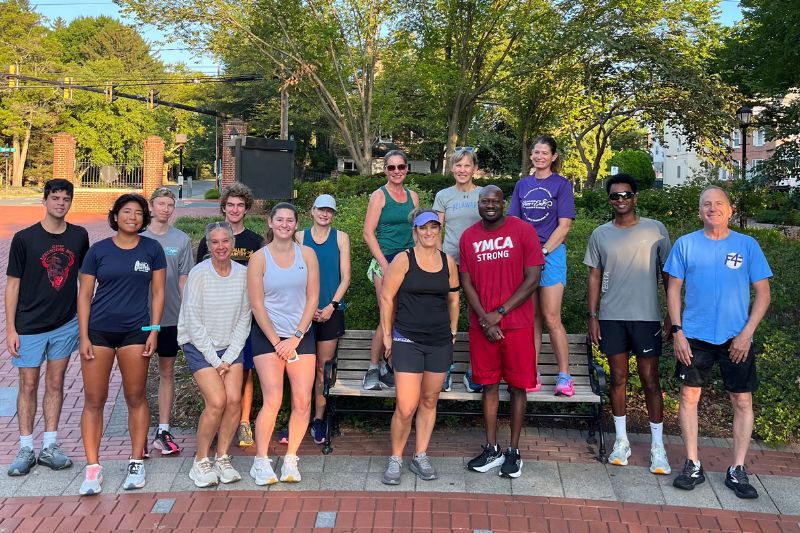
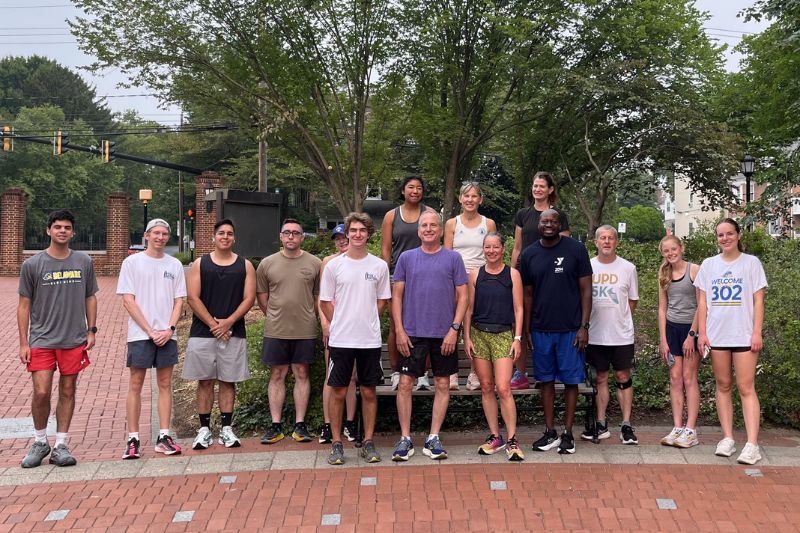
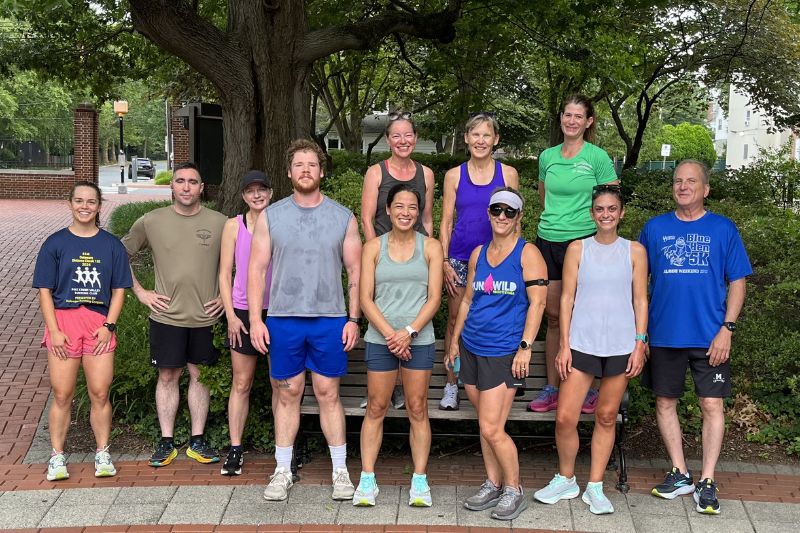
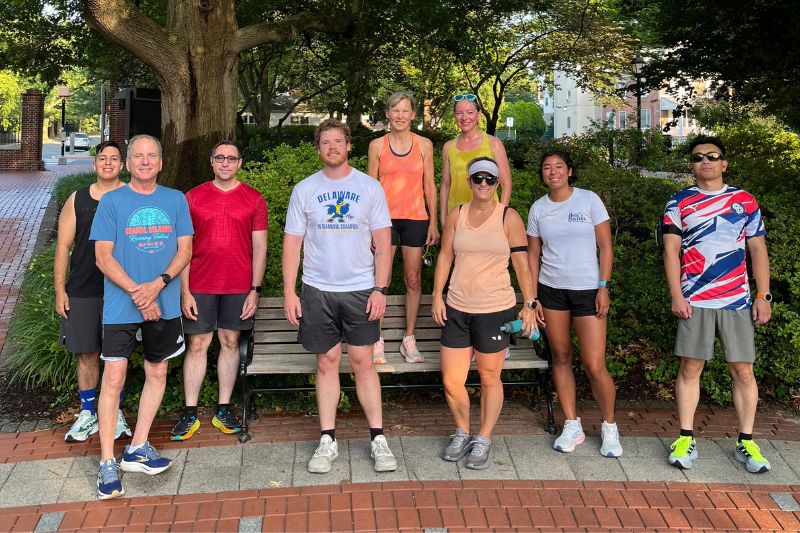
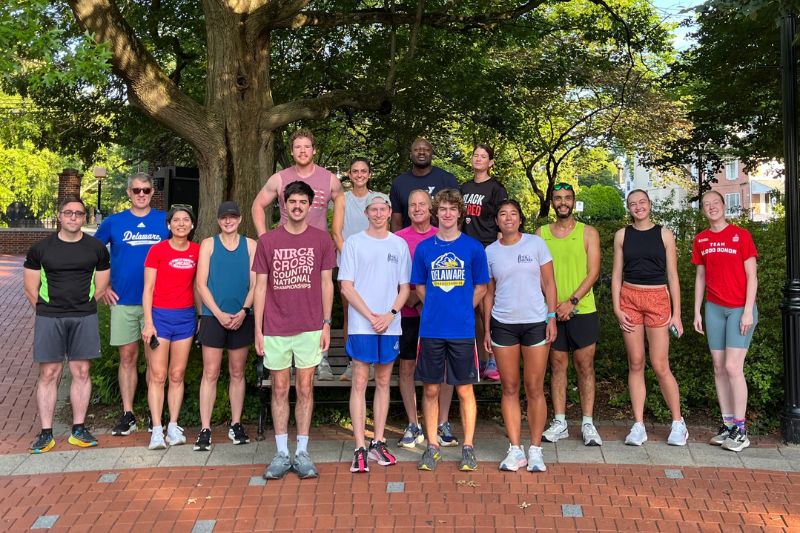
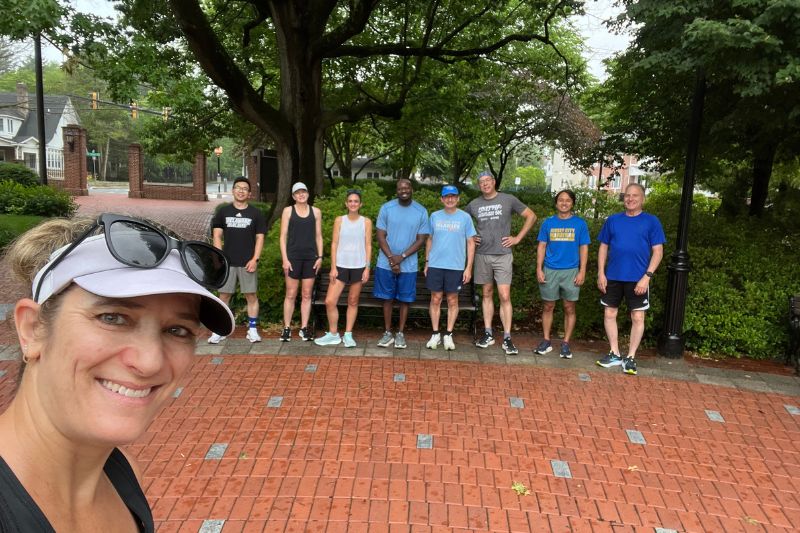
Check out more Prez Run/Walk photos in this gallery, plus photos of the Inauguration Prez Run/Walk in this special gallery.
PREZ RUN SCHEDULE
Aug. 6: COME ON OUT!
Aug. 13: COME ON OUT!
Aug. 20: COME ON OUT!
Aug. 27: COME ON OUT!
Earn some Prez Run bragging rights: First-timers earn a sticker; regular runners (3+ times) earn a pin.

PREZ WALK SCHEDULE
Aug. 6: COME ON OUT!
Aug. 20: COME ON OUT!
Sept. 3: COME ON OUT!
Sept. 24: COME ON OUT!
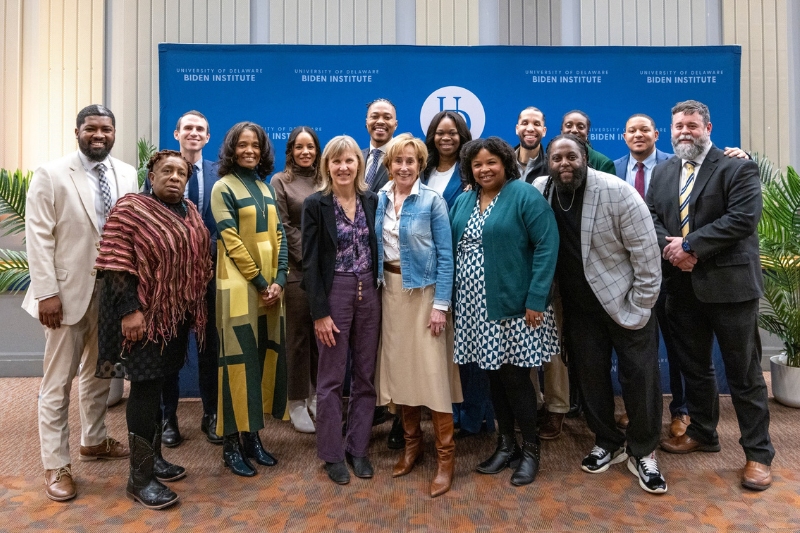




Laura Carlson
President
Laura A. Carlson serves as the University of Delaware’s 29th president.
Dr. Carlson joined the University as provost in 2022 and was appointed interim president by the Board of Trustees in July 2025. On Dec. 9, 2025, the Board unanimously voted to appoint Dr. Carlson as president, effective Jan. 1, 2026.
As provost, Carlson focused on enhancing access by creating pathways to UD, growing enrollment, fostering academic excellence, empowering faculty, and developing and implementing a multi-year strategy that integrated financial, enrollment and hiring plans.
Before joining UD, Carlson had a distinguished career of more than 20 years at the University of Notre Dame, where she served in several key leadership roles, including vice president, associate provost and dean of the Graduate School. She served as director of graduate studies in the psychology department and later as associate chair. Carlson joined the Notre Dame faculty in 1994 as an assistant professor of psychology, becoming a full professor in 2008.
A fellow of the Association of Psychological Science, she has received several teaching awards, including the Rev. Edmund P. Joyce C.S.C. Award for Excellence in Undergraduate Teaching.
Carlson’s primary research interest is spatial cognition — how we mentally represent the places and objects around us — and her work has been supported by grants from the National Institutes of Health and the National Science Foundation. She takes an interdisciplinary approach to her work, collaborating with scholars across the fields of computer science, engineering, architecture, geography and linguistics.
A cum laude graduate of Dartmouth College with a special major in psychology of language, she received a Master of Arts degree at Michigan State University and earned her Ph.D. at the University of Illinois, Urbana-Champaign.
Contact
Email: president@udel.edu
Phone: (302) 831-2111
Mail:
Office of the President
University of Delaware
104 Hullihen Hall
Newark, DE 19716
Speaking requests:
To request President Carlson to speak at an on- or off-campus event, please complete and submit this form.
