



Master of Music in Teaching (Two-Year / 4+1)
Questions?
Email us with questions and to learn more about our program.
Youtube video graduate student music education: youtube.com/watch?v=oMAymUuoAx0
Master of Music in Teaching (Two-Year or 4+1)
Explore your passions within a supportive community!
Join a community of graduate students while studying with professors with expertise in songwriting, informal music learning, music learning theory, musical creativity and democracy in ensembles, quantitative and qualitative research methodologies, and musical development in early childhood through adolescence. The master's program is available as a two-year master's (M.M.) degree or as a 4+1 for highly qualified undergraduate University of Delaware music education students.
Two-Year Master's Program
Follow your own passions by choosing one of two tracks: PROFESSIONAL or RESEARCH (two-year program only).
Competitive teaching assistantships and tuition funding are available.
4+1 Program
Highly qualified students may apply for the 4+1 program in the junior year, for the opportunity to earn a B.M. in Music Education and M.M. in Teaching (PROFESSIONAL TRACK) in a total of five years.
Students must be full-time at UD at the time of application. Up to six credits of graduate coursework in the department of the undergraduate major may be applied toward satisfying the requirements of both degrees. Applications are due by January 15 of junior year, and GRE scores are not required.
See Course Catalog and Program Policy document for more information about eligibility.
Students are required to complete 32 credit hours (maintaining a cumulative grade point average of B or better) to be granted the degree Master of Music: Teaching. During their first year of study, students will choose to pursue either the PROFESSIONAL or RESEARCH track. Their choice will determine the type of culminating project they complete.
Before their capstone project, all students take the following courses:
- Music Education Research
- History and Philosophy of Music Education
- Music Education Seminars such as:
- Curriculum
- Music Learning Theory
- Informal Learning in Music Education
- Narrative Research in Music Education
- Music in the Lives of People
- Sociology in Music Education
- Music History
- Advanced Analysis and Interpretation (Music Theory)
- Ensemble Performance (e.g., Choir, Band, Orchestra)
- Electives such as:
- Courses outside of the music department
- Additional Music Ensembles
Students enrolled in the Master's Degree in Music (MM) with a Teaching Concentration complete a capstone project during their second year of study. Depending on the track a student selects (PROFESSIONAL or RESEARCH), they will complete a Master's Thesis (RESEARCH TRACK) or a Professional Development Project (PROFESSIONAL TRACK).
Example projects from previous students were entitled:
- Including Students with Physical Differences in Secondary Instrumental Music: An Instrumental Case Study
- From Inception to Proficiency: A Choral Program Designed for the Culture of Malawi, Africa
- Exploring Gender and the Lived Experiences and Singers in a Treble Choir: An Instrumental Case Study
- Identity Development in Former Music Educators
- Secondary Music Teachers' Self-Efficacy in Teaching Songwriting
- Life Preparedness for Music Majors: An Approach to Life and Career Readiness
- Facilitating Songwriting With Second-, Third-, and Fourth-grade Students
- Improvisation in the Beginning Choral Rehearsal
- Examining the Perspectives of Three Influential Feminist Music Education Scholars
Students who receive Teaching Assistantships in Music Education receive a wealth of hands-on teaching experiences. Students frequently work with undergraduate music education classes such as Elementary General Music Methods and Materials, Secondary General Music Methods and Materials, Elementary Instrumental Methods and Materials, Secondary Instrumental Methods and Materials, Musicianship for Teaching, Freshman Seminar in Music Education, Music Education Student Teaching Seminar, Secondary Choral Methods and Materials, and Instrumental Methods courses. Graduate Teaching Assistants gain experience mentoring preservice teachers and observing students teaching in local elementary, middle, and high schools.
Each year, some graduate students teach courses such as Creative Sound Design, University Strings, Instrumental Methods, and more.

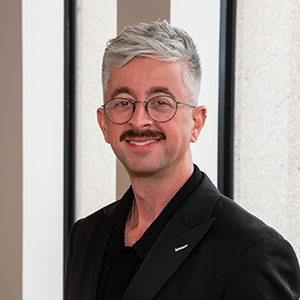

Aimee Pearsall-Kramer
Music Education Coordinator
Director, Concert Choir
Office: 313 Amy E. du Pont Music Building


