



Music Education
Music Education
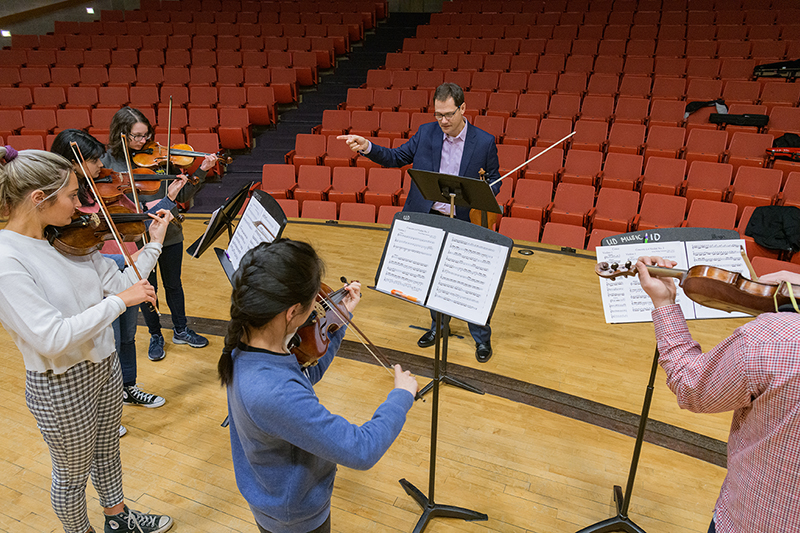
The School of Music is committed to providing a high-quality music education program that prepares pre-service music teachers to become highly qualified professionals. At the University of Delaware School of Music, students can pursue a Bachelor of Music (B.M.) in Music Education, a combined 4+1 Bachelor of Music in Music Education (B.M.) /Master of Music (M.M.) with a concentration in Music Teaching, or a stand-alone Master of Music (M.M.) with a concentration in Music Teaching.
Did you know?
Students who graduate from UD in Music Education have a 100% job placement rate in schools!
The program is accredited by the Council for the Accreditation of Educator Preparation (CAEP) and the National Association of Schools of Music (NASM). All University of Delaware Professional Education Programs are guided by a unified Conceptual Framework, where candidates will demonstrate a commitment to education as a scholarly profession.
As a graduate of the University of Delaware's Music Education program, you'll be fully prepared to inspire and educate the next generation of musicians.
Graduates of our program learn to:
- Design engaging music lessons that support students' musical and personal growth, while using evidence-based assessments to track progress.
- Develop expertise in music and teaching to help students at all levels enhance their musical skills.
- Collaborate with families, students, and music professionals to create safe, supportive, and inclusive learning environments.
- Make a lasting impact by creating positive and meaningful musical experiences that empower all learners to reach their fullest potential.
Undergraduate Program

Graduate Program
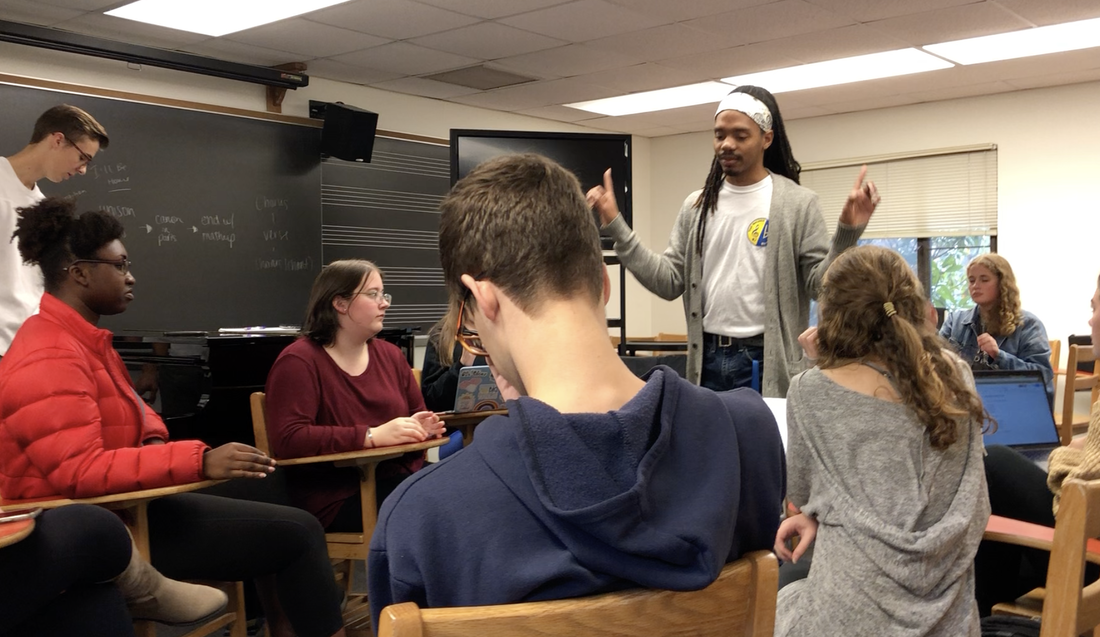
Youtube video - Undergraduate programming in music education: youtube.com/watch?v=IizKCNdxEuc
Youtube video graduate student music education: youtube.com/watch?v=oMAymUuoAx0
Music Education Program FAQs
Undergraduate Program in Music Education
Music Education Majors in our program graduate with over 700 hours of teaching experience in local classrooms, K-12. Specifically, in our program, students engage in three types of teaching and learning experiences:
- Practicum: Students gain over 150 hours of hands-on teaching experience in elementary, middle school, and high school classes before student teaching.
- Student Teaching: Students gain 560 hours of hands-on teaching experience in two student teaching placements that take place in the spring of their senior year.
- Other Teaching Opportunities: Starting in their freshman year, students have opportunities throughout their time studying to work professionally through the UD Community Music School, teaching private lessons, broadway classes, choirs, music theory, digital music, wind ensemble, and more. They also have the opportunity to work with a service learning project called ProjectMUSIC, teaching a variety of subjects and collaborating with local community partners to bring music education to communities in need.
All current requirements for licensure are available through the UD Office of Certification and Accreditation.
Music education undergraduates receive instruction from the same faculty members as performance majors. They also regularly perform in premier ensembles, and have full access to all performance opportunities offered by the School of Music.
Private lessons for music education majors are one hour in length—the same amount of time as performance majors.
Yes! Many music education majors also have a minor such as disability studies, language (e.g.., Spanish), or a secondary instrument.
Yes. Many of our students participate in multiple ensembles. Most ensembles do not overlap, so students are able to gain experience in multiple vocal and instrumental ensembles if they choose.
4+1 Program in Music Education/Music Teaching
The 4+1 program is an accelerated pathway that allows qualified Music Education majors to earn both a Bachelor of Music (B.M.) and a Master of Music (M.M.) degree in approximately five years, both with a focus in music education/music teaching.
Music Education majors at UD who demonstrate strong academic performance and potential for graduate study may apply to the program as early as the fall of their junior year. Admission is competitive and subject to graduate admission requirements.
Students begin taking graduate-level coursework in their senior year while completing their bachelor's degree and continue seamlessly into the master's program, allowing them to earn both degrees on an accelerated timeline.
The program allows students to deepen their knowledge of music education, engage in advanced study with faculty mentors and earn a master's degree more efficiently than through a traditional graduate pathway.
Students continue to participate fully in undergraduate ensembles, field experiences and campus life while incorporating graduate coursework into their academic plan with faculty guidance.
Students enrolled in the fifth year of the 4+1 program may be eligible for graduate funding opportunities, including teaching assistantships and tuition remission, depending on availability in a given year. All applicants to the 4+1 program are automatically considered for available funding at the time of application.
A master's degree can deepen your expertise as an educator while increasing your earning potential, as many school districts offer salary increases for teachers with graduate degrees. Additionally, some states require teachers to earn a master's degree or complete graduate coursework within a specified number of years to maintain certification.
Master of Music Program in Teaching
- Teaching Assistantships: Students who receive Teaching Assistantships in Music Education receive a wealth of hands-on teaching experiences. Students frequently work with undergraduate music education classes such as Elementary General Music Methods and Materials, Secondary General Music Methods and Materials, Elementary Instrumental Methods and Materials, Secondary Instrumental Methods and Materials, Musicianship for Teaching, Freshman Seminar in Music Education, Music Education Student Teaching Seminar, Secondary Choral Methods and Materials, and Instrumental Methods courses. Graduate Teaching Assistants gain experience mentoring preservice teachers and observing students teaching in local elementary, middle, and high schools. Each year, some graduate students teach courses such as Creative Sound Design, University Strings, Instrumental Methods, and more.
- Professional Teaching Opportunities: Many of our graduate students engage in part-time professional roles during their studies, with opportunities ranging from teaching K-8 music, directing high school marching bands, to instructing early childhood music. UD faculty actively facilitate connections with local schools and community partners, ensuring a steady stream of job opportunities for our graduate students each year.
Students enrolled in the Master's Degree in Music (MM) with a Teaching Concentration complete a capstone project during their second year of study. Depending on the track a student selects (PROFESSIONAL or RESEARCH), they will complete a Master's Thesis (RESEARCH TRACK) or a Professional Development Project (PROFESSIONAL TRACK).
MM in Teaching students benefit from small class sizes and frequently collaborate with faculty on various projects. Their research often leads to presentations at international, national, regional, or state conferences. Graduates of this program are highly sought after, landing positions in some of the most competitive school districts.
Yes! Our students frequently sing/play in ensembles at the graduate level.
Contact the Coordinator of Graduate Music Education, Dr. Aimee D. Pearsall, at apearsall@udel.edu.
Sorry, no results found.


