



Category: Biological Sciences
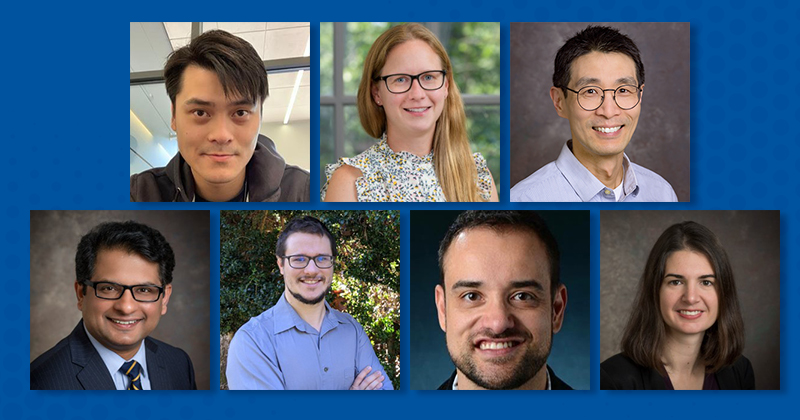
UD Biological Sciences Faculty Secure Millions in New Research Funding
February 17, 2026 Written by Department of Biological Sciences
Department celebrates year of scientific discoveries that benefit human health
The University of Delaware’s Department of Biological Sciences enters 2026 with significant momentum. From uncovering how the brain perceives pain to investigating the molecular "switches" that form the human face, UD faculty are tackling foundational questions that impact human health.
This year, the department’s researchers secured millions in competitive external funding, reinforcing UD’s status as a hub for cutting-edge 21st-century biological research. These grants not only drive discovery but provide high-level training for the next generation of scientists.
New Research Milestones
Protecting the Heart
Assistant Professor Chi Keung Lam received a $3 million NIH grant from the National Heart, Lung, and Blood Institute. His research focuses on "Hsp90b," a protein that helps other proteins acquire proper shape in the heart. Understanding this protein’s role in the heart is critical for combating cardiac disease.
The Building Blocks of Life
Assistant Professor Molly Sutherland earned a $1.4 million NSF CAREER Award, one of the most prestigious honors for early-career faculty. She is investigating how cytochrome c—a protein essential in cellular processes such as respiration—is formed. Her work also focuses on expanding career pathways for undergraduate researchers. Read the UDaily article to learn more about Sutherland's research.
Solving Jaw and Facial Disorders
Two researchers are exploring the complexities of cranial development:
- Assistant Professor Jason Lim was awarded $2 million (NIH/NIDCR/NIGMS) to use "multiomics" to study the temporomandibular joint (TMJ). Read the UDaily article about Lim's work, which aims to find new strategies for treating painful TMJ disorders.
- Assistant Professor Andre Tavares received $315,000 (NIH/NIDCR) to study "neural crest" cells. By defining how the protein Six1 acts as a genetic switch, he hopes to understand the origins of birth defects affecting the face, ears and kidneys.
Restoring Vision
Professor Salil Lachke secured $2 million from the National Eye Institute to study the "Maf" protein. This protein acts as a switch in the eye lens; understanding its function is vital for addressing cataracts, a condition affecting half the global aging population and costing the U.S. Medicare system $3.4 billion annually.
Understanding Pain Perception
Assistant Professor Austin Keeler received $1.1 million through the NIH/NIGMS COBRE program. His research explores why males and females perceive pain differently, aiming to develop more effective, individualized therapies for chronic pain management.
Targeting Rare Diseases
Associate Professor Jessica Tanis was awarded $155,000 (NIH/NCATS) to investigate the protein SETDB1 and its influence on mitochondria, the cell's powerhouse. This research offers new insights into diseases like Huntington’s, acute myeloid leukemia and mesothelioma.
A Culture of Excellence
The department’s success extends beyond new grants. Numerous faculty members continue to lead ongoing federal projects, including Jeremy Bird, Melinda Duncan, Velia M. Fowler, Aimee Jaramillo-Lambert, Justin Parreno, Karl Schmitz, Lisha Shao and Shuo Wei.
As the principal investigator of Delaware INBRE, Melinda Duncan successfully spearheaded the $31.3 million renewal of the NIH/Delaware INBRE grant. This massive multidisciplinary initiative is designed to build the state’s biomedical workforce and research capacity over the next five years.
This story was featured in the Spring 2026 Biological Sciences Newsletter.


