



Category: Fashion and Apparel Studies
Fashion History Meets Innovation
April 09, 2026 Written by Natasha Kapadia
Blank Canvas exhibit highlights student work and sustainable design at UD
What began as a study of women’s garments by students and faculty in the University of Delaware’s fashion and apparel studies department evolved into a multi-year project centered on a key question: how can fragile pieces of fashion history be displayed and still be preserved?
The answer is the Blank Canvas exhibition on display in Mechanical Hall. The exhibit brings 1920s fashion to life through historical research, student collaboration and innovative technology.

Because many garments were too delicate to exhibit on a mannequin, the faculty team leading the show, Kelly Cobb, Dilia Lopez-Gyosh and Belinda Orzada, conducted extensive research, took detailed measurements and worked with students to create digital reconstructions and models.
“We are not only preserving the past but giving our students a blank canvas to create the future of fashion,” Cobb noted, leading the students to rely on reconstructions to present both original pieces and recreated garments while balancing preservation with accessibility.
Described as a “living archive,” the exhibition was developed over seven years with support from faculty, students and university funding, including undergraduate research programs. More than preserving history, it aims to give students a “blank canvas” to design the future.
At its core is UD’s Fashion and Textile Collection, founded in 1975 and now home to about 4,700 objects spanning centuries and cultures. The collection supports hands-on learning and highlights fashion as an expression of identity and creativity, functioning as an active teaching resource rather than a static archive.
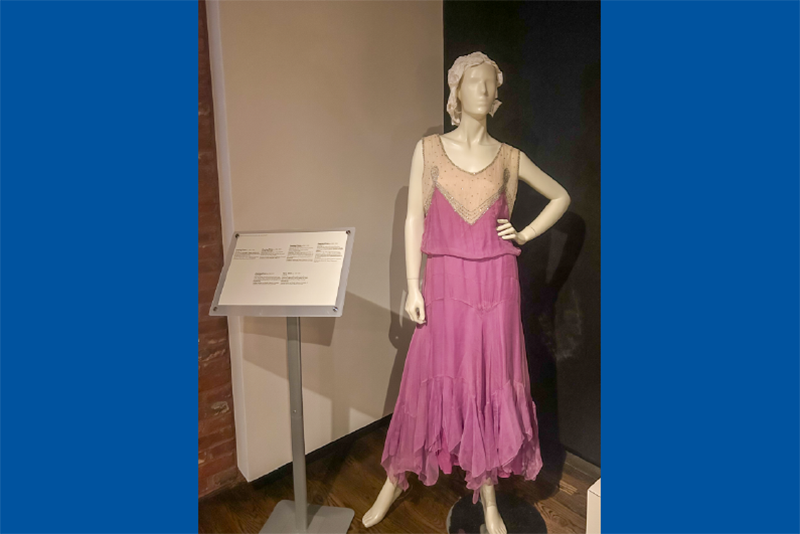
Students played a central role in the development of the exhibit. Saynani Gbason-Krah, a fashion design and product innovation major with a minor in fashion history and culture, contributed to garment measurements, 3D recreations and physical reconstructions. Roselyn Walsh, studying history and museum studies, assisted with cataloging, planning and installation. Both emphasized how the experience shaped their skills and career goals.
“One of the main things interviewers liked was that I had experience measuring garments and recreating them, Gbason-Krah said, referring to a recent interview for an internship. “It gave me a really strong advantage.”
Ultimately, the exhibit looks forward as much as it looks back, giving students a true blank canvas to shape the future of fashion.
This article is part of the Fashion Foundations newsletter.


