



Category: Art Conservation
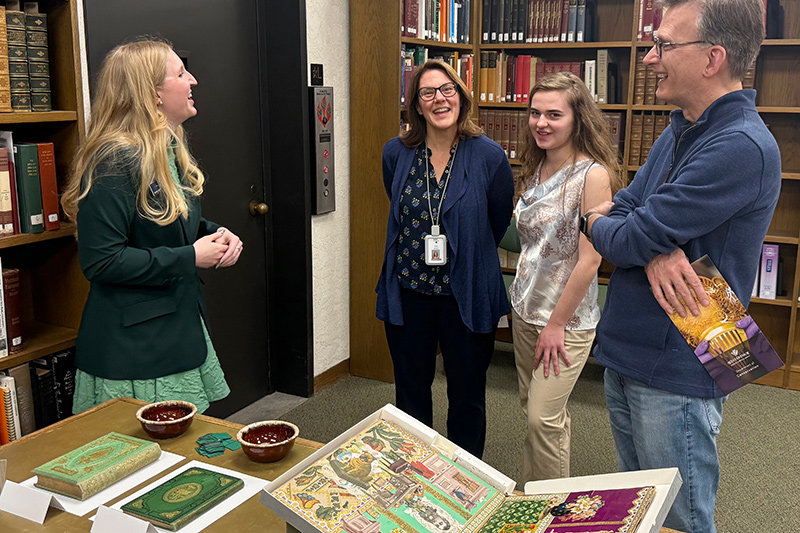
Learning About Arsenical Books with the Poison Book Project
June 08, 2026 Written by Ashley Vernon | Photo by Melissa Tedone
As part of an interdisciplinary research initiative at Winterthur Museum, Garden & Library and the University of Delaware, Class of 2025 alumna Ashley Vernon (UD/Winterthur Program in American Material Culture) is helping educate the public about hazardous materials found in Victorian-era bookbindings.
As I stared at the page of collage album Col. 838, aptly titled “Helen” due to the name being pasted inside the front cover, in the Winterthur Library this past summer 2025, I had only one thought; “this paper is very green, almost too green.”
The proximity of the research completed by the Poison Book Project to the Collage Homes at the center of my M.A. thesis led me to apply for the project assistant position when the job was posted in the fall of 2025. During my time in this role I have relished the opportunity to assist Dr. Melissa Tedone and Dr. Rosie Grayburn, with their goal of educating the public about Victorian-era emerald green bindings through the project's bookmark initiative and public speaking engagements.
Through my position, which is generously supported by the Nadia Sophie Seiler Fund, I have been able to mail bookmarks to institutions and individuals all over the world. Additionally, I have been able to speak about the Poison Book Project with a wide variety of audiences. Myself, along with my colleague Brayden Moore, gave our first presentation on the Poison Book Project in October 2025 at Nerd Night hosted by Wilmington Brew Works in partnership with Delaware Museum of Nature and Science. As an event open to the public, we expected an array of audience members with varying interests and expertise. Consumed with worries of statistics and the correct pronunciation of scientific terminology, we nervously began our presentation and were immediately met with an enthusiasm we could not have predicted. This presentation was a true reminder of why we do what we do in this field of study. After 30 minutes of connecting with the audience, passing out bookmarks, and answering questions, I myself was renewed with new curiosity and excitement for this project.
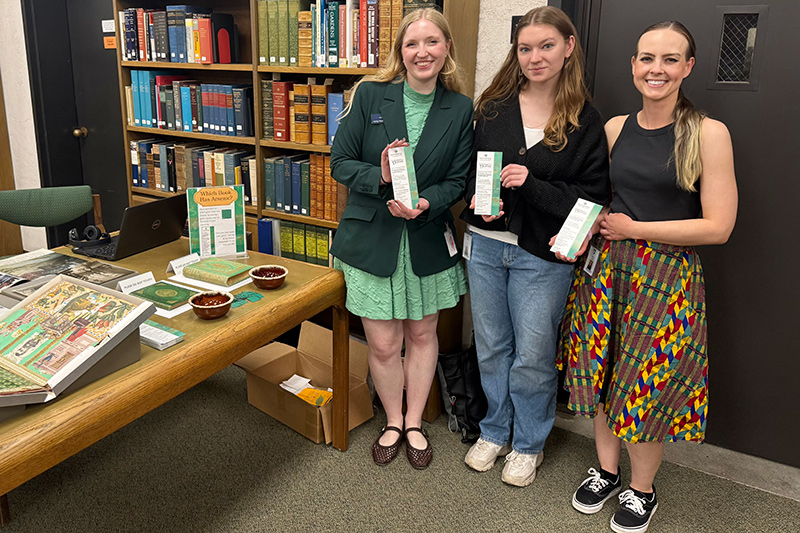
This feeling was not limited to non- academic environments either. Approximately seven months later I once again had the opportunity to present on the work we do at the Poison Book project during the Winterthur Research Building Open House. As an event that drew in over 200 individuals, my fellow assistants and I had the opportunity to connect with people one-on-one as they stopped by our table to inquire about our obsession with the color green. The information we gained from these presentations very closely resembles the results of a survey I was able to help develop and send out on behalf of the Poison Book Project.
With over 500 responses, the survey supported our understanding of the project's growth over the last five years with bookmark requests having steadily increased during that time. Coupled with the response to the project seen in person at the above events there is evidence that the bookmarks developed to be a tool for identifying poison books, remain an engaging, accessible, and effective option for arsenical book identification.
While my time with the project is coming to an end, I am struck by the immense privilege it has been to see the results of this work through those I have talked to in person. Seeing the joy on the faces of these individuals as they learned something new, in a way that was accessible and applicable, will continue to serve as a reminder of why this work is necessary, and why accessibility of scientific information and discovery is important when trying to connect your work to the public.


