Category: Art Conservation
Art conservation and generational treasures
August 19, 2026 Written by Lisa Chambers | Photos by Sarah Lavin and Sydney Collins
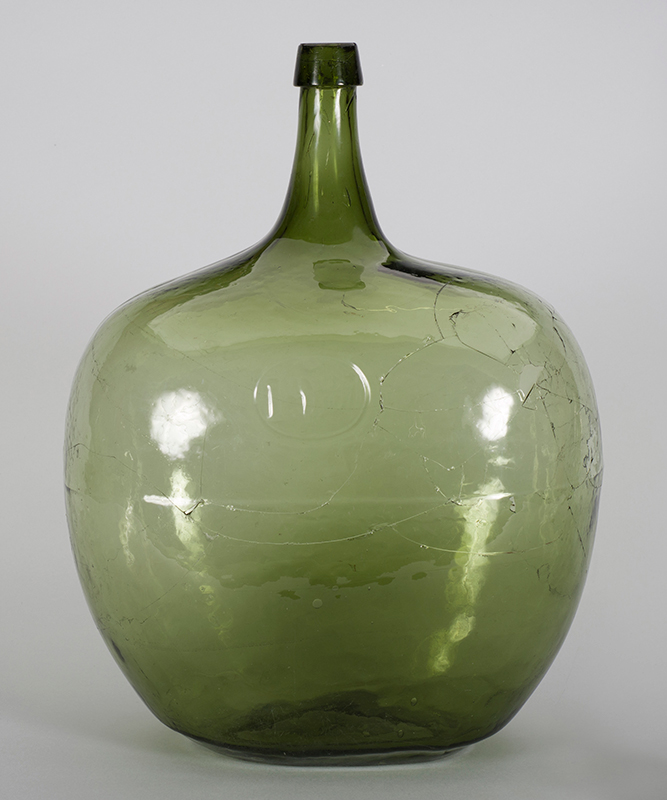
Winterthur/UD Program in Art Conservation fellow Sydney Collins loves that as an objects conservator, she never knows what will land on her worktable next. Her latest project—a nearly 19-inch-tall, olive-green glass demijohn estimated to date to the mid- to late 19th century—was a perfect example.
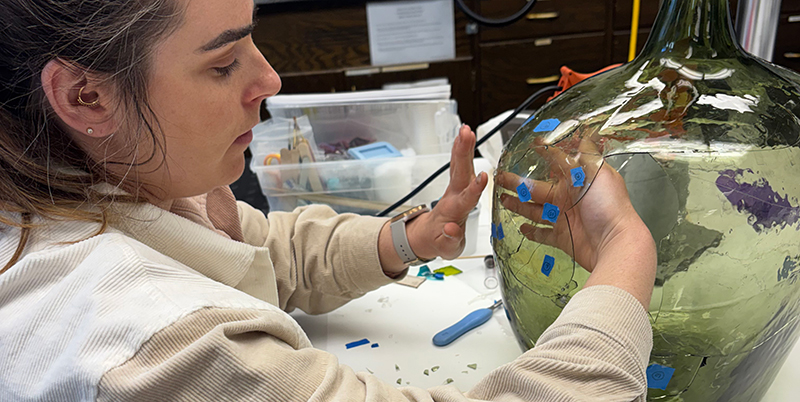
Sydney Collins loves that as an objects conservator, she never knows what will land on her worktable next. “With a background in ceramics and jewelry making, I was always drawn to three-dimensional objects in my art practice,” said Sydney, a second-year objects major in the Winterthur/University of Delaware Program in Art Conservation (WUDPAC). “I also love the variety in objects conservation. You rarely see the same thing twice, which can be a little nerve-wracking. But it’s a constant learning opportunity, which makes it fun and exciting.”
Her latest project—a nearly 19-inch-tall, olive-green glass demijohn estimated to date to the mid- to late 19th century—was a perfect example. The bottle belonged to glass collector Dorothy Gennaro and was displayed in her family home until an unfortunate run-in with a vacuum cleaner shattered it in 1972. Gennaro painstakingly pieced it back together herself. Decades later, as those repairs deteriorated, her daughter Dorothy Thayne brought the bottle to the Winterthur Conservation Clinic seeking advice and eventually donated it to WUDPAC in her mother’s memory.
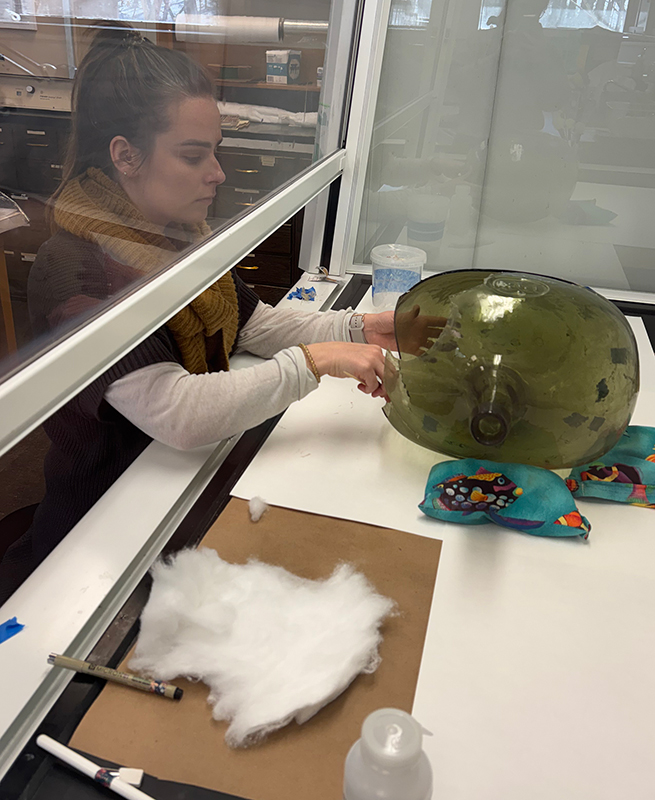
“There was a fondness Dorothy had for the glass, and it was passed down through generations,” said Sydney, who was initially a little daunted by the scale of the job. “That’s a lot of surface area in those cracks and it’s a pretty large jug, so I knew I had my work cut out for me.”
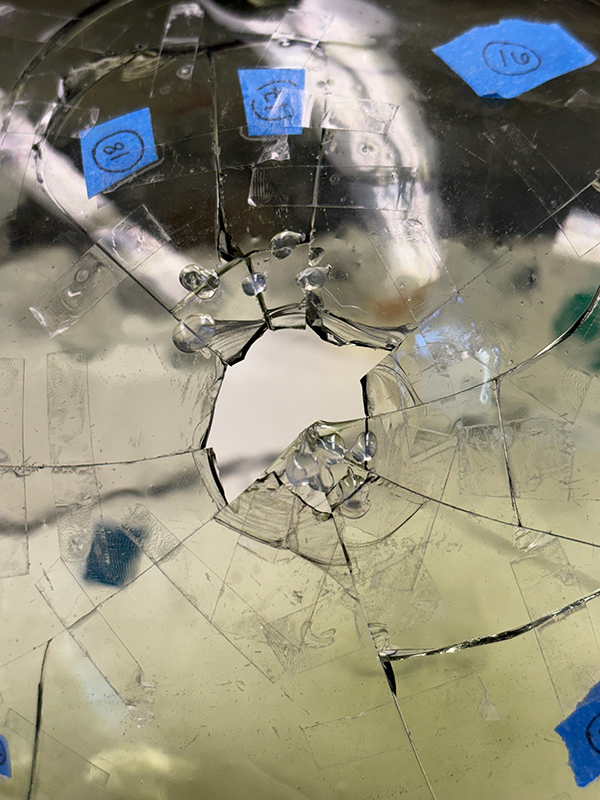
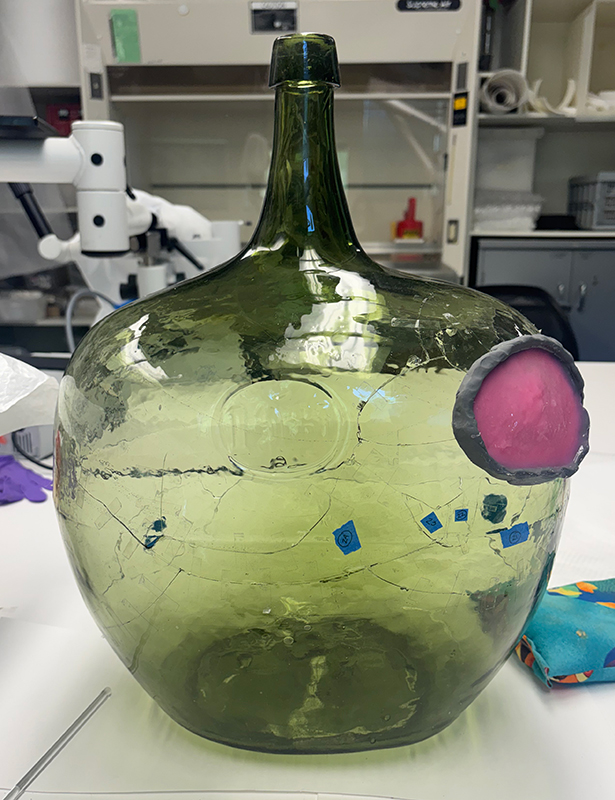
She began by dismantling the old repairs and removing deteriorated adhesive with acetone. She photographed and labeled the pieces, cleaned them with a water and ethanol solution, then performed a “dry-fit assembly”—piecing the bottle back together with blue tape to ensure the fragments fit properly. Because the demijohn is a closed vessel, she could support the joins only from the outside, making the reassembly particularly precarious.
Once everything was aligned, Sydney flowed epoxy resin into the cracks to bond the glass. Where pieces were missing, she created epoxy resin fills, tinting them with translucent dyes to match the demijohn’s distinctive green glass. “I joked with Dorothy Thayne that the hardest part when something is broken is putting the puzzle pieces back together,” Sydney said. “And her mom had already done the hard work.” Sydney has invited Thayne back to Winterthur to see the finished demijohn. Once passed down through generations of her family, the bottle will now live on in WUDPAC’s study collection, passing its story—and lessons in glass repair—to a new generation of conservation students.